How to Address Wedding Invitations Correctly: Every Scenario Covered
How to address wedding invitations for married couples, families, doctors, same-sex couples, and more. Etiquette guide

by Sarah Glasbergen on 23 March 2026
Web editor
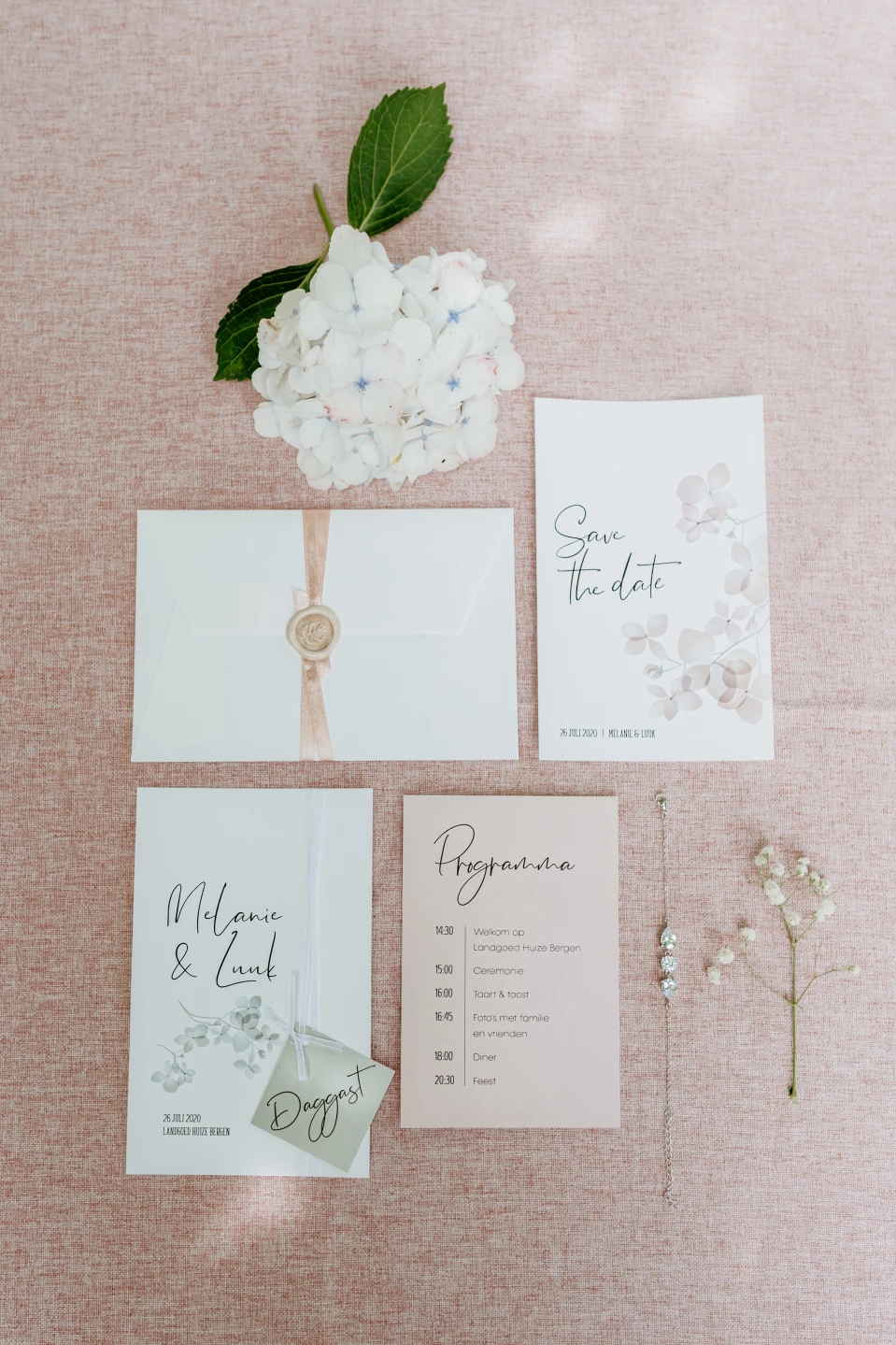
TLDR: Addressing wedding invitations correctly sets the tone for your event and avoids awkward misunderstandings about who is (and is not) invited. ThePerfectWedding.com's etiquette experts cover every scenario: married couples, unmarried couples, families with children, single guests with plus-ones, same-sex couples, doctors, military titles, and more. Bookmark this guide and reference it as you work through your guest list.
Key Facts at a Glance
- Formal invitations use full names and titles (Mr., Mrs., Dr.) with no abbreviations (Source: Emily Post Institute)
- The outer envelope addresses the household; the inner envelope specifies exactly who is invited (Source: The Knot)
- Digital invitations follow the same naming conventions as printed ones for clarity
- ThePerfectWedding.com's sending guide covers the full timeline: When to Send Wedding Invitations
- The most common mistake: forgetting to indicate whether children or plus-ones are invited
What Is the Basic Format for Addressing Wedding Invitations?
The standard format uses the outer envelope for the formal address and an optional inner envelope for specific guest names. If you are skipping inner envelopes (increasingly common), the outer envelope needs to be clear about who is invited.
Outer envelope: Mr. and Mrs. James Taylor, 123 Main Street, Springfield, IL 62701
Inner envelope: Mr. and Mrs. Taylor (formal) or James and Emily (casual)
How Do You Address Invitations for Every Guest Scenario?
| Scenario | Outer Envelope | Inner Envelope / Notes |
| Married couple (same last name) | Mr. and Mrs. David Chen | Mr. and Mrs. Chen |
| Married couple (different last names) | Ms. Jessica Brown and Mr. David Chen | Jessica and David |
| Unmarried couple living together | Ms. Jessica Brown and Mr. David Chen (separate lines) | Jessica and David |
| Single guest with plus-one | Ms. Jessica Brown | Ms. Brown and Guest |
| Single guest, no plus-one | Ms. Jessica Brown | Ms. Brown |
| Family with children under 18 | Mr. and Mrs. David Chen | Mr. and Mrs. Chen, Emma and Liam |
| Same-sex married couple | Mr. David Chen and Mr. James Taylor (alphabetical) | David and James |
| Doctor (one partner) | Dr. Jessica Brown and Mr. David Chen | Dr. Brown and Mr. Chen |
| Two doctors | The Doctors Chen or Drs. Jessica and David Chen | Dr. Brown and Dr. Chen |
| Military officer | Captain Jessica Brown, United States Army, and Mr. David Chen | Captain Brown and Mr. Chen |

What Are the Most Common Addressing Mistakes?
Not specifying children. If only the parents are invited, only their names should appear on the invitation. If children are invited, list their first names on the inner envelope or add "and Family" to the outer envelope.
Assuming plus-ones. "And Guest" must be explicitly written if a single guest is allowed to bring a date. If their name appears alone, the assumption is they are invited solo.
Using abbreviations on formal invitations. Write out "Street" instead of "St.," "Apartment" instead of "Apt.," and full state names instead of abbreviations for formal invitations. Casual invitations have more flexibility.
Misspelling names. Double-check every single name. Text or call guests if you are unsure of spelling. Misspelled names are noticed and remembered.
Outdated conventions. Addressing a married woman only by her husband's name ("Mrs. James Taylor") feels outdated to many couples. Using both first names ("Mr. James and Mrs. Emily Taylor" or "James and Emily Taylor") is more modern and inclusive.
Formal vs. Casual: Which Addressing Style Should You Use?
Formal: Use for black-tie, traditional, or religious ceremonies. Full titles, no nicknames, no abbreviations, handwritten calligraphy or formal print.
Casual: Use for backyard, beach, rustic, or informal celebrations. First names are fine, abbreviations are acceptable, and printed labels or digital invitations work well.
Your invitation style should match your wedding style. A calligraphed envelope for a backyard barbecue wedding feels mismatched, just as a sticky label on a formal black-tie invitation does.
<b>Expert Tip</b>: "When in doubt, be more formal rather than less. You can always loosen up the tone at your wedding, but an invitation that feels too casual can give guests the wrong impression about the event. And please, always proofread your envelopes before they go out. A fresh pair of eyes catches errors your own will miss."
Sarah Glasbergen, Senior Wedding Editor at ThePerfectWedding.com
Addressing Wedding Invitations FAQ
Do I need inner envelopes?
No. Inner envelopes are a traditional formality that many modern couples skip. If you skip them, make sure the outer envelope clearly indicates who is invited by listing all names.
How do I address an invitation to a family?
Use "The Chen Family" or "Mr. and Mrs. Chen and Family" on the outer envelope. On the inner envelope, list children's first names to make it clear they are included.
What if I do not know a guest's partner's name?
Address the envelope to your guest's name "and Guest." If possible, ask your guest for their partner's name so you can include it for a more personal touch.
Should I hand-write or print the addresses?
Formal invitations traditionally feature hand-addressed envelopes (or professional calligraphy). For casual invitations, printed labels or direct printing on envelopes is perfectly acceptable. The key is neatness and consistency.
How should I address a digital invitation?
Use the same naming conventions. Most digital platforms allow you to personalize the recipient field. For more on timing, see our guide: When to Send Wedding Invitations. You can also set up your wedding website with a digital RSVP form.
More Invitation Help from ThePerfectWedding.com
Browse wedding invitation ideas for design inspiration, and use our 12-month wedding planning checklist to stay on schedule with your stationery timeline.


