How to Choose an Engagement Ring: Styles, Settings, and What to Know Before You Buy
Engagement ring buying guide: 4 Cs explained, diamond shapes, settings, metals, lab-grown vs mined, and budget advice.

by Sarah Glasbergen on 1 April 2026
Web editor
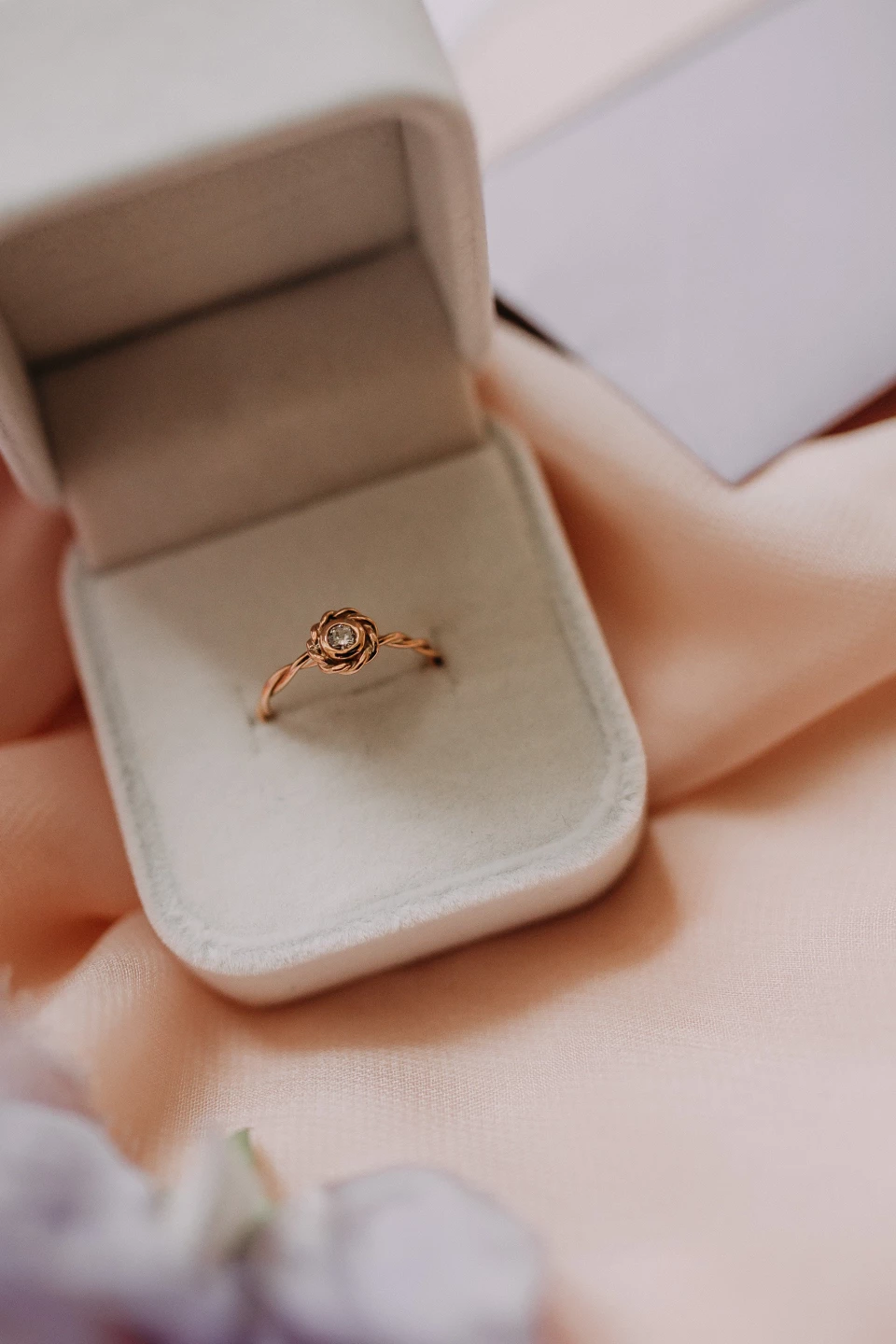
TLDR: An engagement ring is one of the most meaningful (and expensive) purchases you will ever make. Understanding the basics of diamond quality, ring settings, metal types, and current trends helps you choose a ring your partner will love without overspending. ThePerfectWedding.com's jewelry experts break down everything you need to know, from the 4 Cs to alternative stones, so you shop with confidence, not confusion.
Key Facts at a Glance
- The average US engagement ring costs $5,500 to $7,500 (Source: The Knot, 2025)
- Lab-grown diamonds cost 30% to 50% less than mined diamonds of identical quality (Source: Brides.com)
- The most popular diamond shape: round brilliant, followed by oval and emerald cut (Source: Zola)
- The old "2 months' salary" rule is outdated. Spend what you can comfortably afford (Source: WeddingWire)
- For wedding ring selection after the engagement, browse our wedding rings page
The 4 Cs of Diamonds Explained
Cut.
The most important C. Cut determines how well a diamond reflects light. An excellent cut makes a smaller diamond look more brilliant than a larger, poorly cut one. Prioritize cut above all other factors.
Carat.
The weight of the diamond. Bigger is not always better. A well-cut 0.9-carat diamond can look larger and more brilliant than a poorly cut 1.2-carat diamond. Carat affects price dramatically: going from 0.95 to 1.0 carat can increase the price by 20% with minimal visible difference.
Color.
Diamond color is graded D (colorless) to Z (visible yellow). For most settings, G to I grades look white to the naked eye and cost significantly less than D to F. Save money here without sacrificing appearance.
Clarity.
Measures internal imperfections (inclusions). VS1 and VS2 grades are "eye-clean", meaning you cannot see imperfections without magnification. No need to pay for Flawless when VS looks identical to the naked eye.
Popular Diamond Shapes
| Shape | Look | Best For | Price Range vs Round |
| Round Brilliant | Classic, maximum sparkle, most popular | Traditional partners who love sparkle | Baseline (most expensive per carat) |
| Oval | Elongated, flattering on the finger, modern-classic | Partners who want something slightly different but timeless | 15-25% less than round |
| Emerald | Rectangular, step-cut, art deco feel | Sophisticated, fashion-forward partners | 20-30% less than round |
| Cushion | Rounded square, vintage feel, soft sparkle | Romantic, vintage-loving partners | 25-35% less than round |
| Pear | Teardrop, unique, elongates the finger | Bold, distinctive partners | 20-30% less than round |
| Marquise | Boat-shaped, maximizes carat appearance | Partners who want the largest look per carat | 30-40% less than round |
| Princess | Square, modern, brilliant sparkle | Modern partners who like geometric shapes | 20-30% less than round |
Ring Settings Explained
Solitaire.
One center stone, no side stones. Clean, classic, and timeless. The setting that lets the diamond speak for itself. The most popular choice for a reason.
Halo.
A ring of small diamonds surrounding the center stone, making it appear larger and more brilliant. Adds sparkle without significantly increasing cost.
Three-stone.
A center stone flanked by two smaller stones. Symbolizes past, present, and future. Romantic and meaningful.
Pave.
Tiny diamonds set into the band itself. Adds continuous sparkle around the entire ring. Elegant but requires careful maintenance.
Vintage / Art Deco.
Intricate metalwork, milgrain details, and unique settings inspired by past eras. For partners who love antiques, history, and one-of-a-kind pieces.
Bezel.
The diamond is surrounded by a thin metal rim rather than prongs. More secure, more modern, and ideal for active lifestyles.
Metal Types for Engagement Rings
| Metal | Appearance | Durability | Price Range | Best For |
| Platinum | Cool silver-white, naturally white | Extremely durable, hypoallergenic | $$$ | Partners with sensitive skin or who want a forever metal |
| White Gold | Silver-white (rhodium plated) | Very durable, needs re-plating every 2-3 years | $$ | Most popular choice, good balance of look and cost |
| Yellow Gold | Warm gold tone | Very durable | $$ | Vintage lovers, warm skin tones |
| Rose Gold | Pink-gold, romantic | Durable, unique | $$ | Trendy, romantic, feminine |
| Palladium | Similar to platinum, lighter weight | Very durable, hypoallergenic | $$$ | Platinum look at a slightly lower price |
Lab-Grown vs. Mined Diamonds
Lab-grown diamonds are real diamonds.
They are chemically, optically, and physically identical to mined diamonds. The only difference is origin: a laboratory instead of the earth. A jeweler cannot tell the difference without specialized equipment.
Cost savings: 30% to 50% less.
A 1-carat lab-grown diamond costs $1,500 to $3,000 vs. $4,000 to $8,000 for an equivalent mined diamond. This means you can get a larger, higher-quality stone within the same budget.
Ethical and environmental considerations.
Lab-grown diamonds avoid the mining industry's environmental impact and ethical concerns. For couples who value sustainability, this is a meaningful differentiator.
Resale value.
Lab-grown diamonds have lower resale value than mined diamonds. If future resale matters, mined may be the better investment. If the ring is forever (which it should be), resale value is irrelevant.
How to Find Out Your Partner's Ring Size (Secretly)
Borrow a ring they already wear.
ake a ring from their jewelry box (one they wear on the correct finger), press it into a bar of soap or trace it on paper, and bring that to the jeweler.
Ask their friends or family.
A close friend, sibling, or parent often knows or can find out without raising suspicion.
Use a ring sizer while they sleep.
Flexible ring sizer strips can be gently placed on their finger while they are sleeping. Slightly creepy, but effective.
When in doubt, go slightly larger.
Sizing down is easier and cheaper than sizing up. If you are unsure, choose a half-size larger.
Expert Tip: "The ring that makes your partner cry happy tears is never about the size of the diamond. It is about the thoughtfulness of the choice. Did you pay attention to their style? Did you choose something that reflects who they are? A perfectly chosen $2,000 ring will mean more than a generic $10,000 ring. Pay attention. That is the real investment."
Sarah Glasbergen, Senior Wedding Editor at ThePerfectWedding.com
Engagement Ring FAQ
How much should I spend?
Spend what you can comfortably afford without going into debt. There is no correct percentage of salary. The right budget is one that makes your partner happy without creating financial stress for your marriage.
Should I let my partner choose their own ring?
Some couples shop together. Others prefer the surprise. Both are valid. If you are uncertain about their taste, a surprise proposal with a simple placeholder ring (a solitaire in their preferred metal) allows you to propose and then shop together for the final ring.
Where should I buy an engagement ring?
A reputable local jeweler offers the best combination of expertise, customization, and after-purchase service. Online retailers (Blue Nile, James Allen, Brilliant Earth) offer competitive pricing and wide selection. Wherever you buy, ensure the diamond comes with a GIA or AGS certification. Browse ring options on our wedding rings page.
Can I design a custom ring?
Yes. Many jewelers offer custom design services starting at $1,500 to $3,000 for simple designs. Bring inspiration photos and a budget. The process takes 4 to 8 weeks.
Start Your Ring Journey on ThePerfectWedding.com
Browse engagement and wedding rings on our ring page. Plan your proposal with our engagement party timeline. Once you are engaged, start planning with our 12-month wedding checklist and explore wedding ideas. Find jewelers on our vendor directory.


