Vintage Wedding Cakes: Timeless, Elegant, and Nostalgic Designs
Vintage wedding cakes: art deco, piped buttercream, Lambeth, and classic tiered designs. Historic styles

by Sarah Glasbergen on 16 April 2026
Web editor
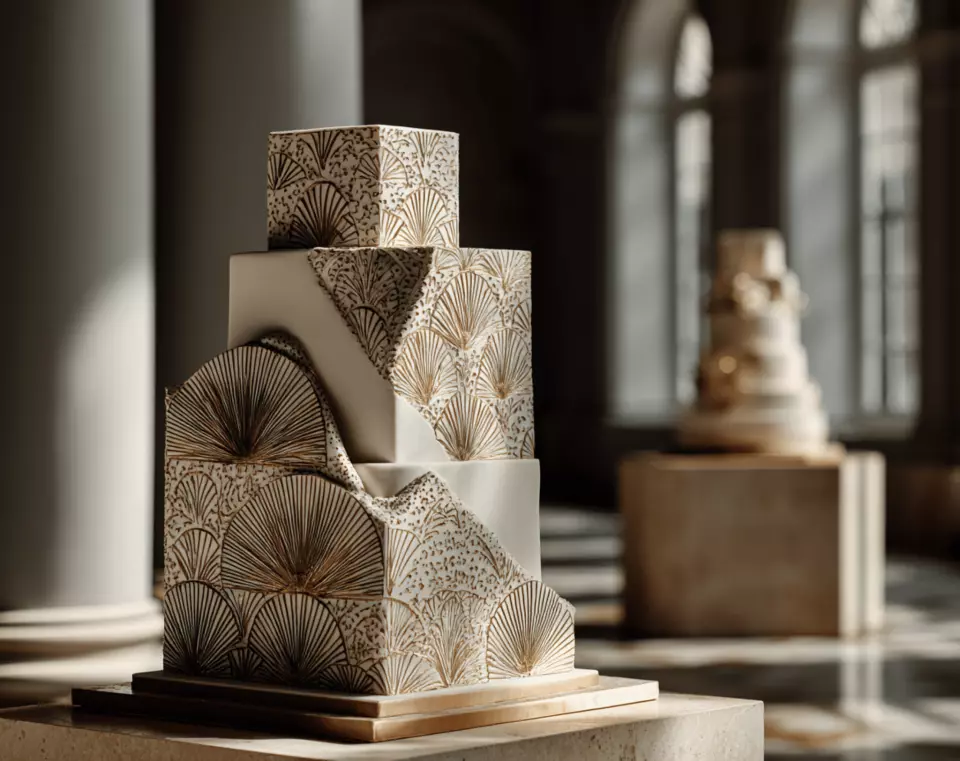
TLDR: Vintage wedding cakes draw on historic cake traditions while adding modern elegance, with styles ranging from 1920s art deco geometry to 1950s piped buttercream lattice to 1970s textured ruffles. Vintage cakes feel nostalgic, romantic, and distinctively crafted rather than trendy. ThePerfectWedding.com's cake experts explore the different vintage eras, how to choose one that matches your venue and dress, and which modern techniques create a truly vintage look.
Key Facts at a Glance
- Vintage wedding cakes have seen a 45% resurgence in searches over the past 2 years (Source: Pinterest Trends, 2025)
- The most popular vintage cake style: Lambeth piping, an elaborate 1970s technique experiencing major revival (Source: The Knot)
- Vintage cakes are typically multi-tier (3 or more) and decoratively elaborate, costing $600 to $2,000+ (Source: WeddingWire)
- Vintage cakes pair best with vintage venues, historic venues, and vintage-themed weddings (Source: Brides.com)
- Browse all cake styles on our wedding cakes page on ThePerfectWedding.com
Vintage Cake Styles by Era

1920s art deco
Geometric patterns, metallic accents, and bold architectural lines. Art deco cakes feature fan patterns, chevron designs, gold or silver foil details, and structured tiers. Colors lean black, white, gold, and ivory. Perfect for gatsby-themed weddings, ballroom celebrations, and glamorous formal events. The era's confidence shows in bold, geometric cakes.

1950s piped buttercream
Classic piped buttercream with ruffles, rosettes, and lattice work. The 1950s aesthetic is soft, feminine, and romantic, with flowers and bows as common decoration. White-on-white detailing is typical, with subtle color only in a single ribbon or accent. Pairs beautifully with lace wedding dresses and traditional venues.

1960s fondant elegance
Smooth fondant finishes with delicate piping and hand-painted details. The 1960s brought royal wedding cake influences: Queen Elizabeth-style tiered grandeur with precise decoration. Classic, dignified, and formal. Best for formal venues and traditional celebrations.

1970s Lambeth piping
Elaborate overpiping, lacework, and sculptural buttercream named for the British master Joseph Lambeth. This is the most technically demanding vintage style, featuring intricate layered piping that looks like lace carved from frosting. Lambeth cakes are having a major modern revival because they feel distinctly handcrafted and cannot be mass-produced.

1980s-90s English garden
Tiered cakes with fresh flowers, royal icing, and sugar paste florals. The English garden cake dominated the 1980s and early 1990s with its focus on handmade sugar roses and abundant floral decoration. Best for garden weddings, English-style venues, and floral-forward weddings.
Modern vintage interpretations
Modern bakers are reimagining vintage techniques with contemporary twists: pastel color palettes, asymmetric vintage designs, minimalist Lambeth with one focal cluster, or art deco in unexpected colors. These fusion cakes feel vintage-inspired without looking like period pieces.
Defining Vintage Cake Elements
Piped buttercream detailing
Vintage cakes are piped rather than fondant-covered. Piping creates dimensional texture that fondant cannot match: ruffles, rosettes, lattice, scrollwork, and lacework. The piping is where the craftsmanship shows. A vintage cake without piping is not really vintage.
Multiple tiers
Vintage cakes are almost always 3 to 5 tiers. Single-tier cakes feel modern or minimalist, not vintage. The height and grandeur of multi-tier cakes is part of the vintage tradition. If your guest count is small, consider a display-only vintage cake with a sheet cake for actual serving. See our three-tier guide.
Sugar flowers
Hand-crafted sugar flowers (roses, peonies, orchids, lily of the valley) are vintage cake staples. Sugar flowers are more expensive than fresh flowers but last indefinitely as keepsakes. Best for formal vintage cakes where every detail is handmade art.
Classic color palette
Vintage cakes use white, ivory, cream, pale blush, and muted metallics. Bright or saturated colors feel modern. Even colorful vintage cakes use muted, powdery shades (dusty rose, sage, periwinkle) rather than bright versions.
Hand-painted or stenciled details
Monograms, delicate floral patterns, or lacework hand-painted on fondant or icing. These details require master-level bakers and add hundreds to the cake cost, but create one-of-a-kind vintage beauty.
Where Vintage Cakes Work Best
Historic venues: Victorian mansions, historic hotels, castles, libraries, and any venue with architectural history amplifies the vintage cake aesthetic.
Formal and black-tie weddings: Vintage cakes feel most at home at formal events where their elaborate craftsmanship fits the level of formality.
Vintage-themed weddings: If your decor, dress, and venue already lean vintage, your cake should match. A modern minimalist cake at a vintage-themed wedding creates an aesthetic mismatch.
Lace dress brides: A lace wedding dress pairs beautifully with a piped, lace-detailed vintage cake. The decorative elements echo each other.
Expert Tip: "Vintage cakes are experiencing a major revival because they look handmade in a way modern minimalist cakes cannot. Every piped detail, every hand-painted flourish, every sugar flower tells the story of a baker who spent hours on your cake. In an era of mass production and shortcuts, that level of craftsmanship reads as luxury. If you want your cake to feel like an heirloom moment, go vintage."
Sarah Glasbergen, Founder at ThePerfectWedding.com
Frequently Asked Questions
Are vintage cakes old-fashioned?
Vintage-inspired is different from old-fashioned. A modern vintage cake uses vintage techniques (piping, layered tiers, hand-painted details) but feels fresh through color choices, asymmetric design, or modern flavor profiles. Old-fashioned cakes are executed straight from 1950s cookbooks. Modern vintage cakes are contemporary interpretations.
Can I have a vintage cake at a casual wedding?
A fully elaborate 5-tier vintage cake feels out of place at a casual outdoor wedding. However, a two-tier cake with subtle vintage piping details can work at semi-formal and casual weddings. Scale the elaborateness to the event. Vintage-inspired is more flexible than vintage-exact.
How much do vintage cakes cost?
Vintage cakes cost more than modern cakes because of the labor-intensive piping, hand-painting, and sugar work. Expect:
- Simple vintage (2 tiers with piping): $500 to $900
- Classic vintage (3 tiers with elaborate piping): $900 to $1,500
- Full vintage grandeur (4+ tiers with sugar flowers and hand-painting): $1,500 to $3,000+
What flavors work best for vintage cakes?
Traditional flavors: vanilla bean, classic chocolate, lemon, almond, hazelnut praline, and traditional fruit cake. Modern vintage interpretations can use rose-infused cake, Earl Grey, champagne, or pistachio. Match the flavor era to the decoration era: a 1920s art deco cake pairs with more sophisticated flavors (champagne, pistachio). A 1950s-inspired cake pairs with classic vanilla or lemon.
Explore More Cake Styles on ThePerfectWedding.com
Browse all cakes on our wedding cakes page. Compare with modern, minimalist, boho, and naked styles. See sizes: one-tier, two-tier, three-tier. Add details: fresh flowers, pearls, strawberries. Skip fondant: buttercream only. Season: fall, winter. Find bakers on our vendor directory. Coordinate with vintage wedding theme.


