Round Wedding Bouquets: The Classic Shape That Flatters Every Bride and Every Dress
Round wedding bouquets: best flowers, sizing for your frame, binding, and why it flatters every bride.

by Sarah Glasbergen on 17 April 2026
Web editor
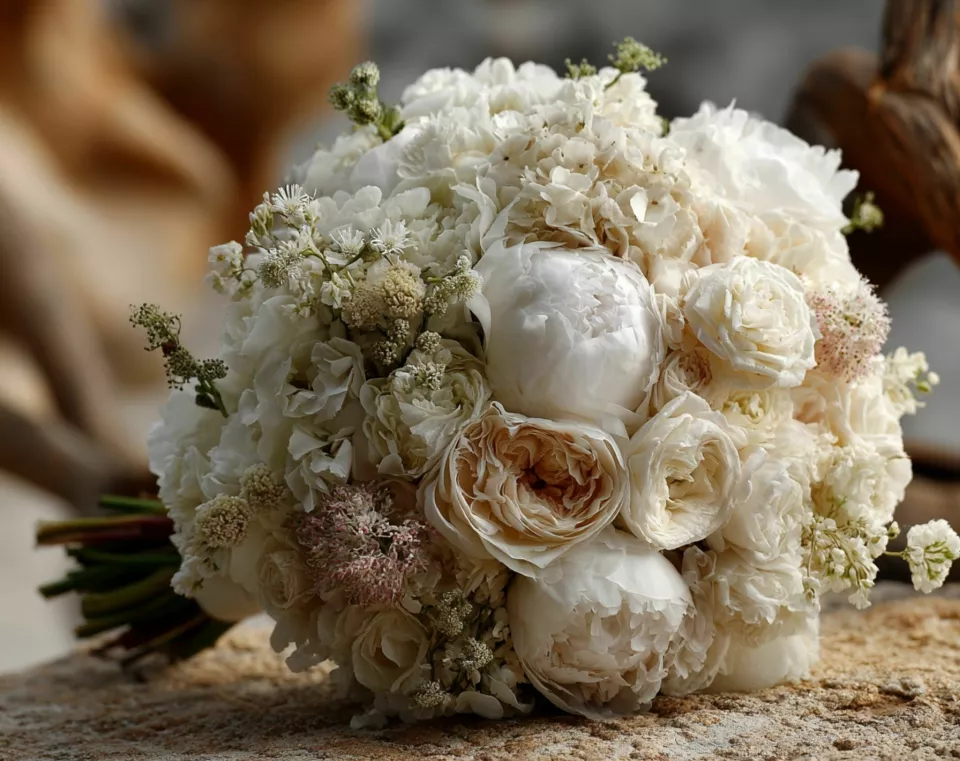
TLDR: The round bouquet is the most popular, most versatile, and most photographed bridal bouquet shape. Its compact, dome-shaped silhouette works with every dress style, every body type, and every wedding formality level. Whether tightly packed with roses, loosely gathered with garden blooms, or bursting with mixed textures, the round bouquet is a timeless choice. ThePerfectWedding.com's floral experts share the best flower combinations for round bouquets, how to size them for your frame, and the binding and handling techniques that keep them beautiful all day.
Key Facts at a Glance
- The round bouquet is the #1 most popular bridal bouquet shape, chosen by over 50% of brides (Source: The Knot, 2025)
- Average cost: $150 to $350 for a round bridal bouquet with premium flowers (Source: WeddingWire)
- Best size for most brides: 9 to 12 inches in diameter, held at waist height (Source: Brides.com)
- Round bouquets work with every dress silhouette from ball gown to sheath (Source: Zola)
- Browse all bouquet styles on our bridal bouquet page on ThePerfectWedding.com
Why the Round Bouquet Works for Everyone
Universally flattering proportions
The round shape is visually balanced and symmetrical, which means it complements rather than competes with any body proportion or dress silhouette. A round bouquet held at the waist creates a natural focal point that draws the eye to the center of the bride without overwhelming any part of the frame. Taller brides, petite brides, plus-size brides: the round bouquet adapts to all.
Works with every dress
Unlike cascading bouquets that can overwhelm a minimalist dress, or small posies that get lost against a ball gown, the round bouquet scales to any dress. A tight, compact round bouquet suits a sleek sheath or lace dress. A looser, larger round bouquet matches a ball gown or A-line. Adjust the size and density to your dress's level of drama.
Easy to hold and photograph
Round bouquets sit naturally in one or both hands at the waist. They are not heavy enough to cause arm fatigue (a problem with very large cascading bouquets) and not so small that they get lost in photos. The dome shape catches light from above, creating beautiful dimension in photographs.
Best Flowers for Round Bouquets
Roses
The most classic round-bouquet flower. Tightly packed roses create a clean, formal, structured dome. Garden roses (fuller, more petals) create a romantic, lush dome. Spray roses (smaller, multi-bloom) fill gaps affordably. See our rose bouquet guide for varieties and pairings.
Peonies
Full, lush, and incredibly romantic. Peonies create the most photogenic round bouquets because their ruffled petals add dimension and softness. Available spring through early summer. Expensive but worth it for the visual impact. 7 to 10 peonies make a stunning medium round bouquet.
Ranunculus
Layered, peony-like blooms that are more affordable and available over a longer season. Ranunculus in a tightly packed round bouquet creates a clean, modern look with incredible texture. Available in white, blush, coral, burgundy, and yellow.
Hydrangea
Large, cloud-like blooms that fill space quickly and affordably. A round bouquet built on hydrangea with accent flowers (roses, ranunculus) tucked in creates volume without breaking the budget. Available in white, blue, pink, and green.
Mixed garden flowers
A mix of seasonal blooms (dahlias, lisianthus, anemones, sweet peas, snapdragons) in a loose, garden-gathered round shape. Less structured than a single-flower round bouquet. More romantic and organic. Feels like you just gathered the most beautiful flowers from a garden. See our seasonal flower guide for what is available when.
Sizing Your Round Bouquet
Small (7 to 8 inches)
Best for petite brides, courthouse weddings, and elopements. A small round bouquet feels proportional to a smaller frame and intimate celebration. Works beautifully with simple, minimalist dresses.
Medium (9 to 11 inches)
The most popular and versatile size. Works for most brides and most dress styles. Large enough to make an impact in photos, small enough to hold comfortably for hours. This is the size most florists default to.
Large (12 to 14 inches)
Best for taller brides and dramatic dresses (ball gowns, cathedral trains). A large round bouquet makes a statement and balances a grand dress. It is heavier, so ensure the handle is reinforced for comfortable holding.
Match to your dress
Scale the bouquet to the dress volume. A slim dress (sheath, fit-and-flare) pairs with a smaller, tighter round bouquet. A full dress (ball gown, full A-line) pairs with a larger, looser round bouquet. The bouquet should complement the dress silhouette, not fight it.
Round Bouquet Binding and Handling
Hand-tied vs. wired
Hand-tied: Stems are gathered and tied with ribbon, twine, or fabric. The stems remain visible below the binding. More organic and natural. The most popular modern technique.
Wired: Each stem is wired internally for precise positioning. Creates a more controlled, symmetrical shape. More labor-intensive and expensive. Used for formal, structured round bouquets.
Ribbon wrap
The stems are wrapped in satin ribbon, silk, lace, or fabric that matches your dress or palette. The ribbon wrap is part of the bouquet's design. White and ivory are classic. Blush, sage, and dusty blue are trendy. Ribbon should be pinned securely so it does not unravel.
Holding technique
Hold the bouquet at waist height, slightly below the belly button, with both hands. Arms relaxed, elbows slightly bent. Do not hold the bouquet against your chest (too high, hides the dress) or at arm's length (too low, looks awkward). Your florist and photographer will guide you at the rehearsal.
Keeping it fresh
Your florist delivers the bouquet in water and stores it cool until the ceremony. Once you are holding it, the bouquet has 4 to 6 hours of beauty without water. For all-day weddings, ask your florist for a vase at the reception where you can set the bouquet down between photos.
Expert Tip: "The round bouquet has been the most popular bridal bouquet for decades, and there is a reason it has never gone out of style. It photographs from every angle. It works in every hand. It matches every dress. If you are unsure about bouquet shape, choose round. You cannot go wrong. The magic is in the flower selection: a round bouquet of tightly packed white roses feels formal and classic. The same round shape with loose garden roses, ranunculus, and trailing greenery feels romantic and organic. Same shape, completely different personality."
Sarah Glasbergen, Founder at ThePerfectWedding.com
Frequently Asked Questions
How many stems are in a round bouquet?
It depends on flower size. A round bouquet of large roses: 24 to 36 stems. Peonies: 7 to 12 stems. Ranunculus: 30 to 50 stems. Mixed flowers: varies. Your florist calculates stem count based on the size you want and the flowers you choose. Share your size preference and budget, and the florist handles the math.
Can a round bouquet include trailing greenery?
Yes. A round bouquet with soft trailing elements (eucalyptus, ivy, jasmine vine) at the edges creates a romantic, loose feel while keeping the overall dome shape. The trailing greenery should soften the edges without transforming it into a cascading bouquet.
How far in advance should I order?
Book your florist 4 to 8 months before the wedding. The bouquet design can be finalized 4 to 6 weeks before. Seasonal flower availability may require adjustments. See our planning checklist for full timeline.
What if my favorite flower is out of season?
Your florist can source out-of-season flowers at a premium (30% to 100% more), or suggest a seasonal substitute that achieves the same look. Ranunculus can substitute for peonies. Lisianthus can substitute for roses. See our seasonal flower guide for availability.
Explore More Bouquet Styles on ThePerfectWedding.com
Browse all bouquets on our bridal bouquet page. Compare shapes: cascading, wildflower, greenery-only. Specific flowers: roses, peonies, dried flowers. Budget tips: bouquet budget guide. Coordinate with your cake flowers, hair flowers, and color palette. Choose seasonal blooms: seasonal guide. Find florists on our vendor directory.


