Cascading Wedding Bouquets: Dramatic, Trailing, and Showstopping Designs
Cascading Wedding Bouquets: Dramatic Trailing Designs

by Sarah Glasbergen on 17 April 2026
Web editor
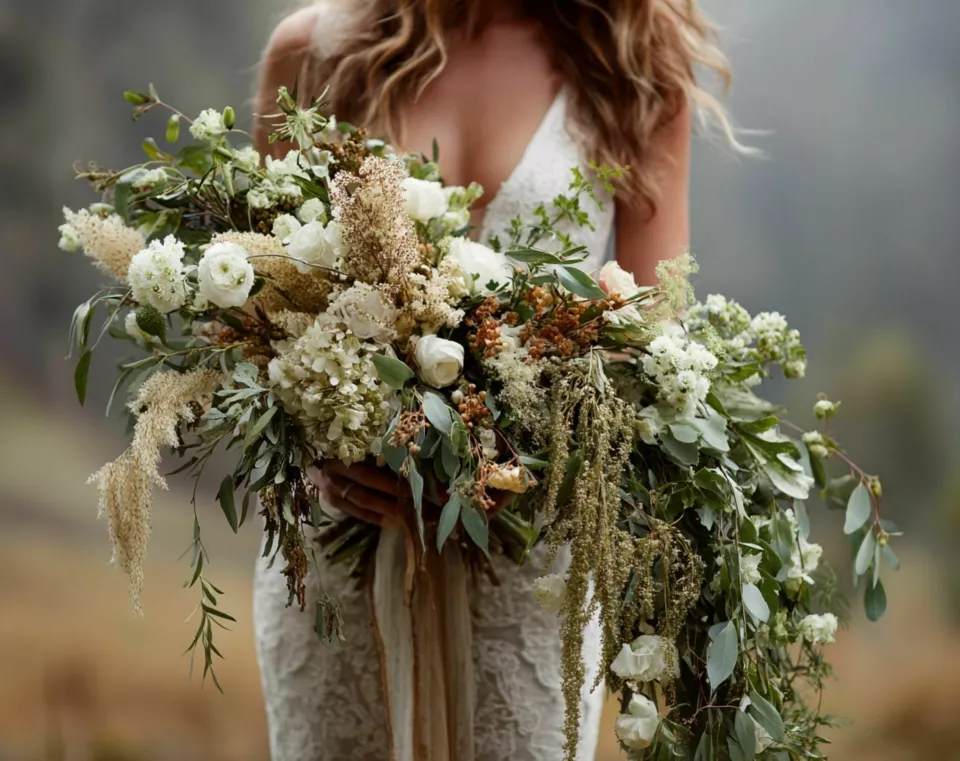
TLDR: A cascading bouquet (also called a waterfall or trailing bouquet) is the most dramatic bridal bouquet style, featuring flowers and greenery that spill downward from the hand in a flowing, waterfall-like shape. Made famous by Princess Diana's iconic bridal bouquet, cascading bouquets add visual drama, elongate the frame, and create breathtaking movement in ceremony photos. ThePerfectWedding.com's floral experts explain when cascading bouquets work best, which flowers create the most beautiful trails, and how to carry one without arm fatigue.
Key Facts at a Glance
- Cascading bouquets are experiencing a major revival after declining in the 2010s (Source: The Knot, 2025)
- Average cost: $250 to $600, more than round bouquets due to additional flowers and wiring (Source: WeddingWire)
- Best with tall brides, long dresses, and formal settings (Source: Brides.com)
- The ideal cascade length: 12 to 24 inches below the hand, longer than that becomes unwieldy (Source: Zola)
- Browse all bouquet styles on our bridal bouquet page on ThePerfectWedding.com
What Makes a Cascade
The shape
A cascading bouquet has a rounded top (similar to a round bouquet) with flowers and greenery trailing downward from the center or bottom. The cascade can be short and subtle (just a few inches of trailing greenery) or dramatically long (24+ inches of flowing flowers). The top provides the focal point. The trail provides the drama.
The movement
The defining quality of a cascade is movement. When the bride walks, the trailing flowers sway gently. In photos, the cascade creates a sense of flowing motion. Soft, flexible flowers and greenery (orchids, jasmine, ivy, stephanotis) create the best movement. Stiff flowers do not cascade naturally.
The construction
Cascading bouquets are more complex to construct than round bouquets. The trailing elements need to be wired and supported so they fall naturally without breaking. Internal wire structures and careful stem placement create the cascade effect. This is why cascading bouquets cost more: they require advanced floral engineering.
Best Flowers for Cascading Bouquets
Trailing flowers
Orchids: Phalaenopsis and dendrobium orchids cascade beautifully with their arching stems. Elegant, exotic, and dramatic. The most popular cascading flower.
Stephanotis: Small, waxy, star-shaped white flowers that cascade on delicate vines. Classic and romantic.
Jasmine: Trailing jasmine vines with tiny fragrant flowers. Romantic and sweet-smelling.
Sweet peas: Soft, ruffled petals on delicate stems that drape naturally. Available in pastels.
Wisteria: Dramatic clusters of hanging flowers in lavender, white, or pink. The most dramatic cascading element.
Focal flowers (top of the bouquet)
Roses: Garden roses and standard roses provide the round, lush base from which the cascade flows.
Peonies: Full, romantic blooms that anchor the top of the cascade beautifully.
Calla lilies: Long-stemmed, architectural flowers that transition naturally from the bouquet into the cascade.
Ranunculus: Layered blooms that add texture and romance to the top section.
Trailing greenery
Eucalyptus: Seeded or silver dollar eucalyptus drapes softly and adds natural volume.
Ivy: Classic, formal trailing greenery. Long ivy strands create dramatic length.
Smilax: Delicate vine with small leaves that cascades naturally. Romantic and wispy.
Ferns: Sword ferns or maidenhair ferns add lush, organic texture.
When Cascading Bouquets Work Best
Tall brides
A cascade elongates the frame further. On tall brides, the trailing elements have room to extend without dragging. The proportions are naturally balanced. Petite brides can carry shorter cascades (12 to 15 inches) but should avoid very long trails that overwhelm their frame.
Long, formal dresses
Cascading bouquets pair with long trains, cathedral veils, and formal gowns where the cascade echoes the flowing fabric. A cascade against a sleek floor-length dress creates stunning vertical lines. Against a ball gown, the cascade adds movement to the already-dramatic silhouette.
Formal and traditional weddings
Cascading bouquets feel grand and formal. They are most at home in churches, cathedrals, ballrooms, and historic venues where the scale of the bouquet matches the grandeur of the setting.
When to choose a different shape
Skip the cascade for: casual backyard weddings, beach ceremonies (wind destroys cascading elements), very active celebrations where you will set the bouquet down frequently, and tight budgets (cascades cost 40% to 100% more than round bouquets).
Carrying a Cascading Bouquet
Hold at waist height
Hold the bouquet slightly lower than a round bouquet: at the low waist or upper hip. This gives the cascade room to trail without bunching. Both hands support the weight, which is heavier than a round bouquet.
Manage the weight
Cascading bouquets weigh 2 to 4 pounds, compared to 1 to 2 pounds for round bouquets. For a long ceremony, your arms may fatigue. Practice holding for 15 minutes at the rehearsal. During the ceremony, rest the bouquet against your dress (the cascade drapes naturally). Your MOH can hold it during readings or vows.
Photo positioning
In photos, angle the bouquet slightly toward the camera to show the full cascade. Side-angle shots capture the trail beautifully. Your photographer will know the best angles, but communicating that you want cascade-focused photos helps them plan.
Expert Tip: "The cascading bouquet is having a major comeback, and I think it is because brides are embracing drama again after years of minimalism. There is something magical about a bride walking down the aisle with flowers trailing from her hands. It creates movement, it fills the frame in photos, and it makes a statement that no round bouquet can match. If you want your bouquet to be the thing guests remember, go cascading. Just make sure your florist has experience building them. A cascade that falls apart mid-ceremony is not the drama you want."
Sarah Glasbergen, Founder at ThePerfectWedding.com
Frequently Asked Questions
How long should the cascade be?
For most brides, 12 to 18 inches of trailing length creates beautiful drama without being unwieldy. Very formal or dramatic weddings can go 20 to 24 inches. Longer than 24 inches becomes difficult to manage and can drag on the ground when the bride holds the bouquet at natural arm height.
Can petite brides carry a cascading bouquet?
Yes, with modifications. Choose a shorter cascade (10 to 14 inches) and a smaller overall bouquet size. The cascade should be proportional to the bride's frame. A very long cascade on a petite bride looks like the bouquet is carrying her.
Are cascading bouquets heavy?
Heavier than round bouquets, yes. Expect 2 to 4 pounds. Your florist can reduce weight by using lighter trailing elements (greenery instead of heavy flowers) and wiring techniques that minimize stem weight. Practice holding at the rehearsal to build comfort.
Can I toss a cascading bouquet?
Cascading bouquets are not ideal for the traditional bouquet toss. The trailing elements can break, and the weight can injure the catcher. Have your florist make a separate, smaller toss bouquet. This is standard practice for formal or expensive bouquets of any shape.
Explore More Bouquet Styles on ThePerfectWedding.com
Browse all bouquets on our bridal bouquet page. Compare shapes: round, wildflower, greenery-only. Specific flowers: roses, peonies, dried flowers. Budget tips: bouquet budget guide. Coordinate with your cake flowers and color palette. Choose seasonal blooms: seasonal guide. Find florists on our vendor directory.


