Wedding Seating Chart: How to Seat Every Guest Without Losing Your Mind
Wedding seating chart: step-by-step process, head table options, handling conflicts, and difficult situations.

by Sarah Glasbergen on 18 April 2026
Web editor
TLDR: The seating chart is one of the most stressful and most consequential logistical tasks of wedding planning. Who sits where affects conversation, comfort, family dynamics, and the overall energy of the reception. ThePerfectWedding.com's planning experts share the step-by-step process for creating a seating chart that keeps everyone happy (or at least prevents disaster), when to assign specific seats vs. just tables, and how to handle the inevitable conflicts.
Key Facts at a Glance
- 80% of wedding planners rank the seating chart as the most stressful planning task for couples (Source: The Knot, 2025)
- Assigned tables (not specific seats) is the most popular approach for receptions of 50+ guests (Source: WeddingWire)
- Start the seating chart 2 to 3 weeks before the wedding, after RSVPs are in (Source: Brides.com)
- Standard round table: 8 to 10 guests. Standard rectangular: 6 to 8 per side (Source: Zola)
- Plan your timeline with our 12-month planning checklist on ThePerfectWedding.com
Assigned Tables vs. Assigned Seats
Assigned tables (most popular)
Guests are assigned to a specific table but choose their own seat at that table. This is the most common approach because it gives couples control over group dynamics without the stress of placing every individual. Guests have the freedom to sit next to whoever they choose within their table.
Assigned seats
Guests are assigned to a specific seat at a specific table, indicated by a place card. This gives the couple maximum control: you can ensure the talkative uncle sits next to the quiet cousin, or that divorced parents are not facing each other. More work but fewer surprises. Best for formal weddings and complex family dynamics.
Open seating (no assignments)
No table or seat assignments. Guests sit wherever they want. This works for very small weddings (under 30 guests) and very casual celebrations. For larger weddings, open seating creates anxiety (guests searching for seats), cliques (friend groups claiming tables while stragglers get stuck), and logistically complicates meal service.

The Step-by-Step Seating Process
Step 1: Wait for RSVPs
Do not start the seating chart until your RSVPs are mostly in. Start 2 to 3 weeks before the wedding when you have 85%+ of responses. Working with an incomplete guest list means redoing work.
Step 2: Know your table layout
Get the exact floor plan from your venue: how many tables, what shape (round, rectangular, mixed), how many seats per table, and where the head table, dance floor, bar, and DJ are located. You cannot seat guests without knowing the physical space.
Step 3: Start with must-seat groups
Place the non-negotiable groupings first:
- The head table or sweetheart table (couple + wedding party or couple alone)
- Immediate family tables (parents, siblings, grandparents)
- Tables for guests who must NOT sit near each other (divorced parents, feuding relatives)
Step 4: Group remaining guests by connection
Seat guests with people they know: college friends together, work friends together, family branches together. The goal is that every guest has at least 2 to 3 people they know at their table. A guest seated alone among strangers will have a miserable time.
Step 5: Fill gaps thoughtfully
Tables that are not full after grouping need additional guests who will mix well. Consider age, interests, personality, and social energy. The outgoing cousin can bridge two friend groups at a mixed table. The shy coworker should be near at least one friendly face.
Step 6: Review for conflicts
Scan the entire chart for potential problems: ex-couples at the same table, feuding family members in eyeshot, a table of all strangers, or a kids' table with no supervising adult nearby. Fix these before finalizing.
Step 7: Create the display
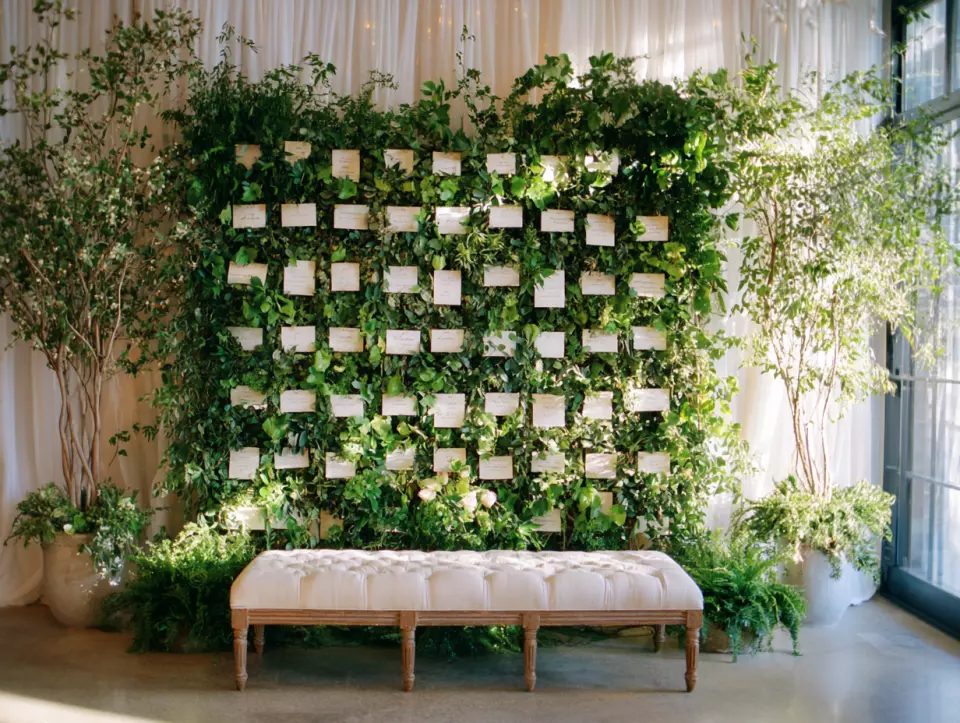
Your seating chart display can be: an alphabetical board with table numbers, individual escort cards, a framed poster, a mirror with calligraphy, or a digital display. Choose the style that matches your wedding aesthetic. Alphabetical by last name is the easiest for guests to find themselves.

The Head Table Question
Traditional head table
A long rectangular table facing the room with the couple in the center, flanked by the wedding party. The most traditional format. Benefits: the couple is visible to everyone, the wedding party sits together. Drawbacks: the wedding party's partners are separated to other tables.
Sweetheart table
A small table for just the couple, separate from the wedding party. Increasingly popular because it gives the couple a private moment during dinner. The wedding party sits with their partners at nearby tables. Benefits: the couple can actually eat, talk, and enjoy the meal. Drawbacks: some couples feel isolated.
Family-style head table
A large table with the couple, wedding party, AND their partners. The most inclusive option but requires a very large table or multiple tables pushed together. Benefits: nobody is separated from their partner. Drawbacks: requires significant space.
Handling Difficult Situations
Divorced parents
Seat them at separate tables with their respective sides of the family. If they get along, they can be at adjacent tables. If they do not, put visual barriers (the dance floor, a pillar, a centerpiece) between their sightlines. Neither parent should be at the "reject" table.
Single guests at a couples' table
Never seat a single guest at an all-couples table. Create mixed tables with singles and couples together. Or create a dedicated "singles" table, but only if the guests know each other. A table of strangers labeled "singles" feels like a punishment.
Elderly guests
Seat older guests near the action but not in the path of loud speakers or the dance floor. Close to exits and bathrooms. Near family members who can assist if needed. Avoid back-corner tables that feel isolated.
Children
Kids can sit with their parents (easiest) or at a designated kids' table with a supervising adult nearby. A kids' table works for ages 5 to 12 when enough children are present to form a group. Provide activities (coloring books, stickers) to keep them occupied during speeches.
Expert Tip: "The seating chart does not need to be perfect. It needs to be kind. Every guest should have at least 2 people they know at their table, no one should be seated near someone who makes them uncomfortable, and the couple should be visible from most tables. Beyond that, adults can handle themselves. You are not responsible for everyone's social experience. You are responsible for creating the conditions for a good one."
Sarah Glasbergen, Founder at ThePerfectWedding.com

Frequently Asked Questions
Do I need a seating chart for under 50 guests?
Recommended but not required. Even for small weddings, a loose table assignment prevents the awkward scramble for seats and ensures family groups are together. For under 20 guests, open seating is fine.
Can I change the seating chart after printing?
Yes. Last-minute changes happen (RSVPs change, family dynamics shift). Print the chart as late as possible (2 to 3 days before) or use a format that allows easy swaps (escort cards, removable name cards on a board).
Who should NOT sit together?
Exes who ended badly, family members in active conflict, guests with a history of confrontation, and anyone whose proximity would cause stress for the couple. You know your guest list better than any etiquette guide. Trust your instinct.
Is it rude to seat guests far from the head table?
Not if the room is well-designed. Every table should feel included: good sightlines to the dance floor, easy access to the bar, and not in a corner that feels like exile. If certain tables are less desirable (near the kitchen, far from the action), seat your most easygoing guests there.
More Planning Guides on ThePerfectWedding.com
See our 12-month planning checklist for full timeline. Read our RSVP etiquette, plus one etiquette, gift etiquette, and speech order guide. Plan your venue layout with our venue page. Coordinate with your caterer for meal service logistics. Find planners and coordinators on our vendor directory.


