Groom Suit Style Guide: How to Choose, Fit, and Personalize the Perfect Wedding Suit
Groom suit guide: suit vs. tuxedo, best colors, perfect fit, buy vs. rent, and how to stand out.

by Sarah Glasbergen on 18 April 2026
Web editor
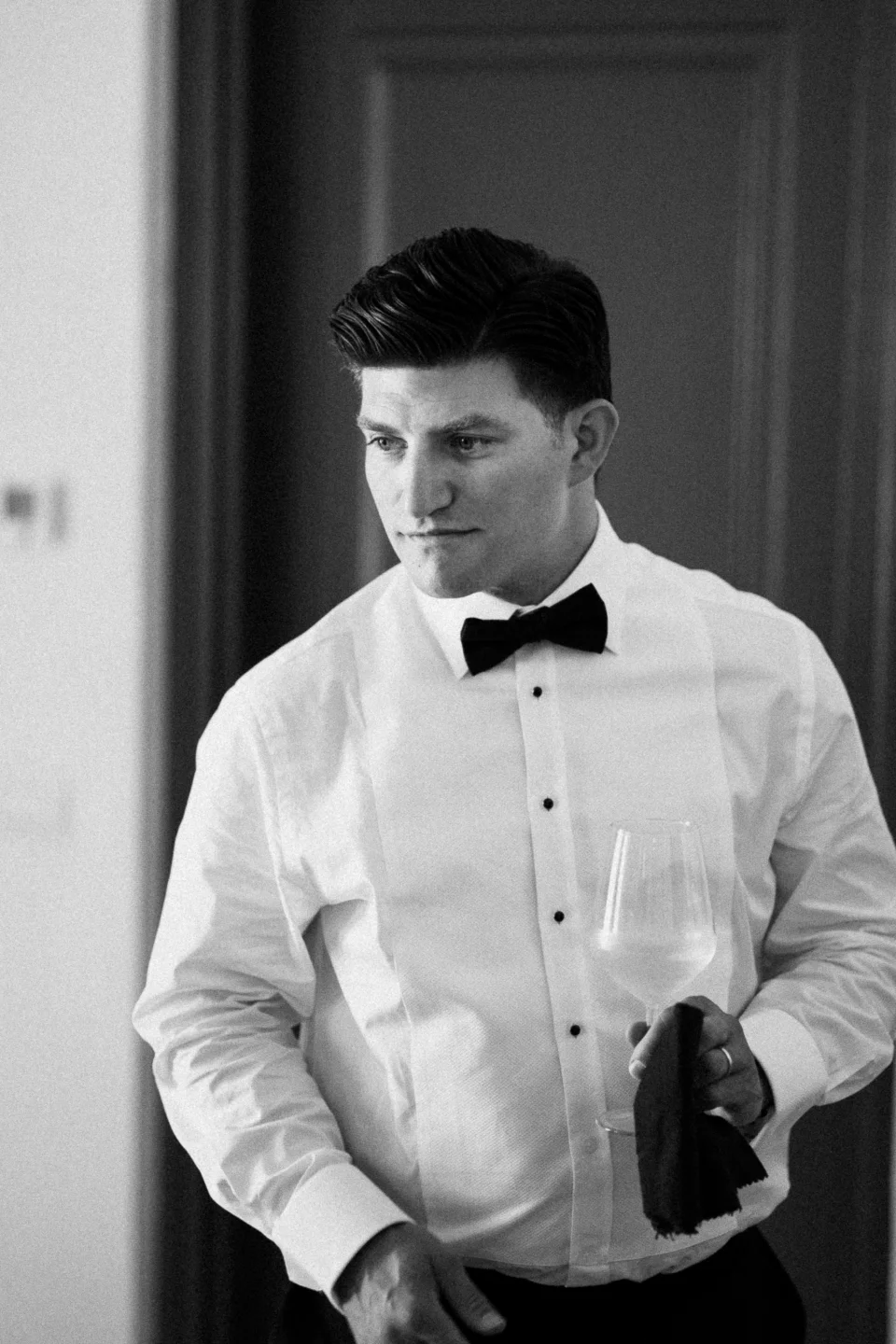
TLDR: The groom's suit is one of the most photographed and most remembered details of the wedding. Getting the right color, fabric, fit, and accessories transforms a standard suit into a wedding-day statement. ThePerfectWedding.com's menswear experts walk you through choosing between a suit and a tuxedo, the best colors for every season and venue, how fit should actually feel, and the personalization details that make the groom stand out from the groomsmen.
Key Facts at a Glance
- The average US groom spends $300 to $800 on a suit (purchased) or $150 to $300 (rented) (Source: The Knot, 2025)
- 65% of grooms buy rather than rent, viewing the suit as a long-term investment (Source: WeddingWire)
- The most popular groom suit color: navy blue, followed by charcoal gray and black (Source: Brides.com)
- The single most important factor: fit, not brand, not price, not color (Source: GQ, 2025)
- Browse suit inspiration on our wedding suit page on ThePerfectWedding.com

Suit vs. Tuxedo
When to wear a suit
A suit is appropriate for casual, semi-formal, and most formal weddings. If your wedding is outdoors, at a garden, vineyard, farm, restaurant, or non-ballroom venue, a suit is the right choice. Suits come in broader color and fabric options than tuxedos, giving you more creative freedom. See our dress code guide for formality levels.
When to wear a tuxedo
A tuxedo is required for black-tie and white-tie weddings. If your venue is a ballroom, a historic hotel, or a formal evening setting (ceremony after 5 PM), a tuxedo is the traditional choice. The defining features: satin lapels, satin-covered buttons, satin stripe on the trouser seam, and a bow tie.
The modern gray area
Many grooms now wear a dark suit with formal accessories (pocket square, dress shoes, tie pin) at formal weddings instead of a traditional tuxedo. This is increasingly accepted, especially at "black-tie optional" and "formal" events. A well-fitted dark navy or charcoal suit with a silk tie is indistinguishable from a tuxedo in most wedding photos.

Best Suit Colors by Season and Venue

Navy blue
The most versatile and most popular groom suit color. Navy works at every season, every formality level, and every venue. It flatters every skin tone and pairs with virtually any color palette. If you are unsure, choose navy. You cannot go wrong. Pair with brown shoes for casual/semi-formal or black shoes for formal.

Charcoal gray
The most formal suit option after black. Charcoal suits are sophisticated, serious, and photograph sharply. Best for fall, winter, and evening weddings. Pair with black shoes and a white shirt for maximum formality. Charcoal is less forgiving of poor fit than navy, so invest in tailoring.

Light gray or medium gray
A lighter, friendlier alternative for spring and summer weddings. Light gray in a lightweight fabric (linen, tropical wool) is perfect for outdoor daytime ceremonies. Pair with brown shoes and a pastel or patterned tie. Avoid light gray at formal evening weddings where it reads too casual.

Tan or beige
Reserved for casual summer, beach, and destination weddings. A linen or cotton-blend tan suit is relaxed, warm, and seasonally appropriate. Pair with loafers or dressy sandals. Never wear tan to a formal or evening wedding. See our mens guest outfit guide for more color guidance.

Black
Traditional for tuxedos and very formal evening weddings. A black suit (without satin details) can feel funereal at daytime or casual weddings. If you choose black, ensure it is intentional: pair with a black bow tie for tuxedo formality, or a colorful tie to soften for a suit.
Bold colors
Burgundy, forest green, deep blue, and plum are increasingly popular for fashion-forward grooms. Bold suits make a statement and photograph dramatically. Best for grooms who want to stand out. Pair with neutral accessories to let the suit color be the star.

The Fit That Makes Everything
Shoulders
The shoulder seam should sit exactly on your shoulder bone, not beyond it (too big) and not before it (too small). This is the single most important fit point and the hardest to alter. If the shoulders do not fit, the suit does not fit. Period.
Jacket length
The jacket should cover your seat and end at your knuckles when your arms hang naturally at your sides. Too short exposes your seat. Too long looks like a borrowed suit. The modern trend leans slightly shorter than traditional, but the knuckle rule is reliable.
Chest and waist
The jacket should button without pulling or gaping. When buttoned, you should see a slight V of shirt at the chest, not a strained X of fabric. When unbuttoned, the jacket should hang straight without flaring. A skilled tailor can adjust the chest and waist easily.
Trouser length
Trousers should break cleanly on your shoe: a slight fold of fabric where the trouser meets the shoe. No break (trousers end above the shoe) is modern. Full break (fabric pools on the shoe) is dated. One clean break is the safest default.
Sleeve length
Jacket sleeves should show 1/4 to 1/2 inch of shirt cuff below the sleeve. This detail separates a well-fitted suit from an off-the-rack look. If your sleeves do not show shirt cuff, your tailor shortens the jacket sleeve in 10 minutes.
Buy vs. Rent
Buy if
You will wear the suit again (work, events, formal occasions). Your budget allows $300 to $800+. You want perfect custom fit. You want unique color or style options. Best sources: Suitsupply ($400 to $700), Indochino (made-to-measure, $400 to $600), Bonobos ($300 to $500), J.Crew ($300 to $500), Brooks Brothers ($500 to $1,500).
Rent if
You will not wear a suit again for years. Budget is under $300. You need a tuxedo for one event. Best sources: The Black Tux ($150 to $250), Generation Tux ($100 to $200), Men's Wearhouse ($150 to $250). Rental includes the full ensemble. Return after the wedding.
Standing Out from the Groomsmen
Same suit, different details
The most popular approach: the groom wears the same suit as the groomsmen but differentiates with accessories. A different tie color, a different pocket square, a boutonniere with a unique flower, or a vest when groomsmen skip theirs. Subtle but visible differentiation.
Different suit entirely
The groom wears a distinctly different suit from the groomsmen: a different color, a different fabric, or a three-piece when groomsmen wear two-piece. This makes the groom immediately identifiable in photos. Popular combinations: groom in navy, groomsmen in gray. Groom in charcoal, groomsmen in navy.
Accessories as differentiators
A unique tie, custom cufflinks, a distinctive watch, or a personalized boutonniere set the groom apart without requiring a separate suit. See our groom accessories guide for specific ideas.
Expert Tip: "The most common mistake grooms make is buying a suit off the rack and wearing it without alterations. Every body is different. A $300 suit tailored to your body looks better than an $800 suit worn straight off the hanger. Budget $50 to $150 for alterations and the difference is dramatic. Shoulders, sleeve length, trouser break, waist suppression. Four adjustments, 30 minutes with a tailor, and you look like a different person."
Sarah Glasbergen, Founder at ThePerfectWedding.com

Frequently Asked Questions
How far in advance should I get my suit?
3 to 4 months before for purchased suits (to allow time for ordering and alterations). 2 to 3 months for made-to-measure. 1 to 2 months for rental. Final fitting: 2 weeks before the wedding. See our planning checklist.
Should I match the groomsmen exactly?
Not necessarily. Coordinating is more modern than matching exactly. Groomsmen in the same color family but slightly different shades, or the same suit with different ties, looks cohesive without being uniform. Discuss with your partner to match the overall wedding aesthetic.
Can I wear a colored suit?
Yes, if the venue and formality support it. Burgundy, forest green, and deep blue work at semi-formal and creative weddings. Avoid bold colors at very traditional or black-tie events. When in doubt, show the suit to your partner for their honest reaction.
What shoes should I wear?
Oxford shoes for formal (black for tuxedo, brown for navy/gray suits). Loafers for semi-formal. Brogues for rustic and vintage-inspired. Polish them the day before. New shoes should be broken in for at least 2 hours before the wedding. See our wedding suit page for complete styling.
More Groom Guides on ThePerfectWedding.com
Browse our wedding suit page. See groom grooming timeline, accessories guide, best man duties, groomsmen duties, groomsmen gift ideas, and groomsmen proposal ideas. Prepare your groom speech and best man speech. Find suit shops on our vendor directory.
