Parent Dance Songs: Mother-Son, Father-Daughter, and How to Make It Meaningful
Parent dance songs: father-daughter and mother-son recommendations, modern formats, and complex family guidance. ThePerfectWedding.com.

by Sarah Glasbergen on 3 June 2026
Web editor
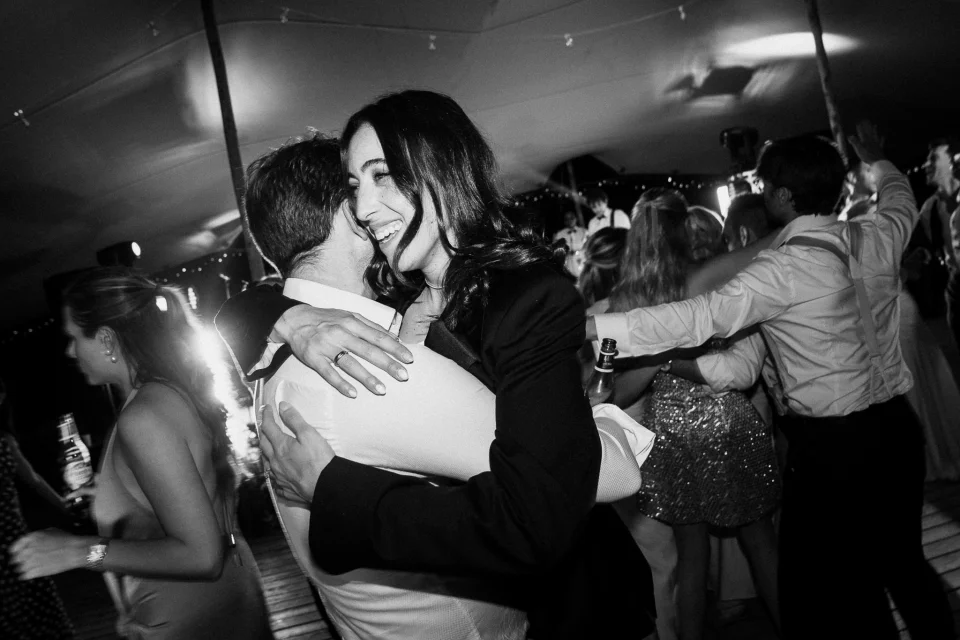
TLDR: The parent dance is often the most emotional moment of the entire reception, more than the first dance, more than the speeches. A parent holding their child on the dance floor, knowing that everything has changed, is universally moving. ThePerfectWedding.com's music experts share song recommendations for every parent-child combination, how to handle complex family dynamics, and the modern formats that make the moment inclusive.
Key Facts at a Glance
- 85% of US weddings include at least one parent dance (Source: The Knot, 2025)
- The most popular format: father-daughter dance followed by mother-son dance, either separately or simultaneously (Source: WeddingWire)
- Parent dances last 1.5 to 2.5 minutes each (shortened from the full song) (Source: Brides.com)
- Modern weddings increasingly include all parent combinations: mother-daughter, father-son, stepparent dances (Source: Zola)
- See our first dance guide and speech order on ThePerfectWedding.com
Father-Daughter Songs
Classic and timeless
"My Girl" by The Temptations, "Isn't She Lovely" by Stevie Wonder, "What a Wonderful World" by Louis Armstrong, "Unforgettable" by Nat King Cole, "The Way You Look Tonight" by Frank Sinatra. Safe, universally recognized, and guaranteed to make everyone smile.
Sentimental
"Butterfly Kisses" by Bob Carlisle, "I Loved Her First" by Heartland, "My Wish" by Rascal Flatts, "You'll Be in My Heart" by Phil Collins, "Fathers and Daughters" by Michael Bolton. These are purpose-written for this moment and will make every parent in the room cry.
Modern and understated
"Landslide" by Fleetwood Mac, "Daughters" by John Mayer, "Gracie" by Ben Folds, "In My Life" by The Beatles, "How Long Will I Love You" by Ellie Goulding. Less obvious choices that carry deep emotional weight without being overly sentimental.
Mother-Son Songs
Classic and timeless
"What a Wonderful World" by Louis Armstrong, "You Are the Sunshine of My Life" by Stevie Wonder, "Stand By Me" by Ben E. King, "Let It Be" by The Beatles, "Moon River" by Andy Williams. Warm, familiar, and comfortable for moms who are nervous about dancing in front of an audience.
Sentimental
"A Song for Mama" by Boyz II Men, "You Raise Me Up" by Josh Groban, "Because You Loved Me" by Celine Dion, "Wind Beneath My Wings" by Bette Midler, "I Hope You Dance" by Lee Ann Womack. Written for mothers and children, these songs leave no dry eye in the house.
Modern and understated
"Humble and Kind" by Tim McGraw, "Forever Young" by Rod Stewart, "Simple Man" by Lynyrd Skynyrd, "Golden" by Jill Scott, "Over the Rainbow" by Israel Kamakawiwoole. Songs that express gratitude and love without being overtly "mother-son dance" songs.
Modern Formats and Complex Families
Simultaneous parent dances
Instead of separate dances, both parent dances happen at the same time: father-daughter and mother-son on the floor together. This halves the time, reduces the spotlight on any single pair, and creates a shared family moment. After 60 seconds, the DJ can invite all parents to join the dance floor.
Stepparent dances
If a stepparent has been a significant parenting figure, they deserve their own dance moment. Options: a shared dance with both the biological parent and stepparent (switching partners halfway), or a separate short dance with the stepparent. Communicate with all parties in advance so nobody is surprised.
Same-sex couples
Parent dances work for every couple configuration. Two mother-child dances, two father-child dances, or any combination that reflects the family. There is no "correct" format. Choose what feels right for your family and honor every parent who raised you.
When a parent is absent
If a parent has passed away or is estranged, you have options: dance with a grandparent, sibling, or close family friend who filled the parental role. Play the song with a moment of silence and a dedication ("This dance is in memory of [Name]"). Or skip the parent dance entirely and transition directly to open dancing. All are valid choices.
Skip it entirely
Parent dances are traditional but not required. If your family dynamics make a parent dance uncomfortable, if your parent is a terrible dancer who would hate the spotlight, or if you simply do not want one, skip it. Nobody will miss it as much as they will notice a forced, awkward moment.
Logistics
When it happens
Parent dances typically follow the first dance, either immediately after or later in the reception between speeches and open dancing. Some couples place parent dances before dinner. Discuss timing with your DJ. See our day-of timeline.
Song length
Edit to 1.5 to 2 minutes. A full 4-minute parent dance feels long for the audience (and for the parent). Your DJ fades out gracefully at the 2-minute mark. Or the DJ can transition by inviting all couples to join the dance floor for the final minute.
The mid-song transition
A popular moment: halfway through the parent dance, the DJ invites "all parents to join the dance floor." This opens the moment to everyone, reduces spotlight pressure, and creates a beautiful, inclusive family moment as the floor fills with dancing parents.
Expert Tip: "The parent dances that make me cry every time are the ones where the parent whispers something to their child during the song. I never hear what they say. Nobody does. But you can see their lips move, you can see the child's face change, and suddenly it is not a performance. It is a private conversation happening in a room full of people. That is what makes parent dances different from every other reception moment: the intimacy in the middle of a crowd."
Sarah Glasbergen, Founder at ThePerfectWedding.com
Frequently Asked Questions
Do we need both a father-daughter and mother-son dance?
No. You can do one, both, or neither. If one parent is absent or uncomfortable, skip that dance. If both parents want to dance, do both. There is no rule that requires symmetry.
Can I dance with a non-parent?
Absolutely. An aunt, grandparent, older sibling, or family friend who raised you is a meaningful and beautiful substitute. The dance honors the relationship, not the biological title.
What if my parent cannot dance?
A slow sway in place is a complete dance. No footwork required. If a parent uses a wheelchair, you can kneel beside them, hold their hands, and sway together. The moment is about connection, not choreography.
More Music Guides on ThePerfectWedding.com
See our first dance songs, DJ vs. band, ceremony music, entrance songs, reception playlist, and last dance songs. Plan timing with our day-of timeline and speech order. Find DJs on our music page and vendor directory.


