Open Bar vs Cash Bar vs Limited Bar: What Each Costs, How Guests React, and Which Is Right for Your Wedding
pen bar vs cash bar vs limited: costs, guest expectations, etiquette, and the smart compromises. Wedding bar guide.

by Sarah Glasbergen on 24 June 2026
Web editor
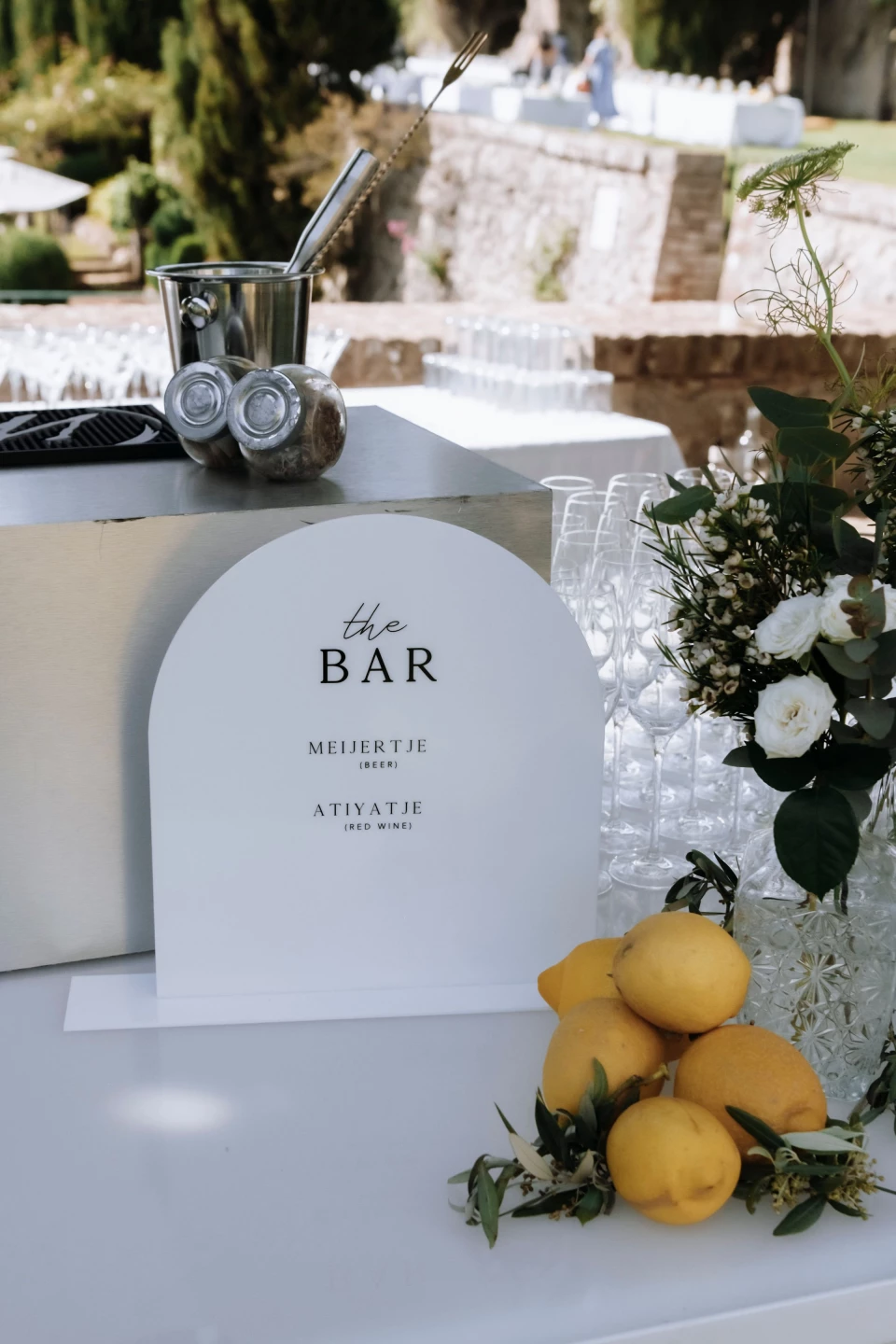
TLDR: The bar format is one of the most debated, most budget-impactful, and most socially loaded decisions in wedding planning. An open bar signals generosity but can cost $5,000 to $15,000+. A cash bar saves thousands but risks guest frustration. A limited bar (beer, wine, and a signature cocktail) offers the best compromise for most couples. ThePerfectWedding.com's reception experts break down the real costs, the guest experience implications, the etiquette considerations, and the creative alternatives that let you serve great drinks without destroying your budget.
Key Facts at a Glance
- Open bar average cost: $50 to $100+ per guest for a 4 to 5 hour reception (Source: The Knot, 2025)
- Beer and wine only bar: $25 to $45 per guest, saving 40% to 60% compared to full open bar (Source: WeddingWire)
- 78% of wedding guests expect some form of hosted bar at the reception (Source: Brides.com)
- Cash bars are considered a faux pas in most US regions, though regional norms vary (Source: Zola)
- See our bar cost calculator and drinks per guest guide for detailed budgeting

Open Bar: The Full Experience
What it includes
Guests drink whatever they want, as much as they want, with zero cost to them. A full open bar typically includes: well liquor (house brands of vodka, gin, rum, tequila, whiskey, bourbon), beer (2 to 4 options on draft or bottled), wine (1 red, 1 white, sometimes a rose or sparkling), and non-alcoholic options (soda, juice, water). Premium open bars upgrade to name-brand spirits (Grey Goose, Hendrick's, Maker's Mark) and expand wine and beer selections. Ultra-premium bars add top-shelf spirits, craft cocktails, and specialty drinks.
The real cost
Open bar pricing structures vary, and understanding the structure determines whether you overspend or get a deal. Per-person packages ($50 to $100/person for 4 to 5 hours): the most predictable and usually the most cost-effective option. The venue or caterer charges a flat rate per guest regardless of consumption. Light drinkers subsidize heavy drinkers, but the total is capped. Consumption-based pricing (you pay for what guests actually drink): risky. A few heavy-drinking tables can blow your budget. You will not know the final cost until the night is over.
A consumption bar for 150 guests can range from $3,000 (light-drinking crowd) to $12,000+ (heavy-drinking crowd).
Hourly pricing ($15 to $25/person/hour): some venues charge by the hour.
For a 5-hour reception, this becomes $75 to $125/person, making it the most expensive structure.
For 150 guests at $75/person: $11,250. At $100/person: $15,000.
See our full cost breakdown and hidden costs guide.
When open bar makes sense
Your budget accommodates it without cutting other priorities. Your guest list includes many drinkers who would be visibly disappointed with limited options. Your cultural or regional norm strongly expects an open bar (common in the Northeast and South). You are hosting at a hotel or all-inclusive venue where the bar is bundled into the per-person package and cannot easily be downgraded. You want the simplest possible bar setup with zero guest-facing friction.

Cash Bar: The Budget Saver
What it means
Guests pay for their own drinks at the bar. The couple provides the bartender and the bar setup, but drinks are purchased individually at market prices ($5 to $15 per drink). Some cash bars include a few complimentary options (a champagne toast, water, soda) while charging for alcohol. Others charge for everything.
The etiquette reality
Cash bars are controversial in most US wedding circles. The prevailing etiquette position: you invited these guests to celebrate with you, and asking them to pay for drinks at your party feels inhospitable. This is a strong cultural norm in the Northeast, South, and West Coast. However, cash bars are perfectly acceptable and even standard in the Midwest, in the UK, in Australia, and in many non-US cultures. Regional and cultural norms matter more than any etiquette book. If cash bars are common in your community, your guests will not be offended. If they are unusual in your community, guests will notice and talk about it. Know your audience.
When cash bar works
Your cultural or regional norm accepts it (Midwest US, UK, Australia, many non-US cultures). Your guest list is not heavy-drinking and will not spend much anyway. Your budget genuinely cannot accommodate any hosted bar option and the alternative is canceling the reception or going into debt. You are hosting a very casual, daytime, or brunch event where alcohol is a secondary element.

Limited Bar: The Smart Compromise
Beer and wine only
The most popular compromise in modern US weddings. You host (pay for) beer and wine for all guests but do not offer liquor or mixed drinks.
Cost: $25 to $45 per guest for a 4 to 5 hour reception, saving 40% to 60% compared to a full open bar.
For 150 guests, this saves $3,750 to $8,250 compared to a full open bar. Most guests are perfectly happy with beer and wine, especially when you offer quality selections (2 to 3 wines, 3 to 4 beer options including a craft option). See our wine selection guide and craft beer guide for choosing the right options.
Beer, wine, and signature cocktail
The "Goldilocks" option that satisfies almost everyone. Offer beer and wine plus 1 to 2 signature cocktails (a his-and-hers pair or a single cocktail that reflects your personality). This gives guests a "special" drink option beyond beer and wine without the cost of a full liquor bar.
A batch-made signature cocktail costs $3 to $5 per serving to produce, and a bartender can serve them quickly from a pre-mixed batch. Total cost: $30 to $55 per guest. This option feels generous, personal, and curated rather than limited.
Hosted bar for a set period, then cash
Host an open bar during cocktail hour and the first 1 to 2 hours of the reception, then switch to a cash bar for the rest of the evening. This covers the toasts, the dinner service, and the early dancing (when drinking is heaviest) and lets the late-night crowd who want more buy their own.
By 10 PM, most guests have had enough hosted drinks to feel well-treated and are not offended by the switch. Cost: roughly 50% to 70% of a full-evening open bar. The transition should be smooth and unannounced. Simply have the bartender begin charging rather than making an announcement that draws attention to the change.

Cost Comparison Table
For 150 guests, 5-hour reception:
Full open bar (well liquor): $7,500 to $15,000. Full open bar (premium): $10,000 to $18,000+. Beer and wine only: $3,750 to $6,750. Beer, wine, and signature cocktail: $4,500 to $8,250. Open bar for 2 hours, then cash: $4,000 to $8,000. Full cash bar: $0 to couple (guests pay). These ranges vary significantly by region: NYC and San Francisco are 30% to 50% higher than national averages. Rural markets are 20% to 30% lower. Brewery and vineyard venues may include their beverages in the package at lower rates. See our detailed cost calculator.
How to Reduce Bar Costs Without Going Cash
Limit the hours, not the selection
A 3-hour open bar costs 25% to 40% less than a 5-hour open bar with the same drink options. If your reception is 5 hours, open bar from hour 1 through hour 3 covers cocktail hour, dinner, toasts, and early dancing. The last 2 hours (when consumption naturally drops) can transition to beer/wine only or a reduced menu.
Choose per-person packages over consumption pricing
Per-person packages cap your risk. At $60/person for 150 guests, your maximum bar cost is $9,000 regardless of how much your guests drink. Consumption pricing has no ceiling. A group of heavy-drinking groomsmen can add $500 to $1,000 to your bar tab in a single evening. Packages protect your budget. Read our budget breakdown guide and negotiation tips.
Skip top-shelf upgrades
80% of guests do not notice the difference between well and premium spirits in mixed drinks. A vodka-soda made with Absolut and a vodka-soda made with Grey Goose taste virtually identical to most palates, especially after the second drink. Upgrade wines and beer (which are consumed straight and noticed) and save on spirits (which are mixed and less distinguishable). This targeted approach saves $5 to $15/person.
Expert Tip: "The bar decision that ruins the most wedding budgets: consumption-based pricing with an open bar. I have seen couples set a $5,000 bar budget on consumption pricing, feel confident based on their per-person estimate, and receive a $9,200 invoice the next morning. Their 'moderate drinking' guest list included a table of college friends who drank premium whiskey all night, an uncle who ordered top-shelf martinis for his entire table, and a cocktail hour that ran 30 minutes long because the DJ was late. Per-person packages exist to prevent this exact scenario. Pay the flat rate. Sleep peacefully. Never gamble your budget on how much your guests will drink."
Sarah Glasbergen, Founder at ThePerfectWedding.com

Frequently Asked Questions
Is it rude to not have an open bar?
No, as long as you host something. Beer, wine, and a signature cocktail is generous and well-received at the vast majority of US weddings. What guests find disappointing is not the absence of top-shelf liquor; it is the feeling that the couple did not provide for them at all. A thoughtfully curated beer and wine selection with a personal signature cocktail feels more intentional and welcoming than a generic full open bar.
Should we tell guests the bar format in advance?
Not on the invitation. Bar format is not included on formal or informal invitations. However, you can note it on your wedding website under event details: "Beer, wine, and our signature Limoncello Spritz will be served throughout the evening." This sets expectations without feeling like a warning.
How do we handle guests who want liquor when we only offer beer and wine?
They will be fine. The vast majority of guests are happy with any hosted beverage. The small percentage who specifically want a cocktail will either switch to wine/beer for the evening or quietly accept the limitation. Nobody has ever left a wedding early because they could not get a gin and tonic. Do not stress about this.
Can we do an open bar at a venue that does not serve alcohol?
Many barn, tent, and outdoor venues allow BYOB (bring your own beverage) with a licensed bartender. You purchase the alcohol at retail (often 30% to 50% cheaper than venue-markup prices), hire a licensed bartender ($200 to $400 for the evening), and serve from your own stock. This is often the most cost-effective path to a full open bar. Check the venue's alcohol policy and local liquor laws before planning this approach. See our DIY bar setup guide.
What about a dry wedding (no alcohol at all)?
Completely valid for religious, cultural, health, or personal reasons. Dry weddings are increasingly common and increasingly well-received, especially when the couple provides excellent non-alcoholic alternatives (mocktails, craft sodas, specialty teas, cold-pressed juices). The key: do not apologize for the choice. Present it positively and invest in quality non-alcoholic options that feel special, not just water and Coke.
More bar and drink guides on ThePerfectWedding.com: Bar cost guide, Non-alcoholic drinks, Wine selection, Craft beer, Champagne guide, DIY bar setup, and more. See our signature cocktail ideas and catering cost guide. Find bar services on our vendor directory.
Key Facts at a Glance
- A complete invitation suite averages $400 to $600, and wording errors are the most common reason couples pay for a reprint (Source: Zola, 2026)
- You send one invitation per household, so roughly 75 to 80 invitations cover 100 guests (Source: Zola, 2026)
- Order 10 to 15 percent extra invitations to absorb wording corrections and keepsakes (Source: Overnight Prints, 2026)
- The invitation is the single biggest formality signal your guests receive before arriving (Source: Emily Post Institute)
- For the full paper budget, see our hidden wedding costs guide and wedding costs hub

What Is the Standard Wedding Invitation Wording Formula?
Every traditional wedding invitation, no matter how formal or relaxed, is built from the same five components. According to ThePerfectWedding.com's stationery editors, understanding these five lines is the fastest way to write wording that reads correctly and feels intentional.
The five core lines
1. The host line. This names whoever is formally inviting guests, which historically meant whoever was paying. Today it can be the couple, one or both sets of parents, or everyone together.
2. The request line. This is the invitation phrase itself. Formal weddings use "request the honour of your presence" for a religious ceremony, while "request the pleasure of your company" suits a non-religious venue. Casual weddings simply say "invite you to celebrate."
3. The couple's names. Traditionally the person who was historically called the bride appeared first, but modern couples order names however they like. Same-sex couples often choose alphabetical order or the order that simply sounds better aloud.
4. The date, time, and year. Formal invitations spell everything out: "Saturday, the twelfth of September." Casual invitations can use numerals.
5. The location. The venue name and city, with the full street address usually reserved for the details card rather than the main invitation.
<b>Expert Tip:</b> "The single detail that signals formality the most is whether you spell out the numbers. Spelled-out dates and times read as black tie. Numerals read as casual and modern. Pick one register and keep it consistent across the save the date, the invitation, and your <a href="https://www.theperfectwedding.com/wedding-website">wedding website</a>, so the whole suite speaks with one voice."
Sarah Glasbergen, Founder at ThePerfectWedding.com

How Do You Word the Host Line for Different Families?
The host line is where most couples get stuck, because modern families rarely fit the old template of "Mr. and Mrs. John Smith." Here are ready-to-adapt examples for the situations ThePerfectWedding.com sees most often.
The couple is hosting themselves
"Together with full hearts, [Partner One] and [Partner Two] invite you to share in the joy of their marriage." This warm, host-free opening has become the most popular choice for couples paying for their own celebration.
One set of parents is hosting
"Mr. and Mrs. James Rivera request the pleasure of your company at the marriage of their daughter [Name] to [Partner]." If you prefer first names over the formal "Mr. and Mrs." style, that is completely acceptable and increasingly common.
Both sets of parents are hosting
"Mr. and Mrs. James Rivera and Mr. and Mrs. David Chen request the pleasure of your company at the marriage of their children [Name] and [Name]." List the host families in the order that respects who is contributing, or alphabetically if that feels more neutral.
Divorced parents hosting together
List each parent on a separate line without "and" connecting them, since they are no longer a couple: "Linda Rivera / and / Mark Rivera / request the pleasure of your company." If a parent has remarried, use their current name and partner.
A same-sex couple
There is no required order. "[Name] and [Name] invite you to celebrate their wedding" works beautifully. Choose the order that sounds most natural when read aloud, or go alphabetical to sidestep the question entirely.
Honoring a deceased parent
You can include a late parent gracefully: "[Name], daughter of Linda Rivera and the late Mark Rivera, and [Partner]." This acknowledges them without making the invitation feel heavy.
Formal Versus Casual Wording: A Side-by-Side Comparison
The same wedding can be described in radically different registers. This table shows how each line shifts between a black-tie invitation and a relaxed celebration.
| Element | Formal Wording | Casual Wording |
|---|---|---|
| Request line | request the honour of your presence | invite you to celebrate with us |
| Names | Full names, no nicknames | First names or nicknames welcome |
| Date | Saturday, the twelfth of September | Saturday, September 12 |
| Time | at half after four o'clock | at 4:30 in the afternoon |
| Reception line | Reception to follow | Dinner, drinks, and dancing to follow |
| Dress code | Black tie | Cocktail attire, or "dress to party" |
Where Do You Put the Dress Code and Reception Details?
The lower right or lower center of the main invitation is the traditional spot for a brief reception line and dress code. If your ceremony and reception are at the same venue, "Reception to follow" is enough. If they are at different locations, the reception address belongs on a separate details card, which you can read more about in our invitation suite anatomy guide.
Dress code wording matters more than couples expect. "Black tie" requires tuxedos and floor-length gowns. "Black tie optional" or "formal" gives guests room. "Cocktail attire" signals a suit or a shorter dress. If you have a specific vision, spell it out kindly, because vague wording leads to mismatched photos.
What Are the Most Common Wedding Invitation Wording Mistakes?
According to ThePerfectWedding.com's editorial team, these are the errors that most often trigger a costly reprint:
- Forgetting the year. On a save the date the year is obvious, but on an invitation it must appear in full.
- Mixing registers. Spelled-out times paired with a numeral date looks like an oversight, not a style.
- Listing a full street address on the main card. This clutters the design. Keep it on the details card.
- Omitting an RSVP method. Every suite needs a clear way to respond, whether a printed card or a wedding website link.
- Inconsistent name styling. If you use "Mr. and Mrs." for one family, do not switch to first names for the other without a reason.
Always order a printed proof and read it aloud with a second person before approving the full run. Reading aloud catches errors your eye skips.
Wedding Invitation Wording FAQ
Do we have to use "Mr. and Mrs." for our parents?
No. First names are perfectly correct and feel more modern. The "Mr. and Mrs." style is a formality choice, not a rule.
Whose name goes first on the invitation?
Whichever you prefer. The old convention placed one partner first, but couples today choose by sound, by alphabetical order, or by personal preference. There is no wrong choice.
Should we put registry information on the invitation?
No. Registry details belong on your wedding website or a separate details card, never on the main invitation. See our wedding gift guide for how to share registry links gracefully.
How do we word an adults-only wedding?
Keep it off the main invitation. Address envelopes to named adults only, and add a gentle note on the details card or website such as "We have chosen to keep our celebration an adults-only event."
What if our ceremony and reception are at different times?
State the ceremony time on the main invitation, and list the reception time and address on the details card. Plan the gap with our wedding day timeline guide.
Plan Your Full Stationery Suite with ThePerfectWedding.com
Wording is just the first piece. Once your language is set, build the rest of your suite with our invitation suite anatomy guide, decide on timing with our save the dates guide, and weigh formats with our digital versus paper invitations comparison. Browse design ideas on our wedding invitations hub and coordinate the look with your wedding decor. To find a stationer, search our vendor directory.


