Tuxedo vs Suit: What to Wear to a Wedding
Tuxedo vs suit explained: the real differences, when to wear each, and how to choose for your wedding.

by Sarah Glasbergen on 30 June 2026
Web editor
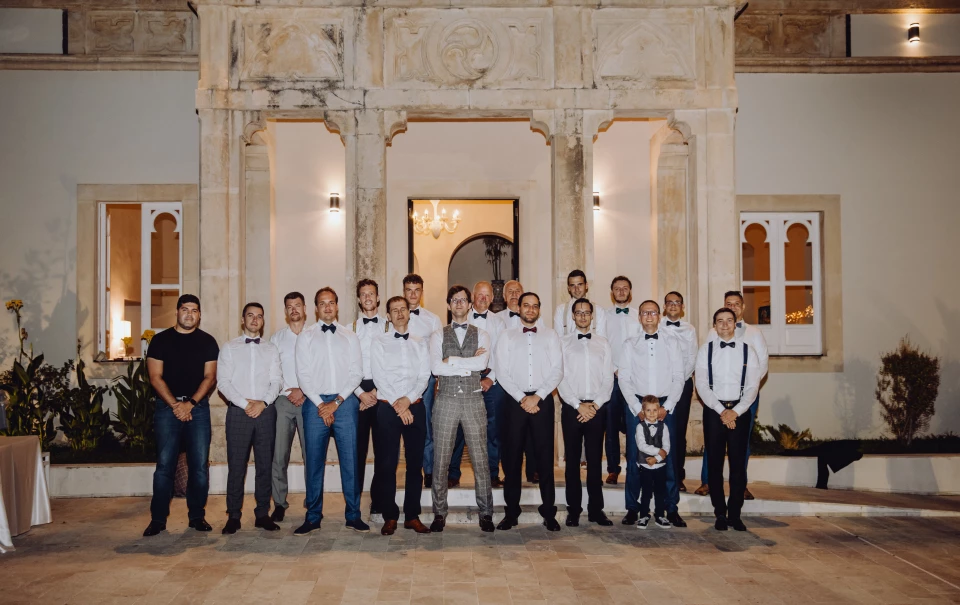
In short
A tuxedo is the more formal choice, defined by satin details: satin lapels, a satin stripe down the trouser, and a bow tie. A suit is more versatile and works across far more weddings. Choose a tuxedo for black tie or a formal evening wedding, and a suit for everything from semi-formal to daytime celebrations.
Below: the real differences, when to wear each, and how to choose for your wedding or as a guest. Updated June 2026.
Tuxedo or suit? It is one of the most common questions for grooms and male guests, and the answer comes down to formality and the details. They look similar at a glance, but a few specific features separate them, and getting it right makes all the difference at a formal wedding. Here is how to choose.

What is the difference between a tuxedo and a suit?
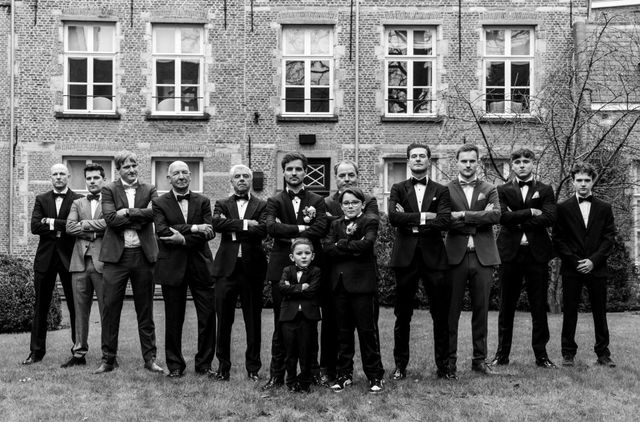
The core difference is formality, and it shows up in the details. A tuxedo is built for formal evening wear and is defined by satin: satin (or grosgrain) lapels, satin-covered buttons, and a satin stripe running down the outer seam of the trousers. It is traditionally worn with a bow tie, a formal shirt, and patent or highly polished shoes.
A suit is more versatile. Its lapels and buttons are made from the same matte fabric as the jacket, the trousers have no satin stripe, and it is worn with a necktie (or no tie for relaxed settings) and standard leather shoes. A suit works across far more weddings, from semi-formal to formal, while a tuxedo is reserved for the most formal occasions.
The tuxedo: hallmarks and when to wear it
- Satin or grosgrain lapels (peak or shawl), satin buttons, and a satin trouser stripe
- Worn with a bow tie, a formal tuxedo shirt, and patent or polished black shoes
- Often finished with a cummerbund or a black waistcoat
- The right choice for black tie, white tie (in tailcoat form), and formal evening weddings
If the invitation says black tie, the tuxedo is the expected choice. For a formal evening wedding without a stated dress code, a tuxedo is a safe, elegant option.
The suit: hallmarks and when to wear it
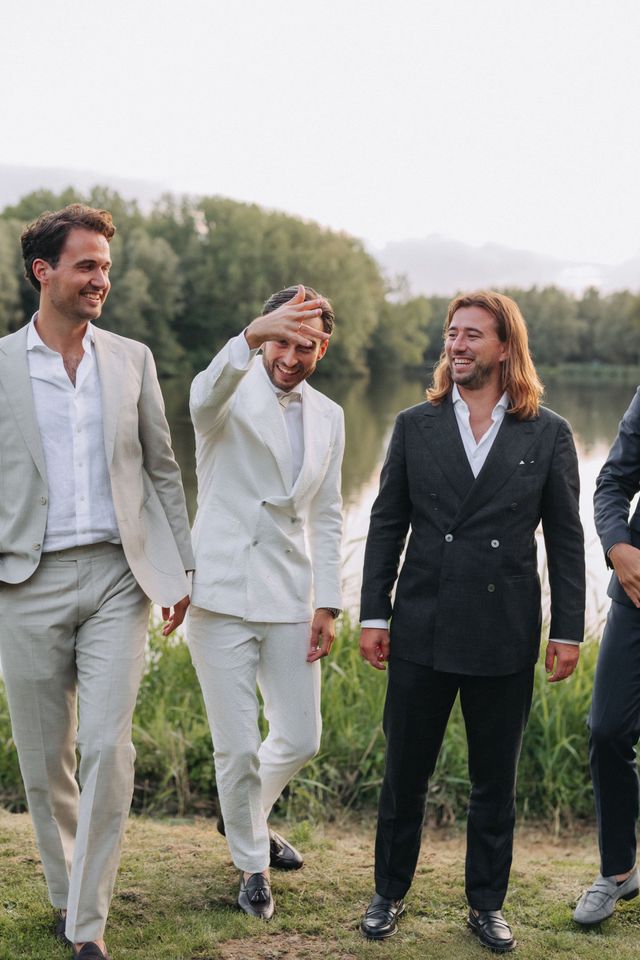
- Matte lapels and buttons in the same fabric as the jacket, no satin stripe on the trousers
- Worn with a necktie, or no tie for relaxed weddings, and standard leather shoes
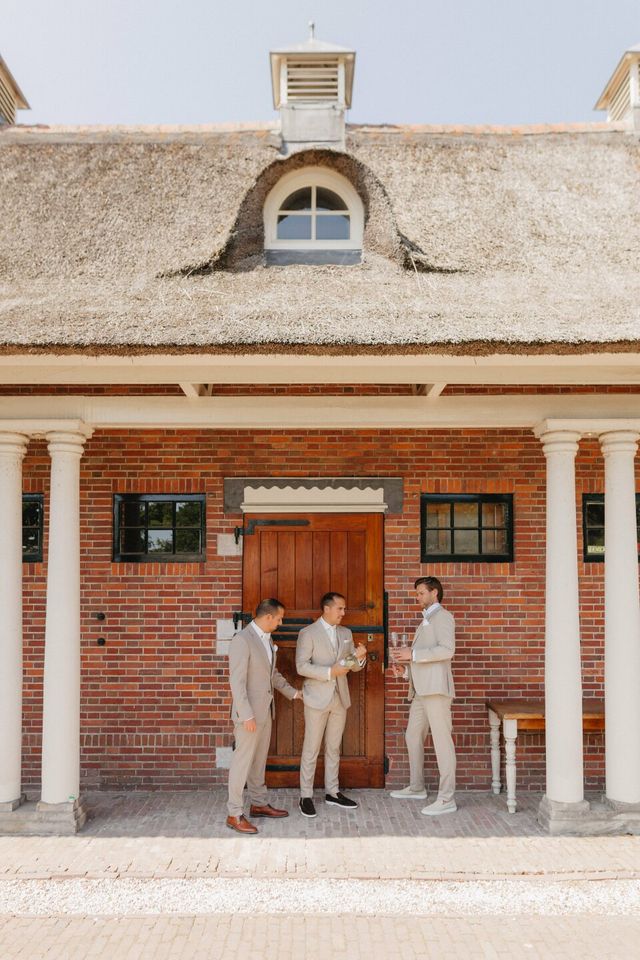
- Available in many colors, from navy and charcoal to tan and light gray
- The right choice for semi-formal, cocktail, dressy casual, and daytime weddings
A well-fitted dark suit also covers “black-tie optional,” and a lighter suit is perfect for summer and daytime celebrations.
How to choose for your wedding
As a guest, let the invitation lead. Black tie means a tuxedo; semi-formal, cocktail, and dressy casual mean a suit. When no dress code is stated, match the formality of the venue and the time of day: a tuxedo for an evening ballroom, a suit for a daytime garden wedding.
As a groom, the choice sets the tone for your wedding party and photos. A tuxedo reads classic and formal, especially in the evening. A suit, particularly in navy or a seasonal color, reads modern and versatile and is easier for groomsmen to match. Either way, fit matters more than anything: a well-tailored suit always outshines an ill-fitting tuxedo. Explore options in our wedding suit section.
Still not sure? Follow this rule
If the wedding is a formal evening affair, choose the tuxedo. For everything else, a well-fitted suit is the safer, more versatile choice. And whatever you pick, prioritize tailoring, the fit is what people actually notice.
“The tuxedo-or-suit question almost always answers itself once you look at the invitation and the time of day. Black tie or a formal evening, wear the tuxedo. Anything more relaxed, a sharp suit wins. And honestly, fit beats formality every time, a tailored suit always looks better than a rented tux that does not fit.”
Sarah Glasbergen, Founder at ThePerfectWedding.com
Frequently asked questions about tuxedos and suits
-
What is the main difference between a tuxedo and a suit?
A tuxedo has satin details, satin lapels, satin buttons, and a satin trouser stripe, and is worn with a bow tie. A suit uses matte fabric throughout, has no satin stripe, and is worn with a necktie. The tuxedo is more formal.
-
Can I wear a suit to a black tie wedding?
Strict black tie expects a tuxedo. If the invitation says black-tie optional, a well-fitted dark suit with a tie is acceptable.
-
Is a tuxedo only for evening weddings?
Traditionally yes. Tuxedos are formal evening wear. For a daytime wedding, a suit is usually the more appropriate choice.
-
What color tuxedo or suit should a groom choose?
Black and midnight blue are classic for tuxedos. For suits, navy and charcoal are versatile year-round, while tan and light gray suit summer and daytime weddings.
-
Does a groom have to wear a tuxedo?
No. Many grooms choose a well-tailored suit, especially for daytime or relaxed weddings. Fit and a cohesive look with the wedding party matter more than the tuxedo-versus-suit label.
Plan your perfect wedding look
Still pulling the details together? Browse outfit inspiration in our guest section, explore wedding dresses and wedding suits for the couple and the wedding party, and decode every level with our complete wedding dress code guide on ThePerfectWedding.com.
Keep everything on track with our free wedding planning checklist, and find more styling ideas in our wedding inspiration galleries.


