Wedding Day Vendor Coordination: How to Keep 15 Vendors in Sync
Wedding day vendor coordination: master timeline, arrival scheduling, communication flow, vendor meals, and why a coordinator protects your entire investment.

by Sarah Glasbergen on 30 June 2026
Web editor

TLDR: On your wedding day, 8 to 15 vendors arrive at different times, set up in different spaces, and execute their roles in a coordinated sequence that either flows seamlessly or collides chaotically. The difference is vendor coordination: a shared timeline, clear contact information, defined responsibilities, and one person (your coordinator, planner, or a designated point person) managing the logistics so you can focus entirely on getting married. ThePerfectWedding.com's planning experts explain how to coordinate your vendor team for a stress-free day.
Key Facts at a Glance
- The average wedding involves 8 to 15 vendors who must coordinate arrival, setup, execution, and teardown (Source: The Knot, 2025)
- A shared timeline document sent to all vendors 2 weeks before the wedding is the single most effective coordination tool (Source: WeddingWire)
- The couple should NEVER be the point of contact on the wedding day. A coordinator, planner, or designated friend manages all vendor communication (Source: Brides.com)
- See our planning checklist for the complete pre-wedding coordination timeline

The Master Timeline: Your Most Important Document
Two weeks before the wedding, distribute a single comprehensive timeline document to every vendor. This document should include:
- Vendor arrival times: when each vendor arrives at the venue for setup. Stagger arrivals to prevent congestion (florist at 10 AM, caterer at 11 AM, DJ at 2 PM)
- Setup locations: which vendor sets up where. Include a simple venue map showing ceremony area, cocktail space, reception room, and vendor staging areas
- Event timeline: every moment from the first guest arrival through the send-off, with exact times. Ceremony start, cocktail hour, grand entrance, first dance, speeches, cake cutting, last dance, exit
- Key contact information: the coordinator or point person's phone number (the person vendors call with questions on the day, which is NOT the couple), plus the venue contact for access and logistics issues
- Vendor-specific notes: the DJ needs to know the exact speech order. The photographer needs the family formal grouping list. The florist needs to know which arrangements move from ceremony to reception. Include these details in the timeline or as attachments

Who Coordinates on the Wedding Day
Professional wedding planner or coordinator
This is the ideal scenario. A professional wedding planner or day-of coordinator manages all vendor communication, troubleshoots problems, enforces the timeline, and ensures every vendor delivers what was promised. They are the single point of contact for every vendor question, freeing the couple to be fully present in their celebration.
- Full planner: has managed the entire vendor selection and planning process. They know every vendor, every contract, and every detail. Coordination on the wedding day is seamless because they built the plan
- Day-of coordinator: steps in 4 to 8 weeks before the wedding to learn the plan, review contracts, create the timeline, and manage the day. Less expensive than a full planner ($800 to $2,000 vs. $3,000 to $8,000) and sufficient for most couples who planned their own wedding
- Venue coordinator: manages venue-specific logistics (room setup, kitchen timing, noise curfew) but typically does NOT manage external vendors (photographer, DJ, florist). Understand the scope of your venue coordinator before assuming they will manage everything

If you do not have a coordinator
Designate a trusted, organized friend or family member as your day-of point person. This person:
- Has the master timeline and all vendor contact information on their phone
- Arrives at the venue before the first vendor to direct setup
- Handles any vendor questions, delays, or issues without involving the couple
- Knows the ceremony and reception sequence well enough to cue vendors at the right moments ("DJ, the couple is ready for the first dance in 5 minutes")
- Is NOT a member of the wedding party (bridesmaids and groomsmen have their own responsibilities during the ceremony and reception)
ThePerfectWedding.com strongly recommends hiring a professional coordinator. The cost ($800 to $2,000) is a fraction of your vendor budget and protects the entire investment by ensuring every vendor performs as planned. Find coordinators on our planner directory.
Vendor Arrival and Setup Coordination
Staggered arrival schedule
Not all vendors should arrive at the same time. A typical setup sequence for a 5 PM ceremony:
- 8 to 10 AM: rental company delivers tables, chairs, linens, and large equipment
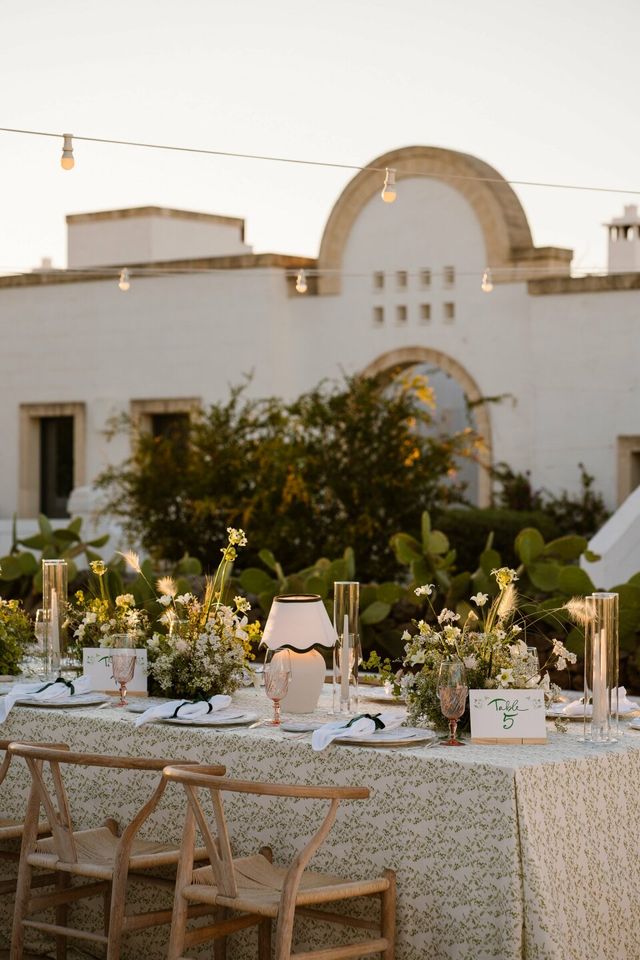
- 10 AM to 12 PM: florist arrives for setup (ceremony arrangements, centerpieces, installations). This is the most time-intensive setup
- 11 AM to 1 PM: caterer begins kitchen setup, prep work, and cold storage organization
- 1 to 2 PM: DJ/band begins sound and lighting setup. Sound check should happen before guests arrive
- 2 to 3 PM: cake/dessert delivery and display setup
- 2:30 to 3 PM: photographer and videographer arrive for detail shots of the fully styled venue before guests arrive
- 3 PM: hair and makeup team finishes (started at the couple's getting-ready location hours earlier)
- 3:30 PM: officiant arrives for ceremony walkthrough
- 4:30 PM: guests begin arriving. All vendor setup should be complete 30 minutes before first guest arrival
Managing Vendor Interactions During the Event
Communication flow
On the wedding day, the communication chain should be:
- Vendor has a question → calls/texts the coordinator. Never the couple
- Coordinator makes a decision or escalates to the couple only for major changes (timeline shift of 30+ minutes, a vendor not showing up, a significant weather change)
- The couple should not know about minor issues that the coordinator resolved: the florist was 20 minutes late but caught up, the cake had a small crack that was repaired, the DJ's backup speaker had to be swapped in. These are coordinator problems, not couple problems
Key coordination moments during the reception
- Dinner timing: the caterer, DJ, and coordinator align on when guests are seated, when the first course is served, and when speeches happen between courses. See our timeline template
- Golden hour sneak-away: the coordinator cues the photographer and videographer 10 minutes before golden hour, ensures the DJ keeps music playing, and guides the couple out and back without guests noticing their absence
- Speech sequence: the coordinator confirms the speech order with the DJ and ensures each speaker knows when they are up. This prevents the awkward "who goes next?" pause
- Cake timing: the coordinator aligns cake cutting with the photographer, videographer, and DJ so all three are in position before the moment happens
- Last dance and exit: the coordinator cues the DJ for the last song, ensures the photographer and videographer are in position for the exit, and organizes any sparkler or send-off logistics
Vendor Meals and Breaks
Vendors working 6+ hours need a meal. This is both practical and considerate:
- Feed your vendors. A vendor meal does not need to be the same plated dinner as guests. Most vendors are happy with a simpler meal (pasta, sandwiches, salad) served in a break area. Many caterers offer a reduced vendor meal rate ($15 to $30/person vs. the guest rate)
- Schedule break time: photographers, videographers, and DJs need 20 to 30 minutes to eat during the event. The ideal window: during the seated dinner when the couple is eating and no key moments are happening
- Provide water throughout the day: especially for outdoor weddings in warm weather. A vendor who is dehydrated and exhausted by hour 8 cannot perform their best. A cooler with water bottles in the vendor staging area costs $10 and prevents a performance decline
- Acknowledge them as people, not service providers: a quick "thank you, the room looks incredible" to the florist, a "you are doing an amazing job" to the DJ during the reception takes 10 seconds and makes the vendor feel valued. Valued vendors go above and beyond
Post-Wedding Vendor Follow-Up
The vendor relationship does not end when the last guest leaves:
- Within 1 week: send a brief thank-you email to every vendor. Two sentences is sufficient: "Thank you for making our wedding day so special. We loved [specific thing they did]."
- Within 2 to 4 weeks: leave reviews for your top vendors on Google, The Knot, and WeddingWire. Specific, detailed reviews help vendors more than generic praise. Mention what made them exceptional
- Within 1 to 3 months: once you receive your photos and video, tag vendors on social media with specific images of their work. A tagged photo of the floral arrangements reaches the florist's target audience directly
- Ongoing: when friends get engaged, recommend your best vendors by name. Word-of-mouth referrals are the most valuable marketing a vendor can receive. Share vendor profiles from our vendor directory
Expert Tip: "The best-coordinated wedding I ever attended had one thing that set it apart: every vendor had the same timeline document, every vendor had the coordinator's phone number, and every vendor knew exactly one rule: 'If you have a question, call the coordinator, not the couple.' That single rule transformed the day. The couple was never interrupted. Problems were solved invisibly. Transitions happened on time because the DJ, photographer, caterer, and coordinator were all working from the same page. That coordination document and that one rule cost nothing but 30 minutes of planning time. The result was a wedding that felt effortless, even though 12 vendors were executing a complex, synchronized production behind the scenes."
Sarah Glasbergen, Founder at ThePerfectWedding.com
Frequently Asked Questions
What if a vendor does not show up on the wedding day?
This is extremely rare with professional vendors but your coordinator should have a contingency plan. The vendor contract should specify a backup arrangement. Your coordinator should have a list of emergency replacements for critical vendors (photographer, DJ, caterer). If a non-critical vendor (photo booth, transportation) does not show, the coordinator adapts the timeline and the wedding continues smoothly.
Should all vendors meet before the wedding day?
A full vendor meeting is ideal but impractical for most weddings. At minimum, the coordinator should connect with every vendor individually via email or phone 2 weeks before the wedding. The vendors who MUST coordinate directly are the photographer and videographer (positioning), the DJ and coordinator (timeline cues), and the caterer and coordinator (meal timing).
How do we handle a vendor who is underperforming during the wedding?
The coordinator handles it, not the couple. If the DJ is playing inappropriate music, the coordinator speaks to them. If the bartender is slow, the coordinator addresses it with the bar manager. If the photographer is missing moments, the coordinator redirects them. The couple should never manage vendor performance on their wedding day. That is exactly what a coordinator is for.
More planning guides: 12-month checklist, Hidden costs, Day-of timeline, Photographer guide. Find coordinators and all vendor types on our vendor directory.


