Children at Your Wedding: Include and Entertain Kids
How to include and entertain children at your wedding: ceremony roles, kids tables, activities, childcare, food, and timing so parents can relax.

by Sarah Glasbergen on 30 June 2026
Web editor
In short
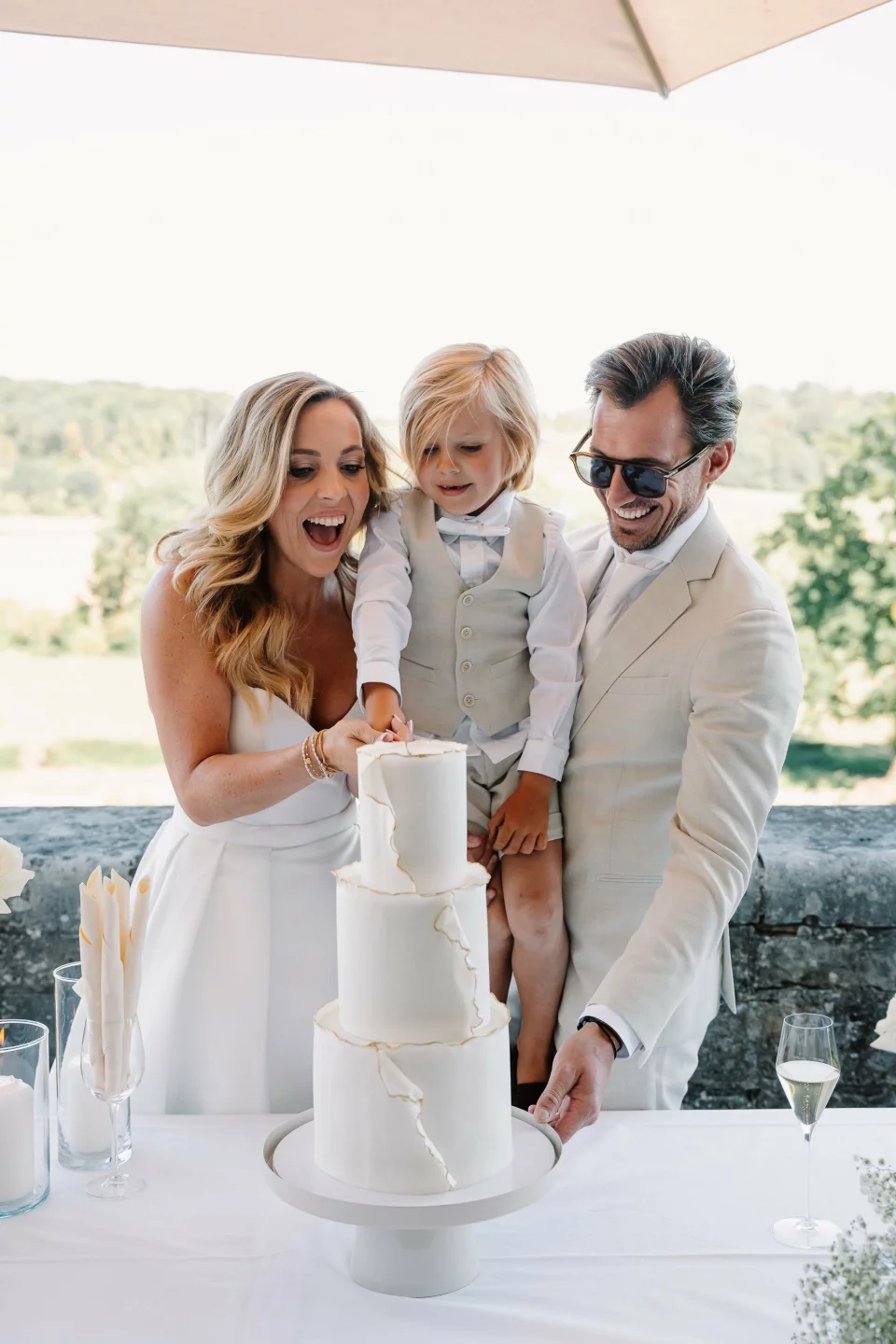
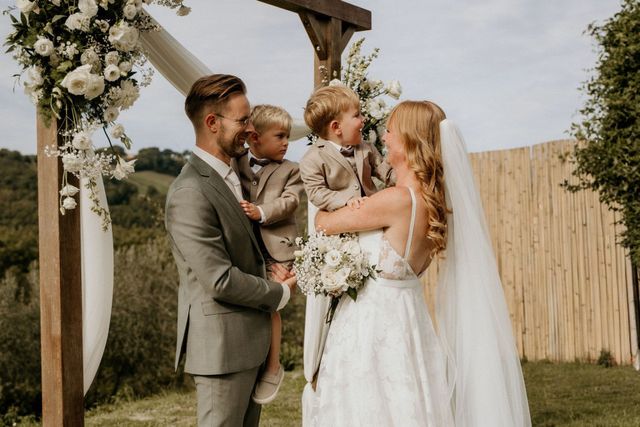
When you already have children, your wedding is not just the joining of two people, it is the joining of a family. Including your kids in the ceremony, through a role, a children's vow, or a family unity ritual, turns the day into a celebration everyone belongs to. The key is choosing involvement that fits each child's age and personality, and keeping it warm and low pressure.
Below we cover why to include your children, giving them a ceremony role, children's vows and family unity rituals, involving older kids, helping them feel secure, and navigating blended families with care.
Saying I do is one promise. Turning to a small face beside you and watching them realize they are part of it too is another entirely. When you marry as a family, the ceremony belongs to everyone standing in it.
Key Facts at a Glance
- Marrying with children means joining a family, not just a couple, and the ceremony is the natural place to honor that.
- A ceremony role gives kids a sense of belonging, from ring bearer or flower girl to carrying a sign or walking a parent down the aisle.
- Children's vows and family unity rituals, like a family medallion or a unity ceremony, include kids directly in the promises.
- Match involvement to age and temperament, since a shy child and an outgoing teen want very different roles.
- Keep it low pressure, because an unscripted, relaxed child usually creates the most memorable moment.
- 2026 couples personalize their ceremonies deeply, and family inclusion is a meaningful, growing part of that (Source: The Knot Worldwide 2026 Real Weddings Study).

Why include your children when you marry?
When you have children, your wedding marks a change for them too. Including them in the ceremony tells them, in front of everyone who matters, that this is their family being formed, not something happening to the adults around them. It is reassuring, joyful, and deeply bonding.
According to ThePerfectWedding.com's ceremony planning guidance, the goal is to celebrate the love in your family alongside the love between the two of you. Whether your children are toddlers or nearly grown, a thoughtful role helps them feel seen, secure, and part of the promise you are making.
Giving your children a role in the ceremony
A clear role is the simplest way to involve a child, and there are options for every age. Little ones can be a ring bearer or flower girl, carry a sign, or scatter petals, while older children can take on something with more responsibility.
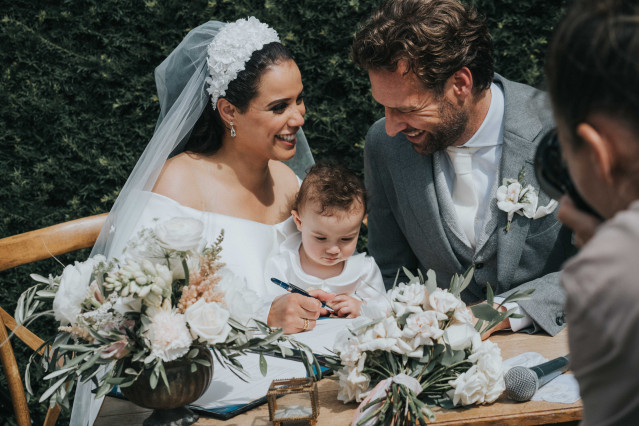
Match the role to the child rather than forcing a script. A rough guide:
| Age or temperament | Roles that tend to fit |
|---|---|
| Toddlers (under 4) | Walk with an adult, carry a small sign, or simply be held |
| Young children (4 to 8) | Ring bearer, flower girl, petal scattering, a short line to say |
| Older children (9 to 12) | A reading, handing out programs, a junior photographer role |
| Teens | A reading, a song or performance, an usher role, or standing up with you |
| Shy children of any age | A low key job out of the spotlight, like walking with a sibling |
One lovely option for marrying as a family is to have a child walk a parent down the aisle, or to walk in together as a family group. It visually says everything about what the day means.
Children's vows and a family unity ritual
Beyond a role, you can include children directly in the promises. Many couples add a short set of children's vows, where the two of you make a simple promise to the kids, and the children, if they want, say a few words or a yes in return. It is almost always the moment that brings the tissues out.
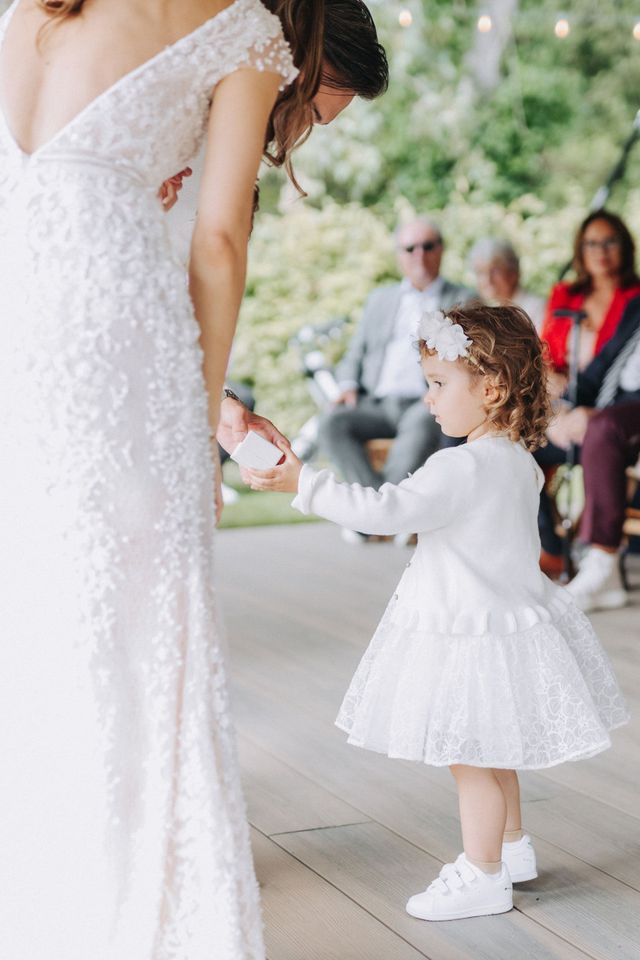
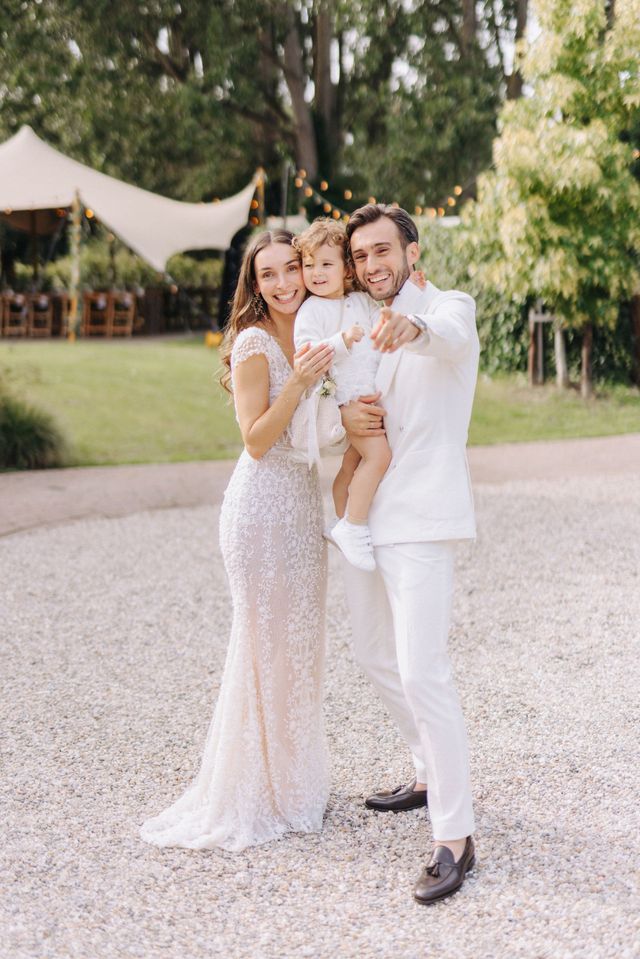
A family unity ritual makes the bond visible. Popular choices include a family medallion or necklace presented to each child, a unity ceremony such as a sand blend where every family member adds a layer, or a small keepsake certificate the children sign as a fun, non legal memento of the day. Pick one that suits your kids' ages and keep it short.
Involving older children and teens
Older children and teenagers often want a real contribution rather than a cute role, and they have the skills to deliver one. If your child enjoys writing or speaking, a short reading is meaningful. If they sing or play an instrument, inviting them to perform is a showstopping, personal touch.
Practical roles suit teens who would rather not be center stage. They can act as an usher, hand out programs, take candid photos as a junior photographer, or help younger siblings through their parts. Ask what they would feel comfortable with rather than assigning it, since a willing teen shines and a cornered one does not.
Helping your children feel secure on the day
A wedding is a big, busy, emotional day, and children feel that. The kindest thing you can do is prepare them. Talk through what will happen, walk their part at the rehearsal if there is one, and keep expectations gentle so nobody feels they have to perform.
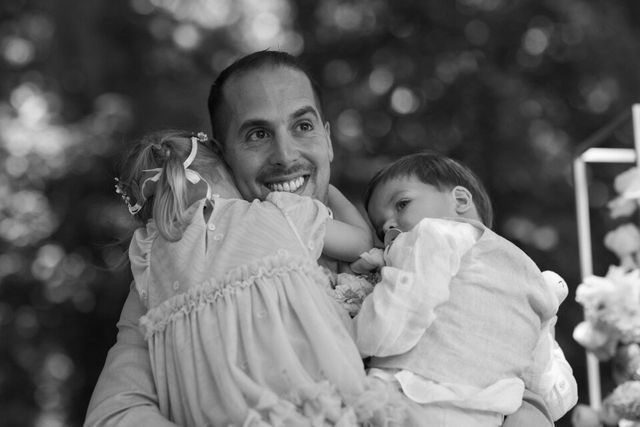
Assign a trusted adult, a grandparent, godparent, or sitter, to look after each young child during the ceremony so they can step away the moment they need to. A child who knows they can wriggle out, get a snack, or have a cuddle will be far more relaxed when their moment comes.
Blended families: navigating it with care
For blended families, the ceremony can carry extra emotional weight, and a little sensitivity goes a long way. Children may have complex feelings about a parent remarrying, so involve them in a way that feels inviting rather than obligatory, and check in with them ahead of time about what they would like.
Honor every child equally so no one feels like an add on, and be mindful of relationships with other households. A family unity ritual that includes all the children, step siblings included, can be a powerful symbol of the new family forming, but only if everyone genuinely wants to take part. Let the children set the pace.
Common mistakes to avoid
- Forcing a role. Match involvement to each child's age and temperament, and let willing kids shine rather than cornering shy ones.
- Over scripting. Keep parts short and relaxed. An unscripted child is usually the most charming moment of the day.
- No support person. Assign a trusted adult to each young child so they can step away when they need to.
- Skipping the prep. Talk children through their part in advance so the day feels exciting, not overwhelming.
- Treating children unequally. In blended families especially, involve every child evenly so no one feels left out.
A wedding with children is not the couple's day with the kids invited. It is the family's day, and the moment your child realizes they are being promised to as well is one you will never stop being grateful you made room for.
Sarah Glasbergen, Founder at ThePerfectWedding.com
Frequently asked questions about including children in your wedding
-
How can I include my children in the ceremony?
Give them a role that fits their age, from ring bearer or flower girl to a reading, a song, or walking a parent down the aisle. You can also add children's vows or a family unity ritual.
-
What are children's vows?
A short set of promises the couple makes to the children, often with the kids saying a few words or a yes in return. It is a moving way to include them directly in the commitment.
-
What is a family unity ritual?
A symbolic moment that includes the children, such as presenting a family medallion to each child or a unity ceremony like a sand blend where every family member adds a layer.
-
How do I choose the right role for my child?
Match it to their age and personality. Toddlers can walk with an adult, young children can be ring bearer or flower girl, and older kids can read, perform, or help. Always ask shy children what they are comfortable with.
-
How do I help my child feel secure on the wedding day?
Prepare them by talking through what will happen, walk their part at the rehearsal, keep expectations gentle, and assign a trusted adult to look after them so they can step away when needed.
-
How do I involve teenagers?
Offer a meaningful contribution like a reading, a song, an usher role, or candid photography. Ask what they would enjoy rather than assigning it, since a willing teen shines.
-
How do we handle children in a blended family?
Involve every child equally and invitingly rather than by obligation, check in with them in advance, and consider a unity ritual that includes all the children if they genuinely want to take part.
-
What if my child gets shy or upset during the ceremony?
That is completely normal and often becomes a treasured memory. A support person on hand means they can step away, and a relaxed, no pressure approach keeps the moment sweet rather than stressful.
Plan a ceremony your whole family will treasure
Including your children is one of the most meaningful choices you can make. Use the wedding planning checklist on ThePerfectWedding.com to organize your ceremony, your roles, and every detail that makes the day truly yours.
