Table Numbers, Escort Cards, and Place Cards
The difference between wedding table numbers, escort cards, and place cards, whether you need all three, creative ideas, etiquette, and mistakes to avoid.

by Sarah Glasbergen on 1 July 2026
Web editor
In short
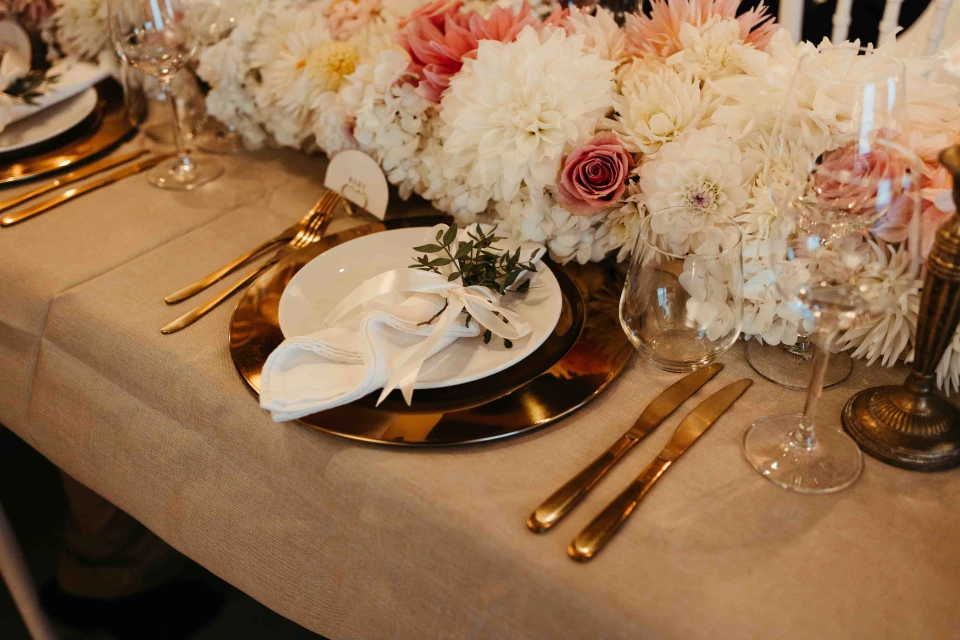
Table numbers, escort cards, and place cards do three different jobs: table numbers identify each table, escort cards tell guests which table they are at, and place cards mark a specific seat. Most weddings use table numbers plus one of the card types, and whether you need place cards depends on how formal and structured your dinner is. Get the system right and guests seat themselves smoothly, with no confused huddle at the door.
Below we cover the difference between the three, whether you need all of them, table number ideas, escort card displays, place card etiquette, how to set them out without errors, and mistakes to avoid.
Nothing stalls a reception faster than fifty guests holding plates and squinting for their names. A clear little system of numbers and cards is the invisible hand that guides everyone to their seat and keeps the night flowing.
Key Facts at a Glance
- Table numbers identify each table, so guests and staff can locate them easily.
- Escort cards tell a guest which table they are assigned to, usually displayed at the entrance.
- Place cards mark a specific seat at the table, for a more formal, fully assigned dinner.
- Most weddings need table numbers plus one card type, rarely all three at once.
- Place cards suit formal, plated dinners; casual receptions often skip them.
- 2026 couples treat these as decor, not just logistics, matching them to the overall style (Source: The Knot Worldwide 2026 Real Weddings Study).
It also helps to remember that these items are part of your paper and decor story, not just wayfinding. Coordinating their fonts, colors, and materials with your invitations and signage makes the whole reception feel considered, and it costs nothing extra to plan them together from the start.

Escort cards vs place cards vs table numbers: what is the difference?
These three items are constantly confused, but each has a distinct job. Understanding the difference is the key to deciding what your wedding actually needs and avoiding a redundant, cluttered setup.
| Item | What it does | Where it lives |
|---|---|---|
| Table number | Identifies each table | On the table itself |
| Escort card | Tells a guest their table | At the entrance or cocktail area |
| Place card | Marks a specific seat | At each seat on the table |
According to ThePerfectWedding.com's reception planning guidance, the simplest way to think about it is a two-step handoff: an escort card sends a guest to the right table, and a place card, if you use one, sends them to the right chair once they arrive.
Do you need all three?
Almost never. The right combination depends on how structured you want the dinner to be. For most weddings, table numbers plus escort cards are plenty: you assign tables but let guests choose their own seat once there.
Add place cards only if you are assigning specific seats, which suits formal plated dinners, large weddings, or when seating matters for family dynamics. A very casual reception with open seating may need only table numbers, or nothing at all. Choose the lightest system that keeps your night running smoothly.

Wedding table number ideas
Table numbers are a chance to reinforce your theme while doing a practical job. The only rule is legibility: guests should spot them from a few steps away, so keep them elevated or large enough to read across a busy room.
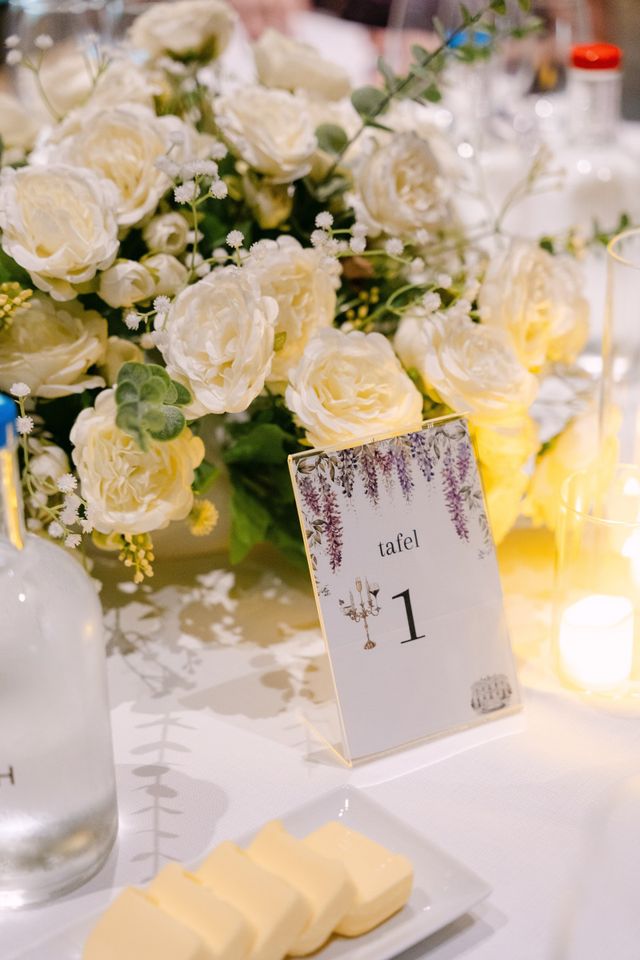
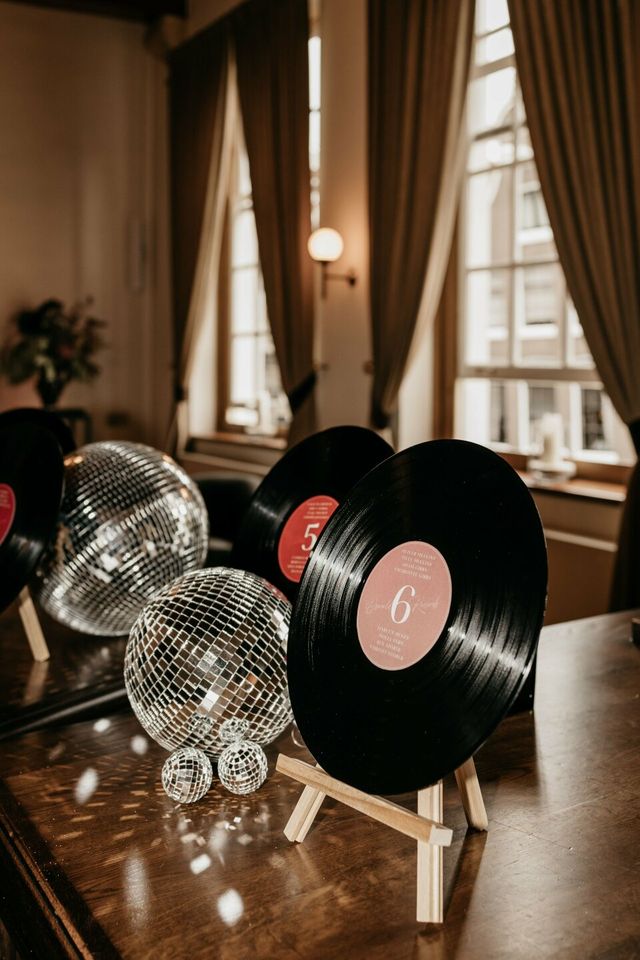
Creative approaches include framed numbers, calligraphy on acrylic or mirror, numbers worked into the florals, or replacing numbers with meaningful names, favorite places, songs, or years you have been together, with a small guide at the entrance so guests can find theirs.
Escort card display ideas
Escort cards are usually the first styled detail guests encounter after cocktail hour, so the display sets the tone. Arrange them alphabetically by last name so people find theirs quickly, and place the display where it creates flow rather than a bottleneck.
Popular displays include cards on a decorated table, clipped to a ribbon wall, tucked into a living plant or citrus, tied to small favors, or written on a single large seating chart that doubles as decor. Whatever the format, clarity comes first, since a beautiful display no one can read defeats the purpose.
Place card ideas and etiquette
Place cards mark each guest's seat and, at plated dinners, often carry a discreet meal indicator so servers know each guest's choice. Handwritten calligraphy feels elegant, but clean printed cards are just as correct and far easier at scale.
Etiquette wise, decide on a consistent name format, first and last name for formality, or first names for a relaxed feel, and use it throughout. If you are indicating meal choices, use a subtle symbol or color code rather than writing it out, and make sure your caterer knows the system in advance.
How to set them out without errors
The setup is where mistakes creep in, so build in checks. Finalize your seating chart late enough to include last-minute RSVP changes, then create your cards from that single master list to avoid mismatches. Proofread every name, since a misspelled card is the one guests always notice.
On the day, assign someone, your coordinator or a trusted helper, to lay out escort cards and place cards and to remove cards for no-shows so tables look intentional. Keep a copy of the master chart on hand to fix any gaps quickly.
How many table numbers and cards do you need?
Work backward from your final table count and guest list. You need one table number per table, one escort card per guest or per couple sharing an entry, and, if you use them, one place card per seat. Ordering a handful of blanks on top is smart, since names change and cards get damaged in transit.
Give yourself enough lead time to assemble everything calmly. Calligraphy and printing both take longer than couples expect, especially at scale, so build in a buffer before the wedding and do a full dry run of the display at home if you can. Seeing it laid out early catches spelling errors and gaps while there is still time to fix them.
Common mistakes to avoid
- Using all three when you do not need to. Table numbers plus one card type covers most weddings.
- Illegible table numbers. Keep them elevated and large enough to read across the room.
- Unsorted escort cards. Alphabetize by last name so guests find theirs fast and avoid a bottleneck.
- Misspelled names. Proofread every card against your master list. Guests always spot their own.
- No day-of owner. Assign someone to set out cards and pull no-shows so tables look polished.
Guests will never compliment your escort card display, but they will absolutely remember waiting ten minutes to figure out where to sit. Quiet, clear, and correct beats clever every time.
Sarah Glasbergen, Founder at ThePerfectWedding.com
Frequently asked questions about table numbers and place cards
-
What is the difference between escort cards and place cards?
An escort card tells a guest which table they are seated at and lives at the entrance, while a place card marks a specific seat and sits on the table itself.
-
Do I need table numbers, escort cards, and place cards?
Rarely all three. Most weddings use table numbers plus escort cards. Add place cards only for formal, fully assigned seating.
-
Do I need place cards?
Only if you are assigning specific seats, which suits formal plated dinners or larger weddings. Casual receptions with open seating often skip them.
-
What are creative table number ideas?
Framed numbers, calligraphy on acrylic or mirror, numbers in the florals, or replacing numbers with names, places, or years, with a guide at the entrance.
-
How should I arrange escort cards?
Alphabetically by last name so guests find theirs quickly, displayed where it creates flow rather than a bottleneck.
-
How do place cards show meal choices?
With a subtle symbol or color code rather than written words, so servers know each guest's selection. Tell your caterer the system in advance.
-
When should I finalize the cards?
Late enough to include last-minute RSVP changes, then create every card from one master seating list and proofread all names.
-
Who sets out the cards on the day?
Assign your coordinator or a trusted helper to lay them out and to remove cards for no-shows so the tables look intentional.
Style every detail down to the table
Table numbers and cards are an easy way to reinforce your look. Explore wedding decoration ideas on ThePerfectWedding.com for signage, styling, and the details that pull a reception together.


