How to Choose Your Wedding Party: Who to Ask
How to choose your wedding party: how many to include, who to ask, whether sides must match, how to ask and set expectations, and mistakes to avoid.

by Sarah Glasbergen on 1 July 2026
Web editor
In short
Choosing your wedding party means deciding who stands beside you on the day, and it is about trust and support, not obligation. There is no required number, no rule that sides must match or be split by gender, and no need to have a wedding party at all. Pick the people who genuinely support your relationship, be clear about the time and cost involved, and ask in a way that feels personal.
Below we cover what a wedding party is, how many people to include, who to ask, whether sides must match, how to ask and set expectations, going smaller or skipping it, and mistakes to avoid.
Your wedding party is not a popularity contest or a family duty roster. It is the small handful of people you want at your shoulder on the biggest day of your life. Choose for that, and the rest sorts itself out.
Key Facts at a Glance
- Your wedding party stands with you and supports you before and during the wedding.
- There is no required number, from zero to a dozen, whatever fits your relationships.
- Sides do not have to match in size or gender; mixed and uneven parties are common.
- Choose for trust and support, not obligation, seniority, or who asked you first.
- Be upfront about time and cost so anyone you ask can say yes with full information.
- 2026 couples build flexible, personal parties over rigid tradition (Source: The Knot Worldwide 2026 Real Weddings Study).
Above all, treat the choice with care, because who you ask, and how, can shape friendships and family ties well beyond the wedding itself. A little thought and honesty at this stage prevents hurt feelings later and sets the tone for a supportive, drama-free run-up to the day.

What is a wedding party and who is in it?
The wedding party is the group of people you choose to stand with you and support you through the wedding, from planning help to being by your side at the ceremony. Traditional roles include the maid or matron of honor and best man as the leads, plus bridesmaids and groomsmen, and sometimes junior attendants, flower children, and ring bearers.
According to ThePerfectWedding.com's wedding party guidance, those labels are a starting point, not a rulebook. Modern couples freely adapt roles and titles to fit their real relationships, so build the group around the people who matter rather than forcing them into traditional slots.v
How many people should be in your wedding party?
There is no correct number. Some couples have one person each, others have large groups, and many have none at all. The right size depends on how many people you genuinely want up there and the scale of your wedding, a huge party can overwhelm an intimate ceremony.
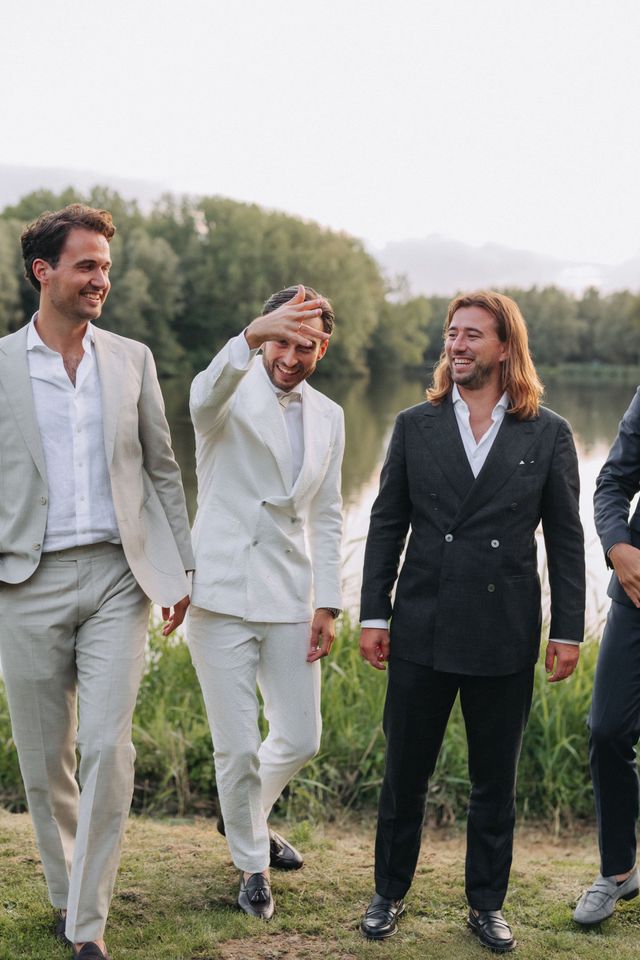
Remember that a bigger party means more people to coordinate, more opinions, and more cost for those involved. Choose the number that feels supportive rather than logistically heavy, and do not pad it just to fill a symmetrical lineup.
Who should you ask, and who you do not have to
Ask the people who genuinely support you and your relationship, the ones you trust and want beside you. That is the only real criterion. Longtime friends, siblings, and close family are common choices, but proximity and loyalty matter more than title or history.
You are not obligated to ask someone just because they asked you to be in theirs, because they are a relative, or because you were close years ago. It is also fine to include a friend in another way, a reading, a special role, without making them a formal attendant. Choose honestly, and be kind in how you handle those you do not ask.
Do the sides have to match?
No. The old convention of two equal, gender-split sides is long gone. Your party can be any mix of genders, uneven in size, and arranged however suits you. A bride can have a man of honor, a groom can have a best woman, and the numbers on each side do not need to line up.
If uneven sides bother you visually, there are easy fixes: have attendants walk in groups rather than pairs, or simply embrace the asymmetry, which almost no one notices once the day is underway. Prioritize the people over the picture.
How to ask and set expectations
Once you know who you want, ask in a way that feels personal, whether that is a heartfelt conversation or a small proposal gesture. What matters most is that the person feels genuinely wanted, not handed a task.
Crucially, be clear about what the role involves. Being in a wedding party can carry real costs, attire, travel, showers, and bachelor or bachelorette events, and a time commitment. Spell this out kindly when you ask so each person can say yes with full information, and never assume everyone can afford or attend everything.

What if you want a small party or none at all?
Skipping the wedding party or keeping it tiny is a completely valid, increasingly popular choice. Some couples name no attendants, some have a single person each, and some invite loved ones to contribute in other ways instead.
If you go this route, you can still honor important people with meaningful roles, a reading, a toast, walking you down the aisle, or witnessing the marriage license. The absence of a big lineup takes pressure off relationships and budgets while keeping your closest people involved.
When should you ask your wedding party?
Ask early, ideally soon after you are engaged and have a rough sense of your wedding's size and style. Your attendants often help with planning and pre-wedding events, so bringing them in early gives everyone time to prepare, budget, and clear their calendars for key dates.
Before you ask, have the basics in mind: roughly when and where the wedding is, and what you expect the role to involve. That lets you answer the practical questions people naturally have, and it signals that you have thought about the commitment you are requesting rather than asking on impulse.
Common mistakes to avoid
- Asking out of obligation. Choose for trust and support, not because someone is a relative or asked you first.
- Padding for symmetry. Do not add people just to make the sides match. Uneven and mixed is fine.
- Hiding the costs. Be upfront about attire, travel, and events so people can say yes with full information.
- Forcing traditional roles. Adapt titles and roles to your real relationships rather than the rulebook.
- Overlooking other ways to include people. A reading or special role honors someone without a formal spot.
The people standing next to you should be there because you cannot imagine the day without them, not because a chart said the sides should be even. Pick your people, and let the lineup look however it looks.
Sarah Glasbergen, Founder at ThePerfectWedding.com
Frequently asked questions about choosing your wedding party
-
How do I choose my wedding party?
Choose the people who genuinely support you and your relationship and whom you trust and want beside you. Support matters more than title, seniority, or history.
-
How many bridesmaids and groomsmen should I have?
There is no correct number, from none to a dozen. Pick how many you truly want up there, keeping the scale in proportion to your wedding.
-
Do the two sides have to be equal?
No. Sides do not need to match in size or gender. Uneven and mixed-gender parties are common and easily handled in how attendants walk in.
-
Do I have to ask someone because I was in their wedding?
No. You are not obligated to ask someone back, or to include a relative or an old friend. Choose honestly, and be kind to those you do not ask.
-
Can I have a mixed-gender wedding party?
Absolutely. A bride can have a man of honor, a groom a best woman, and attendants of any gender on either side.
-
How do I ask someone to be in my wedding party?
Ask in a personal way, a heartfelt talk or a small proposal, so they feel genuinely wanted, and be clear about the time and cost the role involves.
-
Is it okay not to have a wedding party?
Yes, and it is increasingly popular. You can skip it or keep it tiny and still honor loved ones with roles like a reading, a toast, or witnessing the license.
-
How do I handle the costs for my wedding party?
Be upfront about attire, travel, and events when you ask, and never assume everyone can afford or attend everything. Flexibility keeps it kind.
Plan every role with confidence
Your wedding party is just one of many decisions ahead. Use the wedding planning checklist on ThePerfectWedding.com to keep every person, task, and detail on track from yes to I do.


