Wedding Hairstyles That Work Perfectly with a Veil
Wedding hairstyles with veil: best styles for cathedral, fingertip, birdcage, and mantilla veils. Securing and removal tips.

by Sarah Glasbergen on 9 April 2026
Web editor
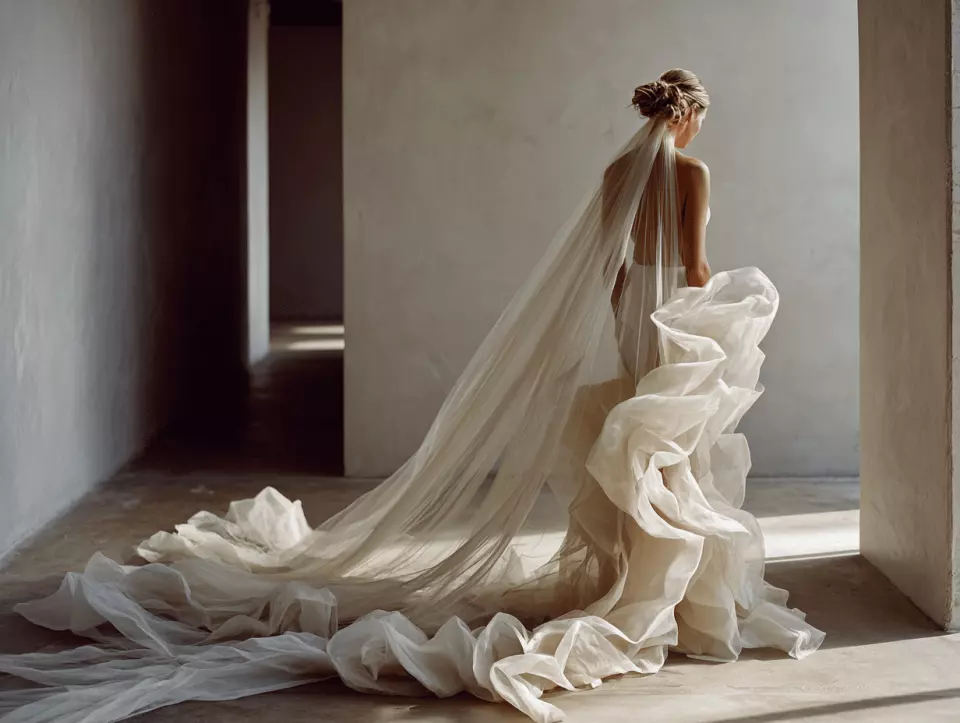
TLDR: A veil changes everything about your bridal hairstyle: where it sits, how it is anchored, and which styles showcase it best. Whether you are wearing a cathedral-length veil, a fingertip veil, a blusher, or a birdcage, your hairstyle needs to be planned with the veil in mind from the very first trial. ThePerfectWedding.com's beauty experts explain which hairstyles pair best with each veil type, how to ensure yours stays secure from the aisle to the dance floor, and how to plan for the veil-off moment at the reception.
Key Facts at a Glance
- 60% of brides still choose to wear a veil on their wedding day (Source: The Knot, 2025)
- The most popular veil length: fingertip, which falls to the bride's fingertips when arms are at her sides (Source: WeddingWire)
- Veils are attached with a comb, clip, or pins that your hairstylist integrates into the finished style (Source: Brides.com)
- Always bring your veil to your hair trial so your stylist can plan anchor points and test security (Source: Zola)
- Browse all bridal hair on our bridal hairstyles page on ThePerfectWedding.com
Best Hairstyles for Each Veil Type

Cathedral veil (floor-length or longer)
A cathedral veil is dramatic, formal, and makes a statement. The best hairstyles are low buns, low chignons, and romantic low updos. The veil comb sits just above the bun at the mid-back of the head, and the long fabric cascades down without competing with or covering the hairstyle. Avoid very high updos with a cathedral veil because the weight of the fabric can pull at the style over hours. See our updo guide for low bun variations.

Fingertip veil
The most versatile veil length, and the one that works with nearly every hairstyle. Updos, half-up styles, hair worn down, and braids all pair beautifully. The comb typically sits at the crown of the head. A fingertip veil with a romantic low bun is the most classic bridal combination. With half-up, half-down hair, the veil drapes over the loose bottom section for a layered, dimensional effect.

Blusher veil (face-covering)
A blusher is a short, single-layer veil that covers the face during the walk down the aisle and is flipped back for the ceremony. It sits at the very top of the head and works best with hairstyles that have volume at the crown: a textured updo, a voluminous half-up style, or a high bun. The blusher needs something to sit on, so flat, sleek styles do not work as well.

Birdcage veil
A short, vintage-inspired net that covers just the eyes or extends to the chin. Birdcage veils pair best with sleek, polished, retro hairstyles: a structured chignon, vintage finger waves, a sleek bob, or a polished half-up with smooth waves. The birdcage sits close to the face, so the hairstyle should be swept back from the forehead to avoid visual clutter.

Mantilla veil (lace-edged, no comb)
A mantilla drapes directly over the head without a comb, held in place by pins or its own weight. It works best with a center part and smooth, simple hair: a low bun, a center-parted blowout, or sleek half-up waves. The lace edge of the mantilla frames the face, so the hairstyle should be understated to let the veil be the star.
How to Secure a Veil in Different Hairstyles

In an updo
The veil comb slides directly into the bun or twist, anchored with extra bobby pins crossing over the comb teeth. This is the most secure attachment method. Your stylist should build the updo with the comb insertion point in mind, leaving a firm anchor spot that does not disrupt the visual shape of the updo.

In a half-up style
The comb tucks into the pinned section at the crown, just above where the top section is secured. The veil then drapes over the flowing bottom section. This creates a beautiful layered effect. Your stylist needs to make the pinned section firm enough to support the veil weight.

In hair worn down
With no updo or pins to anchor to, the veil comb is secured with bobby pins placed in a criss-cross pattern around the comb at the crown of the head. Teasing the hair at the crown first creates grip. This is the least naturally secure method, so use extra pins and strong-hold spray. A stylist experienced with veil placement is essential.
In braided hair
The veil comb tucks under or above the braid, depending on the braid position. Crown braids are ideal because the braid itself creates a natural shelf for the comb to rest against. The texture of braided hair actually grips the comb better than smooth hair, making braids one of the most secure bases for a veil.
Planning for the Veil-Off Moment
Most brides remove their veil after the ceremony, either during cocktail hour or before the reception entrance. Your hairstyle should be designed to look complete and beautiful both WITH and WITHOUT the veil. This means the back of the hairstyle needs to look finished on its own, not like something is missing when the veil comes off.
Designate a veil person. Your maid of honor, coordinator, or a trusted bridesmaid should know how to remove the veil without disturbing the hairstyle. Practice this at the hair trial. The veil person slides the comb out gently, removes any extra pins, and does a quick touch-up with a comb and spray.
Some brides swap the veil for an accessory. After removing the veil for the reception, add a jeweled comb, a hair vine, or fresh flowers in the same spot. This gives you two distinct looks: a veiled ceremony bride and a sparkly reception bride. See our hair accessories guide for ideas.
<b>Expert Tip:</b> "The number one veil disaster I hear about: the bride bought the veil after the hair trial and it did not work with the hairstyle. Always choose your veil before your hair trial, or at least bring a similar test veil to practice with. Your stylist needs to build the hairstyle around the veil placement, not the other way around. And practice the removal at the trial too. Your MOH needs to learn how to take it out without dismantling your hair."
Sarah Glasbergen, Founder at ThePerfectWedding.com
Frequently Asked Questions
Should I choose my hairstyle or my veil first?
Choose your veil first, or at least narrow down the type (cathedral, fingertip, birdcage). The veil determines where the comb sits, how much weight the hairstyle needs to support, and which styles are compatible. Bring the veil (or a similar stand-in) to every hair trial appointment.
Can I wear a veil with hair completely down?
Yes, but it requires more secure pinning since there is no updo to anchor to. A fingertip veil with Hollywood waves is a classic, beautiful combination. Your stylist will tease and pin at the crown to create a grip point. Use extra bobby pins and strong-hold spray.
Will the veil ruin my hairstyle when I remove it?
Not if your stylist plans for it. The comb insertion point should be designed for easy removal without disturbing the surrounding hair. Practice removal at your trial. A few extra pins and a mini hairspray in your emergency kit handle any post-removal touch-ups.
Can I wear flowers AND a veil?
Yes. The flowers go on one side or around the base of the updo, and the veil comb goes at the crown. They occupy different zones. A few small blooms with a fingertip veil is one of the most romantic combinations. Coordinate placement with your stylist at the trial.
What if I decide not to wear a veil?
Many brides skip the veil entirely. Statement hair accessories (jeweled combs, hair vines, crystal headbands), fresh flowers, or simply a beautifully styled hairstyle with no adornment are all gorgeous alternatives. There is no rule that says you need a veil.
Plan Your Veiled Look on ThePerfectWedding.com
Browse all bridal hairstyles on our bridal hairstyles page. Find the perfect base style: updos, half-up, braided, or worn down. Add detail with flowers or accessories. For shorter hair with veils, see our short hair guide and bob hairstyles. Coordinate your bridal party with our bridesmaid hairstyles guide. Match your dress on our wedding dress page. Find stylists on our vendor directory.


