Tent Wedding Planning Guide: Types, Costs, Layouts, and the Logistics Nobody Warns You About
Tent wedding guide: pole vs frame vs sailcloth vs clear-top, real costs, flooring, climate control, and layout planning.

by Sarah Glasbergen on 19 June 2026
Web editor
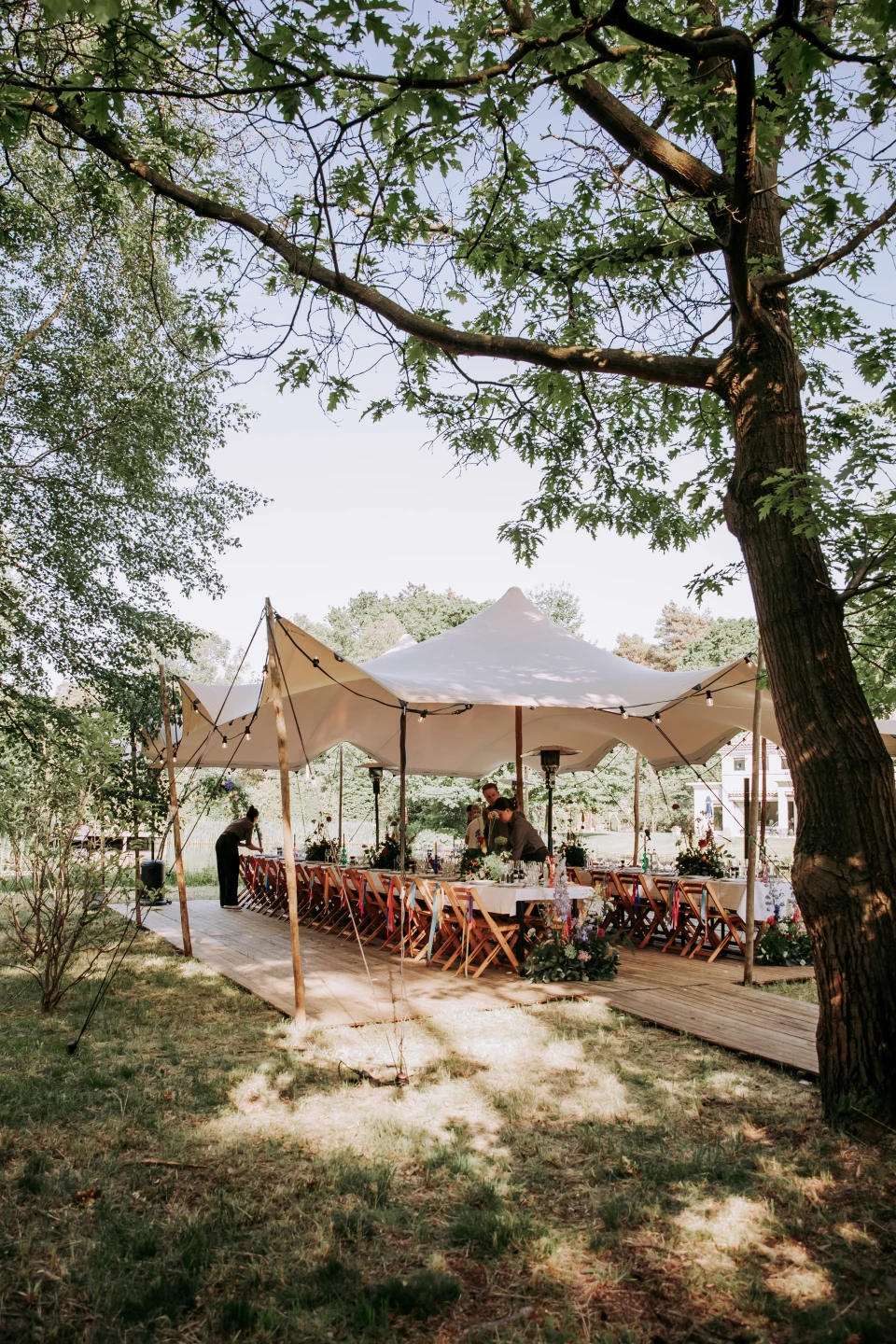
TLDR: A tent wedding creates a private, customizable outdoor event space on virtually any flat piece of ground, from a family estate to a rented field to your own backyard. But tents are more expensive, more complex, and more logistically demanding than most couples anticipate. The tent itself is just the beginning: you also need flooring, lighting, climate control, power, a restroom solution, and a weather backup for the backup. ThePerfectWedding.com's event experts break down every tent type, the real costs, the timeline for planning, and the specific logistics that turn a tent from a Pinterest dream into a functioning event space.
Key Facts at a Glance
- Basic tent rental (frame or pole tent, no extras): $1,000 to $5,000 for 100 to 150 guests (Source: The Knot, 2025)
- Complete tent package (tent + flooring + lighting + sidewalls + climate): $5,000 to $20,000+ depending on size and style (Source: WeddingWire)
- Clear-top (transparent) tents cost 30% to 50% more than standard white tents (Source: Brides.com)
- Tent setup requires flat, accessible ground and typically 1 to 2 days of advance installation time (Source: Zola)
- See our hidden wedding costs guide for the full list of tent add-on expenses

Tent Types and When to Use Each
Pole tents
The classic peaked-top tent supported by center poles and anchored with stakes. Pole tents create a dramatic, cathedral-like interior with high center peaks and sweeping fabric lines. They are the most affordable option for large events and look beautiful with hanging chandeliers, string lights, and fabric draping that follow the natural tent lines. The tradeoff: center poles take up floor space and affect table placement. A 60-by-90-foot pole tent for 150 guests may have 2 to 4 center poles that you must design around, placing them between tables or using them as decorative anchors wrapped in greenery or fabric. Pole tents require staking into the ground, so they cannot be installed on concrete, asphalt, or hard surfaces without weighted anchors (which add cost). They are ideal for grass lawns, fields, and backyard properties with soft ground.
Frame tents
Supported by an aluminum frame structure with no center poles. The entire interior is open, unobstructed floor space, which makes layout planning dramatically easier and more flexible. Frame tents can be installed on any surface: grass, concrete, pavement, decks, and even rooftops (with engineering approval). They handle sidewalls, flooring, and climate control attachments better than pole tents. The tradeoff: frame tents cost 20% to 40% more than pole tents of equivalent size, and they have a flatter, less dramatic roofline. For weddings where table layout flexibility and surface versatility matter more than the soaring peaked aesthetic, frame tents are the practical choice.
Sailcloth tents
A premium hybrid: translucent sailcloth fabric on a wooden pole structure. Sailcloth tents combine the dramatic peaked shape of pole tents with a luminous, glowing quality as natural light filters through the translucent fabric during the day and lighting creates a warm glow from inside at night. They are the most aesthetically striking tent option and the most popular for high-end outdoor weddings, especially at vineyard and estate properties. The tradeoff: sailcloth tents are the most expensive option (40% to 70% more than standard pole tents), they require experienced installation crews, and the translucent fabric provides less rain protection than opaque alternatives. Light rain creates a beautiful patter effect. Heavy rain can leak at seams if the tent is not premium quality.

Clear-top tents
Transparent vinyl panels replace the traditional fabric roof, creating an open-air feeling with weather protection. Clear-top tents are spectacular for evening events because guests can see the stars, the sunset, and the sky while remaining protected from wind and rain. Hanging chandeliers, string lights, and greenery installations are visible from both inside and outside, creating dramatic visual impact. The tradeoffs: clear-top tents are expensive (30% to 50% premium over standard tents), they create a greenhouse effect in warm weather (requiring significant climate control), they show dirt and water spots (requiring cleaning before the event), and they provide zero shade in daytime summer heat. Clear-top tents work best for evening events in moderate climates (spring and fall).
The Real Cost Breakdown
The tent is only 30% to 40% of the total tent cost
This is the most important sentence in this article. Couples budget for the tent rental and are shocked when the total invoice is 2 to 3 times higher. A $3,000 tent rental becomes $8,000 to $12,000 once you add the elements that make it a functioning event space. Here is the real breakdown for a 150-person tent wedding: tent rental ($3,000 to $6,000), flooring or subflooring ($1,500 to $5,000, essential for safety and comfort over grass), dance floor insert ($500 to $1,500), lighting including string lights, chandeliers, and uplighting ($800 to $3,000), sidewall panels for wind/rain protection ($500 to $1,500), heating or cooling depending on season ($500 to $2,500), power generator ($500 to $1,000), installation and teardown labor ($500 to $1,500), permits if required by your municipality ($100 to $500).
Total: $7,900 to $22,000 before you add tables, chairs, linens, catering, bar, restrooms, and all the other elements a tent venue does not include. Compare this honestly against an all-inclusive indoor venue using our venue comparison framework. See our hidden costs guide for the complete picture.
Flooring: the expense nobody expects
You cannot put dinner tables and chairs directly on grass. Uneven ground means wobbling tables, sinking chair legs, and tripping hazards for guests in heels. Even a "flat" lawn has enough variation to make a formal dinner uncomfortable. Subflooring options: plywood subfloor with carpet or vinyl overlay ($2 to $5 per square foot), interlocking modular flooring ($3 to $7 per square foot), or a dedicated dance floor insert in the center with bare ground or rugs elsewhere (cheapest option but uneven). For 2,000 square feet of flooring at $3/sq ft, budget $6,000. This single line item catches more couples off guard than any other tent expense.

Layout and Space Planning
How big a tent do you need
For a seated dinner with a dance floor, plan 15 to 20 square feet per guest under the tent. This accounts for dining tables, chairs, aisle space, a dance floor, DJ/band area, bar stations, and service corridors. For 150 guests: 2,250 to 3,000 sq ft minimum, which translates to a tent approximately 40-by-60 feet or 30-by-90 feet. Add 10% to 15% for a comfortable, uncrowded feel. Consult our venue capacity guide for detailed calculations. When working with a tent company, provide your guest count, desired layout (rounds vs. long tables), dance floor size, and bar station count, and they will recommend the appropriate tent dimensions.
Working around poles
If using a pole tent, map the pole locations before finalizing your table layout. Center poles are typically spaced 20 to 30 feet apart. Each pole creates a 3 to 4 foot diameter obstacle. Smart solutions: place poles between tables (not at table positions), wrap poles in greenery or fabric to make them decorative features, use poles as anchors for hanging installations (chandeliers, flower garlands, signage), or center the dance floor between poles. Request a pole-location diagram from the tent company before committing to a specific tent size.
Weather and Climate Inside the Tent
Summer heat
A tent in direct sun traps heat like a greenhouse. Interior temperatures can exceed outdoor temperatures by 10 to 20 degrees without ventilation. Solutions: industrial fans ($200 to $500 for a set), portable AC units ($1,000 to $3,000 for adequate cooling), open sidewalls for airflow (free but eliminates rain protection), and strategic tent placement under existing shade trees. Schedule the tent company to open sidewalls during setup and close them only if rain threatens. For summer tent weddings, climate control is not a luxury. It is a guest safety issue.
Fall and winter cold
Propane heaters ($500 to $2,000) can make a tent comfortable down to approximately 40 degrees outside temperature. Below that, the cost and logistics of heating a tent become impractical for most budgets. Enclosed sidewalls are essential to retain heat. Flooring with insulation reduces cold from the ground. Consider providing warm blankets or shawls at each seat as both a comfort measure and a decor element. For very cold conditions, an indoor venue with outdoor ceremony is more practical than a fully heated tent. See our cold weather wedding guide.
Rain protection
A properly installed tent with sidewalls protects against moderate rain. Heavy, wind-driven rain can enter through open sides and may overwhelm drainage around the tent perimeter. Ensure the tent company provides proper water runoff channels (gutters and drainage paths) that direct water away from the tent entrance and guest pathways. Puddles around the tent entrance are the fastest way to ruin the arrival experience. For rainy forecasts, add additional covered walkways from parking to the tent entrance. See our comprehensive rain plan guide.
Expert Tip: "The tent wedding mistake I see every season: couples visit the property on a beautiful sunny day, fall in love with the view, and book the tent. They never visit in the rain, they never visit at night, and they never ask about the ground conditions after three days of moisture. The same gorgeous lawn that was firm in May becomes a mud pit in October after a week of rain. The same field that looked flat turns out to have a 6-inch slope that sends every table wobbling. Visit the property in imperfect conditions. Walk the ground in different weather. Ask the landowner what happens to the soil when it rains for three days straight. The answer determines whether your tent wedding works or whether 150 guests are sinking into mud in their wedding attire."
Sarah Glasbergen, Founder at ThePerfectWedding.com

Frequently Asked Questions
How far in advance should we book a tent?
6 to 12 months for peak season (May to October). Tent rental companies have limited inventory, and popular tent sizes book out, especially in markets where outdoor weddings are common. Sailcloth and clear-top tents have even more limited availability. Book early and confirm the installation/teardown schedule at least 2 months before.
Can we use a tent on a public park or beach?
Usually yes, but permits are required. Parks departments have specific rules about tent sizes, staking methods (no ground stakes on some surfaces), installation windows, and teardown deadlines. Apply for permits at least 3 to 6 months before your event. Some parks prohibit tents entirely during certain seasons or in certain locations.
What happens if there is extreme weather during our tent wedding?
Tents protect against moderate rain and light wind but not severe weather. High winds (above 35 to 40 mph), thunderstorms with lightning, hail, or torrential rain can make a tent unsafe. Your tent company should provide a severe weather protocol. Have a genuine backup plan: a nearby indoor venue you can move guests to on short notice. See our weather planning guide.
Is a tent wedding more or less expensive than an indoor venue?
Almost always more expensive than an equivalent indoor venue when you calculate the true all-in cost. The tent rental is just the beginning. Add flooring, lighting, climate control, power, restrooms, all furniture and tableware rentals, catering (outside kitchen setup), and labor. For 150 guests, a complete tent wedding typically costs $8,000 to $22,000 for the tent infrastructure alone, before food, drink, and entertainment. An all-inclusive hotel at $200/person for 150 guests is $30,000 including most of those elements. Use our venue comparison framework to calculate honestly.
Do we need a separate tent for catering?
If there is no permanent kitchen on the property, yes. Caterers need a covered, powered workspace for food preparation, plating, and staging. A small 10-by-20-foot catering tent ($300 to $800) adjacent to the main tent is standard. The catering tent should be positioned with easy access to the main tent's service entrance but away from guest areas (generator noise, cooking smells, truck unloading). Ask your caterer about their specific space and power requirements before finalizing the tent layout.
Can we set up a tent ourselves to save money?
No. Tent installation is specialized, physically dangerous work that requires professional crews and equipment. Improperly installed tents collapse in wind, create fire hazards, and void any liability insurance. Always use a licensed, insured tent rental company with references. The installation cost is typically included in the rental fee or charged as a separate line item ($500 to $1,500). This is not a DIY opportunity.
More outdoor wedding planning on ThePerfectWedding.com: Sound guide, Lighting guide, Seating layouts, Hot weather tips, Cold weather guide, and more. See our weather backup plan guide and indoor vs outdoor comparison. Browse outdoor venue types: barn, vineyard, beach, and garden estate. Find venues on our venue directory.


