Outdoor Wedding Lighting Guide: From Golden Hour to Dance Floor, How to Light Every Moment
Outdoor wedding lighting guide: string lights, uplighting, candles, chandeliers, power logistics, and timing around sunset.

by Sarah Glasbergen on 26 June 2026
Web editor
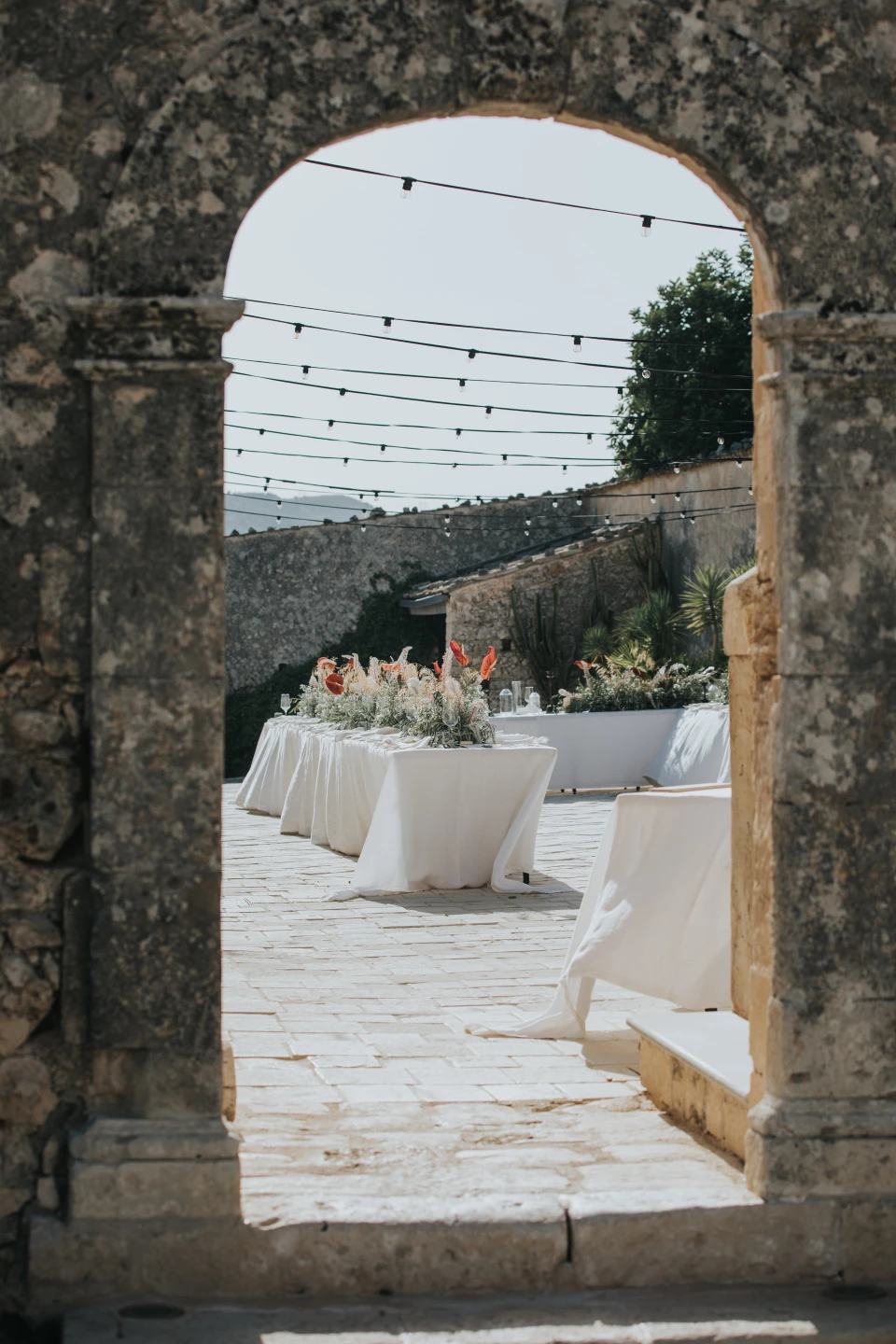
TLDR: Outdoor weddings have a natural lighting timeline that no indoor venue can match: afternoon sun, golden hour glow, sunset colors, twilight magic, and then darkness. The first four stages are free and breathtaking. The last stage, darkness, is where your lighting plan becomes the most important design element of the entire reception. Without intentional lighting, an outdoor evening reception goes from romantic sunset to "where is my table" in about 20 minutes. ThePerfectWedding.com's lighting and decor experts explain every option, the real costs, the timing considerations, and how to create an atmosphere that transitions seamlessly from day to night.
Key Facts at a Glance
- Professional outdoor wedding lighting: $500 to $5,000+ depending on scope, from basic string lights to full production design (Source: The Knot, 2025)
- String lights (bistro/cafe lights) are the #1 most popular outdoor wedding lighting element, used in over 70% of outdoor receptions (Source: WeddingWire)
- Sunset occurs at a specific, predictable time that you should design your entire timeline around (Source: Brides.com)
- Battery-powered and solar-powered options have improved dramatically, reducing the need for generator power in many cases (Source: Zola)
- See our wedding decor guide for coordination with your overall design vision

The Natural Light Timeline
Building your timeline around the sun
Look up the exact sunset time for your wedding date and location, then design your entire evening around it. This is not a suggestion. It is the single most impactful decision for outdoor wedding photography and atmosphere. The ideal outdoor wedding timeline: ceremony begins 90 minutes before sunset (beautiful afternoon light for the ceremony), cocktail hour spans the 60 minutes around sunset (golden hour light for guest mingling and couple photos), reception dinner begins at or just after sunset (dramatic sky colors as backdrop while there is still enough ambient light to see), and your artificial lighting takes over fully 30 to 45 minutes after sunset as true darkness falls. Every minute of this timeline is beautiful if you plan for it. Check sunset times at timeanddate.com for your specific date and coordinates, and share the sunset time with your photographer, DJ, and coordinator so everyone works to the same clock.
The 30-minute gap
Between sunset and full darkness is a 20 to 40 minute twilight period where the sky is still colorful but ambient light drops rapidly. This is when your artificial lighting must be on and working. If your string lights, uplighting, and table candles are not illuminated before sunset, you will experience a chaotic scramble in fading light. Have all lighting elements on and tested at least 30 minutes before sunset, even though they will not be visually necessary until later. It is better to have lights on "too early" than to have a 10-minute window of darkness while someone finds the extension cord.
Lighting Options by Type
String lights (bistro lights, cafe lights, Edison lights)
The workhorse of outdoor wedding lighting and the most universally flattering option. Warm-toned bulbs (2700K color temperature) strung overhead at 8 to 12 feet create a canopy of warm, soft light that makes skin tones glow, food look appetizing, and the entire space feel romantic and intentional. String lights work over dining areas, dance floors, walkways, and cocktail spaces. They can be strung between trees, between buildings, on poles, or across tent interiors. Cost: $300 to $1,500 for professional installation depending on the area covered. For a 40-by-60-foot reception area, plan for 400 to 600 feet of string lights arranged in parallel lines 3 to 4 feet apart. Use commercial-grade lights (not consumer Christmas lights, which are dimmer, less reliable, and not rated for sustained outdoor use). Warm white is universally preferred over cool white, which reads as harsh and clinical.
Uplighting
Colored LED lights placed on the ground, angled upward at trees, structures, tent poles, or architectural features. Uplighting transforms the vertical surfaces of your venue: tree trunks glow with color, tent poles become dramatic columns of light, stone walls develop depth and texture, and the overall atmosphere shifts from "outdoor dinner" to "designed event." Popular colors: amber/warm gold (universally flattering, romantic), blush pink (soft, romantic), sage green (natural, garden feel), and lavender (ethereal, dreamy). Cost: $50 to $100 per uplighting fixture, with most outdoor receptions needing 10 to 20 fixtures ($500 to $2,000 total). Battery-powered LED uplights have eliminated the need for running power cables to every light position, which simplifies installation significantly.
Candles and lanterns
Tabletop candles, pillar candles in hurricane glass, floating candles, and hanging lanterns create the warmest, most intimate lighting layer. Candles at table level illuminate faces and food from below while string lights illuminate from above, creating a multi-dimensional lighting environment that is deeply flattering. Real candles are most beautiful but may be restricted by your venue (fire risk near fabric, dry grass, or wooden structures) and are affected by wind. LED candles have improved dramatically and many are nearly indistinguishable from real flame at table distance. For outdoor use, always place real candles inside hurricane glass or lanterns to protect from wind. Budget: $200 to $800 for candles and holders across all reception tables.

Hanging installations (chandeliers, pendant lights, lanterns from trees)
Dramatic focal-point lighting suspended from tree branches, tent peaks, or freestanding structures. A crystal chandelier hanging from an oak tree over the sweetheart table. A cluster of paper lanterns above the dance floor. A row of pendant lights along a barn eave. These statement pieces create the "wow" moment in your lighting design and become centerpieces of photography. Cost: $200 to $2,000+ depending on the fixture and installation complexity. Hanging anything from trees requires a professional rigging assessment (branch strength, attachment method, power routing). Never hang lighting from branches without confirming load capacity. A falling chandelier is a safety emergency, not a decor disappointment.
Pathway and accent lighting
Solar stakes, LED pathway markers, luminaries (candles in bags), and ground-level accent lights along walkways, around the dance floor perimeter, and at transition points between spaces. Pathway lighting is a safety requirement, not just a design choice: guests walking from the reception area to restrooms, parking, or cocktail spaces in the dark need to see where they are going. Heels on gravel in the dark is an injury risk. Budget $100 to $500 for pathway lighting. Solar-powered stake lights ($2 to $5 each) are the easiest option: push them into the ground along pathways and they illuminate automatically at dusk.
Power and Logistics
Power sources for outdoor lighting
Every lighting element needs power, and outdoor venues rarely have sufficient electrical outlets. Options: generator (most common for large lighting installations, $500 to $1,000 rental), extension cords from the venue's existing outlets (only for small additions, and run cables under protective mats to prevent tripping hazards), battery-powered LED fixtures (eliminates power routing for uplights, candles, and accent lights, but batteries must be fresh and capacity confirmed for 5+ hours of continuous use), and solar-powered options (reliable for pathway lights and accent lighting, but insufficient for primary lighting like string lights and chandeliers). For most outdoor receptions with string lights, uplighting, and a DJ, a generator is the reliable solution. Position it at least 100 feet from the reception area to minimize noise. See our power and utilities guide for generator details.
Installation timeline
Professional lighting installation takes 3 to 8 hours depending on scope. String light canopies over large areas: 4 to 8 hours. Uplighting placement: 1 to 2 hours. Chandeliers and hanging installations: 2 to 4 hours. Pathway lighting: 1 to 2 hours. The lighting team needs access to the venue the day before or early morning of the event. Coordinate timing with tent installation (tent first, lights second), florist (lights before florals on any shared structures), and caterer (lights should be complete before kitchen setup begins). Create a vendor access schedule and share it with every vendor at least 2 weeks before the event.
Expert Tip: "The single best lighting investment for any outdoor evening wedding is a warm-tone string light canopy over the dining and dance area. For $500 to $1,000, you create an overhead ceiling of warm light that defines your event space, makes every photograph beautiful, and provides functional illumination for dinner and dancing. I have never seen a couple regret investing in string lights. I have seen many couples regret skipping them and ending up with a dark, flat, unflattering reception lit only by table candles and the DJ's colored disco lights. String lights first. Everything else second."
Sarah Glasbergen, Founder at ThePerfectWedding.com

Frequently Asked Questions
Can we do our own outdoor lighting to save money?
For simple elements like pathway lights, table candles, and small string light runs between two nearby anchor points, yes. For anything elevated (lights hung from trees, tent ceilings, or tall poles), anything requiring significant wiring, or anything that involves a generator connection, hire a professional. Improper electrical connections outdoors create fire and electrocution risks, especially when combined with moisture (dew, rain). The DIY threshold: if it requires a ladder or a power tool, hire someone.
How do we handle lighting if our venue has large trees?
Trees are the best natural lighting infrastructure you can get. String lights wrapped around trunks and woven through branches create an enchanted forest effect. Uplights at the base of trunks illuminating the canopy create dramatic vertical columns of light. Hanging lanterns or chandeliers from strong branches create focal points. Work with an arborist or experienced lighting company to identify which branches can safely support suspended lights and what attachment methods (straps, not nails or screws) protect the trees.
What is the best color temperature for outdoor wedding lights?
2700K (warm white/soft amber) for almost every situation. This color temperature matches candlelight, golden hour sun, and incandescent bulbs. It is universally flattering to every skin tone and creates the romantic, warm atmosphere that wedding photography thrives in. Avoid 4000K+ (cool white/daylight) which looks harsh, institutional, and unflattering in photographs. The one exception: dance floor effect lighting (colored wash, moving lights) can use any color for energy and fun, but ambient and dining lighting should always be warm.
Do we need a lighting designer or can our DJ handle it?
For basic uplighting and dance floor lights, most professional DJs handle it well. Many DJ companies offer uplighting packages ($300 to $800) as an add-on service. For elaborate designs involving string light canopies, chandelier installations, tree wrapping, and custom effects, hire a dedicated lighting designer or production company. The complexity threshold: if your lighting involves anything that requires rigging, scaffolding, or custom fabrication, you need a specialist, not a DJ with some extra lights in their van.
What happens to our lighting if it rains?
Professional outdoor lighting equipment is rated for wet conditions (IP65 or higher). String lights, uplights, and pathway lights designed for outdoor use function normally in rain. Consumer-grade lights and indoor fixtures used outdoors can short-circuit in wet conditions, creating safety hazards. Always confirm that your lighting company uses outdoor-rated equipment and that all electrical connections are protected from water. If a thunderstorm with lightning threatens, all lighting (and all outdoor activity) should be suspended until the storm passes. See our rain plan guide.
How long do battery-powered lights last?
Most professional battery-powered LED uplights run 8 to 12 hours on a full charge, which is more than sufficient for a 5-hour reception. LED candles run 100 to 200+ hours per battery set. Solar pathway lights charge during the day and illuminate for 6 to 10 hours after dark. For any battery-powered element, insert fresh batteries or fully charge units the day before the event, and bring spare batteries as backup. Test every battery unit before the event, because the one that dies is always the one in the most visible position.
More outdoor wedding planning on ThePerfectWedding.com: Tent weddings, Sound guide, Seating layouts, Hot weather tips, Cold weather guide, and more. See our weather backup plan guide and indoor vs outdoor comparison. Browse outdoor venue types: barn, vineyard, beach, and garden estate. Find venues on our venue directory.


