Outdoor Wedding Permits and Rules: What You Need, Where to Get It, and What Happens If You Skip It
Outdoor wedding permits: event permits, noise variances, alcohol licenses, fire permits, and HOA rules you need to know.

by Sarah Glasbergen on 23 June 2026
Web editor
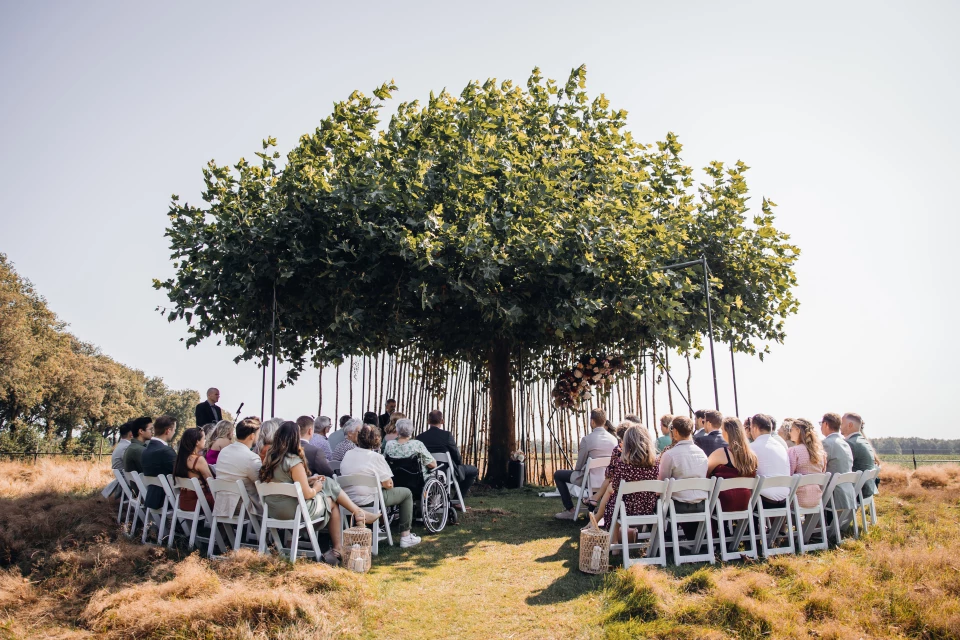
TLDR: An outdoor wedding on public land, a private property with neighbors, or a venue without standard event permits may require permits from your local municipality, fire department, health department, or parks department. Skipping required permits does not just risk a fine. It risks your wedding being shut down mid-ceremony by a code enforcement officer who does not care about your first dance. ThePerfectWedding.com's event experts explain which permits you might need, how to get them, the timeline, and the specific rules that vary by location but catch couples by surprise everywhere.
Key Facts at a Glance
- Event permits for public parks: $50 to $500 depending on municipality, guest count, and duration (Source: The Knot, 2025)
- Noise ordinances affect 75%+ of outdoor wedding venues, with typical cutoffs at 10 PM or 11 PM (Source: WeddingWire)
- Alcohol permits for outdoor events: $25 to $300 and may require 30 to 90 days advance application (Source: Brides.com)
- Fire permits may be required for candles, fire pits, sparklers, and fireworks at outdoor events (Source: Local fire marshal offices)
- See our venue contract guide for ensuring permits are addressed in your agreement

Common Permits for Outdoor Weddings
Special event permit
Required for events on public land (parks, beaches, public gardens) and sometimes for private events that exceed a guest count threshold (typically 50 to 100 guests). The special event permit ensures the municipality knows about your event, has approved the location and timeframe, and has coordinated with relevant departments (police, fire, public works). The application typically asks for: event date and time, expected guest count, site plan (where the ceremony, reception, parking, and restrooms will be), whether amplified sound will be used, whether alcohol will be served, and proof of event liability insurance. Apply 3 to 6 months in advance. Processing times vary from 2 weeks to 3 months. Do not wait until the month before your wedding to discover you need a permit that takes 60 days to process.
Noise permit or variance
If your event includes amplified music (DJ, band, or ceremony speakers) and your venue is near residential properties, you may need a noise variance or amplified sound permit.
Standard noise ordinances in most US municipalities restrict amplified outdoor sound after 10 PM or 11 PM. A noise variance allows you to extend music until midnight or later for a specific event. Cost: $50 to $200. Application window: 30 to 60 days before the event. Some municipalities grant these easily for one-time events. Others are strict and deny them regularly in residential areas. Research your specific location before assuming you can play music until midnight. If denied, your reception timeline must end by the ordinance cutoff. Plan accordingly with your DJ and your event timeline. Also read our outdoor sound guide for managing noise levels proactively.
Alcohol permit
Serving alcohol at an outdoor event on public land or at a venue without a liquor license typically requires a temporary alcohol permit or a special event liquor license.
Regulations vary dramatically by state and municipality. Some states allow one-day event permits for $25 to $50. Others require the caterer or bar service to hold their own license and serve under that license. A few jurisdictions prohibit outdoor alcohol service in public parks entirely. Determine the alcohol rules for your specific venue and municipality at least 4 to 6 months before the wedding. If using a vineyard or brewery venue with an existing liquor license, their license covers your event and no additional permit is needed.
Fire permit
Open flames outdoors, including candles without enclosed glass, fire pits, fire bowls, tiki torches, sparkler exits, and sky lanterns, may require a fire permit or may be prohibited entirely depending on local fire conditions, burn bans, and municipal regulations. California, Colorado, and other wildfire-prone states have strict regulations about outdoor flames that change seasonally based on fire danger levels. A fire permit ($25 to $100) typically requires you to demonstrate that fire extinguishers are on-site and accessible, that open flames are positioned safely away from vegetation and structures, and that a responsible person is monitoring flames throughout the event. Sparkler exits and sky lanterns are prohibited in many jurisdictions. Check before purchasing 150 sparklers.

Tent permit
Tents above a certain square footage (typically 200 to 400+ square feet) require a tent permit from the local building or fire department. The permit ensures the tent is fire-retardant certified, properly anchored, and does not obstruct emergency access. Your tent rental company should handle the permit application as part of their service, but confirm this explicitly. A tent erected without a required permit can be ordered removed by a fire marshal, even during your event. Cost: $50 to $200. Some tent companies include the permit fee in their rental price.
Private Property Rules
HOA and neighborhood restrictions
If your backyard or private property is in a homeowners association (HOA) community, the HOA may have rules about events, noise, parking, and temporary structures. Some HOAs limit guest count, prohibit commercial catering vehicles, restrict parking on neighborhood streets, or require advance notice to neighbors. Violating HOA rules can result in fines ranging from $100 to $1,000+ per infraction. Review your HOA covenants and contact the HOA board 3 to 6 months before the event to understand restrictions and obtain any required approvals.
Neighbor courtesy
Even without legal obligations, notifying immediate neighbors 2 to 4 weeks before an outdoor wedding is a smart investment in goodwill. A friendly note or personal visit explaining the date, approximate end time, and your contact information goes a long way. Offer an invitation to the ceremony or a piece of cake. Neighbors who feel informed and respected are far less likely to call in noise complaints than neighbors who are blindsided by 150 strangers, amplified music, and parking chaos in their quiet neighborhood. This is not legally required. It is strategically wise.
Consequences of Skipping Permits
What can actually happen
Consequences range from mildly inconvenient to wedding-ending. Fines: $100 to $2,500 per violation, issued on-site or after the fact. Noise complaint shutdown: police responding to a noise complaint will tell you to reduce volume immediately or end the event. They do not care about your first dance. Event shutdown: a code enforcement officer or fire marshal discovering an unpermitted tent, unpermitted alcohol service, or fire code violation can order the event to cease until the violation is corrected, which at an outdoor wedding may mean "the party is over." Liability exposure: if a guest is injured at an unpermitted event and sues, your insurance defense is weakened by the lack of proper permits. The financial risk of fines and shutdowns far exceeds the $50 to $500 cost of permits.

Expert Tip: "Call your local municipality's event permitting office 6 months before the wedding and say: 'I am hosting an outdoor wedding for [guest count] at [address] on [date] with amplified music, alcohol service, and a tent. What permits do I need?' They will tell you exactly what to file, how much it costs, and how long processing takes. This single phone call, which takes 15 minutes, prevents every permitting surprise. The information is free. The consequences of not asking are not."
Sarah Glasbergen, Founder at ThePerfectWedding.com
Frequently Asked Questions
Does the venue handle permits or do we?
It depends on the venue type. Established event venues (hotels, country clubs, dedicated event spaces) hold their own permits and licenses, so you need nothing additional. Blank-canvas venues (barns, lofts, private properties) typically require the couple (or their planner) to obtain event permits. The venue contract should specify who is responsible for permits. If it does not, ask explicitly during booking.
How long does permit processing take?
2 weeks to 3 months depending on municipality and permit type. Simple noise permits may process in 2 weeks. Special event permits for large gatherings on public land may require 60 to 90 days and a review by multiple departments (police, fire, parks, public works). Apply as early as the municipality allows. Late applications may be denied simply because the processing window is too short.
Can we get fined after the wedding?
Yes. Noise complaints filed the night of the event can result in fines mailed weeks later. HOA violations may be assessed at the next board meeting. Fire code violations observed by any inspector can generate citations after the fact. The permit is not just for the day of the event. It is your legal protection after the event as well.
Do we need a permit for a backyard wedding?
Possibly, depending on guest count and your municipality. Many cities exempt private property events under 50 guests from event permitting. Above that threshold, or if you are installing a tent, serving alcohol commercially (not just providing it as a host), or using amplified sound, permits may apply. Check your local regulations specifically. "It is my property, I can do what I want" is not a legal defense against noise ordinances, fire codes, or building permits.
More outdoor wedding planning on ThePerfectWedding.com: Tent weddings, Sound guide, Lighting guide, Seating layouts, Hot weather tips, Cold weather guide, and more. See our weather backup plan guide and indoor vs outdoor comparison. Browse outdoor venues: barn, vineyard, beach, and garden estate. Find venues on our venue directory.


