Wedding Wine Selection Guide: How to Choose, How Much to Buy, and What Your Guests Actually Want to Drink
Wedding wine guide: how to choose wines, quantities to order, food pairing, temperature tips, and avoiding common mistakes.

by Sarah Glasbergen on 24 June 2026
Web editor
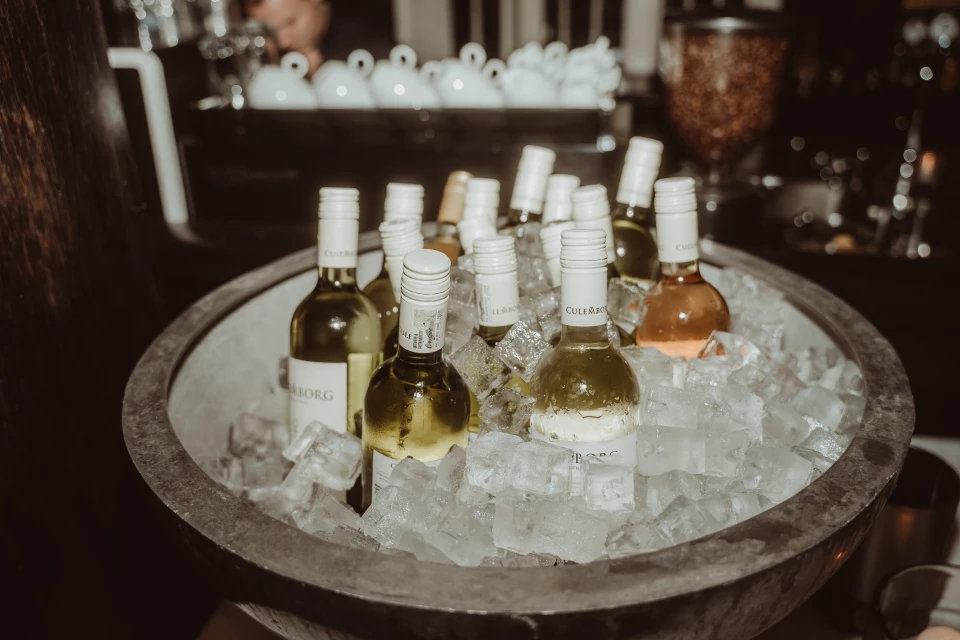
TLDR: Wine is the most consumed alcoholic beverage at US weddings, accounting for approximately 40% of all drinks served at the average reception. Yet most couples spend less than 10 minutes choosing their wine selection, defaulting to whatever the venue offers or grabbing familiar labels at the store. ThePerfectWedding.com's beverage experts explain how to choose wines that complement your menu, satisfy diverse palates, fit your budget, and avoid the two most common wine mistakes: running out of white and over-ordering red.
Key Facts at a Glance
- Wine accounts for 35% to 45% of total alcohol consumption at the average US wedding reception (Source: The Knot, 2025)
- Average wine cost per bottle for weddings: $10 to $25 at retail, $30 to $70 at venue markup (Source: WeddingWire)
- One standard wine bottle serves 5 glasses (750ml at 150ml/pour) (Source: Brides.com)
- White and rose wines outsell red at weddings by a 60/40 ratio in warm months and 50/50 in cool months (Source: Zola)
- See our bar cost guide for complete beverage budgeting and drinks per guest for exact quantities

How to Choose the Right Wines
Match wine to your menu, not to your personal taste
The wine should complement what your guests are eating, not just what you like drinking on a Friday night.
The basic pairing framework:
Lighter proteins (chicken, fish, vegetarian) pair with white wines and lighter reds.
Heavier proteins (beef, lamb, pork) pair with medium to full-bodied reds.
Rich, creamy dishes pair with full-bodied whites (Chardonnay) or medium reds.
Spicy food pairs with off-dry whites (Riesling, Gewurztraminer) or fruit-forward reds (Zinfandel).
If your menu has multiple entree options (which most weddings do), choose versatile wines that work across dishes rather than perfect pairings for one specific course. A Pinot Noir and a Sauvignon Blanc together cover virtually any wedding menu.
The safe, crowd-pleasing selection
For couples who want to choose well without becoming sommeliers, this selection satisfies 90%+ of wedding guests: one Sauvignon Blanc or Pinot Grigio (crisp, refreshing, universally liked, pairs with everything light), one Chardonnay (for guests who prefer a fuller white; choose unoaked or lightly oaked to avoid polarizing heavy-butter styles), one Pinot Noir (the most versatile red: light enough for warm weather, complex enough for red wine lovers, pairs with virtually any food), and optionally one Cabernet Sauvignon or Merlot (for guests who prefer a bolder red, especially with beef or lamb). This four-wine selection covers every palate and every menu combination. You do not need 8 wine options. You need 3 to 4 good ones.
The venue wine list vs. buying your own
Venue-provided wine is marked up 100% to 300% over retail. A $12 retail bottle becomes $30 to $45 on the venue's list. This markup is the venue's profit margin on beverage service and is standard across the industry. If the venue allows you to bring your own wine (BYOB), you save significantly but may pay a corkage fee ($15 to $30 per bottle opened). Calculate: retail cost per bottle + corkage versus venue list price per bottle. If the venue charges $40/bottle and you can buy the same wine at $12 retail with $20 corkage, your cost is $32/bottle BYOB versus $40 venue, saving $8/bottle. Across 50 bottles, that is $400 saved. For vineyard weddings, the venue's own wines are often competitively priced and required. See our bar cost breakdown for the full math.

How Much Wine to Order
The calculation
Assume 40% of your total drinks will be wine. For 150 guests over a 5-hour reception at 4 drinks per person average: 600 total drinks, 240 wine servings, divided by 5 glasses per bottle = 48 bottles (4 cases). Split by color: 60% white/rose (29 bottles) and 40% red (19 bottles) for warm-weather weddings. Adjust to 50/50 for cool-weather or evening-only receptions. Always round up and order 10% to 15% extra. Unopened bottles are returnable at most retailers within 30 days. Running out of wine at 9 PM is not returnable. See our detailed quantity calculator for precise numbers by guest count.
Adjustments for your specific crowd
Your guest list is not "average." If your crowd skews younger (under 35), expect more beer and cocktails, less wine. If it skews older (over 50), expect more wine, less beer. If you are hosting at a vineyard, wine consumption increases 15% to 20% because the setting encourages it. If your crowd includes many non-drinkers (see our non-alcoholic guide), reduce alcohol quantities proportionally. A guest list of 150 where 30 do not drink is effectively a 120-person bar calculation.
Wine Presentation and Service
Temperature matters more than label
A great wine served at the wrong temperature tastes mediocre. White wines: serve at 45 to 50 degrees F (refrigerator cold, not ice cold). Red wines: serve at 60 to 65 degrees F (cellar temperature, not room temperature; room temperature in a summer tent is 80+ degrees, which makes red wine taste flat and alcoholic). Rose: serve at 45 to 50 degrees F like whites. For outdoor receptions, keep white wines in ice baths and take red wines out of any warm storage area at least 30 minutes before service. A $10 wine served at the right temperature tastes better than a $30 wine served too warm.
Seated dinner service vs. bar service
For plated dinners, pre-pour one glass of white and one glass of red at each place setting before guests sit down. This eliminates the initial rush to the bar, gets wine in hands immediately, and creates a beautiful table presentation. Servers then circulate with bottles to refill throughout dinner. For buffet or cocktail-style receptions, wine is typically served from the bar alongside other beverages. Both approaches work; the pre-pour is more elegant and reduces bar congestion during the critical transition from cocktail hour to dinner.
Glassware
Standard wine glasses work for both red and white at weddings. You do not need separate Burgundy, Bordeaux, and white wine glasses. A single all-purpose wine glass (12 to 16 oz, with a slight taper at the rim) serves every wine beautifully. Rental cost: $0.50 to $1.50 per glass. Order 1.5 glasses per guest (guests misplace glasses and need replacements). For 150 guests: 225 wine glasses. For BYOB events, confirm whether the venue provides glassware or you need to rent it separately.
Expert Tip: "The wine mistake I see at 80% of weddings: too much red, not enough white. Couples buy 50/50 red and white because it seems balanced. But at weddings, especially warm-weather and daytime events, guests drink white and rose at a 60/40 ratio over red. By 9 PM, the white runs out while cases of red sit untouched. Worse, the remaining red is too warm because it has been sitting in a non-climate-controlled space for hours. Order 60% white/rose and 40% red. Your guests and your budget will thank you."
Sarah Glasbergen, Founder at ThePerfectWedding.com

Frequently Asked Questions
What is a good price point for wedding wine?
$10 to $18 per bottle at retail delivers excellent quality for wedding-volume purchasing. Below $8, quality drops noticeably and guests will notice. Above $25, the improvement in a party setting (noise, food, conversation) is minimal; those subtleties are lost outside of a quiet dinner. The sweet spot is $12 to $15/bottle retail, which buys a genuinely good wine that any sommelier would approve for event service.
Should we do a wine tasting before choosing?
If your venue or caterer offers a tasting, absolutely. Taste 2 to 3 options per color alongside your menu selections. If doing BYOB, visit a wine shop with knowledgeable staff, describe your menu and budget, and ask for recommendations in the $12 to $15 range. Most good wine shops will open bottles for tasting if you are purchasing 4+ cases.
Can we serve boxed wine at a wedding?
In the box: no. Decanted into glass carafes: potentially. Premium boxed wines (Bota Box, Black Box, etc.) are genuinely good wines at $20 to $25 per 3-liter box (equivalent to four 750ml bottles at $5 to $6/bottle). Decanted into glass carafes or decanters and served by a bartender, no guest will know or care about the original packaging. This is a legitimate cost-saving strategy for budget-conscious couples. The key: never display the box.
Should we serve champagne for the toast?
See our complete champagne guide. Short answer: a champagne toast is traditional but optional. If budget is tight, skip the separate champagne pour and toast with whatever guests are already drinking. Nobody has ever complained about toasting with wine, beer, or even water. The toast is about the words, not the glass.
How do we handle leftover wine?
Unopened bottles with receipt are returnable at most retailers. Opened bottles can be corked and taken home (your personal wine collection just expanded). Some couples donate unopened leftover alcohol to the wedding party or family members. Others use it for the farewell brunch the next morning. Do not leave it behind at the venue; clarify leftover alcohol policy in the contract.
More bar and drink guides on ThePerfectWedding.com: Open bar vs cash bar, Bar cost guide, Non-alcoholic drinks, Craft beer, Champagne guide, DIY bar setup, and more. See our signature cocktail ideas and catering cost guide. Find bar services on our vendor directory.


