Wedding Dietary Accommodations Guide: Allergies, Restrictions, and How to Feed Every Guest Well
Wedding dietary guide: collecting restrictions, accommodating allergies, vegan/GF/kosher/halal, menu design, and inclusive hosting.

by Sarah Glasbergen on 24 June 2026
Web editor
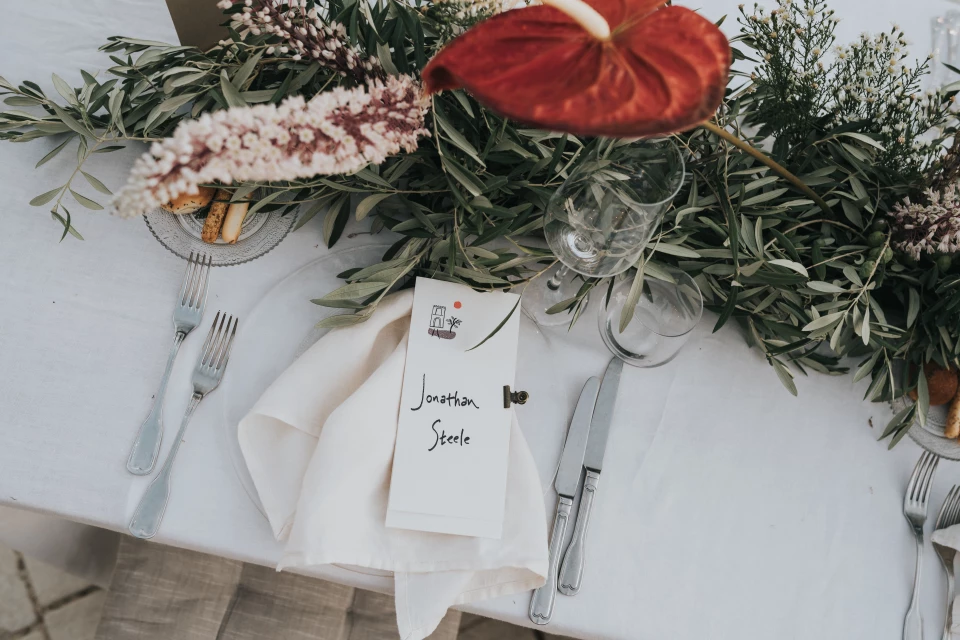
TLDR: At a 150-person wedding, you can expect 15 to 30 guests with some form of dietary restriction: vegetarian, vegan, gluten-free, dairy-free, nut allergies, shellfish allergies, kosher, halal, or medical dietary needs. Ignoring these guests means they either eat nothing, eat a sad plate of plain rice, or risk an allergic reaction. Accommodating them well means they enjoy the same celebratory meal as everyone else. ThePerfectWedding.com's catering experts explain how to collect dietary information, communicate with your caterer, design an inclusive menu, and handle the logistics without making restricted-diet guests feel like a burden.
Key Facts at a Glance
- 15% to 25% of US adults follow some form of dietary restriction or have a food allergy (Source: FDA, 2024)
- The "Big 9" allergens (milk, eggs, fish, shellfish, tree nuts, peanuts, wheat, soy, sesame) affect 32 million Americans (Source: FARE, 2025)
- Vegetarian and vegan guests now represent 5% to 10% of the average US wedding guest list (Source: The Knot, 2025)
- Gluten-free needs have increased 300% in the last decade across both celiac disease and gluten sensitivity (Source: WeddingWire)
- See our vegan wedding menu guide for plant-based menu planning and catering cost guide for budgeting
Collecting Dietary Information
When and how to ask
Include a dietary question on your RSVP card or wedding website RSVP form. The wording should be simple, open-ended, and non-judgmental: "Please let us know of any dietary restrictions or allergies so we can ensure you are well-fed: _______________" This allows guests to specify anything from "severe peanut allergy" to "vegetarian" to "kosher" to "no restrictions" without feeling like they are creating a problem. Collect this information at least 4 to 6 weeks before the wedding to give your caterer adequate planning time. For RSVP cards with limited space, direct guests to your wedding website where a text field allows detailed explanations.
Organize and share with your caterer
Create a simple spreadsheet listing every guest with a dietary need: guest name, table assignment, specific restriction, and severity (preference vs. medical necessity). Share this with your caterer at least 3 to 4 weeks before the wedding. The caterer needs to know the difference between "prefers not to eat gluten" (can be served the standard meal with a gluten-free modification) and "celiac disease" (requires a completely separate preparation to avoid cross-contamination). Severity determines the level of kitchen protocol required.

Common Dietary Needs and How to Accommodate
Vegetarian and vegan
The most common dietary need at modern weddings. The best approach is not to create a separate "vegetarian option" that is clearly an afterthought (a sad plate of roasted vegetables while everyone else eats filet mignon). Instead, design your menu so the vegetarian option is genuinely appealing: a mushroom risotto, an eggplant parmesan, a stuffed pepper, or a vegetable Wellington that omnivorous guests would choose voluntarily. For vegan guests, ensure the vegetarian option can be made without dairy and eggs, or offer a separate vegan entree.
Common pitfalls: butter in the vegetables, cream in the soup, cheese on the salad, and egg wash on the bread. Brief your caterer on the difference between vegetarian (no meat/fish) and vegan (no animal products whatsoever). See our complete vegan menu guide for detailed plant-based menu planning.
Gluten-free
Celiac disease (medical, requires strict avoidance) affects 1% of the population. Non-celiac gluten sensitivity (preference-level, varies in severity) affects an additional 6% to 10%. For celiac guests: the meal must be prepared in a separate area with clean equipment to avoid cross-contamination. Even traces of wheat flour (from shared cutting boards, fryers that cook breaded items, or sauces thickened with flour) can cause a medical reaction. For sensitivity-level guests: avoiding obvious gluten sources (bread, pasta, breaded items) is sufficient.
Menu solutions: naturally gluten-free proteins (grilled or roasted meat, fish, chicken without breading), rice or potato-based sides instead of pasta or bread, and gluten-free dessert options (flourless chocolate cake, fruit tart with a nut crust, macarons). Alert the caterer to the specific number of celiac vs. sensitivity guests so they can calibrate the preparation protocol.

Nut and peanut allergies
Nut allergies are among the most dangerous food allergies and can cause anaphylaxis (a life-threatening reaction) from trace exposure. If any guest has a severe nut allergy: eliminate nuts and peanuts from the entire menu (not just their plate), inform the caterer that the kitchen must be nut-free for this event, check every ingredient including sauces, dressings, and desserts (many contain hidden tree nuts or nut oils), alert the dessert provider (bakeries frequently use nuts in multiple products, creating cross-contamination risk), and ensure your day-of coordinator knows which guest has the allergy and has confirmed that an EpiPen is accessible. This is a medical safety issue, not a preference accommodation.
Kosher and halal
Kosher dietary laws (Jewish) and halal dietary laws (Islamic) have specific requirements that go beyond ingredient lists to include preparation methods, sourcing, and certification. For kosher guests: meat and dairy cannot be served together, all meat must be from kosher-certified sources, and in strict observance, all food must be prepared in a kosher kitchen with kosher supervision.
For halal guests: no pork or alcohol in any dish (including cooking wine), all meat must be from halal-certified sources, and preparation should not involve cross-contamination with non-halal items. For small numbers of kosher or halal guests (1 to 3), the most practical approach is ordering individual pre-prepared certified meals from a kosher or halal caterer, plated and sealed, that your caterer serves alongside the general menu. For larger groups, work with a caterer experienced in kosher or halal preparation.
Multiple allergies and complex needs
Some guests have multiple overlapping restrictions (vegan + gluten-free, or dairy-free + nut-free + shellfish allergy). For these guests, a direct conversation (email or phone) between the guest and your caterer is the most effective approach. Have the guest specify exactly what they can eat, and have the caterer confirm the specific meal they will prepare. This personalized approach takes 5 to 10 minutes per complex-needs guest and prevents day-of surprises.

Menu Design Strategy
Build an inclusive base menu
The smartest approach is designing your main menu to naturally accommodate the most common restrictions rather than treating every restriction as a separate special order. Choose sides that are naturally gluten-free, dairy-free, and vegan: roasted vegetables, rice, salad with vinaigrette (not creamy dressing), and fruit. Choose one protein that is allergen-friendly (grilled chicken or fish without breading, nut-free sauce). This means your base menu already works for 60% to 70% of restricted-diet guests without any modification. Only the most specific needs (celiac-level gluten-free, kosher, halal, severe allergies) require truly separate preparations.
Label everything at buffets and stations
If serving buffet or food stations, every dish must be labeled with: the dish name, a list of the major allergens it contains (or "contains: dairy, gluten" format), and dietary compatibility icons (V for vegetarian, VG for vegan, GF for gluten-free). This allows restricted-diet guests to self-navigate the buffet confidently without having to ask a server about every dish. Small printed tent cards ($0.50 each) or chalkboard labels ($1 to $2 each) at each dish position solve this simply and attractively.
Communicate with restricted-diet guests in advance
For guests with severe allergies or complex dietary needs, reach out directly 2 to 3 weeks before the wedding: "We have spoken with our caterer about your [nut allergy / celiac / kosher needs] and here is what we have planned for you: [specific meal description]. Does this work for you?" This 2-minute email accomplishes three things: the guest knows they are taken care of (reducing their anxiety about attending), you confirm the accommodation is correct (preventing day-of errors), and you demonstrate personal care that the guest will remember and appreciate.
Expert Tip: "The dietary accommodation that impresses me most at weddings is invisible. The best caterers serve restricted-diet meals that look identical to the standard plate but with appropriate substitutions. The celiac guest gets the same beautiful entree presentation with a gluten-free sauce. The vegan guest gets a dish that looks as elegant and intentional as the meat option. The nut-allergy guest gets the same dessert prepared in a nut-free environment. When every guest looks down at a beautiful plate and nobody can tell who has the special meal, that is inclusive hospitality done right. The worst version: the restricted-diet guest receives a clearly different, clearly inferior plate while everyone else enjoys the main menu. That signals 'you are an inconvenience,' which is the opposite of how a wedding should make anyone feel."
Sarah Glasbergen, Founder at ThePerfectWedding.com
Frequently Asked Questions
How much extra does dietary accommodation cost?
For most caterers, minor accommodations (vegetarian entree, gluten-free sides, dairy-free modifications) are included in the standard per-person price. Separate kosher or halal certified meals, if ordered from a specialty provider, cost $25 to $50 per meal. Complex custom preparations for severe allergies may add $5 to $15 per plate in additional labor. Total for a 150-guest wedding with typical dietary needs: $100 to $500 in additional accommodation costs, a tiny fraction of the overall catering budget.
What if a guest does not tell us about their dietary need in advance?
Brief your caterer to have 5 to 10 backup meals available: 3 to 5 vegetarian/vegan plates and 3 to 5 gluten-free plates. These cover the most common undisclosed needs. For severe allergies that were not communicated in advance, the safest approach is a simple grilled protein with steamed vegetables and rice, prepared with clean equipment. Your caterer should have a protocol for day-of dietary requests.
Should we ask about dietary needs on the RSVP or the wedding website?
Both, ideally. A brief line on the RSVP card ("Dietary restrictions: ___") captures the information from guests who do not visit the website. A more detailed form on the wedding website captures specifics from guests who want to explain their needs fully. The RSVP card is a prompt; the website form is where detailed information lives.
How do we handle a guest who claims to have an allergy but is actually just picky?
You do not investigate or challenge anyone's stated dietary need. It is not your job or your caterer's job to determine whether a "gluten intolerance" is medically diagnosed or a personal preference. Treat every stated need as legitimate and accommodate it without judgment. The cost of accommodating a preference is negligible. The cost of dismissing a genuine allergy is potentially catastrophic.
Can we accommodate every possible dietary restriction?
You can accommodate every restriction that a guest communicates to you in advance. You cannot anticipate needs that are not disclosed. Your responsibility is to ask (on the RSVP), to communicate the information to the caterer, and to follow up with guests who have complex needs. If a guest has a need they did not communicate and cannot be accommodated day-of, that is an information gap, not a hosting failure.
More menu guides on ThePerfectWedding.com: Seated vs buffet vs stations, Brunch menu, Family-style dinner, Cocktail hour food, BBQ menu, Taco bar, and more. See our catering cost guide and menu budget tips. Pair with our bar guide and signature cocktail ideas. Find caterers on our vendor directory.


