Wedding Dessert Table Ideas: How to Create a Stunning Spread That Replaces or Complements Your Cake
Wedding dessert table guide: what to include, quantities, sourcing, styling tips, and cost comparison vs. traditional cake.

by Sarah Glasbergen on 24 June 2026
Web editor
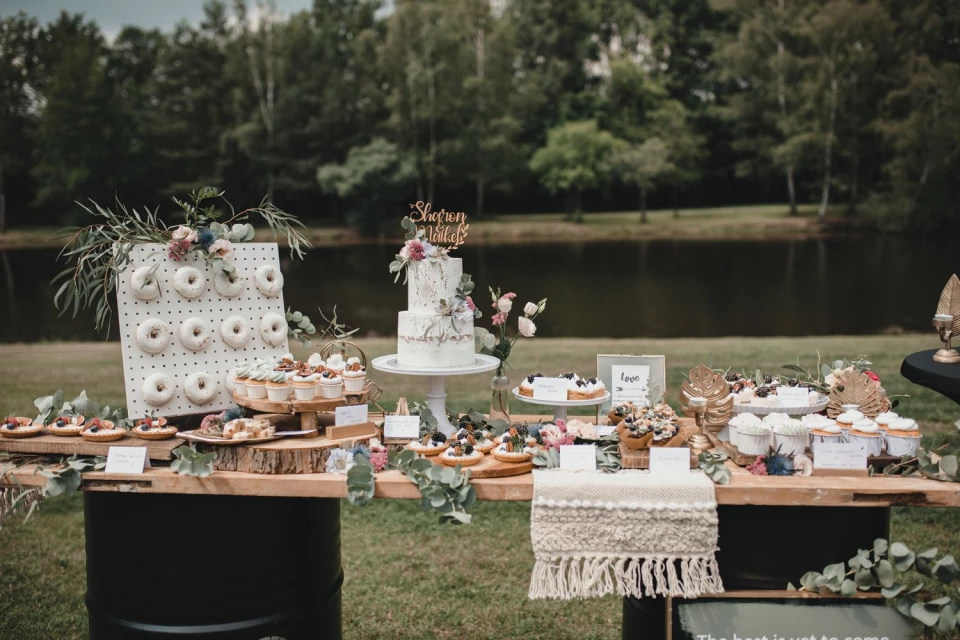
TLDR: A wedding dessert table is a curated display of multiple sweet options that gives guests variety, creates a visual centerpiece, and often costs less than a single elaborate tiered cake. Instead of one $800 fondant creation, imagine a gorgeous spread of mini desserts, cookies, brownies, fruit tarts, and a small cutting cake for the ceremony moment. ThePerfectWedding.com's dessert experts explain what to include, how much to budget, how to style it beautifully, and the logistics that make a dessert table work smoothly for 100 to 200+ guests.
Key Facts at a Glance
- Average wedding dessert table cost: $3 to $8 per guest for a mix of items, vs. $4 to $12/slice for a custom tiered cake (Source: The Knot, 2025)
- 55% of couples now offer dessert alternatives alongside or instead of a traditional wedding cake (Source: WeddingWire)
- Plan 3 to 5 dessert pieces per guest for a dessert table that serves as the main sweet offering (Source: Brides.com)
- A small cutting cake (6-inch, single tier) for the ceremonial moment costs $50 to $150 and lets you skip the expensive tiered display cake entirely (Source: Zola)
- See our wedding cake gallery and dessert display styling guide on ThePerfectWedding.com

Why Choose a Dessert Table Over a Traditional Cake
Variety satisfies every guest
A single wedding cake flavor satisfies people who like that specific flavor. A dessert table offers something for everyone:
- Chocolate lovers: brownies, chocolate truffles, chocolate-dipped strawberries
- Fruit lovers: mini tarts, fruit skewers, lemon bars
- Cookie fans: decorated sugar cookies, macarons, biscotti
- Light dessert preference: panna cotta, mousse cups, meringues
- Dietary restrictions: naturally gluten-free options (macarons, flourless brownies), vegan options (fruit, dairy-free chocolate), nut-free options (clearly labeled)
Instead of one divisive flavor choice, you offer a curated collection that makes every palate happy.
Cost comparison
The math often favors a dessert table over a custom tiered cake:
- Traditional tiered cake (3 tiers, 150 servings): $600 to $1,800 depending on design complexity
- Dessert table (5 items, 3 to 5 pieces per guest): $450 to $1,200 for 150 guests
- Dessert table + small cutting cake: $500 to $1,350 total
The dessert table delivers more variety, more visual impact, and often more food for equal or lower cost. See our catering cost guide for budgeting.
Visual impact as reception decor
A well-styled dessert table is a focal point that guests photograph, Instagram, and talk about. It serves as both food service and decor, doing double duty that a single cake on a stand cannot match. Tiered displays, varying heights, mixed textures, and coordinated colors create a visual moment that draws guests in throughout the evening.

What to Include on Your Dessert Table
The essential mix
ThePerfectWedding.com recommends including 5 to 8 different dessert types that cover variety in flavor, texture, and dietary needs:
- One showpiece item: a small 1 to 2 tier cake, a macaron tower, or an elaborate donut wall that anchors the display
- Two cookie or bar options: decorated cookies, brownies, blondies, or lemon bars (easy to produce in volume, crowd-pleasing)
- One mini dessert: individual portions in cups or on plates (mousse cups, mini cheesecakes, panna cotta, creme brulee)
- One fruit-based option: tarts, chocolate-dipped strawberries, or fruit skewers (lighter, refreshing, naturally accommodates dietary restrictions)
- One dietary-friendly option: clearly labeled gluten-free, vegan, or nut-free item (not as an afterthought, but as a genuinely delicious offering)
- Optional additions: candy or chocolate station, mini pies, cupcakes, or seasonal specialties
Quantity planning
How much to order depends on whether the dessert table is the only sweet offering or accompanies a cake:
- Dessert table as the main dessert (no cake): 4 to 5 pieces per guest. For 150 guests: 600 to 750 total pieces across all items
- Dessert table alongside a cake: 2 to 3 pieces per guest. For 150 guests: 300 to 450 total pieces
- Dessert table as a late-night addition (after cake service): 1 to 2 pieces per guest. For 150 guests: 150 to 300 pieces. See our late-night snack ideas for timing
Not every guest will eat every item. Some will take 6 to 8 pieces. Some will take 1. The averages hold across large groups.

Sourcing Your Desserts
Options by budget and involvement
- Full bakery package ($5 to $10/person): one bakery produces everything, ensures consistent quality and coordinated styling. Most expensive but most cohesive result
- Mixed vendor approach ($3 to $7/person): order cookies from one bakery, cakes from another, and purchase some items from a wholesale club or grocery bakery. More variety but requires coordination
- Partial DIY ($2 to $5/person): purchase or make simple items yourself (rice krispie treats, chocolate-dipped strawberries, candy jars) and order the complex items (macarons, decorated cookies, mini cakes) from professionals
- Full DIY ($1 to $3/person): family and friends bake everything. Lowest cost, highest personal effort, and quality varies. Works best for intimate weddings under 75 guests where the homemade aesthetic is part of the charm
When to order
Timeline for dessert table sourcing:
- 3 to 4 months before: book your primary bakery or baker and confirm the dessert menu
- 6 to 8 weeks before: finalize quantities based on confirmed guest count
- 1 to 2 weeks before: confirm delivery or pickup details, timing, and setup responsibilities
- Day before or day of: delivery. Most items should arrive 2 to 4 hours before the reception for setup
Styling and Presentation
Creating visual impact
The difference between a stunning dessert table and a church potluck is presentation. Key principles:
- Varying heights: use cake stands, wooden crates, stacked books, or acrylic risers to create a landscape of different levels. The eye should travel up and down across the display
- Color coordination: choose desserts and display elements that match your wedding palette. All-white desserts on gold stands. Pastel macarons on marble. Rustic brownies on wooden boards
- Odd numbers: group items in 3s and 5s rather than 2s and 4s. Odd groupings are more visually dynamic
- Filler elements: fresh flowers, greenery, candles, and decorative elements between dessert items fill gaps and tie the display to your overall decor theme
- Backdrop: a wall behind the table (fabric draping, a floral installation, a neon sign, or a simple frame with your names) completes the visual and makes the table photograph-ready
See our dessert display styling guide for detailed presentation techniques.
Practical setup
- Table size: an 8-foot table serves 100 to 150 guests. For 150 to 200, use a 10-foot table or an L-shaped arrangement of two tables
- Labels: small tent cards or tags identifying each dessert and noting allergens (GF, V, NF). Guests should not have to guess what they are eating
- Serving utensils: tongs, small plates, napkins, and individual serving pieces for each item. Do not make guests touch food with their hands
- Placement in the room: position the dessert table where guests naturally flow (near the dance floor or bar), not hidden in a corner. It should be visible and inviting throughout the reception
- Temperature: chocolate, cream-based, and frosted items need climate control. In warm weather or outdoor settings (see our hot weather guide), keep the table in shade or air conditioning and set up no more than 60 to 90 minutes before guests access it
Expert Tip: "The dessert table I remember most was not the fanciest or the most expensive. It was a couple who chose five desserts that represented moments in their relationship: the brownie from the bakery near their first apartment, macarons from the patisserie where they got engaged in Paris, their grandmother's lemon bar recipe, cookies from their favorite local bakery, and a small cutting cake from the baker who made their engagement party cake. Each item had a small card telling the story. Guests ate the desserts AND the love story. That is what a dessert table can do that a single cake never will."
Sarah Glasbergen, Founder at ThePerfectWedding.com
Frequently Asked Questions
Do we still need a cake if we have a dessert table?
You do not need a full tiered cake, but many couples add a small cutting cake for the ceremonial cake-cutting moment. A 6-inch single-tier cake costs $50 to $150 and provides the tradition, the photos, and the moment without the cost of a full display cake. The dessert table serves the actual eating. The cutting cake serves the tradition. Together, they cover everything.
How do we prevent guests from taking too much and leaving nothing for later guests?
Controlled access and replenishment:
- Open the dessert table at a specific time (after dinner, announced by the DJ)
- Release tables in groups if you want to manage flow
- Have a coordinator or dessert attendant monitoring and replenishing from a backup supply kept in the kitchen
- Order 10% to 15% extra as backup stock for replenishment
Can a dessert table work for a formal, black-tie wedding?
Absolutely, if styled accordingly. Elegant mini desserts (petit fours, gold-dusted truffles, champagne-flavored mousse cups) on marble and crystal stands with fresh white flowers creates a display that is as formal as any tiered cake. The format is not inherently casual. The styling determines the formality level.
What if some desserts need refrigeration?
Items with cream, custard, or dairy-based fillings should not sit at room temperature for more than 2 hours (1 hour above 80 degrees). Solutions: set up the table 60 to 90 minutes before dessert service, use items that are stable at room temperature for the display (cookies, brownies, macarons, fruit) and have the temperature-sensitive items (mousse cups, cheesecake, cream puffs) brought out in batches from refrigeration by the catering team.
How many items is too many?
More than 8 to 10 different items creates decision fatigue and visual clutter. The sweet spot is 5 to 8 items with clear visual and flavor variety. Each item should be distinct enough that a guest can scan the table in 5 seconds and identify what they want. If two items look similar, replace one with something visually different.
More dessert guides on ThePerfectWedding.com: Donut wall, Cookie bar, Wedding pie, Ice cream bar, Cupcake display, Display styling, and more. See our late-night snack ideas and wedding cake gallery. Find bakers on our vendor directory.


