Family-Style Wedding Dinner: How It Works and What to Know
Family-style wedding dinner guide: how it works, pros and cons, costs, and how it compares to plated and buffet service

by Sarah Glasbergen on 29 June 2026
Web editor
TLDR: A family-style wedding dinner serves large platters of food to each table, which guests pass and share, blending the warmth of a home meal with the elegance of table service. It encourages connection, suits a relaxed-yet-refined feel, and sits between plated and buffet service. Below we cover how family-style works, its pros and cons, costs, table setup, and how it compares to plated and buffet dinners.
Family-style dining brings a warm, communal feel to your reception, with shared platters that get guests talking. ThePerfectWedding.com gathered the guidance, and paired it with our catering style guide.
How Much Food Do You Need for Family-Style?
Family-style requires generous portions, since platters are shared and you want each table to feel abundant rather than running short. Caterers typically plan more food per guest than a strictly plated meal to account for the communal serving and varied appetites. Discuss portion sizing with your caterer based on your menu and guest count, and trust their experience here. The abundance is part of the appeal, but it also influences cost, so factor it into your budget with our catering cost per person guide on ThePerfectWedding.com.
What Foods Work Best Family-Style?
The best family-style dishes are ones that hold well on a platter and are easy to pass and serve, such as roasted meats, whole fish, hearty salads, seasonal vegetables, grains, and breads. Saucy or composed dishes that travel well also work, while delicate plated presentations do not translate as well. Think hearty, generous, shareable fare. Your caterer can design a menu suited to the format, balancing dishes that look abundant on the table with ones that stay appetizing throughout the meal as guests serve themselves at their own pace.
Does Family-Style Take Longer to Serve?
Family-style can actually be efficient, since platters are brought out per table at once rather than plating individually, but the dining itself tends to be more leisurely as guests pass dishes and serve themselves. Build a little extra time into your reception timeline for the relaxed pace, which is part of the charm. Your caterer will coordinate the platter delivery so all tables are served together. Factoring the unhurried, sociable rhythm into your schedule means the meal feels generous and connected rather than rushed, which is exactly the experience family-style is meant to create.

Is Family-Style Good for Large Weddings?
Family-style works at weddings of many sizes, but it shines at long banquet tables and intimate-to-medium counts where passing is natural. Very large weddings can absolutely use it, though they need enough staff, serving ware, and table space to execute it smoothly across many tables. Round tables work if they are not too large to pass across. Discuss the logistics with your caterer for your specific guest count and layout, and compare it with other formats using our catering style guide on ThePerfectWedding.com.
- Roasted meats. Carved platters that look generous and share well.
- Seasonal vegetables. Colorful bowls that brighten the table.
- Hearty salads. Big, fresh bowls guests can pass.
- Grains and sides. Filling accompaniments in shared dishes.
- Breads. Baskets that anchor the communal feel.
Ultimately, family-style dining is about connection. If you want your guests laughing, passing platters, and talking across the table rather than quietly waiting to be served, it is hard to beat. Plan for the space and the slightly higher cost, lean on your caterer's expertise, and you will create a reception dinner that feels generous, warm, and genuinely communal.
For the right couple, it is the dinner format that best captures the spirit of a wedding: people, gathered around a table, sharing a meal together.
Key Facts at a Glance
- Family-style serves shared platters per table (Source: industry advice, 2026)
- It encourages connection among guests (Source: industry advice, 2026)
- It sits between plated and buffet service (Source: industry advice, 2026)
- Tables need room for serving dishes (Source: industry advice, 2026)
- It can require more food than plated (Source: industry advice, 2026)
What Is a Family-Style Wedding Dinner?
Family-style dining serves large platters and bowls of food to the center of each table, which guests pass and serve themselves, just like a meal at home. It combines the communal warmth of sharing with the seated elegance of table service. It is a popular middle ground between plated dinners and buffets. Compare it with the other options in our catering style guide and seated, buffet, and stations guide.
How Does Family-Style Compare to Other Service?
Here is how the main dinner service styles compare.
| Style | Experience |
|---|---|
| Family-style | Shared platters, communal feel |
| Plated | Individual courses, formal |
| Buffet | Guests serve at a line |
| Stations | Interactive food stations |

What Are the Pros of Family-Style?
Family-style offers several appealing benefits:
- Connection. Passing dishes sparks conversation among tablemates.
- Abundance. Generous platters feel warm and plentiful.
- No buffet line. Guests stay seated and relaxed.
- Variety. Everyone can try a bit of everything.
- A refined-yet-relaxed feel. Elegant but not stiff.
What Are the Considerations?
Family-style has trade-offs to plan for. Tables need extra room for serving platters, which can crowd centerpieces and place settings, so coordinate your tablescape. It can require more food and serving ware than plated service, affecting cost, and very large or oddly shaped tables can make passing awkward. Talk it through with your caterer. Plan the budget with our catering cost guide on ThePerfectWedding.com.


How Do You Set the Table for Family-Style?
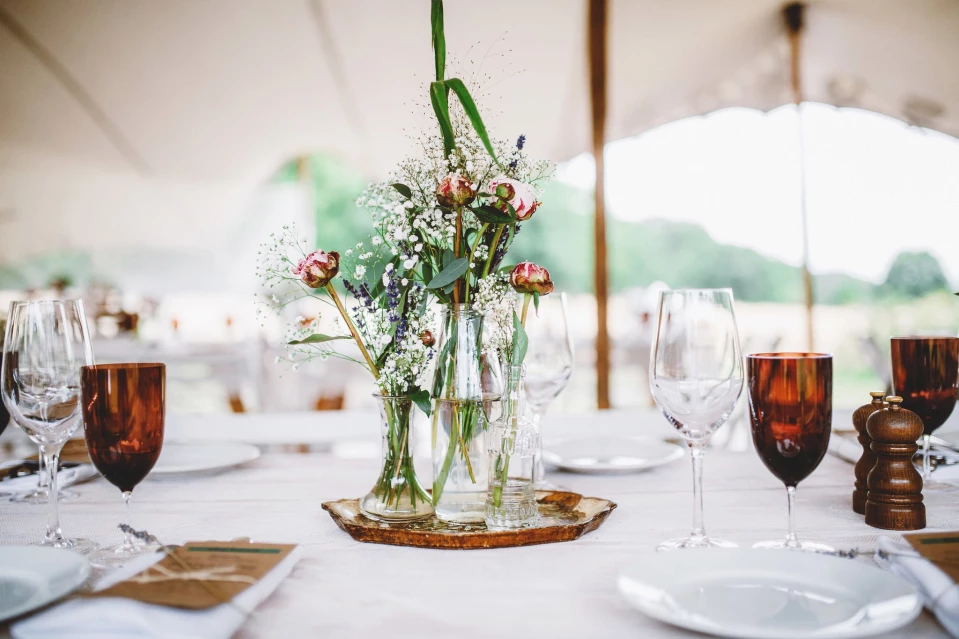
Family-style tables need to balance shared platters with each guest's setting. Leave central space for the serving dishes, keep centerpieces low or minimal so they do not block passing, and ensure each place has the plates and flatware needed. Your caterer and a stylist can plan a layout that works. Coordinate it with our table setting ideas on ThePerfectWedding.com.
How Much Does Family-Style Cost?
Family-style typically costs more than a basic buffet and is comparable to or slightly above plated service, since it needs ample food, serving dishes, and staff to deliver platters. The exact figure depends on your caterer and menu. The communal experience is the payoff. Compare it against the other styles with our catering cost per person guide on ThePerfectWedding.com.
Is Family-Style Right for Your Wedding?
Family-style suits couples who want a warm, communal, relatively relaxed dinner with the elegance of table service, and it works beautifully at long tables and intimate weddings. It may be less ideal where space is tight or a very formal, structured meal is the goal. Discuss it with your caterer to see if it fits. Compare your options with our catering style guide and browse wedding caterers on ThePerfectWedding.com.
“Family-style dining is my favorite for couples who want their reception to feel warm and connected rather than formal and hushed. There is something about passing a platter of food to the person beside you that breaks the ice and gets a table talking, even among guests who just met. Just plan for it properly: tables need real estate for the serving dishes, so keep your centerpieces low, and budget a little more than a buffet, because the abundance and table service are what make it special.”
Sarah Glasbergen, Founder ThePerfectWedding.com
-
What is a family-style wedding dinner?
A service style where large platters and bowls of food are placed at the center of each table for guests to pass and share, blending the communal warmth of a home meal with the elegance of seated table service.
-
How does family-style compare to plated and buffet?
Family-style sits between the two: more communal and abundant than a plated dinner, but more relaxed and seated than a buffet line. Guests stay at their tables and share platters rather than being served individual plates or queuing.
-
Is family-style dining more expensive?
It typically costs more than a basic buffet and is comparable to or slightly above plated service, since it requires ample food, serving dishes, and staff to deliver platters. The communal experience is the payoff.
-
How do you set a table for family-style?
Leave central space for the serving platters, keep centerpieces low or minimal so they do not block passing, and ensure each place has the needed plates and flatware. Your caterer can plan a workable layout.
-
What are the downsides of family-style?
Tables need extra room for platters, which can crowd centerpieces, it can require more food and serving ware than plated service, and passing can be awkward at very large or oddly shaped tables. Plan the layout carefully.
-
Is family-style right for my wedding?
It suits couples wanting a warm, communal, relaxed-yet-elegant dinner, and works beautifully at long and intimate tables. It may be less ideal where space is tight or a very formal, structured meal is the goal.
Plan Your Menu with ThePerfectWedding.com
Compare it with our catering style guide and service styles guide, then browse wedding caterers on ThePerfectWedding.com.
The bottom line on a family-style wedding dinner: shared platters passed at each table create a warm, communal meal with the elegance of table service, sitting between plated and buffet. Plan for table space and a slightly higher cost than a buffet, and it rewards you with connection and abundance. Browse wedding caterers on ThePerfectWedding.com to plan yours.


