Wedding Draping Ideas: Fabric Decor for Ceremony and Reception
Wedding draping ideas: fabric backdrops, ceiling draping, arch and tent draping, colors, and how to transform your venue.

by Sarah Glasbergen on 29 June 2026
Web editor
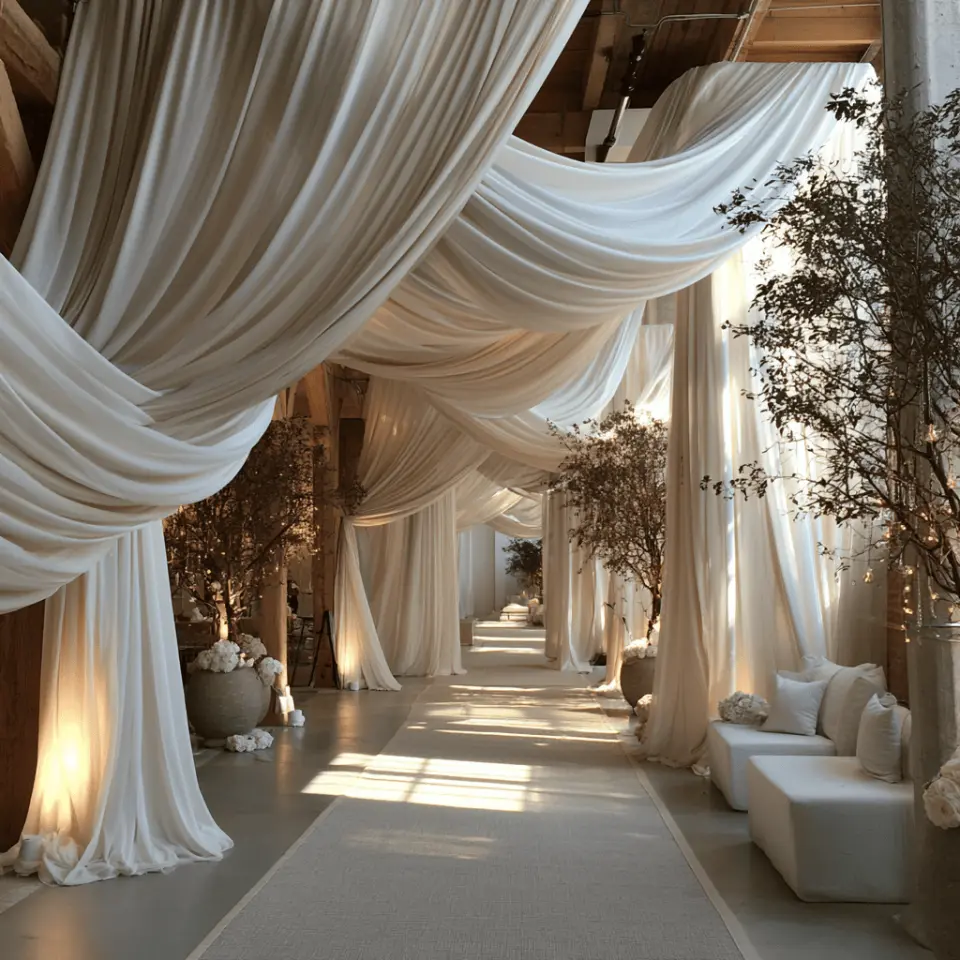
TLDR: Wedding draping uses flowing fabric to soften and transform a space, from ceremony backdrops and arches to ceiling installations and head-table frames. Popular fabrics include chiffon, voile, and satin in soft, light layers. Draping hides bare walls, lowers high ceilings, and adds romance, and it pairs beautifully with lighting and florals. Below we cover draping ideas, fabrics, where to use it, and how to plan it.
Key Facts at a Glance
- Draping softens and transforms a space (Source: industry advice, 2026)
- Chiffon and voile are popular light fabrics (Source: industry advice, 2026)
- Ceiling draping lowers and warms tall rooms (Source: industry advice, 2026)
- Draping pairs beautifully with lighting (Source: industry advice, 2026)
- It frames ceremony backdrops and head tables (Source: industry advice, 2026)

Few decor moves transform a plain venue like draping: yards of soft fabric instantly add warmth, height, and elegance. Used well, it frames your most important moments. ThePerfectWedding.com gathered the ideas, and paired them with our wedding arch ideas.
How Far in Advance Should You Plan Draping?
Book your draping with a decorator several months ahead, earlier for peak season, since large installations require planning, fabric sourcing, and a venue walkthrough. The decorator will measure the space, check rigging points, and coordinate with your venue on what is permitted. Confirm setup and teardown timing so it fits your schedule. Tie it into the rest of your decor planning with our reception styling on ThePerfectWedding.com so every element is booked in good time.
Can You Drape a Tent or Marquee?
Tents and marquees are ideal candidates for draping, since their bare frames and ceilings benefit enormously from softening fabric. Lining the roof and walls turns a plain tent into an elegant, intimate space, and it hides poles, seams, and hardware. Pole drapes and ceiling swags are the most common approaches. Because tents involve structural rigging, this is firmly professional territory, so work with a decorator experienced in marquee installations to get a safe, taut, beautiful result that lasts the whole celebration.

What Colors Work Best for Draping?
White and ivory draping are the most popular for their timeless, romantic glow, especially when backlit, but draping is not limited to neutrals. Soft blush, sage, dusty blue, or deeper jewel tones can reinforce your palette, and uplighting lets you wash neutral fabric in any color you like. Heavier, darker fabrics suit moody, dramatic weddings, while sheer pale fabrics feel light and airy. Choose a color and weight that match your formality and the mood you want the space to convey.
How Do You Combine Draping With Florals?
Draping and florals are a classic pairing: a floral swag or cluster at the gather point of ceiling drapes, blooms cascading down a draped backdrop, or greenery threaded along fabric swags all add a lush, finished layer. Keep the florals in your palette and let the fabric be the soft backdrop they sit against. Your florist and decorator should coordinate on this. Browse wedding florists on ThePerfectWedding.com to design the floral element.
Does Draping Suit Every Wedding Style?
Draping is remarkably versatile, but the execution should match your style. Full, romantic ceiling swags suit classic and glamorous weddings, sheer minimal panels fit modern celebrations, and rich velvet draping leans dramatic and formal. Very rustic or industrial-chic weddings may want only a touch, or none, letting raw architecture show. The key is restraint and intention: drape where it elevates the space and skip it where the venue already has character, so the fabric reads as a deliberate design choice rather than a default.

Does Draping Make a Big Difference in Photos?
Draping is a gift to your photographer. Soft fabric backgrounds eliminate distracting walls and clutter, diffuse light into a flattering glow, and add an elegant, intentional backdrop to portraits, the first dance, and speeches. Backlit voile in particular reads as luminous and dreamy in images. Because the fabric covers large areas, it improves nearly every wide shot of your ceremony and reception, which is part of why couples consistently feel draping was worth the investment when they see their gallery afterward.
What Is Wedding Draping?
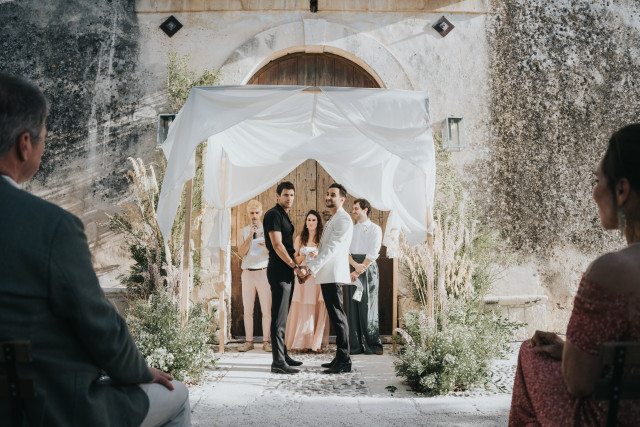
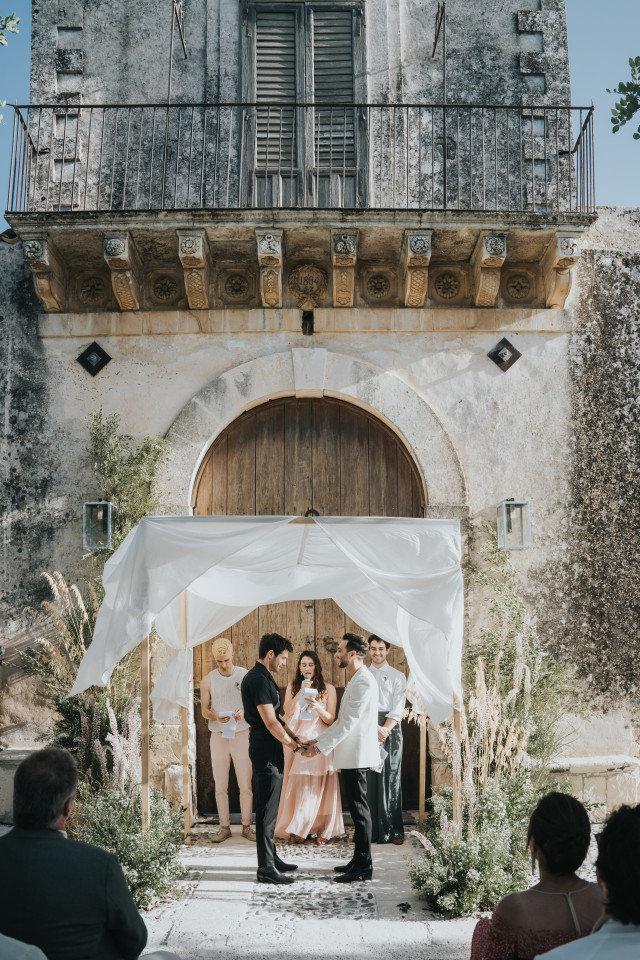
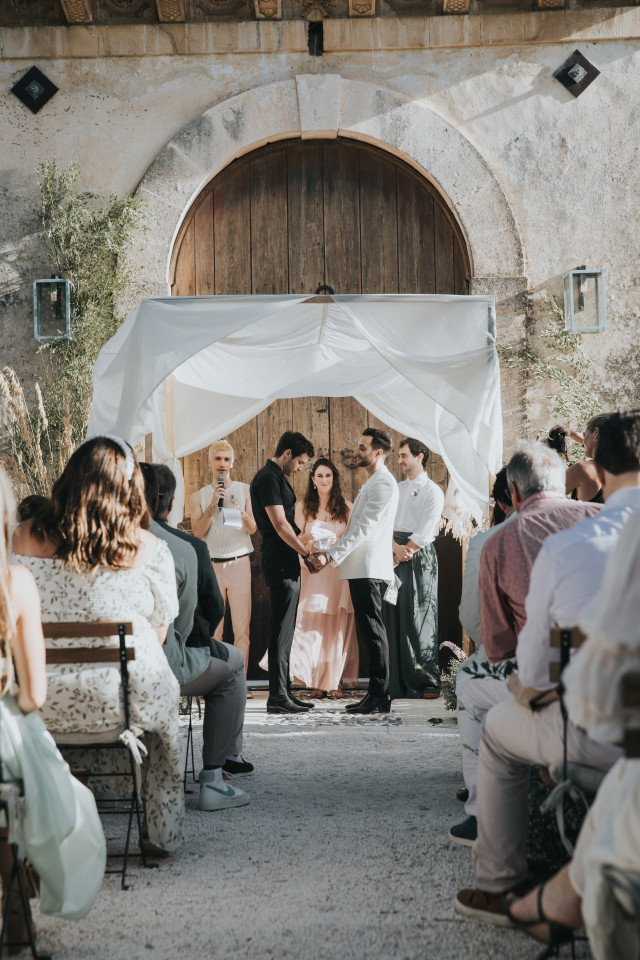
Wedding draping is the use of flowing fabric to decorate and reshape a venue, swagged across ceilings, hung as backdrops, wrapped around arches and poles, or framing the head table. It softens hard architecture, hides unattractive features, and adds a romantic, finished feel. It is one of the most transformative decor elements for the money. Pair it with our arch ideas and lighting guide.
Where Can You Use Draping?
Draping works across the whole celebration.
| Area | Effect |
|---|---|
| Ceiling | Lowers and warms tall or industrial spaces |
| Ceremony backdrop | Frames the couple and altar |
| Arch or arbor | Softens the structure |
| Head table | Defines the couple's focal point |
| Entrance and walls | Hides bare surfaces, sets the tone |
What Fabrics Are Best for Draping?
The fabric sets the whole mood:
- Chiffon. Light, airy, and romantic, the most popular choice.
- Voile. Sheer and soft, beautiful with backlighting.
- Satin. Heavier and luxe with a subtle sheen.
- Organza. Crisp and structured for fuller swags.
- Velvet. Rich and dramatic for moody, formal looks.
How Do You Drape a Ceiling?
Ceiling draping radiates fabric from a central point or runs in parallel swags across the room, instantly making a tall or plain space feel intimate and warm. Add a chandelier, fairy lights, or a central floral at the gather point for extra drama. This is best installed by a professional for safety and a clean finish. Combine it with your lighting plan on ThePerfectWedding.com.
How Do You Use Draping With Lighting?
Draping and lighting are a perfect pair. Backlit voile glows, fairy lights woven behind sheer fabric twinkle softly, and uplighting washes drapery in your wedding color. The fabric diffuses light into a warm, even glow that flatters the whole room. Plan the two together for the best effect. See our wedding lighting guide and color palette guide on ThePerfectWedding.com.
How Much Does Wedding Draping Cost?
Draping cost depends on the fabric, the area covered, and whether you hire a pro. Ceiling installations are the most involved and priced accordingly, while a single backdrop is more modest. Renting fabric and installation from a decorator is usually safer and cleaner than DIY for large spans. Focus the budget on one statement area. Browse wedding decorators and drapers on ThePerfectWedding.com.

How Do You Choose a Draping Style for Your Venue?
Match the draping to your space and style. Tall, industrial, or tented venues benefit most from ceiling draping, plain-walled rooms love a fabric backdrop, and outdoor structures suit light, breezy swags. Keep the color and weight in step with your palette and formality. A decorator can assess your venue and recommend the right approach. Coordinate it with your table settings for a cohesive look.
“Draping is the closest thing to a magic wand in wedding decor. A bare hall, a marquee, an awkward corner, yards of soft fabric transform any of them in an afternoon. My advice is to pick one area to drape dramatically rather than spreading fabric thinly everywhere, and to light it, because backlit chiffon glowing softly is what turns draping from nice into breathtaking. For ceiling work, always use a professional; it is about safety as much as looks.”
Sarah Glasbergen, Founder ThePerfectWedding.com
-
What is wedding draping?
Using flowing fabric to decorate and reshape a venue, swagged across ceilings, hung as backdrops, wrapped around arches, or framing the head table. It softens hard architecture and adds a romantic, finished feel.
-
What fabric is best for wedding draping?
Chiffon is the most popular for its light, airy drape, with voile beautiful when backlit, satin for a luxe sheen, organza for structure, and velvet for dramatic, formal looks. The fabric sets the whole mood.
-
Where do you use draping at a wedding?
On ceilings to lower and warm tall spaces, as ceremony backdrops, wrapped around arches, framing the head table, and over bare walls or entrances. Concentrating it on one area creates the biggest impact.
-
How much does wedding draping cost?
It depends on the fabric, the area covered, and whether you hire a professional. Ceiling installations are the most involved and costly, while a single backdrop is more modest. Renting through a decorator is usually safest.
-
Can you DIY wedding draping?
Small backdrops are doable for the hands-on, but large spans and ceiling work are best left to a professional for a clean, safe, wrinkle-free finish. Decorators have the fabric, rigging, and ladders to do it properly.
-
How does draping work with lighting?
Beautifully. Backlit voile glows, fairy lights behind sheer fabric twinkle, and uplighting washes drapery in your wedding color. The fabric diffuses light into a warm, even glow, so plan draping and lighting together.
Transform Your Venue with ThePerfectWedding.com
Pair draping with our lighting guide and arch ideas, then browse wedding decorators on ThePerfectWedding.com.
The bottom line on wedding draping: use soft fabrics like chiffon and voile to frame ceremony backdrops, arches, ceilings, and head tables, light it for a warm glow, and concentrate it on one statement area. Hire a pro for ceiling work. Few decor elements transform a venue so completely. Browse wedding decorators on ThePerfectWedding.com to design yours.


