Jewel Tone Wedding Ideas: Palette & Styling
Jewel tone wedding ideas for a rich, luxe celebration: emerald, sapphire, ruby and amethyst pairings, plus decor, flowers, and attire.

by Sarah Glasbergen on 29 June 2026
Web editor
In short
Jewel-tone weddings are rich, saturated, and unapologetically luxe: emerald, sapphire, ruby, amethyst, and topaz, usually warmed with gold. The palette is made for fall and winter and looks especially opulent under candlelight.
This guide covers what defines a jewel-tone wedding, the palette with hex codes, where it works best, decor, flowers, what to wear, and the mistakes to avoid. Updated June 2026.
What defines a jewel-tone wedding
- It is deep and saturated. Gem colors like emerald, sapphire, ruby, and amethyst lead the palette.
- It reads luxe and dramatic. Few palettes feel as rich and grown-up.
- It peaks in fall and winter. Cooler seasons and evenings suit its depth.
- It loves gold and candlelight. Both lift jewel tones from pretty to opulent.
- It flatters in satin and velvet. Rich fabrics make the colors glow.
- It rewards restraint. Two or three jewels is plenty; more competes.
The jewel-tone color palette
According to ThePerfectWedding.com's approach to color, the trick with jewel tones is to choose two or three gems rather than all of them, then unify everything with gold. Emerald and amethyst feel regal, sapphire and ruby feel bold, and topaz adds a warm glow.
Balance the depth with cream and plenty of greenery so the palette reads rich rather than heavy, and lean on candlelight to make the colors come alive in the evening.
| Color | Hex (approx.) | The role | Best season |
|---|---|---|---|
| Emerald | #046307 | Lead jewel | Fall / Winter |
| Sapphire | #0F52BA | Bold jewel | Winter |
| Ruby | #9B111E | Warm jewel | Fall / Winter |
| Amethyst | #581845 | Regal jewel | Fall / Winter |
| Topaz | #E1AD01 | Warm glow | Fall |
| Gold | #D4AF37 | Unifying metal | All year |
| Cream / ivory | #FAF3E0 | Balance | All year |
| Greenery | #FFFFFF | Fresh contrast | All year |
Building your palette from scratch? See our wedding color palette ideas and gold wedding decor ideas for more combinations.

Where a jewel-tone palette works best
Jewel tones shine in rich, atmospheric settings. Ballrooms, manor houses, libraries, and warmly lit interiors give the colors a backdrop that matches their depth, especially for an evening reception.
The palette is less at home in a bright, minimalist daytime space, where the saturated colors can feel out of place. If your venue is light and airy, lean toward the lighter jewels and add plenty of candlelight after dark.
When to plan a jewel-tone wedding
Jewel tones are made for fall and winter. The deep, saturated colors suit shorter days and candlelit evenings, and they feel especially rich against autumn light or a frosty winter backdrop.
You can use jewel tones in spring and summer too, but lean toward the lighter gems like emerald and sapphire, keep plenty of cream and greenery in the mix, and save the full drama for the evening reception.
Jewel Tone decor and details
Jewel-tone decor is all about richness and layers. Velvet runners, deep floral centerpieces, and abundant candlelight create an opulent, enveloping table.
Gold ties it all together: gold flatware, candle holders, and rimmed glassware lift the deep colors and stop them from reading flat or dark.
Mix your gems with intention rather than scattering every color everywhere. Letting one jewel lead, with the others as accents, keeps an ambitious palette looking considered.

Jewel Tone wedding flowers
Jewel-tone flowers are deep and lush. Think burgundy and plum dahlias, deep red roses, and jewel-colored anemones, balanced with greenery.
A few lighter blooms or cream accents keep the arrangements from going too dark, and trailing greenery softens the richness on tables and arches.
Candlelight is part of the flowers here too: clustering low blooms with taper candles makes deep arrangements glow rather than disappear into the dark. When you are ready, browse bridal bouquet vendors to bring the look together.
More inspiration: wedding bouquet ideas and trends.
A jewel-tone wedding for a small or large guest list
A small jewel-tone wedding can feel like a jewel box: a tightly styled, candlelit table where every deep color and gold detail reads clearly. Intimacy actually suits the opulence.
At a larger scale, repetition is your friend. Carry the same two or three gems and gold across the room so a big space feels cohesive rather than scattered, and invest in lighting to keep it warm.
What to wear
This palette is made for statement attire. A velvet dinner jacket in emerald, sapphire, or burgundy is a striking groom look for a cooler-season wedding.
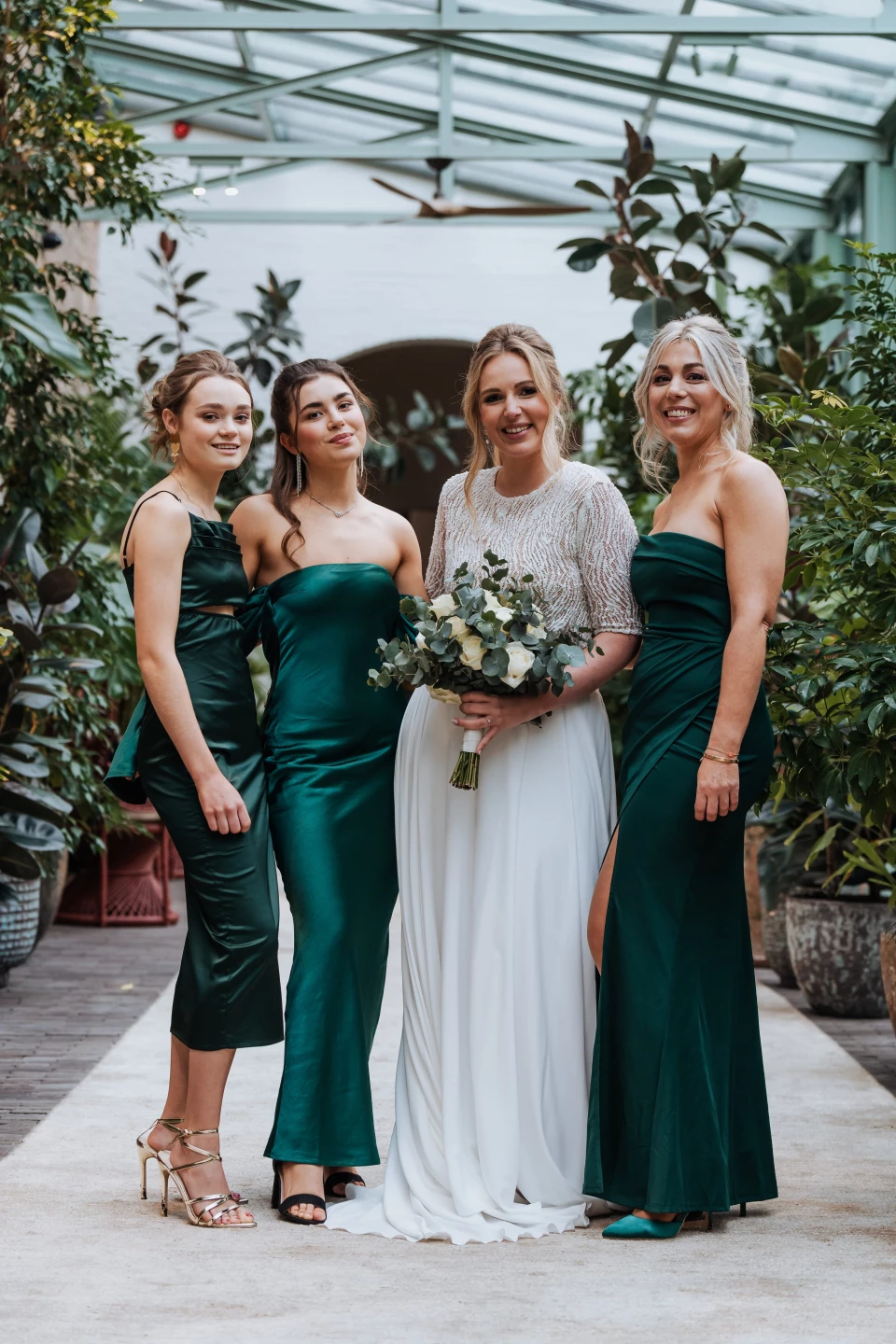
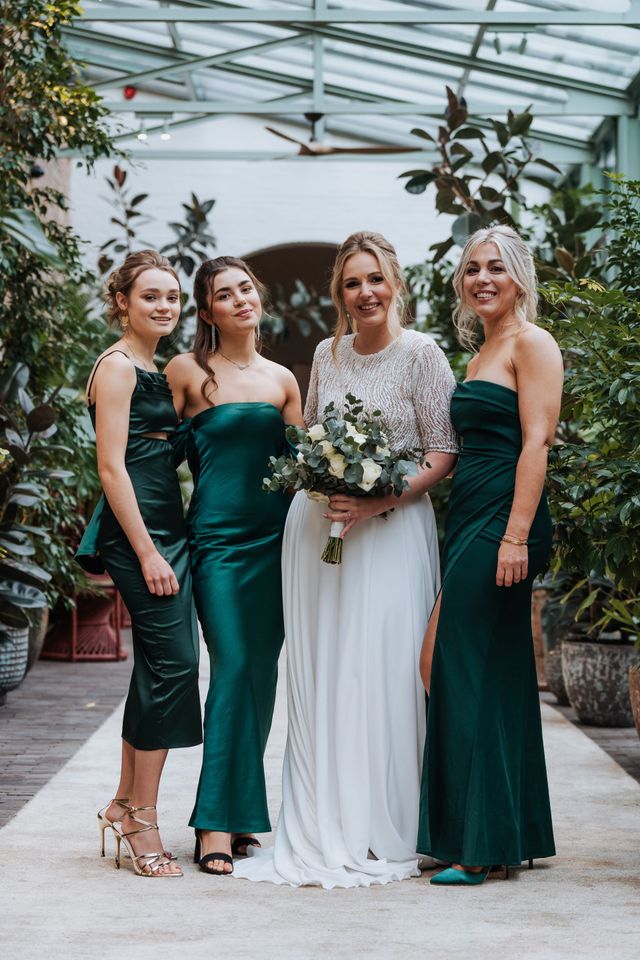
Mismatched jewel-tone bridesmaid dresses, with one in emerald, another in plum, another in sapphire, are a modern, flattering way to use the whole palette at once. To find the look, explore wedding suits.
Building the look from scratch? See our groom suit style guide.

Invitations and stationery
Jewel-tone stationery leans moody and luxe. A deep base with gold foil feels rich and formal, setting expectations for an opulent celebration.
Keep the type clean against the dark background, and let the gold do the talking rather than crowding the design with too many colors. When you have nailed the look, browse wedding invitations to find your style.
Not sure what to include? See our wedding invitation suite anatomy guide.
Common mistakes to avoid with a jewel-tone wedding
- Using every jewel at once. Pick two or three and let one lead; all of them together competes and overwhelms.
- Going too dark. Without candlelight, cream, and greenery, jewel tones can feel heavy and flat.
- Skipping the gold. Gold is the glue that unifies jewel tones and makes them glow.
- Choosing a bright daytime venue. Saturated colors look best in warm, atmospheric, evening light.
- Matching everything flatly. Vary fabric and tone so the palette has depth and movement.
Jewel tones are the most forgiving way to look expensive. A few deep colors, a lot of gold, and candlelight, and the whole room feels rich.
Sarah Glasbergen, Founder ThePerfectWedding.com
Frequently asked questions about jewel-tone weddings
-
What is a jewel-tone wedding?
A jewel-tone wedding uses deep, saturated gem colors such as emerald, sapphire, ruby, and amethyst, usually warmed with gold. It reads rich, luxe, and dramatic.
-
What colors count as jewel tones?
Emerald green, sapphire blue, ruby red, amethyst purple, and topaz or amber. Gold is the metal that ties them together.
-
Is a jewel-tone palette good for every season?
It is most at home in fall and winter and in the evening, but lighter jewels with plenty of candlelight can work in other seasons.
-
What flowers suit jewel tones?
Deep blooms like burgundy and plum dahlias, deep red roses, and jewel-colored anemones, balanced with greenery and a few cream accents.
-
What should the wedding party wear?
Velvet jackets in emerald, sapphire, or burgundy for the groom, and mismatched jewel-tone bridesmaid dresses for a modern, flattering look.
-
How many jewel tones should I use?
Two or three is the sweet spot. Let one lead and use the others as accents, unified by gold, so the palette stays considered rather than chaotic.
-
Do jewel tones work in a bright, modern venue?
They are better suited to warm, atmospheric spaces. In a bright venue, choose lighter jewels and add candlelight in the evening.
-
Why is gold important with jewel tones?
Gold unifies the deep colors and lifts them, adding warmth and shine so the palette looks opulent rather than dark or flat.
Plan your jewel-tone wedding
Ready to bring it to life? Browse real wedding inspiration on ThePerfectWedding.com and keep every detail on track with our free planning checklist.
Or start here: get the free wedding planning checklist.


