Wedding Cake Cutting: Tradition, Timing, and How To
What the wedding cake cutting means, when it happens, how to cut the cake together, the feeding and top tier traditions, and mistakes to avoid.

by Sarah Glasbergen on 30 June 2026
Web editor
In short
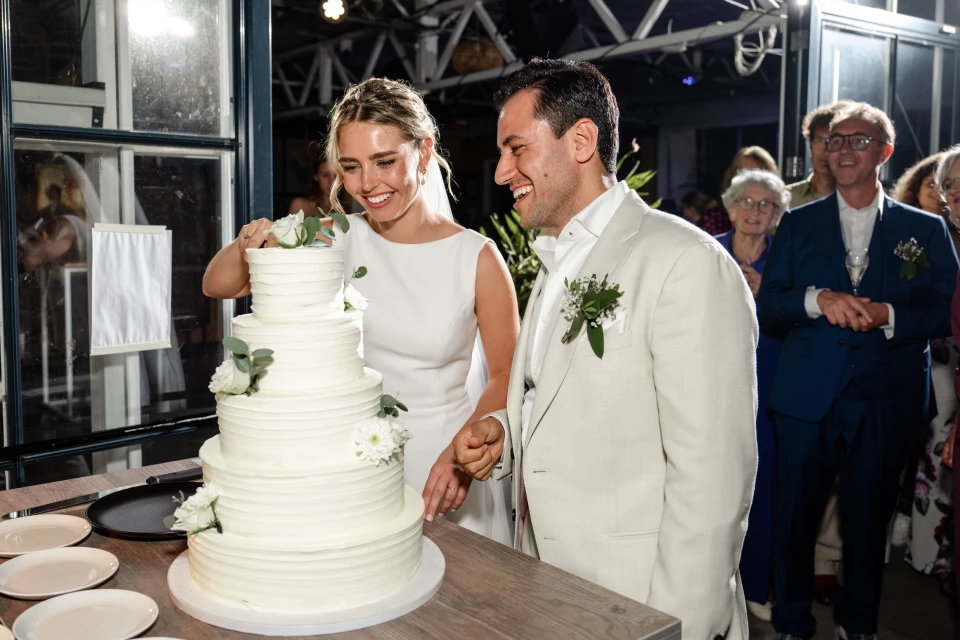
The cake cutting is the moment you and your partner slice into your wedding cake together, the first task you do as a married couple. It usually comes after dinner, signals that the party is about to begin, and turns into a sweet, photogenic moment when you feed each other the first bite.
Below we cover what the cake cutting tradition means, when it happens, how to do it, the feeding and top tier customs, and the mistakes to avoid.
Two hands on one knife, a held breath, and a first slice. The cake cutting is a tiny piece of teamwork that doubles as one of the most photographed seconds of the night.
Key Facts at a Glance
- The cake cutting is traditionally the couple's first joint task as newlyweds, hands together on the knife as a symbol of working as a team.
- Feeding each other the first bite symbolizes care and commitment, a promise to nourish and look after one another.
- It usually happens after dinner and often signals that the formal part of the evening is ending and dancing is about to begin.
- Many couples save the top tier to eat on their first anniversary, a long standing tradition.
- Older guests sometimes leave after the cake cutting, so its timing can shape the flow of your evening.
- 2026 couples personalize the moment, from the cake style to a meaningful song, in line with the year's focus on individual touches (Source: The Knot Worldwide 2026 Real Weddings Study).
What does the wedding cake cutting mean?
Cutting the cake together is one of the oldest wedding reception traditions, and it carries real symbolism. With both of your hands on the knife, it represents the first thing you do as a married couple, a small, public act of teamwork at the very start of your marriage.
According to ThePerfectWedding.com's reception traditions guidance, the moment is as much about the gesture as the dessert. It is a clear, joyful beat that guests gather around, cameras ready, and it marks a shift in the evening from sit down formality to celebration.
When does the cake cutting happen?
The cake cutting traditionally comes after dinner, often as a bridge between the meal and the dancing. Cutting the cake is a recognized signal that the formal portion of the evening is winding down, which is worth knowing because some older guests take it as their cue to head home.
If you want those guests to stay longer, you can move the cake cutting earlier in the evening, right after dinner, so there is still plenty of celebration left afterward. Coordinate the timing with your caterer, who often needs to take the cake away to slice and plate it for service.
How to cut the cake together
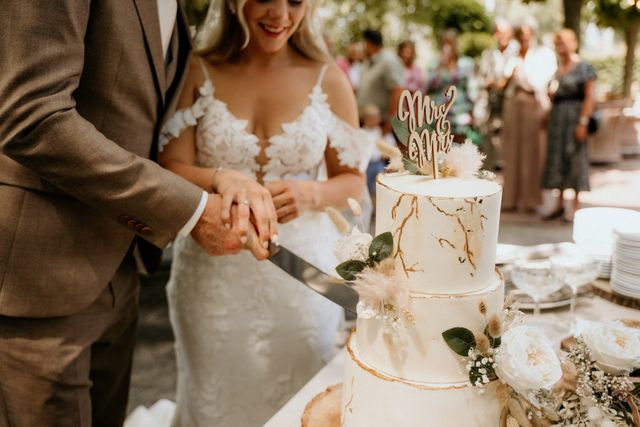
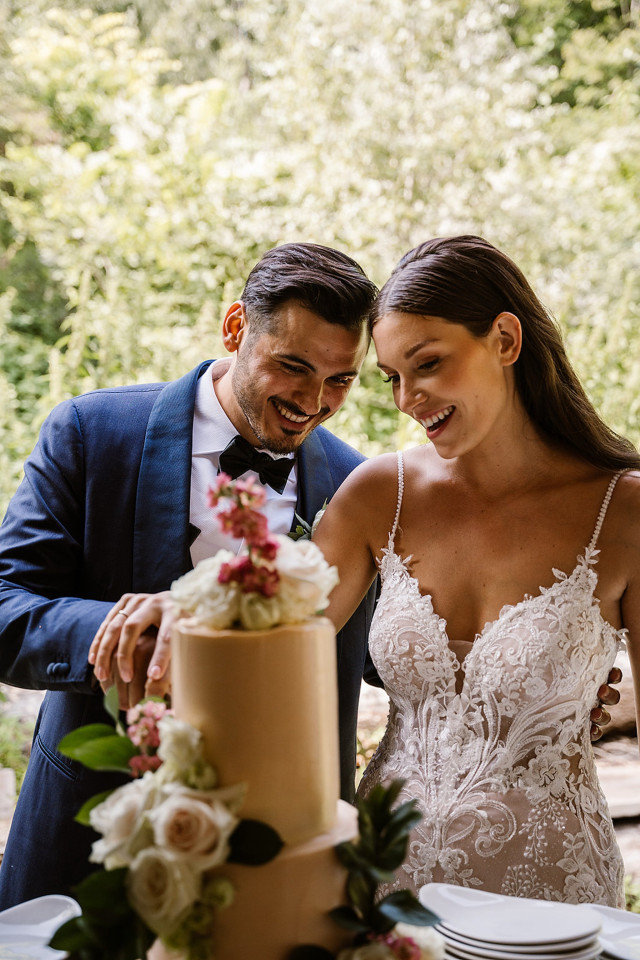
The mechanics are simple, but a little knowledge makes it smooth. Place both of your hands on the knife, the lower tier is the one to cut, and slice down into the bottom layer rather than wrestling with the whole cake. Your caterer or baker can mark the best spot in advance.
Cut one small slice, lift it onto a plate together, and pause for the photo before the feeding. Move slowly. The whole thing takes seconds, and rushing it is the most common way couples end up without a good photo of the moment.
The feeding tradition and the smash debate
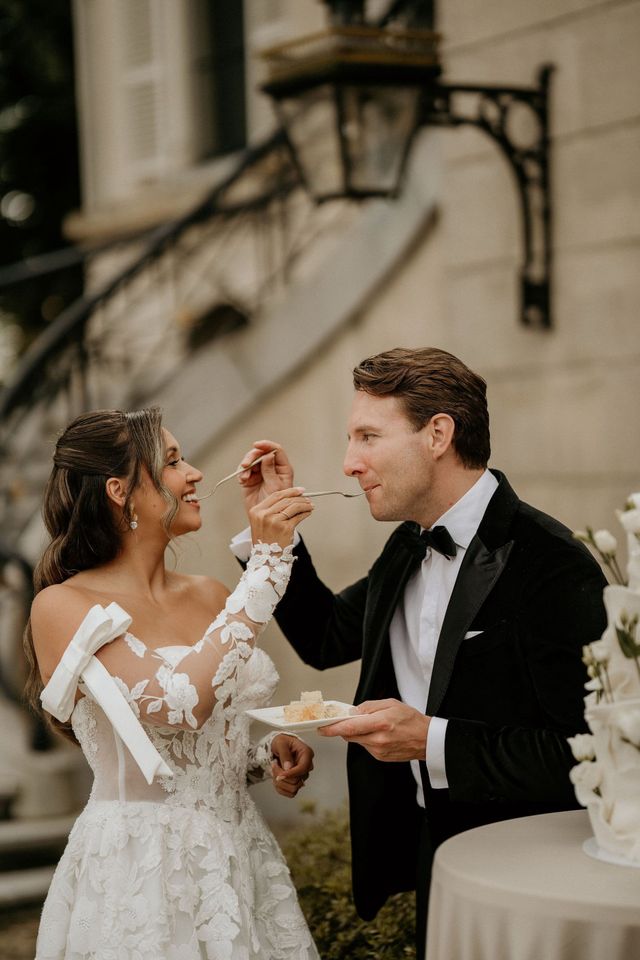
After the cut comes the feeding: you each offer the other the first bite. Traditionally this is a tender gesture, a symbol of caring for and nourishing one another in marriage, and most couples keep it sweet and gentle.
Then there is the cake smash, where one or both of you playfully push cake into the other's face. Some couples find it hilarious, others dread it. There is no rule, just talk about it beforehand so nobody is surprised, and remember your makeup, your photos, and your partner's feelings are all fair to consider.
Saving the top tier and other customs
A classic tradition is to save the top tier of your cake to eat on your first wedding anniversary. If you plan to, ask your baker about the best way to wrap and freeze it, and choose a flavor that freezes well, since some hold up far better than others over a year.
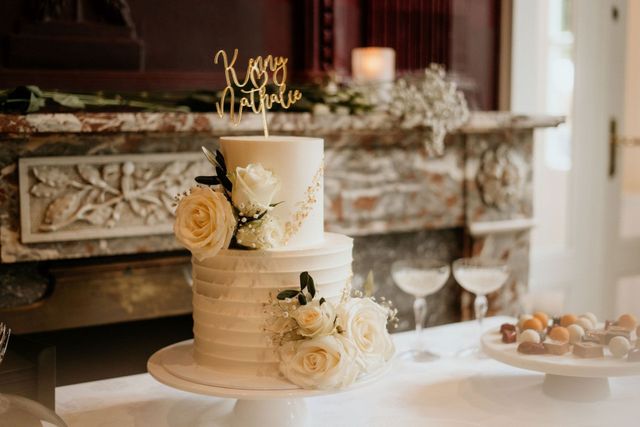
Many couples also pick a short, meaningful song to play during the cutting, or have their photographer and the crowd gather close for the moment. These small touches turn a quick slice into a real highlight of the reception.
One more small kindness: have a plan for the cut cake. Your caterer will usually whisk it away to slice and plate for the whole room, so decide in advance whether dessert is served to seated guests or set out on a table, and ask them to save a slice aside for the two of you to actually taste amid the happy chaos of the night.
What if you do not have a traditional cake?
Not every couple has a tiered cake, and the cutting tradition flexes easily. If you are serving cupcakes, a dessert tower, a wheel of cheese, or a stack of donuts, you can still have a cut the cake moment with a small ceremonial cake or a symbolic first slice of whatever your centerpiece dessert is.
Some couples skip the formal cutting entirely and simply let dessert be served, which is perfectly fine. If you want the photo and the moment but not a towering cake, ask your baker for a small, beautiful cutting cake displayed alongside your real dessert spread. You get the tradition and the picture without a pile of leftover tiers.
Whatever your dessert, the symbolism travels. A shared first bite and a small moment of teamwork land just as sweetly with a single cupcake as with a five tier showstopper.
Common mistakes to avoid
- Rushing the moment. Slow down so your photographer can actually catch the cut and the feeding.
- Cutting the wrong spot. Slice into the bottom tier, and ask your baker to mark the best place in advance.
- Surprising your partner with a smash. Talk about whether you are doing a cake smash beforehand to avoid hurt feelings.
- Ignoring the timing signal. If you want guests to stay, schedule the cutting earlier rather than late in the night.
- Forgetting the top tier plan. If you want to save it, arrange wrapping and freezing with your baker ahead of time.

The cake cutting is the first thing you will ever do together as a married couple, even if it is just slicing dessert. Two hands, one knife, and a whole marriage ahead of you.
Sarah Glasbergen, Founder at ThePerfectWedding.com
Frequently asked questions about the cake cutting
-
What does the cake cutting symbolize?
It represents the couple's first joint task as a married couple, with both hands on the knife as a symbol of working together. Feeding each other the first bite symbolizes care and commitment.
-
When does the cake cutting happen?
Traditionally after dinner, often bridging the meal and the dancing. It also signals the formal part of the evening is winding down.
-
How do you cut a wedding cake?
Place both hands on the knife and slice into the bottom tier, not the whole cake. Cut one small slice, lift it together, and pause for the photo.
-
Do guests leave after the cake cutting?
Some older guests treat it as a cue to head home, since it signals the formalities are ending. If you want them to stay, schedule the cutting earlier.
-
Should we do a cake smash?
It is entirely up to you. Some couples love the playful smash, others prefer to keep it gentle. The key is to agree beforehand so no one is caught off guard.
-
Why do couples save the top tier?
A long standing tradition is to freeze the top tier and eat it on your first anniversary. Ask your baker how to wrap it and which flavors freeze well.
-
Do we need a song for the cake cutting?
It is optional but lovely. A short, meaningful track adds atmosphere as guests gather around for the moment.
-
Who cuts the cake first?
You cut it together, both hands on the knife. There is no strict rule about who leads, so do whatever feels natural for the two of you.
Find your dream wedding cake
A showstopping cut starts with a showstopping cake. Browse wedding cake bakers on ThePerfectWedding.com to find a design that is unmistakably yours, then plan the cutting into your reception.


