Lace Wedding Dresses: Types of Lace, Styles, and How to Find the Perfect One
Lace wedding dresses: Chantilly, Alencon, guipure, eyelash lace. Types, silhouettes, quality tips, and how to choose.

by Sarah Glasbergen on 12 April 2026
Web editor
TLDR: Lace is the most timeless fabric in bridal fashion, adding romance, texture, and heirloom quality to any silhouette. But not all lace is the same. Chantilly, Alencon, guipure, and eyelash lace each create a completely different look and feel. ThePerfectWedding.com's bridal experts break down every type of lace, which silhouettes showcase it best, how to match lace to your wedding style, and what to look for when shopping so you get real quality at every price point.
Key Facts at a Glance
- Lace is featured in over 60% of wedding dresses sold in the US (Source: The Knot, 2025)
- Lace dresses range from $800 to $5,000+ depending on the type of lace and construction method (Source: WeddingWire)
- Hand-applied lace (individually placed motifs) costs significantly more than machine-applied lace overlay (Source: Brides.com)
- The most popular lace type for weddings: Chantilly (soft, delicate, with eyelash edges) followed by Alencon (structured, elegant) (Source: Zola)
- Browse all dress styles on our wedding dress page on ThePerfectWedding.com
Types of Wedding Dress Lace

Chantilly lace
The most delicate, romantic, and feminine lace in bridal fashion. Chantilly lace is lightweight with fine floral patterns on a mesh background. Its signature feature is the scalloped "eyelash" edge where tiny lace threads create a fringe-like border. Chantilly drapes softly, feels ethereal against the skin, and is the top choice for romantic, vintage, and garden weddings. It looks especially beautiful on A-line and fit-and-flare silhouettes.

Alencon lace
Often called the "queen of lace." Alencon features raised floral motifs outlined with a fine cord, giving it a three-dimensional quality. It is more structured and formal than Chantilly, with a regal, elegant appearance. Alencon lace is often used as an applique, with individual motifs hand-sewn onto the bodice or skirt. This is the lace you see on classic, formal, and cathedral wedding gowns. Pairs beautifully with ball gowns and long trains.

Guipure lace
A heavier, more graphic lace with bold, geometric, or large-scale floral patterns and no mesh background. The motifs are connected by bars or threads rather than sitting on a net. Guipure has a modern, structured feel and is the lace of choice for fashion-forward brides who want lace that does not feel traditional. Works beautifully on short dresses, modern fit-and-flare silhouettes, and off-shoulder designs.

Eyelash lace
Named for the tiny, delicate threads that extend from the scalloped edges, creating a soft, feathery border. Eyelash lace is a subset of Chantilly but deserves its own category because of its distinctive fringe-like edges. It is the most romantic lace for necklines, hemlines, and open backs where the scalloped edge creates a beautiful, unfinished-on-purpose line against the skin.

Point d'esprit lace
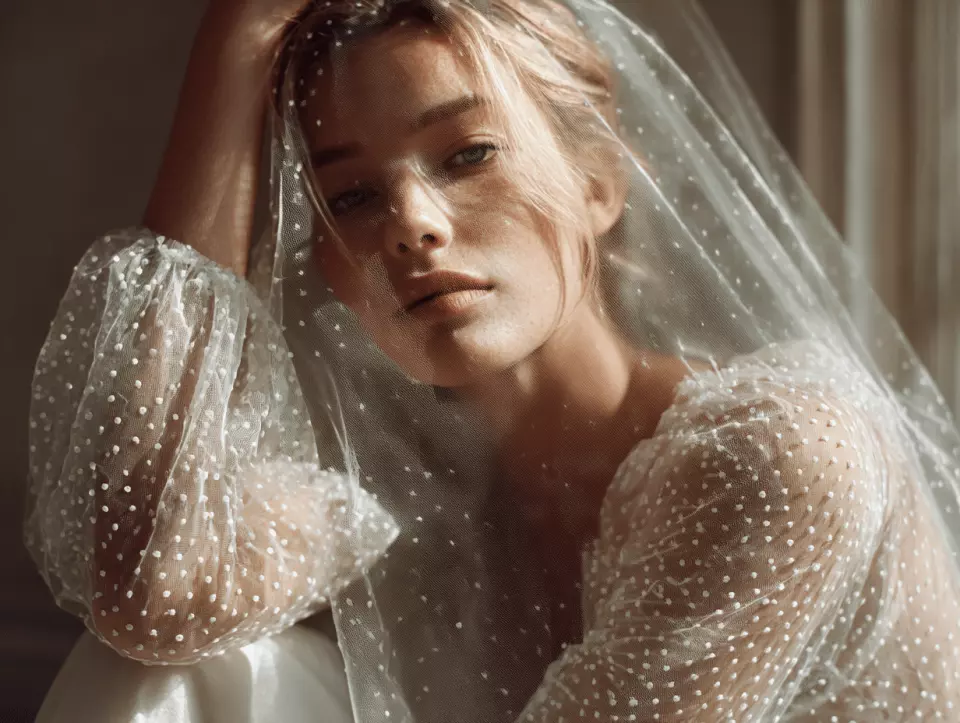
A sheer, dotted net with small, evenly spaced dots or tiny motifs. Point d'esprit is not technically lace but is grouped with lace in bridal fashion. It creates a delicate, whimsical, vintage feel, like wearing a beautiful veil all over. Often used for sleeves, overlays, and long-sleeve designs where you want coverage without heaviness.
Which Silhouette Shows Lace Best
A-line: The most versatile canvas for lace. The fitted bodice showcases lace detail up close, and the flowing skirt lets lace patterns cascade beautifully. Lace A-lines work at every level of formality.
Fit and flare / mermaid: Lace on a fitted silhouette creates a dramatic, body-hugging effect where every motif follows the curves. All-over lace fit-and-flare is one of the most popular bridal looks. The lace does double duty as both fabric and decoration.
Ball gown: Lace on the bodice with a tulle or satin skirt is the classic princess look. Full-lace ball gowns exist but are heavier and more expensive due to the volume of fabric. A lace bodice flowing into a clean skirt is the most balanced approach.
Short dress: Lace on a short dress creates a modern, playful, cocktail-inspired bridal look. Guipure and Chantilly lace both shine on short silhouettes. The hemline of a short lace dress is a key detail: a scalloped lace edge is more elegant than a straight-cut hem.
Backless: Lace creates the most beautiful open backs in bridal fashion. The lace motifs trail down the spine, frame the opening, and create an "illusion" effect where skin peeks through the pattern. Eyelash lace edges along an open back are particularly stunning.
Lace Quality: What to Look For
Feel the fabric
High-quality lace feels soft, supple, and delicate. Cheap lace feels scratchy, stiff, or plasticky. Run your hand over the lace at the boutique. If it catches or feels rough, it will feel worse after 8 hours of wearing. Quality lace moves with you. Cheap lace fights you.
Check the application
Hand-applied lace motifs are individually cut and sewn onto the dress, following the body's contours. Machine-applied lace is layered over the entire dress. Hand-applied is more expensive but creates a more custom, couture look. Look at how the lace sits at the waistline, neckline, and hemline. Does it follow the shape of the dress, or does it just sit on top?
Look at the edges
The hallmark of quality lace is how the edges are finished. On a good dress, the lace edges are clean, scalloped, or deliberately raw (eyelash). On a cheap dress, the lace edges are cut straight with visible machine cutting. The neckline, sleeve ends, and hemline are where quality differences are most visible.
Ask about the lace origin
French and Italian laces are considered the highest quality in bridal fashion. Many designers specify the lace origin in their marketing. Chinese-made lace can be excellent or poor depending on the manufacturer. The origin alone does not guarantee quality, but French and Italian mills have the longest reputations for bridal lace.
Expert Tip: "When you are trying on lace dresses at a boutique, here is the test I always recommend: look at the lace where it meets your skin, at the neckline, the sleeves, and the back. Does the lace create a beautiful line against your body, or does it just sit on top like a layer of fabric? The best lace dresses make the lace and your body look like they were designed for each other. That seamless integration is what separates a $1,200 lace dress from a $3,000 one."
Sarah Glasbergen, Founder at ThePerfectWedding.com
Frequently Asked Questions
Is lace outdated or is it still trending?
Lace is permanently in style. It has been a bridal staple for centuries and shows no signs of slowing. What changes is the type: currently, Chantilly and eyelash lace are trending. Five years ago, guipure was the focus. Lace itself is timeless. Your photos will never look dated because you chose lace.
Can I wear lace at a casual or outdoor wedding?
Absolutely. A lightweight Chantilly lace dress is perfect for a garden wedding or backyard celebration. A short lace dress works for a casual beachside ceremony. Lace does not have to be formal. The silhouette and setting determine the formality, not the fabric.
Is lace comfortable to wear all day?
Quality lace on a well-constructed dress is very comfortable. The lace is backed with a soft lining so it never touches your skin directly. Cheap, unlined lace can be scratchy. Always check that the bodice is fully lined and that no raw lace edges sit against your skin, particularly at the neckline and armholes.
What hairstyle works best with a lace dress?
Lace dresses are romantic, so romantic hairstyles complement them best: a soft low bun, a half-up with loose waves, or hair worn down with curls. If your dress has a detailed lace back, wear an updo to show it off. Add hair accessories that echo the lace motifs, like floral pins or a delicate vine.
How do I care for a lace wedding dress after the wedding?
Have your lace dress professionally cleaned by a bridal specialist, not a regular dry cleaner. Lace requires gentle handling, specific solvents, and careful pressing. After cleaning, store in an acid-free box with acid-free tissue to prevent yellowing. Professional preservation costs $150 to $400.
Find Your Lace Dress on ThePerfectWedding.com
Browse all dress styles on our wedding dress page. Compare lace with other looks: ball gowns, fit and flare, backless, long sleeve, and short dresses. Pair your lace dress with the perfect updo or half-up hairstyle and veil. Coordinate your bouquet and color palette. Budget with our cost guide and hidden costs guide.


