Fit and Flare Wedding Dresses: The Most Body-Celebrating Bridal Silhouette
Fit and flare wedding dresses: mermaid vs. trumpet, who it flatters, movement tips, and best fabrics. Complete guide

by Sarah Glasbergen on 14 April 2026
Web editor
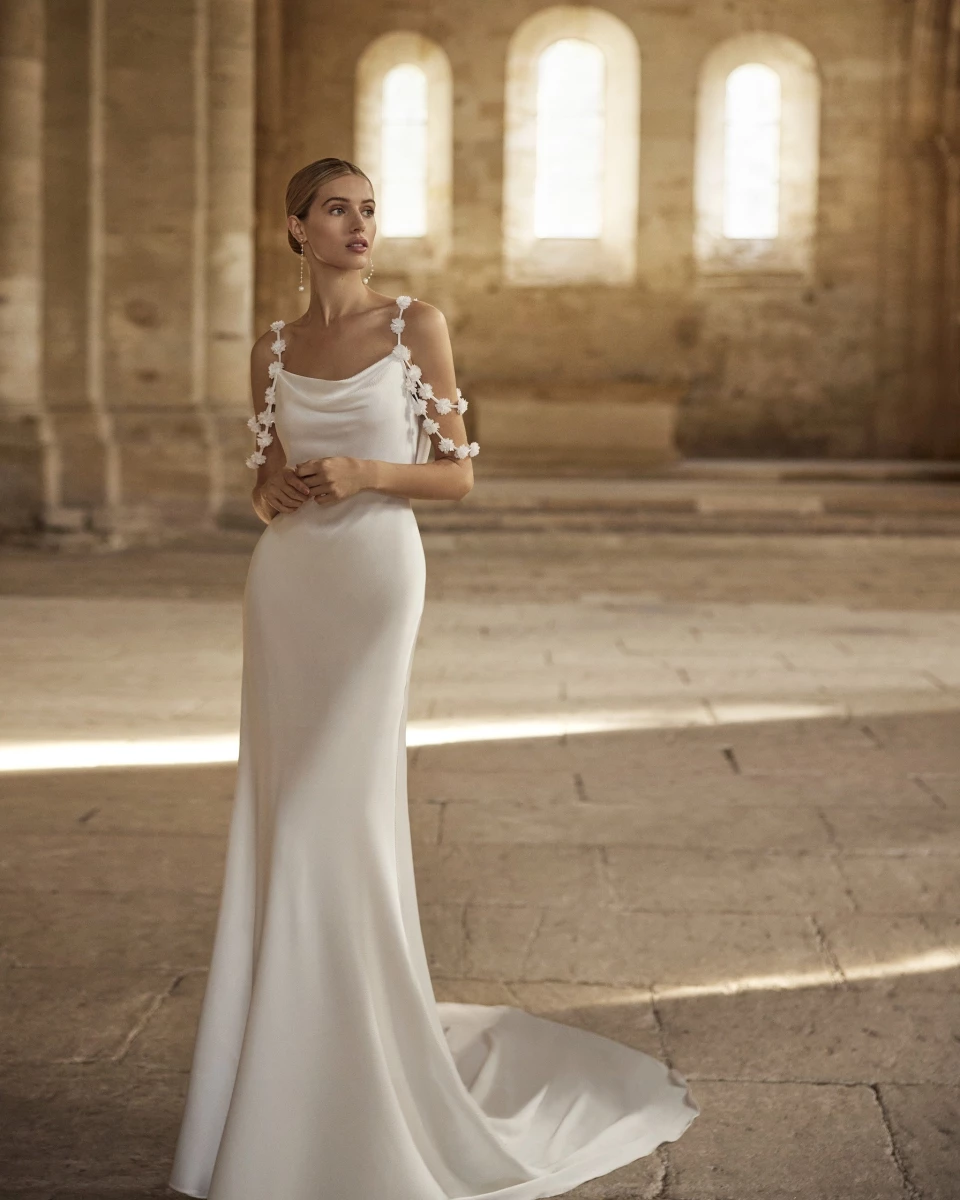
TLDR: The fit-and-flare silhouette hugs the body from the bust through the hips and flares out dramatically at or below the knee, creating a figure-celebrating shape that is glamorous, modern, and undeniably show-stopping. Whether you call it a mermaid (flares at the knee), a trumpet (flares at mid-thigh), or a fit-and-flare (the broadest category), this silhouette makes a statement. ThePerfectWedding.com's bridal experts break down the differences, who it flatters, how to walk and dance in one, and which fabrics create the most beautiful flare.
Key Facts at a Glance
- Fit and flare is the #3 most popular silhouette in US bridal fashion after A-line and ball gown (Source: The Knot, 2025)
- Fit-and-flare dresses range from $1,200 to $6,000+ depending on fabric and construction (Source: WeddingWire)
- The biggest concern: movement and dancing. A good fit-and-flare allows natural walking and dancing when properly fitted (Source: Brides.com)
- Best fabrics: crepe, stretch lace, satin, and mikado that hug curves without restricting movement (Source: Zola)
- Browse all silhouettes on our wedding dress page on ThePerfectWedding.com
Fit and Flare vs. Mermaid vs. Trumpet: What Is the Difference
Fit and flare
The broadest category. The dress is fitted from bust to somewhere between the hip and knee, then flares outward. The flare point varies by designer. This is the most forgiving of the three because the flare can start higher (at the upper thigh), giving more freedom of movement. If you want curves without restriction, this is the safest choice.
Mermaid
The most dramatic version. The dress is tightly fitted all the way to the knee or just below, then flares dramatically into a wide, voluminous skirt. The mermaid creates the most defined hourglass shape and the most dramatic flare. It is also the most restrictive for movement because the fitted section extends to the knees. Walking requires shorter steps. Dancing requires practice.
Trumpet
The middle ground. The dress is fitted through the torso and hips and flares at mid-thigh, creating a more gradual, gentle flare than the mermaid. The trumpet offers more movement than a mermaid while still creating a defined, body-hugging silhouette. Most brides who think they want a mermaid are actually happier in a trumpet once they try walking.
Who Does Fit and Flare Flatter
Hourglass figures: This is the silhouette's natural home. If your bust and hips are similar in size with a defined waist, fit-and-flare was designed for you. It mirrors and celebrates your natural shape.
Pear shapes: The fitted top and defined waist draw attention upward, while the flare at the hip creates a balanced, proportional look. Choose a flare that starts at the upper thigh rather than the knee for the most flattering line.
Athletic or straight figures: Fit-and-flare creates curves where nature did not. The structured bodice, cinched waist, and flared skirt manufacture an hourglass shape. Stretch fabrics and internal boning help sculpt the silhouette.
Plus-size brides: A fit-and-flare with stretch fabric and built-in support is beautiful and flattering at every size. The key is proper boning in the bodice and a flare point at mid-thigh (not the knee, which can restrict plus-size hips). Many designers now make stunning plus-size fit-and-flare gowns up to size 30+.
Petite brides: Choose a trumpet or fit-and-flare with a higher flare point to avoid the skirt overwhelming a shorter frame. A too-dramatic mermaid flare on a petite bride can look bottom-heavy. The higher the flare starts, the more proportional it looks on a smaller body.
How to Walk and Dance in a Fit and Flare
Walking
Take shorter, more deliberate steps than you normally would. The fitted skirt naturally limits your stride, and that is fine. It actually creates a more elegant, measured walk. Kick the front of the skirt gently forward with each step. Practice at your fitting: walk the length of the store and back. Within 5 minutes, it becomes natural.
Sitting
Smooth the back of the skirt with your hands as you sit, then lower yourself slowly. The flare will spread around you. Standing up: press the flare forward with your hands as you rise. Practice this at the fitting too, especially getting in and out of a chair.
Dancing
A trumpet or higher fit-and-flare allows real dancing. A tight mermaid limits movement to upper-body movement and swaying. If dancing is a priority, choose a trumpet over a mermaid and make sure the seamstress does not take the hips in too tightly. You need room to move your legs. Practice your first dance in the dress at the final fitting.
The bustle
If your fit-and-flare has a train, your seamstress adds a bustle for dancing. Fit-and-flare bustles require more precision than A-line bustles because the gathered fabric needs to maintain the flare shape. Discuss bustle options early in your alterations process.
Best Fabrics for Fit and Flare
Crepe: Smooth, slightly stretchy, and body-hugging without clinging. Crepe creates the cleanest, most modern fit-and-flare look. It moves with your body and does not wrinkle.
Stretch lace: Lace with a built-in stretch that follows the body's curves. This combines the romance of lace with the practicality of stretch. The lace detail adds texture and dimension to the fitted silhouette.
Satin and mikado: Smooth, structured fabrics that create a polished, formal fit-and-flare with defined lines. Satin has a sheen. Mikado is matte. Both hold the silhouette's shape beautifully.
Tulle skirt: A fitted bodice and hip section in crepe or satin that transitions to a tulle flare. The tulle creates a lighter, more romantic flare compared to the structured drama of an all-satin skirt. This combination is a modern classic.
Expert Tip: "Here is the secret to looking incredible in a fit-and-flare: the dress needs to fit your hips perfectly. Not your waist, not your bust. The hips. If the hips are too tight, you cannot walk or sit. If they are too loose, the silhouette loses its shape and the flare looks deflated. A skilled seamstress can adjust the bust and waist easily, but the hip fit is the foundation that makes or breaks this dress. When you try one on, walk, sit, and bend at the hips. If any of those feel restricted, the hip area needs more room."
Sarah Glasbergen, Founder at ThePerfectWedding.com
Frequently Asked Questions
Can I walk normally in a fit-and-flare dress?
In a trumpet or higher fit-and-flare, yes. You take slightly shorter steps but it feels natural within minutes. In a tight mermaid (fitted to the knee), your steps are noticeably restricted. Try walking at the boutique and be honest about whether the restriction bothers you. Comfort matters more than aesthetics.
What undergarments work with fit and flare?
A seamless, nude thong or seamless shapewear shorts that end above the knee. Visible panty lines are the enemy of a fitted silhouette. Most fit-and-flare dresses have internal boning that provides bust support, eliminating the need for a bra. Try the dress with your intended undergarments at the fitting.
Is fit and flare comfortable for a full day?
A well-fitted dress in stretch fabric is comfortable all day. The key: proper alterations. The fitted section should hug without squeezing. You should be able to breathe, eat, and sit comfortably. If you feel restricted at the fitting, speak up. Your seamstress can let out the hip area or adjust the boning for comfort.
What hairstyle pairs best with fit and flare?
The glamorous, body-celebrating nature of fit-and-flare pairs beautifully with equally glamorous hair: Hollywood waves worn down, a polished chignon, or a sleek half-up. The overall silhouette is streamlined and sophisticated, so your hair should match that energy.
Find Your Fit and Flare on ThePerfectWedding.com
Browse all silhouettes on our wedding dress page. Compare with A-line, ball gown, and short dresses. Explore fabric options: lace, crepe, satin, and stretch. Add drama with a train, open back, or corset bodice. Style with an updo and veil. Budget with our cost guide.


