Wedding Florist Cost: What Flowers Really Cost and How to Save
Average wedding florist cost in 2026, what each floral piece costs, what drives the price, and how to save.

by Sarah Glasbergen on 26 June 2026
Web editor
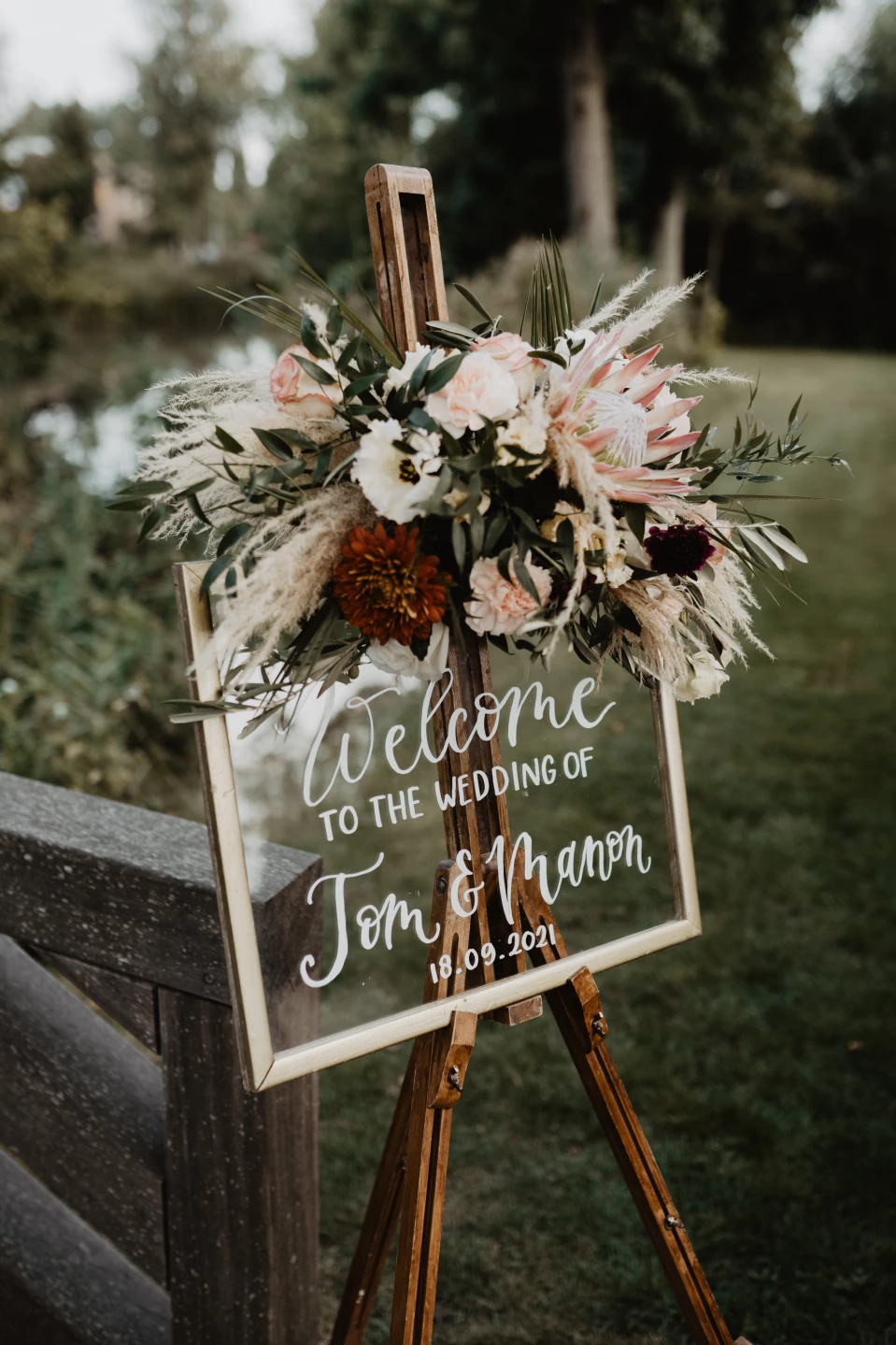
Wedding flowers cost $2,800 on average according to The Knot, though Zola's data runs higher at $5,100 to $7,600 because it counts full floral design. Most couples spend roughly 10 to 13 percent of their budget on flowers. A bridal bouquet alone runs $250 to $350, and centerpieces $100 to $500 each. Below we break down what each piece costs and how to get a lush look for less.
Flowers are what make a room read as a wedding, and they are also where the quotes surprise couples most. The averages swing widely because a florist's bill is the sum of many small pieces. ThePerfectWedding.com pulled current itemized figures from The Knot, Zola, and WeddingWire, and paired them with our guide to saving on wedding flowers.
Key Facts at a Glance
- The Knot 2026 average for wedding flowers is $2,800 (Source: The Knot Real Weddings Study, 2026)
- Zola reports $5,100 to $7,600 for full floral design, about 13 percent of budget (Source: Zola, 2026)
- A bridal bouquet typically costs $250 to $350, more for large cascading designs (Source: Zola, 2026)
- Bridesmaid bouquets run $80 to $150 each and centerpieces $100 to $500 (Source: Zola, 2026)
- Price is the top deciding factor for 70 percent of couples choosing a florist (Source: The Knot, 2026)
How Much Do Wedding Flowers Cost on Average?
The headline averages disagree because they measure different things. The Knot's $2,800 reflects what a typical couple spends across personal flowers and simple arrangements. Zola's $5,100 to $7,600 reflects fuller floral design with statement pieces and lush centerpieces, while WeddingWire's lower figure of around $1,500 leans toward minimal setups. Most couples land somewhere in between, spending 10 to 13 percent of the budget on flowers. Check that share against our budget breakdown.
Location moves the number sharply. Zola's data shows the same floral scope costing about $8,000 in New York City versus $5,500 in Milwaukee. Season matters too: blooms in season and grown locally cost far less than rare or out-of-season flowers shipped in.
What Does Each Floral Piece Cost?
Your florist's total is built from individual items. Knowing the going rate for each helps you see where the money goes and where to trim.
| Floral piece | Typical cost |
|---|---|
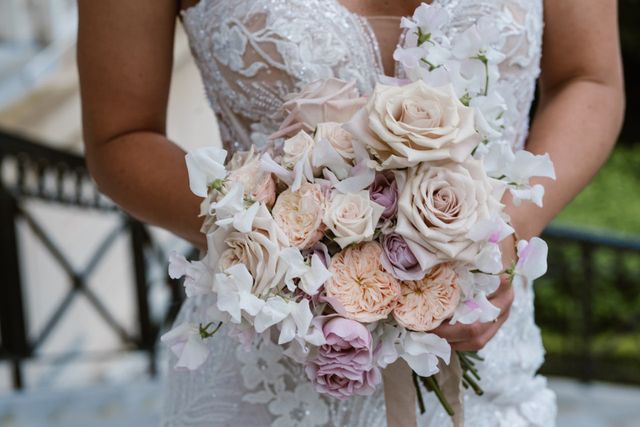
| Bridal bouquet | $250 to $350 (up to $500+ cascading) |
| Bridesmaid bouquet | $80 to $150 each |
| Boutonniere | $15 to $30 each |
| Centerpiece | $100 to $500 each |
| Ceremony arch or installation | $500 to $3,000+ |
What Drives the Cost of Wedding Flowers?
Beyond the pieces themselves, several factors shape the final bill:
- Flower choice: peonies, garden roses, and orchids cost more per stem than carnations, baby's breath, or greenery.
- Season: in-season, locally grown blooms are dramatically cheaper than out-of-season imports.
- Design complexity: hand-wired, cascading, and installed arrangements take more labor than simple hand-tied designs.
- Scale: more tables and larger ceremony pieces mean more stems and more hours.
- Fees: delivery, on-site setup, and breakdown often add several hundred dollars.
How Can You Save on Wedding Flowers?
You can cut floral costs significantly without losing the look. Trust your florist with a mood board and a budget rather than a fixed flower list, since couples who do this consistently come in 30 to 40 percent lower. Mix a few premium focal blooms with affordable fillers and greenery. Repurpose ceremony arrangements at the reception, which saves an average of $700 to $1,200. And lean into seasonal flowers. Our flower savings guide, seasonal flowers by month, and budget centerpiece ideas go deeper.
How Does Season Affect Flower Costs?
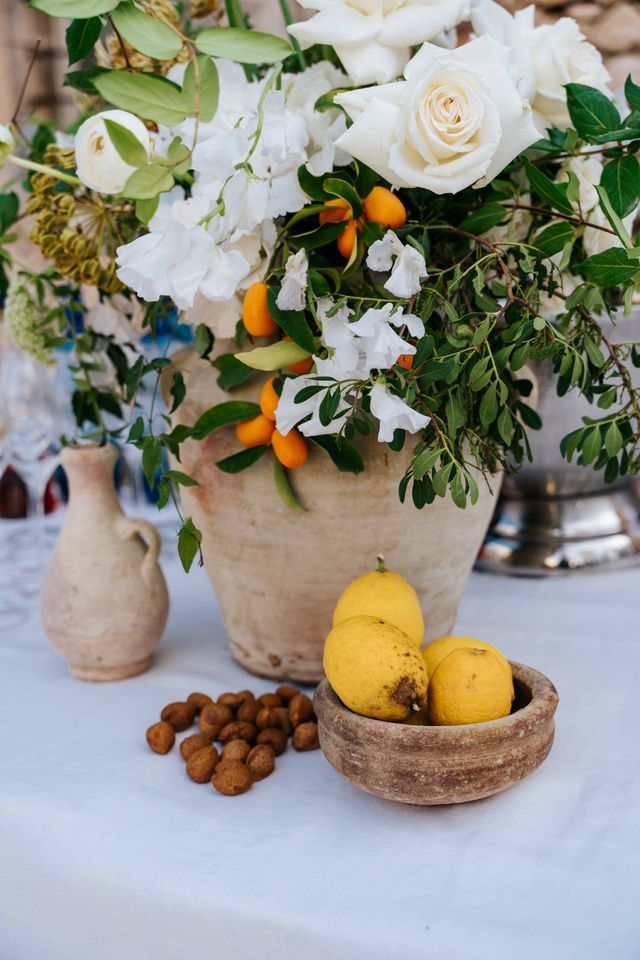
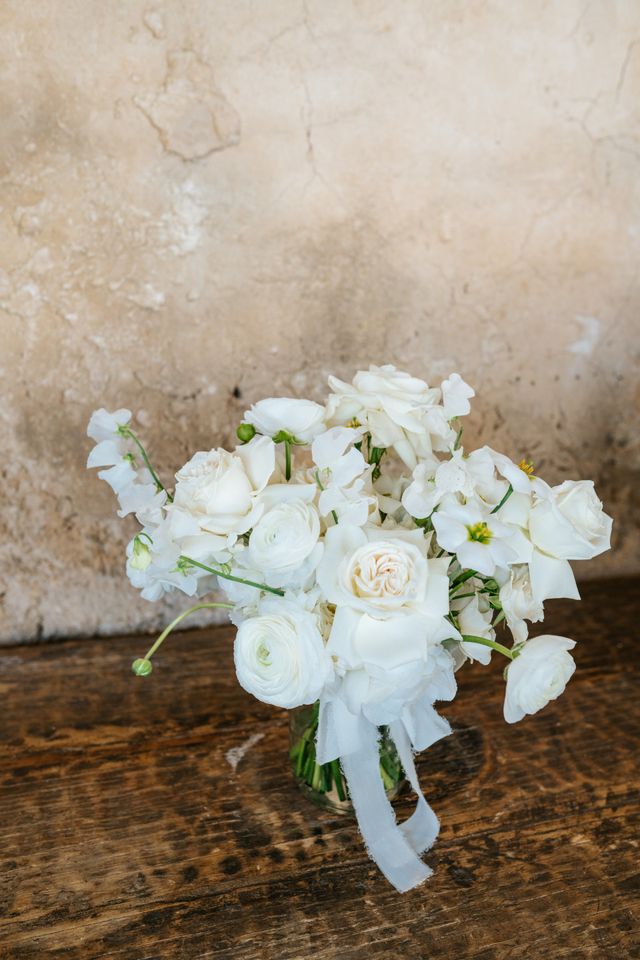
Season is one of the biggest levers on your floral bill. Flowers that are in season and grown locally do not have to be shipped far, which cuts cost significantly. A good florist will tell you what is beautiful and available for your date, whether that is peonies in June, dahlias in September, or ranunculus in April. Insisting on a specific bloom out of season can multiply its price, so flexibility on flower choice is one of the easiest ways to save.
Where Should You Spend and Save on Flowers?
The smartest way to control your floral budget is to direct your spending with your florist, not around them. Concentrate the budget on the few high-impact pieces guests actually notice, your bridal bouquet and one statement ceremony or reception installation, and keep the rest simpler. Ask your florist to build fuller arrangements with a few premium focal blooms surrounded by affordable seasonal flowers and greenery, and to design ceremony pieces that can move to the reception. A good florist will happily work to your number and tell you exactly where to spend for the most impact. Our flower savings guide goes deeper on the trade-offs.
When Should You Book Your Wedding Florist?
Book your florist 6 to 12 months in advance, and sooner if your wedding falls in peak season, since the best florists take a limited number of weddings per weekend. Come to the consultation with a color palette, a few inspiration images, and a realistic budget number. The more you trust the florist's expertise on what is seasonal and available, the more beautiful and cost-effective the result tends to be.
What Are the Most Cost-Effective Wedding Flowers?
Some blooms deliver a lush look for far less. Carnations have shed their dated reputation and now feature in beautiful modern designs at a fraction of the price of roses. Baby's breath creates full, romantic arrangements on a small budget. Alstroemeria and chrysanthemums offer color and longevity for less, and greenery like eucalyptus and ferns adds volume and texture cheaply. The trick is to use a few premium focal flowers, such as a handful of garden roses, and fill the rest with these affordable options. The eye is drawn to the statement blooms while the fillers do the quiet work of making everything look abundant.
How Far Does the Average Floral Budget Stretch?
It helps to know what a number actually buys. A budget around The Knot's $2,800 average typically covers personal flowers, a simple ceremony statement piece, and modest centerpieces. To get the lush, flower-heavy look you see in inspiration photos, with large installations and full centerpieces on every table, you are generally looking at Zola's higher $5,100 to $7,600 range. Neither is right or wrong. The point is to match your expectations to your number early, so the first quote is not a shock, and to tell your florist your real budget so they can design to it rather than around it.
One more cost worth naming: delivery, setup, and breakdown. Most florists charge separately to deliver the arrangements, install ceremony and reception pieces on site, and return to clear everything afterward, which can add several hundred dollars to the invoice. Ask for these fees up front so the final number does not surprise you, and ask your florist whether ceremony pieces can be designed to move to the reception, which can trim a second setup charge.
The bottom line on wedding flowers: the averages disagree because florists' bills are built from many small pieces, so the smartest move is to set a real number, share it with your florist, and trust their expertise on what is seasonal and beautiful that week. Lead with a color palette rather than a fixed flower list, mix a few premium focal blooms with affordable fillers and greenery, and repurpose ceremony arrangements at the reception. Done this way, you get a lush, expensive-looking result for far less, and your floral spend stays in proportion to the rest of your wedding budget.
“The couples who overspend on flowers are almost always the ones who hand the florist a rigid list of specific stems. The ones who save give a color palette, a feeling, and a number, then let the florist choose what is beautiful and in season that week. You get a lusher result for less, every time.”
Sarah Glasbergen, Senior Wedding Editor at ThePerfectWedding.com [DRAFT QUOTE: needs approval]
-
How much do wedding flowers cost on average?
The Knot reports $2,800, while Zola reports $5,100 to $7,600 for fuller floral design. Most couples spend 10 to 13 percent of their budget, with location and season driving big differences.
-
How much is a bridal bouquet?
A standard bridal bouquet runs $250 to $350. Large cascading designs with premium blooms like peonies or garden roses can reach $500 or more.
-
Why are wedding flowers so expensive?
You are paying for the blooms themselves, hours of design labor, sourcing from quality wholesalers, plus delivery, setup, and breakdown. Premium and out-of-season flowers add the most.
-
How can I save money on wedding flowers?
Trust your florist with a palette instead of a flower list, mix premium blooms with affordable fillers, repurpose ceremony pieces at the reception, and choose seasonal, local flowers.
-
What percentage of the budget should flowers be?
Most couples spend 10 to 13 percent on flowers. If florals are a top priority, spending more is reasonable, especially for a statement ceremony installation.
-
When should I book a wedding florist?
Book 6 to 12 months in advance, sooner for peak season. Booking early secures your date and locks in current pricing.
Find Your Florist with ThePerfectWedding.com
Browse wedding florists on ThePerfectWedding.com and get inspired with our bouquet ideas, seasonal flowers by month, and flower savings guide. Plan the rest of your budget with our budget breakdown.


