Who Walks You Down the Aisle? Tradition and Options
Who walks you down the aisle is your choice. The father tradition, modern alternatives, how to choose, and how to handle tricky family situations.

by Sarah Glasbergen on 11 November 2026
Web editor
In short
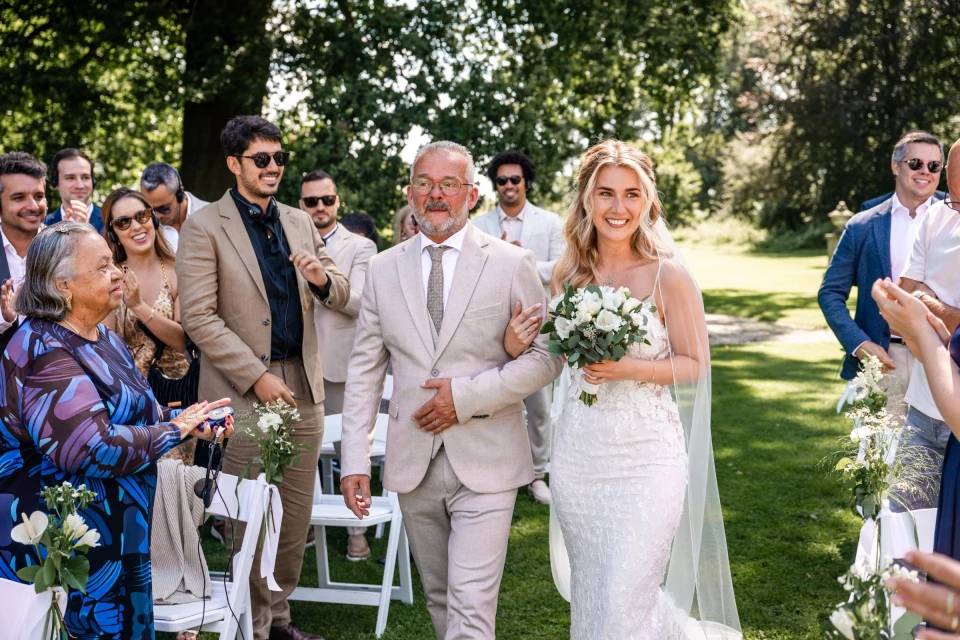
Who walks you down the aisle is entirely your choice. Traditionally the father of the bride escorts her, but today couples are walked by both parents, their mother, a sibling, a child, a close friend, their partner, or they walk alone. The right answer is whoever, or whatever, feels most meaningful to you.
Below we cover the tradition and its meaning, modern alternatives, how to choose, and how to handle tricky family situations with grace.
The walk down the aisle is the longest few seconds of the day, and the arm you hold on the way says something about where you come from. The beautiful part is that, today, the choice is completely yours.
Key Facts at a Glance
- Traditionally the father of the bride walks her down the aisle and symbolically gives her away, a custom rooted in older history.
- Modern couples increasingly rewrite this, choosing both parents, a mother, a sibling, a child, a friend, or walking alone.
- Some couples walk in together, meeting partway or entering side by side as equals.
- The giving away question is now often softened, with officiants asking who supports the couple rather than who gives the bride away.
- 2026 weddings prize personal, meaningful choices over strict tradition, which is reshaping this moment (Source: The Knot Worldwide 2026 Real Weddings Study).
- There is no wrong answer, only the person or approach that means the most to you.
The tradition and what it means
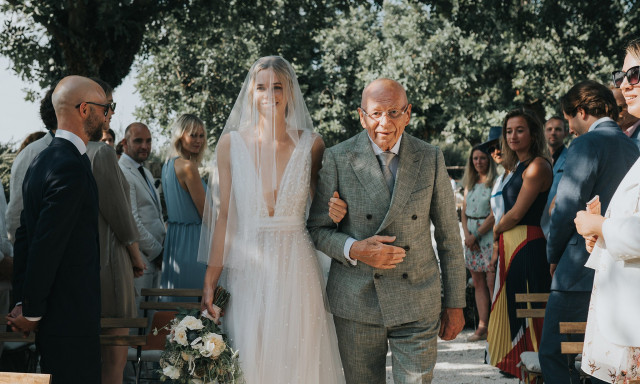
Classically, the father of the bride walks her down the aisle and gives her away to her partner. The custom has old, and frankly dated, origins tied to the idea of a daughter passing from one family to another, but for many people today it has simply become a cherished moment between a parent and child.
According to ThePerfectWedding.com's ceremony etiquette guidance, you are free to keep the tradition for its emotional meaning, adapt it, or set it aside entirely. Plenty of brides treasure walking with their dad, and that is a wonderful reason to do it, just know it is a choice, not an obligation.
Modern alternatives to the traditional walk
There are as many ways to walk down the aisle as there are families. The point is to choose people and an approach that reflect your real relationships, not a script. Some of the most meaningful options couples choose today:
| Who walks you | Why couples choose it |
|---|---|
| Father | The classic choice, a treasured parent and child moment |
| Both parents | Honors both equally and shares the moment |
| Mother | Celebrates the parent who raised or is closest to you |
| A sibling, child, or friend | Honors the person who matters most, whatever the relation |
| Walk in together | Enter side by side or meet partway as equals |
| Walk alone | A powerful statement of independence and self possession |
You can also combine approaches, for example being walked partway by a parent and then meeting your partner to finish the walk together. The arrangement is yours to design.
How to choose who walks you down the aisle
Start from meaning, not obligation. Ask yourself who has shaped your life, who you want beside you in that moment, and what feels true to your family and your values. The answer is often obvious once you stop thinking about what is expected.
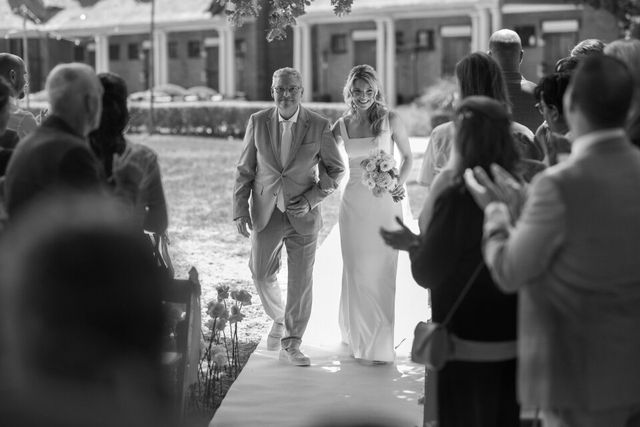
If more than one person matters deeply, you do not have to pick just one. Two escorts, a relay where different people walk you part of the way, or honoring someone in another part of the ceremony all let you include everyone who counts.
Handling tricky family situations
This moment can carry real emotional weight, especially with divorced parents, estrangement, a parent who has passed, or a step parent who raised you. There is no need to force tradition through a painful situation. Choose the arrangement that protects your peace and honors the truth of your relationships.
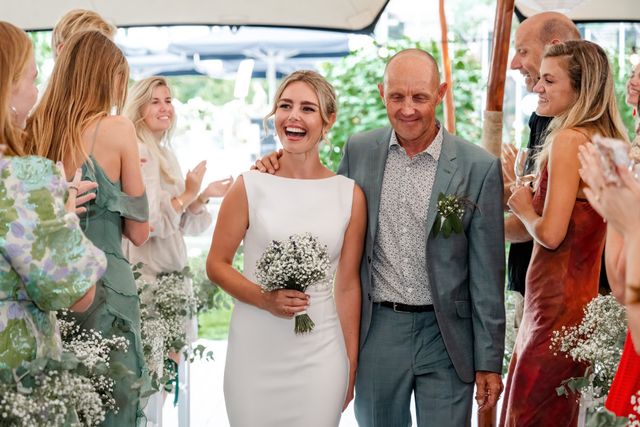
Couples honor a parent who has died with a moment of silence, a photo or token carried in the bouquet, or by walking with someone else who was important. For blended families, both a parent and a step parent can share the walk. Communicate your choices kindly and early so no one is blindsided on the day.
What the officiant says, and the other partner's entrance
If you are keeping a giving away element, talk to your officiant about the wording. The old phrasing can feel dated, so many couples opt for a warmer line, asking who supports this couple, or having both sets of parents stand and offer their blessing together. A quick conversation in advance gets the tone right.
It is also worth remembering that the bride is not the only one who makes an entrance. The other partner can be walked in too, by a parent or both parents, or can already be waiting at the altar, whichever suits your ceremony. Same sex couples and couples of every configuration design this however they like, with one, both, or neither partner being escorted.
Talk through the full sequence with your officiant and coordinator, including who enters when, the music for each entrance, and where everyone ends up standing. A clear plan means every entrance lands the way you pictured it, and no one is left hovering at the back wondering when to walk.
Finally, think about the music for your walk. Whoever is on your arm, the song that plays as you step into the room sets the entire emotional tone, so choose something that means something to you and your escort. A familiar piece can turn an already moving moment into the one that finally brings the tears, both yours and theirs. Cue it clearly with your musicians or sound team so it begins the instant the doors open and you start to walk. It is the soundtrack to the first steps of your marriage, so it is well worth getting right.
Common mistakes to avoid
- Defaulting to tradition out of pressure. Choose from meaning, not obligation. This is your moment to design.
- Not communicating early. Tell the people involved well in advance so feelings are not hurt on the day.
- Feeling you must pick only one person. Two escorts or a relay walk lets you include everyone who matters.
- Forcing a painful arrangement. With estrangement or loss, choose the option that protects your peace.
- Forgetting to brief your officiant. If you are changing the giving away wording, let them know in advance.
The aisle is yours to walk however you choose. Hold the arm that means the most to you, or hold no arm at all and walk into your marriage entirely on your own terms.
Sarah Glasbergen, Founder at ThePerfectWedding.com
Frequently asked questions about who walks you down the aisle
-
Who traditionally walks the bride down the aisle?
Traditionally the father of the bride escorts her and gives her away. The custom has old origins, but today it is widely treated as a meaningful parent and child moment rather than a rule.
-
Can someone other than my father walk me down the aisle?
Absolutely. Couples are walked by both parents, their mother, a sibling, a child, a close friend, or their partner. You can also walk alone or enter together.
-
Can both parents walk me down the aisle?
Yes, and it is increasingly popular. Walking with both parents honors them equally and lets you share the moment with both.
-
Is it okay to walk down the aisle alone?
Completely. Walking alone is a powerful statement of independence and self possession, and a growing number of people choose it.
-
What if my parents are divorced?
You have options: one parent walks you, both share the walk, or different people escort you part of the way. Choose what protects your peace and communicate it early.
-
How can I honor a parent who has passed away?
Many couples carry a photo or token in the bouquet, hold a moment of silence, or walk with another important person while remembering them.
-
Can a step parent walk me down the aisle?
Yes. A step parent who raised you can absolutely do the honor, alone or sharing the walk with a biological parent, whatever reflects your relationships.
-
Do we have to keep the giving away part?
No. Many officiants now soften or skip it, asking who supports the couple rather than who gives the bride away. Tell your officiant your preference in advance.
Plan a ceremony that is truly yours
Every part of your ceremony can reflect who you are. Use the wedding planning checklist on ThePerfectWedding.com to organize your processional, your people, and every meaningful detail.


