Ceremony and Reception at the Same Venue: Pros, Cons and Costs
Ceremony and reception at the same venue: the pros and cons, how room flips work, what you can save and the questions to ask your venue.

by Sarah Glasbergen on 18 November 2026
Web editor
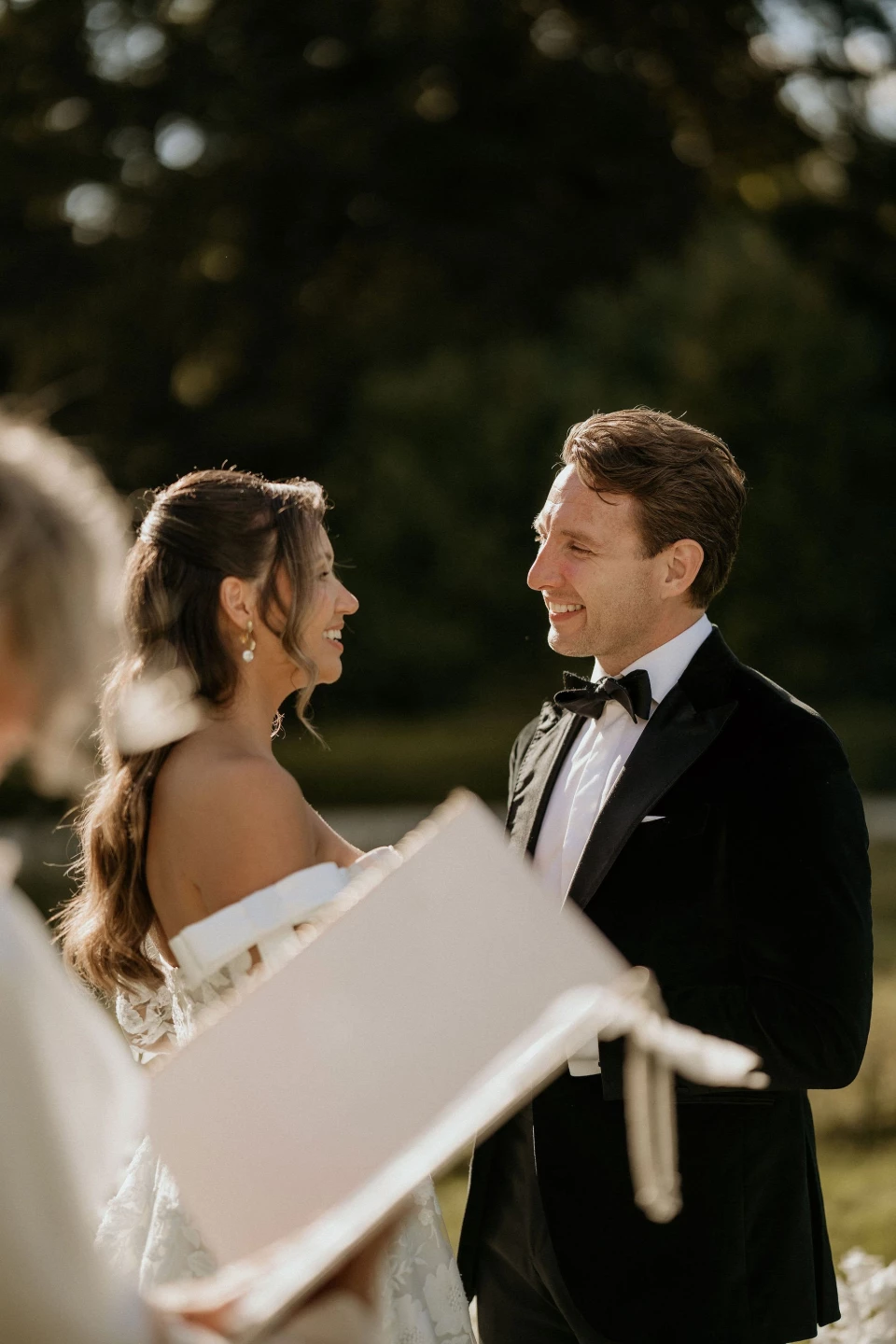
TLDR: Holding your ceremony and reception at the same venue is the simplest setup for most couples: guests stay in one place, cocktail hour flows straight from the vows, you skip transportation between sites and many venues offer a package price for both. The trade-offs are less variety in scenery, a possible room flip if both happen in one space and fewer options if you want a house of worship or a landmark ceremony site. This guide covers the pros and cons, how room flips work, what you can save and the questions to ask your venue.
By Sarah Glasbergen, Founder ThePerfectWedding.com. Updated November 2026
Key Facts at a Glance
- The biggest line item: couples spent an average of $12,900 on their reception venue (Source: The Knot Real Weddings Study, 2026)
- Share of the budget: the venue takes on average nearly 40% of the wedding budget (Source: The Knot Real Weddings Vendor Report, 2024)
- Getting around: wedding transportation averaged $1,100 (Source: The Knot Real Weddings Study, 2026)
- Guests come first: 75% of couples say the guest experience is the most important part of planning (Source: The Knot Real Weddings Vendor Report, 2024)
- Outdoor vows: 57% of couples nationally held an outdoor ceremony (Source: The Knot Real Weddings Vendor Report, 2024)
One of the first decisions after setting your date is whether you need one venue or two. A single location for both the ceremony and the reception shapes your budget, your timeline and how your guests experience the day. If you are still weighing different venues, our guide on how to compare wedding venues helps you score your options side by side.

What does it mean to have your ceremony and reception at the same venue?
It means your guests arrive once and stay for the entire celebration. There are two common setups, and the difference matters for your timeline.
- Separate spaces on one property: for example, a garden or chapel for the vows and a ballroom, barn or courtyard for dinner. Guests simply walk from one to the other.
- One space, flipped: the ceremony takes place in the same room as the reception, and the venue team resets it from rows of chairs to dinner tables while guests enjoy cocktail hour elsewhere.
- One space, no flip: guests are seated at their dinner tables for the ceremony, which suits smaller and more relaxed weddings.
What are the pros of holding both at one venue?
For most couples, the advantages add up quickly. These are the benefits venue coordinators and planners mention most often:
- A seamless flow: cocktail hour starts right after the recessional, with no gap and no driving.
- Fewer logistics: one venue manager, one load-in, one set of rules and one timeline.
- No transport between sites: no shuttles, no parking twice and no guests getting lost.
- Better attendance: older guests, families with kids and out-of-town guests are less likely to skip part of the day.
- Décor that works twice: a ceremony arch or aisle flowers can be moved to frame the sweetheart table or bar.
- An easier rain plan: an indoor backup space is often already on site.
For outdoor ceremonies, ask how the venue handles weather; our guide to outdoor venues with an indoor backup explains what a solid plan looks like.

What are the downsides of one venue for ceremony and reception?
A single venue is not right for every couple. Consider these trade-offs before you commit:
- Less variety: your photos and your guests see one setting all day.
- Room flips: if both events happen in one space, guests must leave the room while it is reset.
- Religious requirements: some faiths require the ceremony in a house of worship, which means a second venue.
- Fewer special ceremony sites: a beach, a landmark or a family church may not host receptions.
- Capacity limits: a venue may fit your guest count for dinner but not for a ceremony with an aisle, or the other way around.
Check both layouts with our venue capacity guide before you sign.
Same venue or two venues: how do they compare?
| Factor | One venue | Two venues |
|---|---|---|
| Guest experience | Simple and relaxed, no travel | Guests travel and may face a gap |
| Timeline | Cocktail hour follows the ceremony | Travel time and buffers needed |
| Transportation | Usually none needed | Shuttles or clear directions and parking |
| Pricing | Often a combined package | Two rental fees and two sets of rules |
| Décor | Pieces can be reused on site | Separate décor or a team to move it |
| Scenery | One setting all day | Two distinct backdrops |
| Best for | Most couples, guests of all ages, tight timelines | Religious ceremonies, landmark sites |
If you do choose two venues, Here Comes The Guide recommends keeping travel time between sites to 30 minutes or less, and the gap between ceremony and reception to no more than 60 to 90 minutes.

What is a room flip and how does it work?
A room flip is when the venue team converts the ceremony space into the reception space during the event. Chairs are moved, tables are set, lighting changes and the dance floor appears, usually while guests enjoy cocktail hour in another room, on a terrace or in a foyer.
- Ask how long the venue needs for a flip with your guest count, and plan cocktail hour to match.
- Confirm a separate cocktail space that comfortably fits all guests, with seating for those who need it.
- Check staffing: is the flip handled by venue staff, the caterer or your rental company?
- Ask about flip fees, since some venues charge extra labor for a full reset.
- Plan the reveal: guests walking into a freshly set reception room can be a lovely moment.
A well-run flip is invisible to guests. A rushed one shows, so let your coordinator guide the timing.
Does having one venue save money?
Often, yes, though savings depend on the venue. Zola notes that many venues offer package discounts when you book both the ceremony and reception, and that one site generally avoids transportation costs and duplicate setup fees.
- One rental fee instead of two, often with a ceremony fee added to the reception package.
- No guest transportation, a category that averaged $1,100 according to The Knot.
- Less duplicated décor: your florist can repurpose ceremony pieces for the reception.
- Fewer vendor hours: your photographer, planner and musicians do not need travel time between sites.
Compare full quotes rather than headline prices, and look at what is included. Our overview of wedding venue cost explains the fees that typically appear. ThePerfectWedding.com recommends asking each venue for a single, itemized quote covering both events.

How does one venue change the guest experience?
Guests rarely remember the exact centerpiece, but they do remember whether the day felt easy. A single venue removes the most common friction points: finding a second address, parking twice, waiting in a car line and arriving at a reception that has not started yet.
- Older relatives and guests with limited mobility have less walking and no transfers.
- Out-of-town guests do not need to arrange rides in an unfamiliar city.
- Parents with young children can step away and return easily.
- Everyone stays together, so the energy from the ceremony carries into cocktail hour.
According to ThePerfectWedding.com's venue advice, this ease is exactly why a single location works so well for couples who put their guests first.
If your venue is far from guest hotels, you may still want a shuttle to and from the property. See our wedding transportation guide for options.

What questions should you ask a venue about hosting both?
Beyond the standard venue questions, a few are specific to holding both events at one property. Bring these to your site visit:
- Which spaces can be used for the ceremony, cocktail hour and reception?
- Is there a ceremony fee on top of the reception package, and what does it include?
- Does the ceremony space need to be flipped, and how long does that take?
- Where do guests go during a flip, and is there seating there?
- What is the indoor backup plan for an outdoor ceremony, and when is the decision made?
- Is ceremony rehearsal time included, and when?
- Can ceremony décor be moved to the reception, and who moves it?
- Are there sound limits for ceremony musicians and the reception band or DJ?
For the full list, use our guide to questions to ask a wedding venue.
“When your ceremony and reception share a venue, the day simply breathes easier. Guests stay together, the celebration flows from the vows to the first toast, and your vendors can focus on what they do best. Ask the right questions about space and timing, and one venue can feel like two worlds.”
Sarah Glasbergen, Founder ThePerfectWedding.com
Same Venue Ceremony and Reception FAQ
-
Is it better to have the ceremony and reception at the same venue?
For most couples, yes. It simplifies logistics, removes travel for guests and often comes with a package price.
-
Is it cheaper to have the ceremony and reception in one place?
It often is. Many venues offer package pricing, and you save on guest transportation and duplicate décor.
-
What is a wedding room flip?
It is when the venue resets the ceremony space into the reception space, usually during cocktail hour.
-
Where do guests go during a room flip?
Usually to a separate cocktail area, terrace or foyer. Confirm it fits all guests and offers seating.
-
When should you choose two venues instead?
When your faith requires a house of worship, or you have your heart set on a ceremony site that does not host receptions.
-
How far apart should a ceremony and reception venue be?
Ideally 30 minutes or less, with no more than 60 to 90 minutes between the two events.
Find your wedding venue
Browse venues that host both your ceremony and reception on ThePerfectWedding.com.
Keep reading: venue site visit checklist and venue contract red flags.


