Wedding Ceremony Music: Songs for Every Moment
Wedding ceremony music guide: the five key moments, song ideas for each, live musicians vs a DJ, costs, and how to choose.

by Sarah Glasbergen on 28 June 2026
Web editor
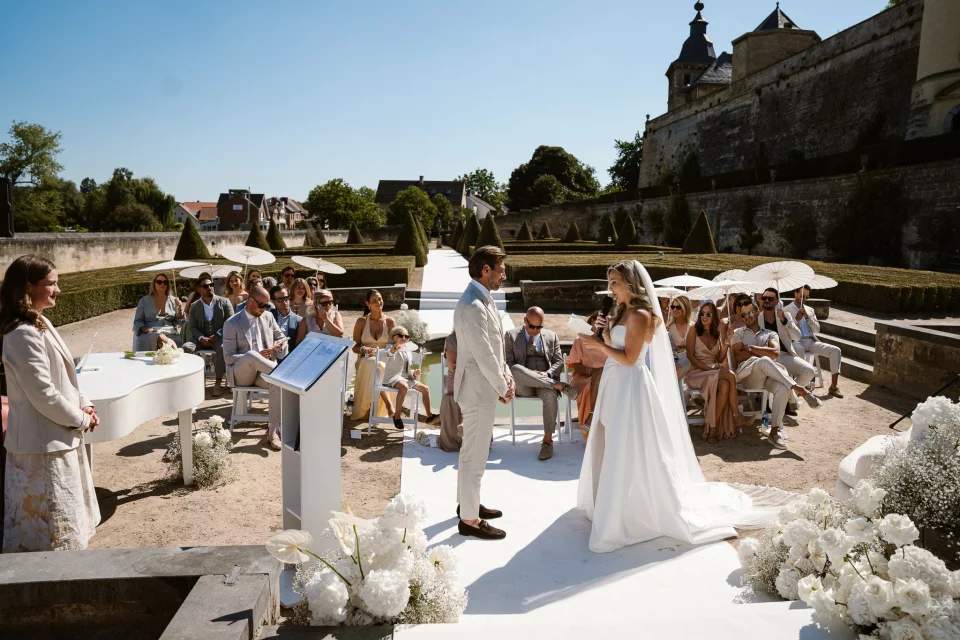
TLDR: Wedding ceremony music has five key moments: the prelude as guests arrive, the processional for the wedding party, the entrance for the person walking down the aisle, an interlude during a unity ritual or signing, and the recessional as you exit. You can use live musicians, typically $500 to $1,200, or a DJ with a curated playlist. Below we cover the songs for every moment and how to choose them.
Ceremony music sets the entire emotional tone of your wedding, yet it is often planned last. Knowing which moments need music and what fits each one makes it simple. ThePerfectWedding.com mapped out every moment, and paired it with our ceremony program guide.
Key Facts at a Glance
- A wedding ceremony has five key musical moments (Source: industry advice, 2026)
- Live ceremony musicians typically cost $500 to $1,200 (Source: industry data, 2026)
- String quartets, guitarists, and harpists are popular live choices (Source: industry advice, 2026)
- A DJ can cover the ceremony for $200 to $500 as an add-on (Source: Zola, 2026)
- The processional and recessional are the most memorable moments (Source: industry advice, 2026)
What Are the Key Moments for Ceremony Music?
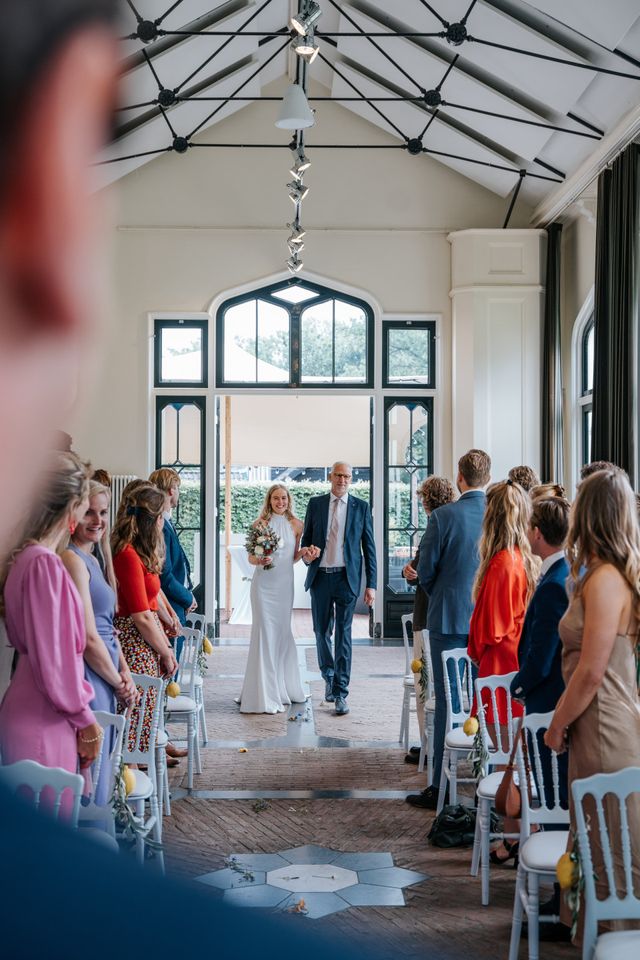
A wedding ceremony has a clear musical structure. The prelude plays softly as guests are seated, the processional accompanies the wedding party down the aisle, and a special song often marks the entrance of the person walking last. During the ceremony, an interlude can underscore a unity ritual, a reading, or the signing. Finally, the recessional sends you back up the aisle on a high note, followed by a postlude as guests depart. Our processional order guide covers who walks when.
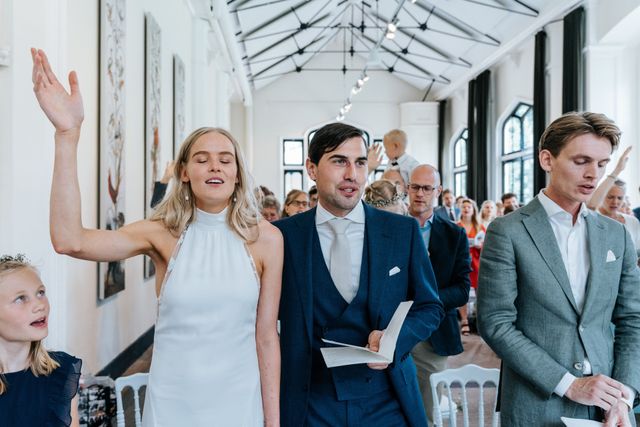
Ceremony Music Moment by Moment
Here is what plays at each point in the ceremony.
| Moment | What it is |
|---|---|
| Prelude | Soft background as guests are seated |
| Processional | The wedding party walks the aisle |
| Entrance | A special song for the final entrance |
| Interlude | Underscores a unity ritual or reading |
| Recessional | An upbeat exit back up the aisle |
Should You Choose Live Musicians or a DJ?
Both work beautifully; it comes down to budget and atmosphere. Live musicians, a string quartet, a solo guitarist, a harpist, or a vocalist, bring an elegant, emotional presence and typically cost $500 to $1,200. A DJ can handle the ceremony with a curated playlist and proper sound, often as a $200 to $500 add-on to your reception package, which keeps everything with one vendor. Some couples blend the two. For a unity moment, our unity ceremony ideas pair beautifully with the right interlude.
How Do You Choose Your Ceremony Songs?
A few guidelines make song selection easier:
- Match the mood to the moment. Gentle for the prelude, building for the entrance, joyful for the recessional.
- Mind the length. Processional songs should match how long the aisle walk takes.
- Make it personal. Choose songs that mean something to you, instrumental or with lyrics.
- Check your venue's rules. Some religious venues restrict secular music, so confirm early.
- Coordinate with your musicians or DJ. Confirm they can play or source your picks.
How Do You Coordinate the Music with the Ceremony?
Smooth ceremony music comes down to cues. Walk your musicians or DJ through the order of events and agree on clear signals for when each piece starts and stops, especially the shift from the processional into the entrance song. Confirm who controls the sound and that microphones are set for your vows and readings. A quick rehearsal run-through irons out the timing. Tie it into your ceremony program so guests can follow along, and browse ceremony musicians and DJs on ThePerfectWedding.com.
How Long Should Each Piece of Ceremony Music Be?
Length matters more than couples expect. The prelude should cover the full 20 to 30 minutes guests spend being seated, so plan a short playlist rather than one song. The processional needs to match how long the aisle walk actually takes, which a quick rehearsal will reveal, and the recessional is a short, upbeat two to three minutes. Tell your musicians or DJ to be ready to extend or fade pieces gracefully if timing shifts on the day.
Can You Mix Live Music and a DJ?
Absolutely, and many couples do. A popular approach is live musicians for the emotional ceremony and cocktail hour, then a DJ to drive the reception dance floor, giving you the best of both. Some couples even blend them within one moment, a saxophonist joining the DJ during peak dancing. The key is coordination, so confirm both vendors know the timeline and hand-off points. Our band versus DJ guide weighs the core choice.
What If Your Venue Has Music Restrictions?
Some venues, particularly religious ones, restrict secular music during the ceremony, and outdoor venues may have sound ordinances limiting amplification or set times. Ask about these rules before you choose songs or book musicians, so there are no surprises. If amplification is limited, acoustic musicians may be the answer. Confirm everything in writing, and fold the order of events into your ceremony program so guests can follow along.
Do You Need Sound for Vows and Readings?
Yes, and it is the most overlooked part of ceremony audio. Without microphones, guests beyond the first few rows often cannot hear your vows or readings, which is a genuine regret afterward. A lapel or handheld microphone and a small PA solve it, especially outdoors or for larger guest counts. Whoever provides your ceremony music, your DJ or live musicians, confirm they bring proper sound for the spoken moments, not just the songs.
Who Decides the Ceremony Music?
The couple chooses, but a few people shape the final picks. Your officiant may have input, especially in a religious ceremony with traditions or restrictions, and your musicians or DJ will advise on what works for each moment and what they can play. Start from songs that mean something to you, then refine with their guidance. Our guide to choosing an officiant covers how that partnership works for a smooth, personal ceremony.
How Do You Cue the Ceremony Music?
Smooth music comes down to clear cues. Walk your musicians or DJ through the order of events and agree on exact signals for when each piece starts and stops, especially the all-important shift from the processional into the entrance song. A coordinator, the officiant, or the musicians themselves can give the cue. A quick run-through at the rehearsal irons out the timing. Fold the sequence into your processional order so everyone knows their moment.
Above all, give your ceremony music the attention it deserves rather than leaving it to the final week. The few minutes of music as you walk down the aisle and back up again set the emotional tone for your entire wedding, so choose with care and rehearse the cues.
“Ceremony music is the most emotional five minutes of music at your whole wedding, so do not leave it to the last minute. Decide on your five moments, pick songs that actually mean something to you, and make sure your musicians or DJ have crystal-clear cues for the transitions. The walk down the aisle and the walk back up are the two everyone remembers, so make them count.”
Sarah Glasbergen, Founder ThePerfectWedding.com
-
What are the key moments for ceremony music?
Five: the prelude as guests are seated, the processional for the wedding party, the entrance for the final walk down the aisle, an interlude during a unity ritual or reading, and the recessional as you exit.
-
How much do ceremony musicians cost?
Live ceremony musicians, such as a string quartet, guitarist, or harpist, typically cost $500 to $1,200. A DJ can cover the ceremony for $200 to $500 as an add-on to a reception package.
-
Should I use live musicians or a DJ for the ceremony?
Both work. Live musicians bring an elegant, emotional presence, while a DJ with a curated playlist keeps everything with one vendor and costs less. Some couples blend the two.
-
How do I choose processional and recessional songs?
Match the mood to the moment, gentle for the processional, joyful for the recessional, mind the song length against your aisle walk, and choose pieces that mean something to you.
-
Can I use any song for my ceremony?
Usually, but some religious venues restrict secular music. Confirm your venue's rules early, and check that your musicians or DJ can play or source your chosen songs.
-
How many songs do I need for the ceremony?
Plan for the prelude set, a processional song, an entrance song, an optional interlude, and a recessional, so roughly four to six pieces plus background music for seating.
Plan Your Ceremony Music with ThePerfectWedding.com
Pair it with our processional order guide and ceremony program guide, then browse ceremony musicians and DJs on ThePerfectWedding.com.
The bottom line on wedding ceremony music: plan for five moments, the prelude, processional, entrance, interlude, and recessional, and choose songs that match each mood and mean something to you. Decide between live musicians at $500 to $1,200 or a DJ add-on, give clear cues for the transitions, and confirm your venue's rules. Done well, the music makes the ceremony unforgettable. Browse musicians on ThePerfectWedding.com to bring it to life.


