Family-Style Wedding Dining: Pros, Cons, and Cost
Family-style wedding dining explained: what it is, the pros and cons, cost vs buffet and plated, and whether it suits your wedding.

by Sarah Glasbergen on 28 June 2026
Web editor
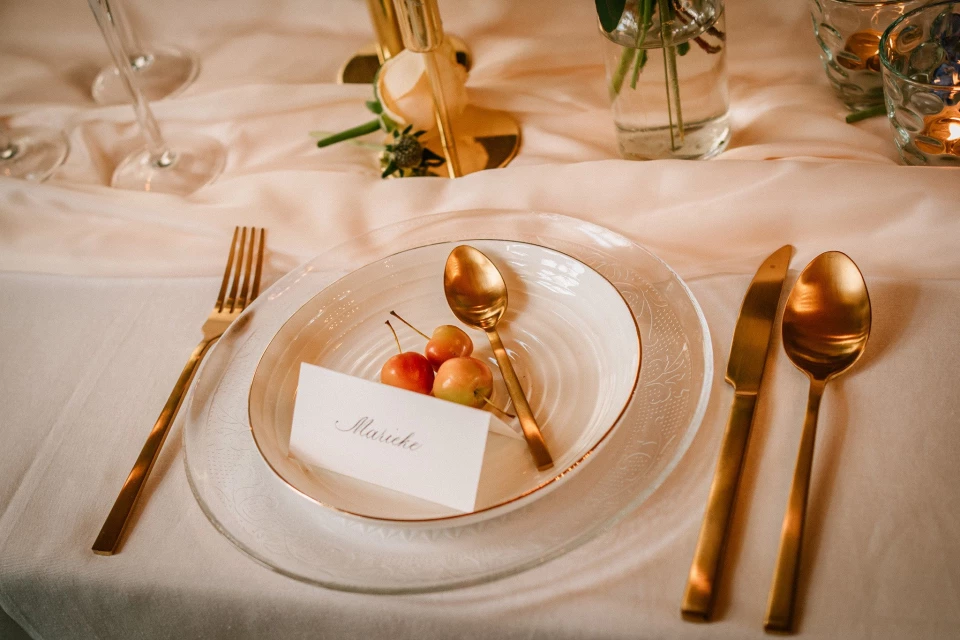
TLDR: Family-style wedding dining serves large platters to each table for guests to share and pass, creating a warm, communal feel between a buffet and a plated dinner. It costs about $50 to $70 per guest, more than a buffet but often less than plated, and needs extra table space for the platters. Below we cover what family-style is, its pros and cons, the cost, and whether it is right for your wedding.
Family-style dining has surged in popularity for the warmth and abundance it brings to a reception. It is a lovely middle ground, but it has trade-offs worth knowing. ThePerfectWedding.com compared the options, and paired this with our guide to seated, buffet, and station service.
Key Facts at a Glance
- Family-style costs about $50 to $70 per guest, between buffet and plated (Source: Zola, 2026)
- Large platters are shared and passed at each table (Source: industry data, 2026)
- It creates a warm, communal atmosphere (Source: industry advice, 2026)
- It needs extra table space for the serving platters (Source: industry advice, 2026)
- It requires more food than a plated meal, like a buffet (Source: industry advice, 2026)
What Is Family-Style Wedding Dining?
Family-style dining sits between a buffet and a plated dinner. Servers bring large platters and bowls of food to each table, and guests pass them around and serve themselves, just like a holiday dinner at home. It pairs the abundance and choice of a buffet with the seated comfort of a plated meal, and no one has to queue. It has become a favorite for the connection it creates. Compare it with other styles in our service styles guide.
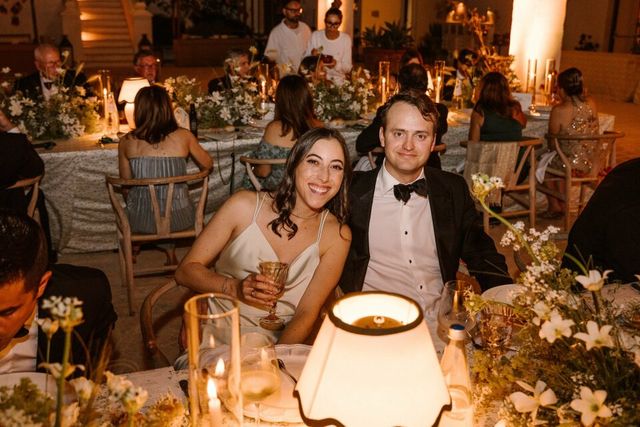
Family-Style vs Buffet vs Plated: How Do They Compare?
Here is how the three main dinner styles stack up.
| Style | Cost per guest | Feel |
|---|---|---|
| Buffet | $40 to $65 | Casual, self-serve, variety |
| Family-style | $50 to $70 | Warm, communal, shared |
| Plated | $65 to $85 | Formal, elegant, served |
What Are the Pros of Family-Style Dining?
Family-style has plenty to recommend it:
- A communal, warm feel. Sharing platters sparks conversation at each table.
- Abundance and choice. Guests pick what and how much they want.
- No buffet line. Everyone is seated and served together.
- A relaxed pace. Less formal than plated, more comfortable than a buffet queue.
- Beautiful tables. Platters of food add to the tablescape.
What Are the Cons of Family-Style Dining?
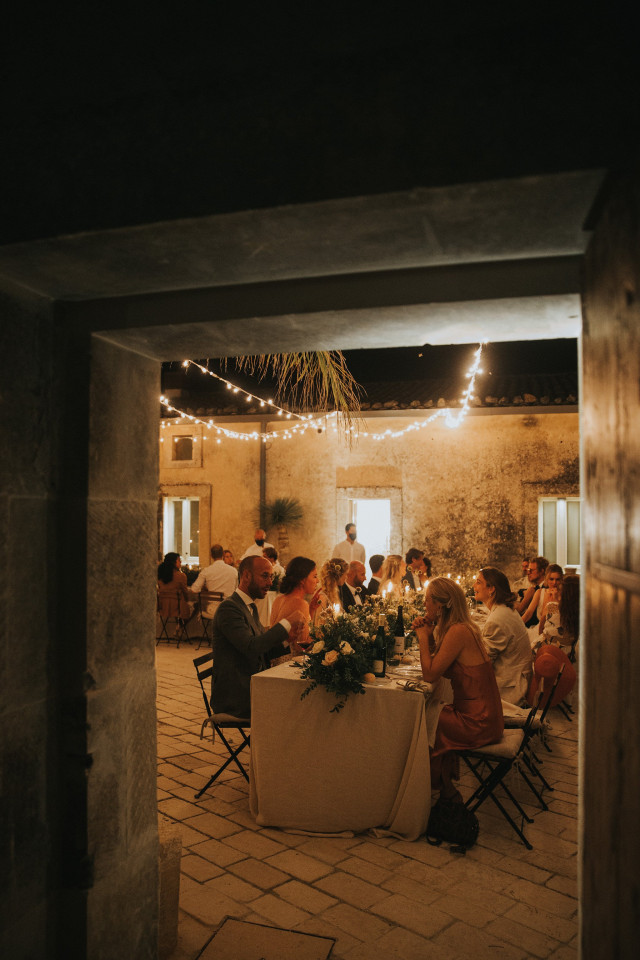
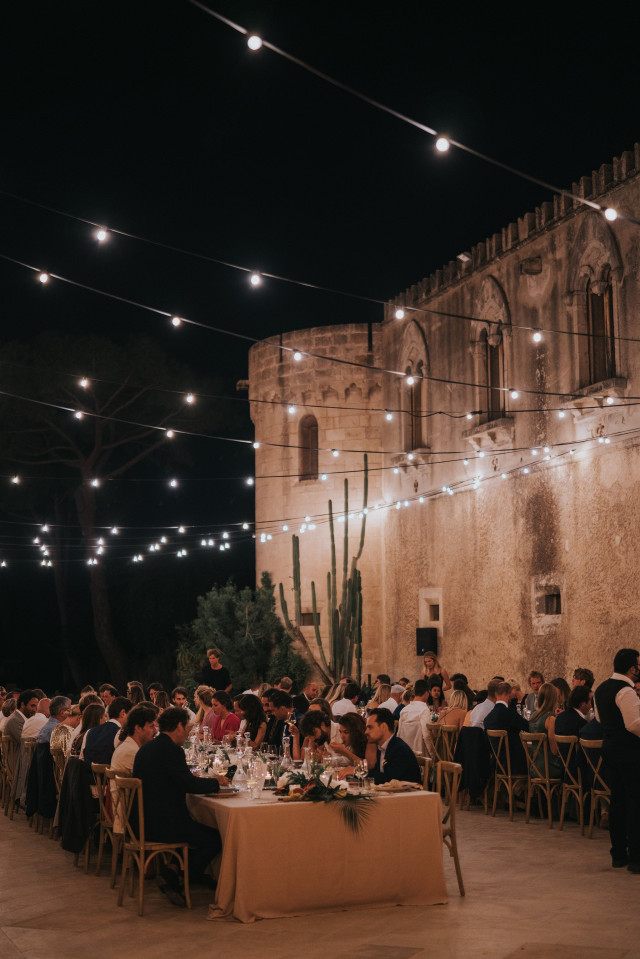
There are trade-offs to weigh. Family-style needs extra space on each table for the platters, which can crowd centerpieces, and it requires more food than a plated meal since portions are not pre-set, nudging the cost up. Dietary needs take coordination, since shared platters mix dishes, so confirm how your caterer flags allergens per table. Discuss these with your caterer early. Our dietary accommodations guide helps you plan.
Is Family-Style Right for Your Wedding?
Family-style shines when connection and abundance are your priorities and your venue has tables large enough for platters alongside the place settings and decor. It suits relaxed, convivial weddings beautifully. If you want the most formal experience, plated service is the move; if budget is the priority, a buffet costs less. Talk through your guest count, table sizes, and budget with your caterer. Browse caterers on ThePerfectWedding.com who offer family-style service.
How Much Food Do You Need for Family-Style?
Because portions are not pre-plated, family-style needs more food than a plated dinner, closer to buffet quantities, so platters stay generous and the last table is served as well as the first. Caterers typically prepare extra to ensure abundance. This is part of why family-style costs more than the food alone would suggest. Your caterer will calculate the right amount for your guest count and menu, so you are not left guessing.
What Foods Work Best Family-Style?
The best family-style dishes are made for sharing. Think roasted and carved meats, whole fish, generous pasta dishes, grain and green salads, and platters of seasonal vegetables and sides, food that looks abundant on a platter and holds up while it is passed. Avoid delicate, individually plated compositions that do not travel well around a table. Your caterer can recommend a menu designed to shine in shared platters rather than on single plates.
How Many Servers Does Family-Style Need?
Family-style sits between buffet and plated for staffing. Servers deliver and sometimes refresh the platters at each table, so it needs more staff than a self-serve buffet but typically fewer than a fully plated meal, where every course is individually served and cleared. Ask your caterer for their staffing ratio for family-style at your guest count, since labor is a major part of the cost and affects how smoothly service flows.
How Do You Handle Dietary Needs Family-Style?
Shared platters take extra planning for dietary needs. Ask your caterer to provide clearly labeled separate dishes for vegetarian, vegan, or gluten-free guests, or to plate individual meals for those with serious allergies rather than relying on shared platters where cross-contact is possible. Brief your caterer on specific needs per table in advance. Our dietary accommodations guide helps you plan this carefully.
Family-Style or Buffet: Which Is Better?
It depends on your priorities. Family-style keeps everyone seated and creates a warmer, more communal feel, but costs a little more and needs roomy tables. A buffet is the more budget-friendly and flexible option, offering lots of variety, though guests queue and tables can feel less unified. Neither is simply better; it is about the experience and budget you want. Compare them fully in our service styles guide.
Does Family-Style Take Longer to Serve?
Family-style is surprisingly efficient. Once servers place the platters, guests serve themselves and each other at the same time across the room, so everyone eats together without the slow march of a buffet line or the course-by-course pace of plated service. There is a little more setup as platters are brought out, but the overall meal tends to flow at a relaxed, sociable pace. Your caterer will build the timing into the reception so nothing feels rushed.
Can You Combine Family-Style With Other Styles?
Yes, and hybrids can be the best of both worlds. Some couples plate a formal first course, then bring out family-style platters for the mains, or pair family-style with a station or two for extra variety. This lets you balance elegance, abundance, and budget to suit your vision. Talk through hybrid options with your caterer. Our service styles guide explains how the formats can work together.
Ultimately, family-style dining is about bringing people together over shared plates, the way the best meals always have. If a warm, abundant, sociable reception is what you picture, few service styles deliver that feeling as naturally, and your guests will remember the easy, convivial mood long after the night is over.
“Family-style is my favorite for couples who want their reception to feel like a big, joyful dinner among people they love. The platters get everyone talking and reaching and laughing together. Just make sure your tables are big enough to hold the food alongside the centerpieces, and brief your caterer carefully on allergies, since the dishes are shared. When it fits the wedding, nothing feels warmer.”
Sarah Glasbergen, Founder ThePerfectWedding.com
-
What is family-style wedding dining?
Servers bring large platters of food to each table, and guests pass them around and serve themselves. It sits between a buffet and a plated dinner, combining abundance and choice with the comfort of being seated.
-
How much does family-style catering cost?
About $50 to $70 per guest, more than a buffet ($40 to $65) but often less than a plated dinner ($65 to $85). It needs more food than plated since portions are not pre-set.
-
What are the pros of family-style dining?
A warm, communal feel that sparks conversation, abundance and choice for guests, no buffet line, a relaxed pace, and platters that add to the tablescape.
-
What are the cons of family-style dining?
It needs extra table space for platters, requires more food than plated service, and takes careful coordination for dietary needs since dishes are shared at each table.
-
Is family-style cheaper than a plated dinner?
Often yes. Family-style averages $50 to $70 per guest versus $65 to $85 for plated, though it costs more than a buffet and requires more food than a pre-portioned plated meal.
-
Is family-style right for my wedding?
It is ideal if you want a warm, communal feel and your tables are large enough for platters alongside decor. Choose plated for the most formal experience, or a buffet to save the most.
Choose Your Service Style with ThePerfectWedding.com
Compare options with our service styles guide and cost per person guide, then browse wedding caterers on ThePerfectWedding.com.
The bottom line on family-style wedding dining: it serves shared platters to each table for a warm, communal feel, costing about $50 to $70 per guest, between a buffet and plated service. It needs roomy tables and careful dietary coordination, but few styles feel as convivial. If connection and abundance are your goal, it is a wonderful choice. Browse caterers on ThePerfectWedding.com who do it well.


