Wedding Reception Music Timeline: Energy Phases from Cocktail Hour to Last Dance
Reception music timeline: cocktail hour, dinner, first dance, open dancing phases with genre suggestions, volume levels, and DJ coordination.

by Sarah Glasbergen on 30 June 2026
Web editor
TLDR: The music at your reception is not one continuous playlist. It is a carefully structured journey that moves through distinct energy phases: the intimate background of cocktail hour, the warm ambiance of dinner, the emotional peak of the first dance and speeches, and the escalating energy of the dance floor that builds to a euphoric peak before the final slow dance. ThePerfectWedding.com's entertainment experts map every phase of the reception music timeline with genre suggestions, energy levels, and the transitions that keep guests engaged from the first drink to the last dance.
Key Facts at a Glance
- A typical 5-hour reception moves through 4 to 5 distinct music phases, each with a different energy level and purpose (Source: The Knot, 2025)
- The dance floor peaks 60 to 90 minutes into open dancing, not at the start. Music energy should build gradually (Source: WeddingWire)
- Share this timeline with your DJ 4 to 6 weeks before the wedding so they can prepare transitions and song selections for each phase (Source: Brides.com)
- Coordinate music timing with your wedding day timeline and coordinator
Phase 1: Cocktail Hour (45 to 60 minutes)
Energy level: low, warm, conversational
Cocktail hour music is background, not foreground. Guests are arriving, greeting each other, getting drinks, and eating appetizers. The music should complement conversation, not compete with it.
- Volume: low enough that guests can talk at normal volume without raising their voices. If you can clearly hear lyrics from across the room, it is too loud
- Genre suggestions: acoustic covers of popular songs, jazz standards, bossa nova, indie folk, acoustic pop, lo-fi chill. Nothing with heavy bass or aggressive vocals
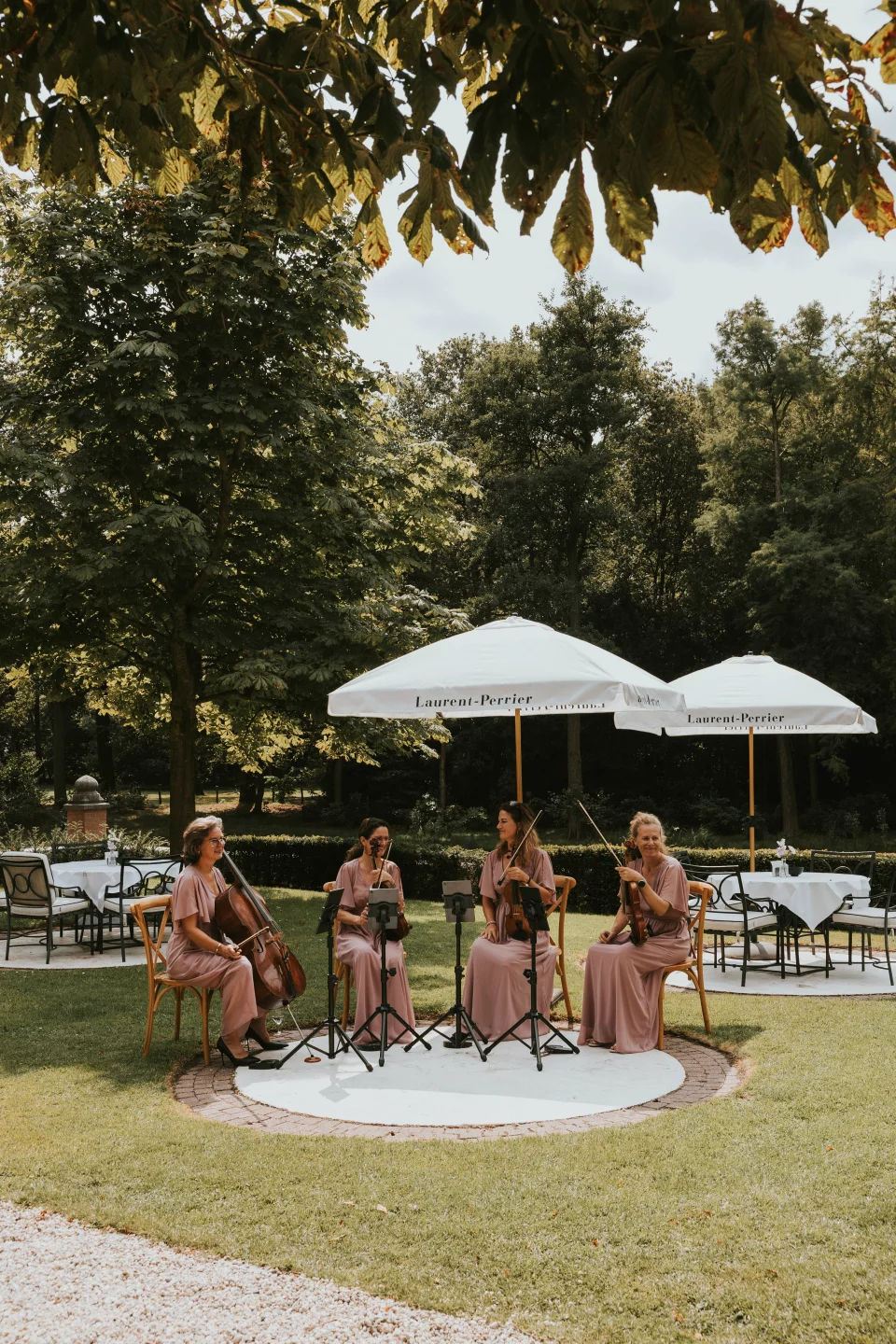
- Live music option: a solo acoustic guitarist, jazz trio, or string quartet is perfect for cocktail hour. Live music at low volume creates an intimate, elegant atmosphere that speakers cannot replicate
- What to avoid: dance music (too early, creates awkward energy when nobody is dancing), silence (feels uncomfortable and institutional), and anything too familiar that demands attention rather than blending into the background

Phase 2: Dinner (60 to 90 minutes)
Energy level: medium-low, warm, ambient
Dinner music shifts slightly from cocktail hour: a bit louder, a bit more present, but still a backdrop for conversation and eating.
- Volume: slightly higher than cocktail hour but still conversational. Guests at the same table should be able to talk without shouting
- Genre suggestions: modern acoustic, soft pop, R&B ballads, Motown classics, singer-songwriter, light jazz. Songs with recognizable melodies that guests enjoy without needing to get up
- Transition to speeches: the DJ lowers music, welcomes the first speaker, and ensures the wireless microphone is working. Music should be completely off during speeches (no background tracks competing with spoken words)
- Between-course moments: if there are pauses between courses, the music fills the gap naturally. The DJ should increase volume slightly during plate clearing (when conversation is naturally louder) and decrease when new courses arrive
Phase 3: Special Dances and Key Moments (20 to 30 minutes)
Energy level: emotional, focused, building
This is the transition from dinner to dancing, and it includes the most emotionally significant music moments of the evening. Coordinate every cue with your coordinator and photographer:
- Grand entrance (2 to 3 minutes): the couple is introduced into the reception. An upbeat, celebratory song that gets applause and sets the tone. This is the first high-energy moment of the evening
- First dance (3 to 5 minutes): the couple's chosen song. The room watches, photographs, and feels the emotion. After the first dance, the DJ can invite parents to join (transitioning to parent dances) or invite all guests to the dance floor (jumpstarting open dancing)
- Parent dances (3 to 5 minutes each): father/daughter, mother/son, or any combination. Emotional, intimate songs. The DJ should confirm exact songs and timing with both the couple and the parents in advance
- Cake cutting (1 to 2 minutes): a brief, fun song that plays during the cut. Not critical to the musical arc but a nice touch
- Bouquet and garter toss (if applicable): upbeat, playful songs that get the crowd cheering
Phase 4: Open Dancing (90 to 120 minutes)
Energy level: building from medium to peak
This is where the DJ earns their fee. Open dancing is not a flat 2-hour playlist at maximum volume. It is a carefully structured energy arc:
First 30 minutes: warm-up
- Start with crowd-pleasers that everyone knows: classic Motown, familiar pop hits, sing-along songs. The goal is to get the first wave of dancers on the floor
- The wedding party leads: your bridesmaids and groomsmen should hit the floor immediately and bring energy. Their enthusiasm gives permission for other guests to join
- Volume: medium-high. Loud enough to feel the beat but not so loud that guests who are still finishing dessert feel assaulted
- Genre: accessible crowd-pleasers across generations. This is not the time for niche genres
Middle 60 minutes: peak energy
- The DJ reads the room and escalates: current pop, dance hits, hip-hop, whatever makes YOUR specific crowd move. This is where the DJ's experience matters most. A skilled DJ knows exactly when to drop the next hit to keep energy building
- Volume: high. The dance floor is the center of the reception now. Guests who want to talk move to the bar or lounge areas. The dance floor is for dancing
- Genre rotation: rotate genres every 3 to 4 songs to keep different groups of guests engaged. Three pop songs, then two hip-hop songs, then a classic rock anthem, then back to current hits. No group of guests should feel excluded for more than 10 minutes
- Group participation moments: one or two crowd-engagement songs (a circle dance, a line dance, a sing-along anthem) bring the entire room together. These are the moments that get filmed and become highlights

Last 30 minutes: wind-down to final moment
- Gradually reduce energy: transition from peak-energy dance hits to beloved sing-along songs and slower crowd favorites. The shift should be gradual, not abrupt. Guests should not notice the energy decreasing until they realize the evening is ending
- The last fast song: one final high-energy song that gets every remaining guest on the floor for the last hurrah
- The last slow dance: a meaningful slow song announced by the DJ: "This is the last dance of the evening." All couples on the floor. The room quiets. This is the emotional closing moment of the reception
- Exit music: as guests transition to the send-off (sparklers, bubbles, confetti), the music should be celebratory and warm. Not blasting dance music, but joyful background that completes the evening
Music Do's and Don'ts by Reception Phase
- DO: give your DJ a general vibe for each phase ("cocktail hour should feel like a jazz lounge, dinner should feel like a warm dinner party, dancing should feel like the best house party ever")
- DO: trust your DJ to select specific songs within those vibes. They know what works in real time better than any pre-made playlist
- DO: include songs that are meaningful to you as a couple ("our road trip anthem," "the song from our first concert together")
- DON'T: front-load all your favorite songs in the first 30 minutes. Build toward the peak
- DON'T: request that the DJ play at maximum volume for the entire reception. Volume escalation is part of the energy arc
- DON'T: allow a well-meaning uncle to take the microphone for an unplanned speech during peak dancing. The coordinator manages this
Expert Tip: "The reception music timeline is a story. Cocktail hour is chapter one: relaxed, social, gentle. Dinner is chapter two: warm, intimate, conversational. The first dance is the emotional climax. And the dance floor is the celebration that follows. Every great wedding DJ understands this arc intuitively and builds the evening like a narrative, not a random shuffle. When you brief your DJ, think in terms of chapters and energy levels, not song lists. Tell them how you want each chapter to FEEL, and let their expertise choose the songs that create that feeling."
Sarah Glasbergen, Founder at ThePerfectWedding.com
Frequently Asked Questions
How many songs should be on our must-play list?
10 to 20 songs maximum. Each song is 3 to 4 minutes. A 5-hour reception includes approximately 75 to 100 songs. If 20 are pre-selected by you and 10 are do-not-plays, the DJ still has 50+ songs to choose based on real-time crowd energy. More than 20 must-plays constrains the DJ's ability to read and respond to the room.
Should we allow guest requests?
Yes, filtered through the do-not-play list. Guest requests make people feel included and often spark dance floor energy (a guest who requested a song will absolutely dance to it). Your DJ should accept requests cheerfully but decline anything on the do-not-play list without making the requester feel rejected.
What if our families have very different music tastes?
This is the norm, not the exception. Your DJ should rotate genres throughout the evening to include something for everyone. A block of classic rock for dad's side, followed by current pop for the bridal party, followed by Latin music for mom's family, followed by Motown for everyone. A skilled DJ weaves diverse tastes into a cohesive evening where every group feels included for multiple song blocks.
When should the music end?
Check your venue's noise curfew first. Many venues require music to end by 10 or 11 PM. Plan the last dance 15 to 20 minutes before the hard curfew to allow time for the exit moment. If there is no curfew, plan music for the full contracted DJ hours and let the evening end naturally. See our timeline template for end-of-reception planning.
More entertainment guides on ThePerfectWedding.com. See our wedding timeline, signature cocktail ideas, and planning checklist. Find DJs on our DJ directory.


