Wedding DJ Cost vs Live Band Cost: A Full Price Comparison
verage wedding DJ cost vs live band cost in 2026, what drives each price, a side-by-side comparison, and how to choose.

by Sarah Glasbergen on 26 June 2026
Web editor
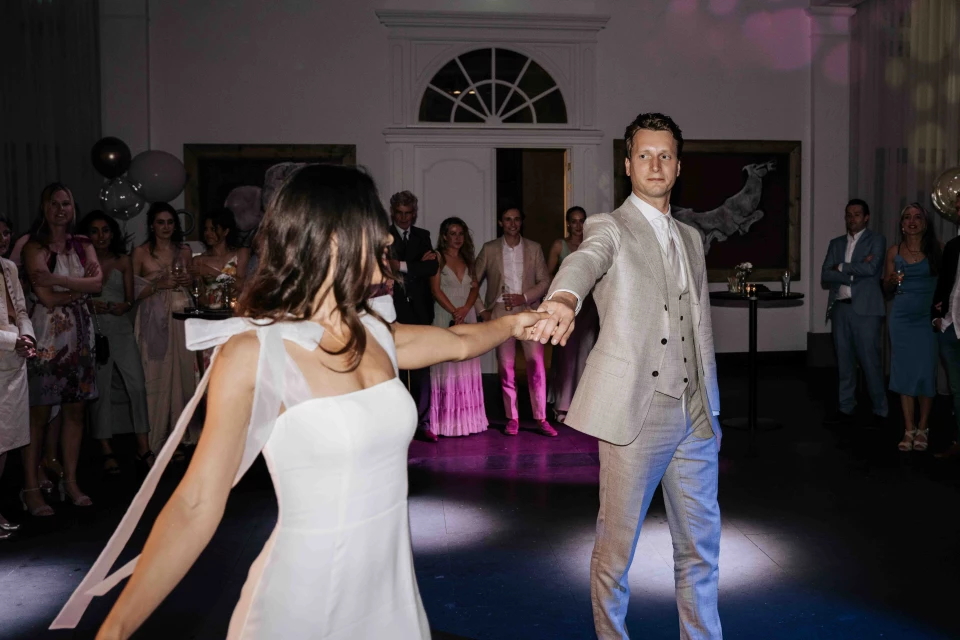
A wedding DJ costs about $1,800 on average, while a live band costs around $4,500, according to The Knot's 2026 data. That makes a band roughly 150 percent more expensive than a DJ. Most couples spend between 3 and 8 percent of their budget on music. Below we compare the two, break down what changes the price, and help you decide which fits your wedding.
The music is what your guests remember most, because it decides whether the dance floor is packed or empty. The DJ versus band question is really a budget question, and the gap between them is large. ThePerfectWedding.com pulled the current numbers from The Knot, Zola, and WeddingWire, and paired them with our band vs DJ comparison.
Key Facts at a Glance
- The Knot 2026 average is $1,800 for a DJ and $4,500 for a live band (Source: The Knot Real Weddings Study, 2026)
- A live band costs about 150 percent more than a DJ on average (Source: The Knot, 2026)
- Zola's average for music and entertainment is $1,567, typically $1,300 to $1,900 (Source: Zola, 2026)
- DJs start around $1,000 and reach $5,000+, while bands run $2,500 to $10,000+ (Source: Zola, 2026)
- WeddingWire reports a DJ at $1,700 and a band at $4,200, close to The Knot's figures (Source: WeddingWire, 2026)
How Much Does a Wedding DJ Cost?
The Knot's 2026 study puts the average wedding DJ at $1,800, and WeddingWire reports a similar $1,700. Zola's broader music figure averages $1,567 across DJs and bands. DJs start around $1,000 for reception-only coverage and climb past $5,000 for experienced professionals or full-day service. You are paying for far more than a playlist: professional equipment, MC duties, timeline coordination, backup gear, and 10 to 15 hours of prep before the day. Plan for music to take roughly 3 to 8 percent of your budget, which you can check against our budget breakdown.
How Much Does a Live Wedding Band Cost?
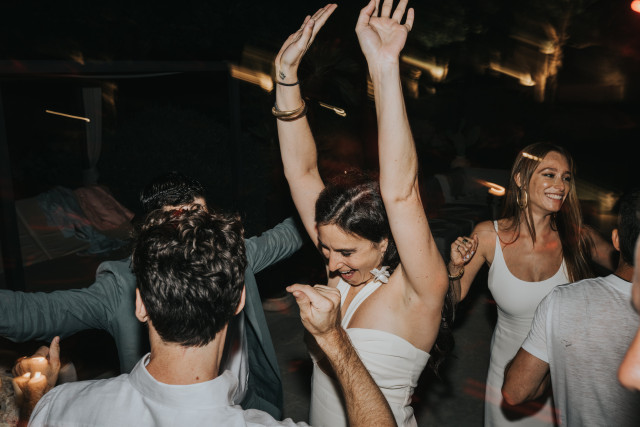
The Knot's 2026 average for a live band is $4,500, and WeddingWire reports $4,200. The range is wide: a small acoustic group starts around $2,500, a standard four-to-six-piece band runs $4,000 to $12,000, and a full show band with horns can exceed $15,000. You are paying for multiple musicians, more equipment, and live performance energy that a DJ cannot replicate.
DJ vs Live Band: Which Is Right for Your Wedding?
The cost gap is real, but so are the trade-offs. This comparison lays out the practical differences.
| Factor | Wedding DJ | Live band |
|---|---|---|
| Average cost | About $1,800 | About $4,500 |
| Music range | Any genre or era, exact recordings | Limited to their repertoire and style |
| Energy | Consistent, reads the crowd | Live performance, unique presence |
| Space and breaks | Compact, plays continuously | Needs stage space, takes breaks |
| Best for | Variety, budget, all-night dancing | Couples who want live music as a focal point |
A growing 2026 trend is the hybrid: a DJ for the night plus live musicians, such as a saxophonist or percussionist, during peak dance sets or a string trio for the ceremony. It blends a DJ's range with live energy. For the full breakdown, see our DJ vs live band guide, and plan the night with our must-have reception playlist and first dance song ideas.
How Can You Save on Wedding Music?
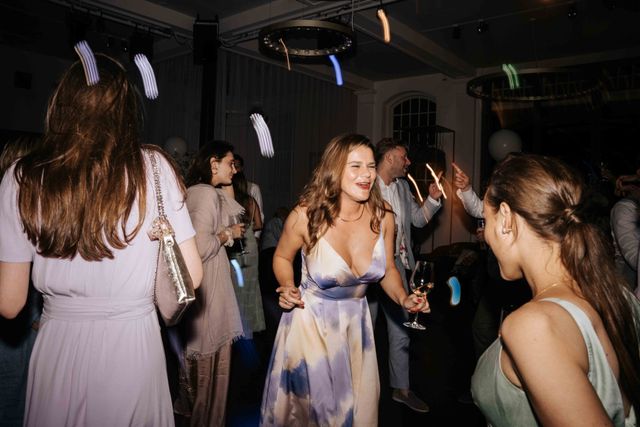
If a band is out of reach, a skilled DJ delivers a packed dance floor for far less, and guest surveys rate dance-floor energy as roughly equivalent between a good DJ and a mid-market band. If you love live music, book a smaller acoustic group for the ceremony and cocktail hour and switch to a DJ for the reception. And always compare at least three quotes, since entertainment pricing varies widely by experience and region.
What Does a Wedding DJ Actually Do?
A wedding DJ does far more than press play. They act as the master of ceremonies, announcing the wedding party, the first dance, the toasts, and the cake cutting, and they coordinate timing with your planner, photographer, and caterer so the night flows. They read the crowd in real time, shifting the music to keep the floor full, and they bring professional sound equipment with backups. Most DJs spend 10 to 15 hours preparing for a single wedding before they ever arrive. That invisible work is a large part of what you are paying for.
Should You DIY Your Wedding Music?
A playlist on a speaker can work for a small, casual celebration, but it carries real risks for a full reception. You lose the MC role, so announcements fall to a nervous friend. You lose crowd reading, so the energy can sag. And you lose the backup of professional equipment and contingency plans. If you do go the DIY route, assign a confident friend to run announcements and test all equipment in advance. For most weddings with dancing, a professional is worth the spend.
When Should You Book Your Wedding Music?
Book your DJ or band 8 to 12 months before the wedding, and sooner for peak-season Saturdays when popular acts book up first. Confirm the contract covers setup time, overtime rates, equipment, and a backup plan if your performer falls ill. For a band, ask how many breaks they take and whether they provide recorded music in between, so the dance floor never goes silent.
How Much of Your Budget Should Go to Music?
Most couples spend between 3 and 8 percent of their total budget on music and entertainment, though those who treat the party as the priority often invest 10 to 15 percent once lighting and extras are added. It is worth weighting this category by how much dancing matters to you. Guests may not remember the centerpieces, but they will absolutely remember whether the dance floor was full. If a lively reception is central to your vision, the music is not the place to cut to the bone.
What About Ceremony and Cocktail Hour Music?
The reception is only part of the picture. Many couples add live musicians for the ceremony and cocktail hour, such as a string trio, a solo guitarist, or a harpist, which creates an elegant atmosphere before the DJ-driven reception begins. These add-ons typically run several hundred dollars each and are a popular way to get a touch of live music without the cost of a full band all night. A DJ can also handle ceremony and cocktail audio through their system, which keeps things simple and is included in many packages.
The bottom line on wedding music: a DJ at around $1,800 delivers a packed dance floor for far less than a band at around $4,500, and guest surveys say the energy is comparable. Book the band because you love live music and want it as a centerpiece, not because you assume it guarantees a better party. Whichever you choose, weight this category by how much dancing matters to you, confirm the contract covers setup, overtime, and a backup plan, and book early. The music sets the tone for the entire reception, so give it the share of your budget it deserves.
“Couples ask me whether a band makes people dance more than a DJ. Honestly, the data says no. A great DJ packs the floor for a fraction of the price. Book the band because you love live music and want it as a centerpiece, not because you think it guarantees a better party. The right DJ absolutely delivers one.”
Sarah Glasbergen, Senior Wedding Editor at ThePerfectWedding.com [DRAFT QUOTE: needs approval]
-
How much does a wedding DJ cost?
About $1,800 on average per The Knot's 2026 data, with WeddingWire reporting $1,700. DJs start around $1,000 for reception coverage and reach $5,000 or more for experienced professionals.
-
How much does a live wedding band cost?
Around $4,500 on average, roughly 150 percent more than a DJ. Small acoustic groups start near $2,500, while full show bands can exceed $15,000.
-
Is a DJ or a band better for a wedding?
Neither is objectively better. A DJ offers more variety and value, a band offers live energy and presence. Guest surveys rate dance-floor energy as similar between a good DJ and a mid-market band.
-
What percentage of the budget should music be?
Most couples spend 3 to 8 percent on music and entertainment, though couples who prioritize the party often invest 10 to 15 percent including lighting and extras.
-
Can I have both a DJ and a band?
Yes, and it is a popular 2026 trend. Many couples pair a DJ with live musicians, such as a saxophonist during peak sets or a string trio for the ceremony.
-
How far in advance should I book?
Book your DJ or band 8 to 12 months out, sooner for peak-season Saturdays when popular acts fill up quickly.
Find Your Wedding Music with ThePerfectWedding.com
Browse wedding DJs and bands on ThePerfectWedding.com, then compare options with our band vs DJ guide and plan the night with our reception playlist and first dance ideas. Check your budget with our budget breakdown.


