Signing the Marriage Register and Your Witnesses
Signing the register is the legal heart of your wedding. Learn who can be a witness, how to choose yours, and how to make the moment special.

by Sarah Glasbergen on 11 November 2026
Web editor

In short
Signing the marriage register is the legal heart of your wedding, the moment you and your witnesses sign the document that makes your marriage official. Most places require one or two witnesses, the rules vary by location, and a little planning turns the paperwork into a meaningful, photogenic moment.
Below we cover what the signing is, who can be a witness, how to choose yours, where the moment fits in the ceremony, and how to make it special. This is general information, not legal advice, so always confirm the rules for your location.
Amid the flowers, the vows, and the confetti, there is one quiet moment that actually makes you married: a pen, a document, and the people you chose to witness it.
Key Facts at a Glance
- Signing the register is the legal act that makes your marriage official, separate from the symbolic parts like vows and rings.
- Most places require one or two witnesses to sign alongside the couple, though the exact number and rules vary by country and US state (Source: general marriage license requirements).
- Witnesses are usually required to be adults, commonly 18 or older, but confirm the age and eligibility rules for your location.
- The signing often happens during or just after the ceremony, and many couples make it a visible, photographed moment.
- Choosing your witnesses is a meaningful honor, often given to a maid of honor, best man, parent, or close friend.
- 2026 couples increasingly personalize even the paperwork, with a special table, pen, or signing music (Source: The Knot Worldwide 2026 Real Weddings Study).
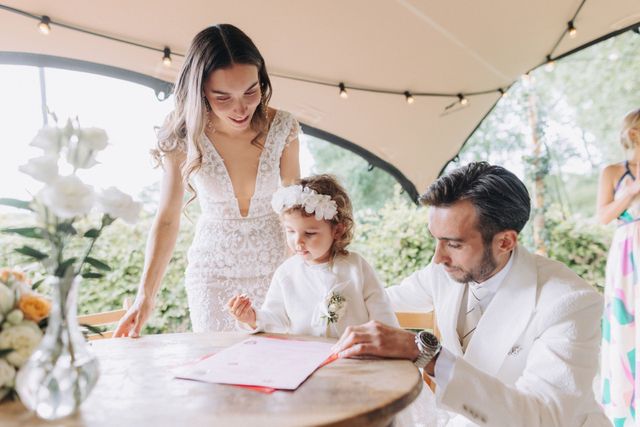
What is signing the marriage register?
Signing the register, or the marriage license and certificate, is the legal step that turns your ceremony into a marriage in the eyes of the law. While the vows and rings carry the emotional weight, this signature is what officially binds it, witnessed and recorded.
According to ThePerfectWedding.com's ceremony planning guidance, treating the signing as a real moment rather than an administrative afterthought makes it both meaningful and photogenic. It is, after all, the literal beginning of your marriage.
Who can be a witness?
A witness is someone who watches you sign and adds their own signature to confirm it happened. The specifics depend on where you marry, but a few general principles hold true in most places.
- Most locations require one or two witnesses. The exact number varies, so check your local rules.
- Witnesses usually must be adults, commonly 18 or older, and able to understand what they are signing.
- They do not have to be related to you. A friend, sibling, parent, or member of the wedding party all qualify in most places.
- They need to be present for the actual signing, not just the ceremony.
- Local rules differ. Some places have extra requirements, so always confirm with your officiant or local authority.
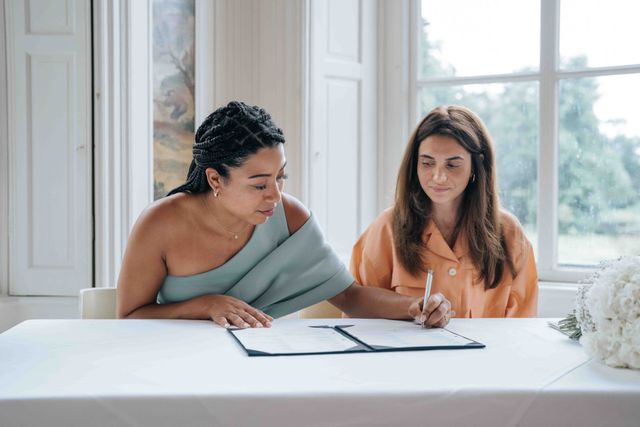
How to choose your witnesses
Being asked to witness a marriage is a quiet but significant honor, so couples often give it to the people closest to them. The maid of honor and best man are classic choices, but parents, siblings, or lifelong friends are just as meaningful.
If you are torn between more people than you have witness spots, remember the role is symbolic as well as legal. Some couples involve extra loved ones in other signing related ways, or simply explain the limit. Choose people who will be reliably present and who will treasure the moment.
Where the signing fits in your ceremony
In many ceremonies the signing happens near the end, after the vows and rings, sometimes with the couple and witnesses moving to a dedicated signing table while music plays. In others, the paperwork is completed just before or just after the ceremony in a quieter setting.
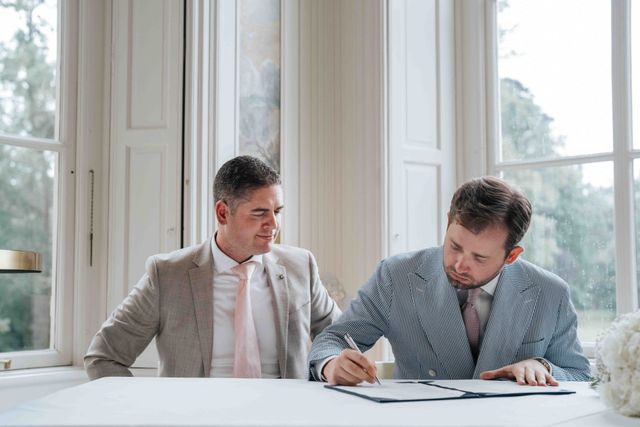
Talk to your officiant about how and when it happens for your ceremony type and location. Building in a short, calm moment for the signing, with your witnesses ready, keeps the flow smooth and gives your photographer time to capture it.
How to make the signing a special moment
With a little thought, the signing becomes a highlight rather than a formality. A beautiful table, a special pen, perhaps one passed down in the family, and a piece of meaningful music elevate the moment without changing a thing about its legal weight.
Some couples frame and display their signed certificate at home afterward as a piece of art, or choose a designer certificate where the keepsake is separate from the legal document. Small touches like these turn a signature into a memory.
It is also worth thinking about who you want in the room. Some couples keep the signing intimate, just the two of them, the officiant, and the witnesses, while others fold it into the ceremony so everyone shares the moment. Neither is more correct. If you want photos of it, make sure your witnesses know to look up and engage rather than staring at the page, and give your photographer a clear line of sight to the table. A few seconds of direction here turns a routine signature into one of the most quietly emotional frames in your whole album.

License, certificate, and what you keep
It helps to know what you are actually signing, because the paperwork usually comes in two parts. The marriage license is the legal authorization to marry, often obtained in advance, while the marriage certificate is the record that you did, signed on the day and filed with the relevant authority.
After the signing, the documents are typically submitted by your officiant to be registered, and you receive an official certified copy afterward. That certified copy is what you will use later to change a name, update records, or prove your marriage, so keep it somewhere safe.
A short checklist keeps the day stress free:
- Confirm the license is valid and in hand before the ceremony, including any waiting period or expiry date.
- Check the required number of witnesses and that they will be present for the signing.
- Bring any identification your officiant or local authority requires.
- Have a reliable pen and a stable signing surface ready.
- Know who files the paperwork afterward and when your certified copy will arrive.
Common mistakes to avoid
- Assuming the rules. Witness numbers and eligibility vary by location, so always confirm with your officiant or local authority.
- Choosing unreliable witnesses. They must be present for the actual signing, so pick people who will reliably be there.
- Treating it as an afterthought. Give the signing a real moment in the timeline rather than rushing it.
- Forgetting the practicalities. Have the document, a working pen, and a stable surface ready in advance.
- Not briefing your photographer. Tell them when the signing happens so the moment is captured.
Everything else at a wedding is a celebration of the marriage. The signing is the marriage. Give that pen and that signature the small, intentional moment they deserve.
Sarah Glasbergen, Founder at ThePerfectWedding.com
Frequently asked questions about signing the register
-
What does signing the marriage register mean?
It is the legal act of signing your marriage license and certificate, witnessed and recorded, which officially makes your marriage valid in the eyes of the law.
-
How many witnesses do you need?
Most locations require one or two witnesses, but the exact number varies by country and US state, so confirm the rule for where you are marrying.
-
Who can be a wedding witness?
Generally any adult, often 18 or older, who is present for the signing and understands what they are signing. They usually do not need to be related to you.
-
Can a family member be a witness?
Yes, in most places a parent, sibling, or other relative can serve as a witness, as can a friend or member of the wedding party.
-
When does the signing happen?
Often near the end of the ceremony, after the vows and rings, or sometimes just before or after the ceremony in a quieter setting. Your officiant will advise.
-
Is the signing the legal part of the wedding?
Yes. While vows and rings are symbolic, signing the register is the step that makes the marriage legally official.
-
Can we personalize the signing moment?
Absolutely. A special table, a meaningful pen, signing music, or a designer certificate all make the moment feel intentional without affecting its legal validity.
-
Do witnesses need to do anything beforehand?
Usually just be present and ready to sign. Confirm any local requirements with your officiant, and make sure they know when the moment will happen.
Plan every detail, big and small
The legal moments deserve as much planning as the pretty ones. Use the wedding planning checklist on ThePerfectWedding.com to keep your paperwork, witnesses, and timeline organized from start to finish.


