Wedding Dress Fabrics: How to Choose by Look, Season, Fit and Photos
Satin, crepe, mikado, tulle, chiffon and more, compared by drape, season, wrinkling and how they photograph, so you can shop with confidence.

by Sarah Glasbergen on 13 November 2026
Web editor
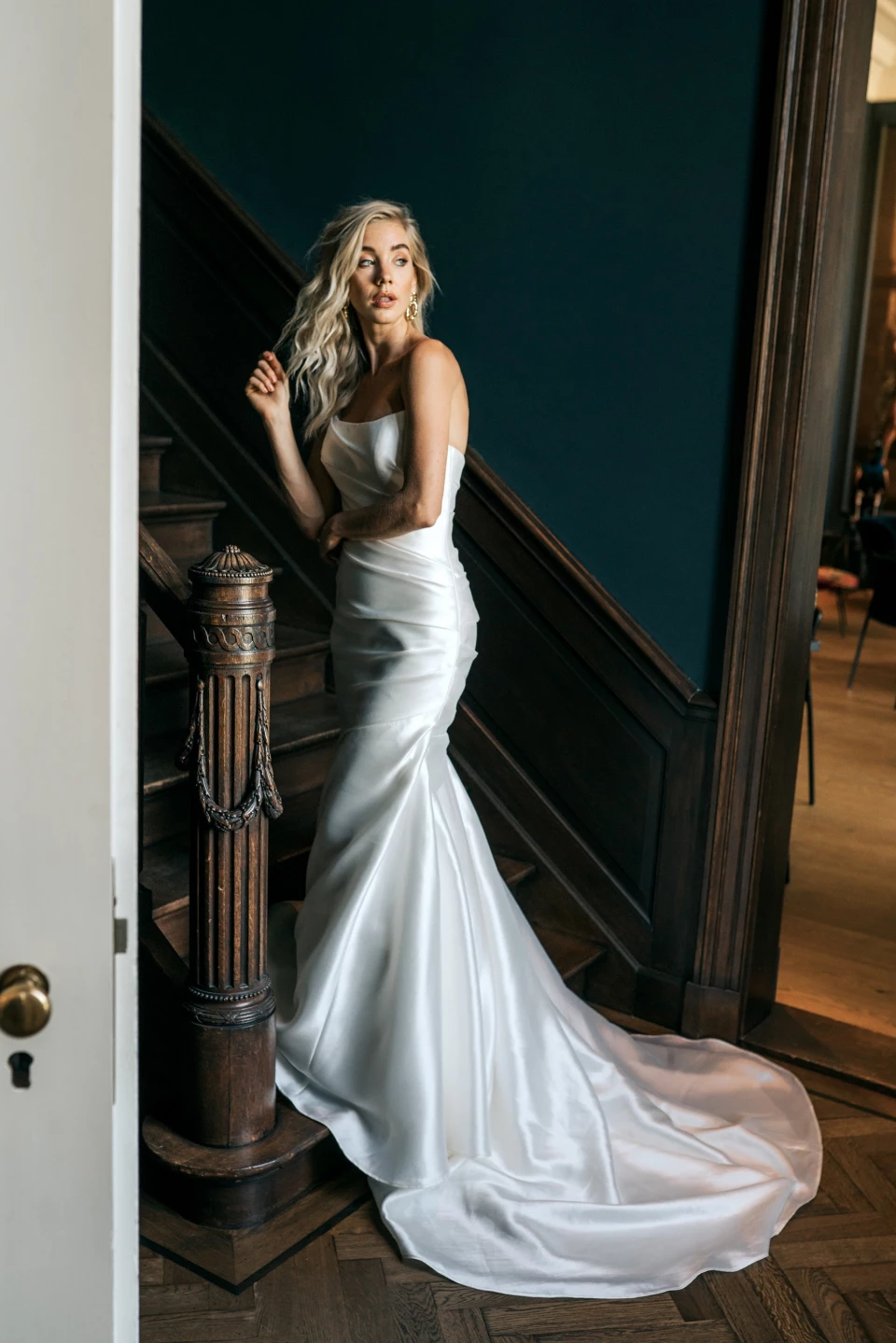
TLDR: The right wedding dress fabric depends on four things: the silhouette you love, your season and venue, how much movement you want and how the gown will look in photos. Structured fabrics like mikado, taffeta and heavy satin hold sculpted shapes and suit cooler, formal weddings. Fluid fabrics like crepe, charmeuse, chiffon and georgette drape close to the body and breathe better in the heat. This guide explains each popular fabric, compares them side by side and helps you match fabric to your body, season and camera. Updated November 2026.
Key Facts at a Glance
- $2,100 average dress spend: that is what US couples spent on a wedding dress, and fabric is one of the biggest drivers of price. (Source: The Knot 2026 Real Weddings Study)
- 19% went custom: nearly one in five women in the study wore custom-made attire, where fabric choice is fully open. (Source: The Knot 2026 Real Weddings Study)
- 46% chose lace: nearly half of brides wore a lace gown, often layered over tulle, satin or crepe. (Source: The Knot Fashion & Attire Study, 2024)
- Satin is a weave, not a fiber: satin and chiffon describe how threads are woven, so both can be made from silk, polyester or nylon. (Source: WeddingWire)
- Crepe resists wrinkles: crepe is described as highly wrinkle-resistant, while chiffon wrinkles and snags more easily. (Source: The Knot)
Fabric is the part of a wedding dress you feel all day long, yet it is often the last thing couples think about when they start shopping. It decides how a gown moves down the aisle, how it handles a humid garden or a chilly ballroom and how it catches light in photos. ThePerfectWedding.com's dress guides always start with fabric, because once you know what you like to wear, the right silhouettes almost choose themselves.


What are the most popular wedding dress fabrics?
Bridal designers work with dozens of materials, but most gowns you try on will use one or more of the fabrics below. Many dresses combine two, such as a crepe bodice with a tulle skirt.
- Satin: a smooth, heavier weave with a soft sheen on one side. It drapes cleanly and works for sheath, A-line, mermaid and ball gown shapes.
- Crepe: a matte, lightly textured fabric with a sleek drape. It is the go-to for minimalist sheath, fit-and-flare and jumpsuit styles.
- Mikado: a dense, crisp silk blend with a subtle luster. It holds sculpted shapes, so you see it in structured A-lines and ball gowns.
- Tulle: a fine, sheer netting that builds volume when layered. It is the classic choice for full skirts, overlays and sheer sleeves.
- Chiffon: sheer, lightweight and matte. It floats and moves, which makes it a favorite for beach and summer weddings.
- Organza: sheer like tulle but smoother and crisper, with a slight luster. It is used for overlays, structured skirts and statement sleeves.
- Charmeuse: lightweight and liquid, shiny on the outside and matte underneath. It suits slip dresses and relaxed sheaths.
- Taffeta: smooth and crisp with a gentle sheen and a soft rustle. It works for structured A-lines and ball gowns.
- Georgette: airy like chiffon but slightly heavier and less sheer, with a fine texture and lots of movement.
How do wedding dress fabrics compare?
Use this table as a quick filter before your appointments. The ratings are general guidance, because weight and fiber content vary between designers.
| Fabric | Look and finish | Drape | Best season | Wrinkling | In photos |
|---|---|---|---|---|---|
| Satin | Smooth, soft sheen | Clean, glossy | Fall, winter, formal spring | Can crease when sitting | Rich glow, shows every fold |
| Crepe | Matte, fine texture | Fluid, body-skimming | All year | Highly resistant | Sleek and modern, no glare |
| Mikado | Crisp, subtle luster | Structured, sculpted | Fall, winter | Stays smooth thanks to density | Bold shape, clean lines |
| Tulle | Sheer, airy netting | Light, voluminous | All year | Moderate, steams out | Soft and dreamy, catches backlight |
| Chiffon | Sheer, matte | Floating, weightless | Spring, summer, beach | Wrinkles and snags easily | Movement in breeze |
| Organza | Sheer, crisp, slight sheen | Airy with body | Spring, summer | Can crease | Luminous layers |
| Charmeuse | Liquid, shiny face | Very fluid | Spring, summer | Shows creases | Glamorous, unforgiving close-up |
| Taffeta | Crisp, gentle sheen | Structured | Fall, winter | Low-maintenance | Sculptural, slight shimmer |
| Georgette | Matte, fine grain | Flowing | Spring, summer | Moderate | Soft, romantic movement |
Sources for the descriptions: The Knot wedding gown fabric glossary and WeddingWire's wedding dress fabrics overview. Your bridal consultant can tell you the exact fiber content of each sample.
Which wedding dress fabric is best for each season?
Season matters more than most couples expect, because you will wear your gown for eight hours or more, often outdoors for photos.
Spring and summer
Choose breathable, lightweight fabrics that move. Chiffon, georgette, organza and charmeuse all suit warmer weather, and The Knot lists chiffon as a warm-weather fabric that stays comfortable in heat. Layers of tulle can also work if the bodice is light. For seaside ideas, see our guide to beach wedding dresses.
Fall and winter
Heavier fabrics feel right when the air turns crisp. Mikado, taffeta, heavy satin and brocade hold their shape, add warmth and look regal in candlelit or ballroom settings. Pair them with long sleeves or a structured coat for outdoor portraits, and browse ThePerfectWedding.com's winter wedding dress ideas for styling inspiration.
Year-round
Crepe, tulle and medium-weight satin are the most versatile. They work in a climate-controlled venue in July or a garden ceremony in October.

Which fabric suits my body shape and silhouette?
Fabric and silhouette work together. A fabric that looks stunning on a hanger can behave very differently once it follows the curves of your body, so try at least one gown in each fabric family.
- To add structure and shape: mikado, taffeta and heavy satin hold a defined waist and a full skirt, which suits ball gowns and structured A-lines.
- To skim and smooth: crepe offers a sleek line with a little more hold than silk, so it flatters fitted sheath and fit-and-flare shapes.
- To create volume without weight: layers of tulle or organza add drama to a skirt while keeping the bodice light.
- To show every curve: charmeuse and lightweight satin cling, so they work best with good foundation garments and precise tailoring.
- To keep things soft and moving: chiffon and georgette fall gently from an empire or A-line waist and flatter most figures.
If you are unsure which shapes suit you, ThePerfectWedding.com's guide to wedding dress silhouettes and our article on dress styles for every body type explain the options in detail.


Which wedding dress fabrics wrinkle the least?
Wrinkles show up in getting-ready photos, after the car ride and after dinner. If you want a gown that looks crisp from the first look to the last dance, fabric choice helps a lot.
- Least likely to wrinkle: crepe, which The Knot calls highly wrinkle-resistant, plus dense mikado and low-maintenance taffeta.
- Middle ground: tulle, georgette and medium-weight satin, which may need a quick steam on the morning of the wedding.
- Most delicate: chiffon, charmeuse and organza, which crease and snag more easily and need careful handling.
Whatever you choose, ask your bridal salon or seamstress about professional pressing before the big day. Many include it with alterations, and it is one of the best investments for flawless photos. Our wedding dress alterations guide explains timing and costs.
How do different fabrics look in wedding photos?
Your photographer will light you differently depending on how your gown reflects light, so mention your fabric when you share your plans.
- High-sheen fabrics like satin and charmeuse glow beautifully in soft window light and golden hour, but they show every fold and seam up close.
- Matte fabrics like crepe and georgette look modern and clean, and they rarely produce glare under flash.
- Sheer fabrics like tulle, organza and chiffon catch backlight and breeze, which creates dreamy, movement-filled images outdoors.
- Structured fabrics like mikado and taffeta keep their shape in every pose, so the silhouette reads clearly even in wide shots.
“Couples often fall for a dress in a mirror and only later realize how much the fabric shapes their whole day. I always suggest one simple test in the salon: sit down, walk, raise your arms and imagine the hottest or coldest hour of your wedding. The fabric that still feels like you is the one to choose.”
Sarah Glasbergen, Founder ThePerfectWedding.com
What about lace and other textured fabrics?
Lace is technically a decorative fabric rather than a base, and it usually sits on top of tulle, satin or crepe. It is so popular and varied, from Chantilly to Guipure, that we cover it separately in our lace wedding dress guide.
Other textured options include brocade and damask, with raised woven patterns that suit formal fall and winter weddings, and point d'esprit, a sheer net with woven dots used for overlays and sleeves.

How does fabric affect the price of a wedding dress?
Fiber content is one of the main reasons two similar-looking gowns can have very different price tags. Pure silk versions of satin, crepe, mikado or charmeuse usually cost more than polyester versions, and they feel and breathe differently.
- Ask for the fiber content: "satin" can mean silk, polyester or a blend, so check the label or ask your consultant.
- Compare the same silhouette in two fabrics: many designers offer one style in more than one material.
- Factor in alterations: heavy, layered or beaded fabrics take longer to alter, so include fittings in your budget.
ThePerfectWedding.com's wedding dress cost guide breaks down budgets and what drives price, and our article on when to start dress shopping helps you leave enough time for ordering and fittings.
Wedding dress fabrics: frequently asked questions
-
What is the most comfortable wedding dress fabric?
Lightweight, breathable fabrics like chiffon, georgette and crepe are usually the most comfortable, especially in warm weather. Comfort also depends on the lining, boning and fit, so ask your consultant how the gown is built.
-
What is the difference between satin and silk?
Silk is a natural fiber, while satin is a weave. A satin gown can be made from silk, polyester or nylon, which is why satin dresses vary so much in price and feel.
-
Which wedding dress fabric is best for a summer wedding?
Chiffon, georgette, organza and lightweight charmeuse are the best choices for summer. They are airy, move with a breeze and feel cooler than heavy satin or mikado.
-
Is mikado a good fabric for a wedding dress?
Yes, mikado is ideal for structured gowns. It is dense, holds sculpted shapes and stays smooth, which makes it a strong choice for formal fall and winter weddings.
-
Does tulle wrinkle easily?
Tulle can crease when it is packed, but the wrinkles usually steam out. Ask your salon or seamstress to steam or press the gown shortly before the wedding.
-
Which fabric photographs best?
Every fabric can photograph beautifully. Satin glows in soft light, crepe looks clean and modern, and sheer fabrics like tulle create dreamy outdoor images. Share your fabric with your photographer so they can plan lighting.
Find a dress in your favorite fabric
Explore gowns by fabric, silhouette and style on ThePerfectWedding.com and book appointments with bridal salons near you.


