Wedding Dress Bustle Types: How to Choose, Add and Master Yours
American, French, ballroom, Austrian and more: which bustle suits your train and fabric, what it costs to add and how to teach someone to do it.

by Sarah Glasbergen on 13 November 2026
Web editor
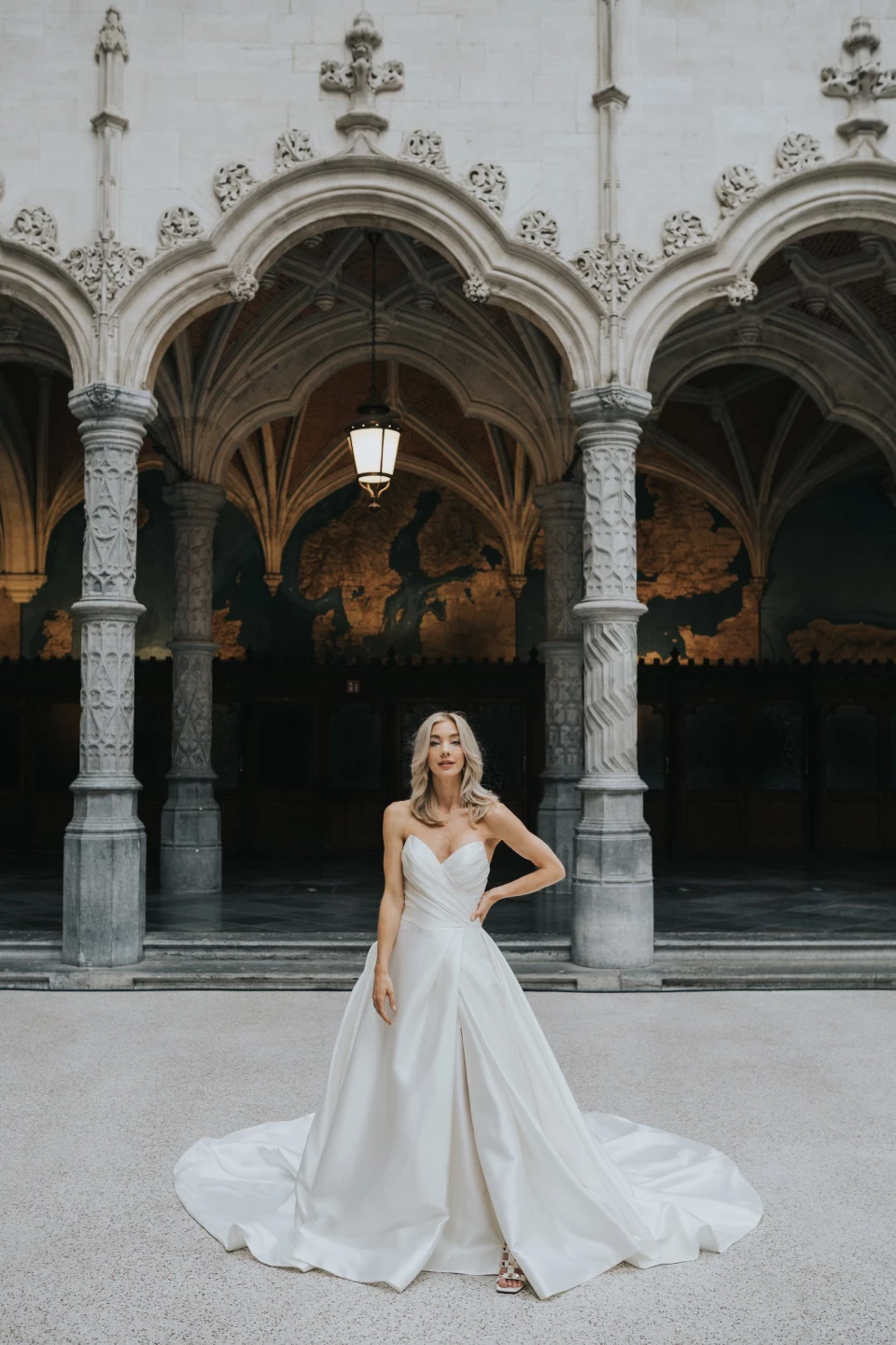
TLDR: A wedding dress bustle is a set of hooks, buttons or ribbons that lifts your train off the floor after the ceremony, so you can walk, mingle and dance without anyone stepping on it. The main types are the American (over) bustle, the French (under) bustle, the ballroom bustle, the Austrian bustle, the train flip and a detachable train. Your seamstress adds it during alterations, usually for $75 to $175 and sometimes more for complex gowns. Below you will find each type explained, which one fits your train and fabric, what to budget and how to teach your bustle helper. Updated November 2026.
Key Facts at a Glance
- $75 to $175 for a bustle: a typical price range from a bridal seamstress, depending on the number of layers and the bustle type. (Source: Melissa Lennie, Sew Creative Bridal, via The Knot)
- Up to $400 for complex bustles: gowns with many pickup points, buttons and ribbons can cost considerably more. (Source: Zola)
- $700 to $1,000 for a standard package: a hem, bustle and one bodice or skirt adjustment often land in this range. (Source: Melissa Oddo, deMelis Atelier, via The Knot)
- $2,100 average dress spend: the bustle is a small addition that protects a big investment. (Source: The Knot 2026 Real Weddings Study)
- Bring your helper to the last fitting: stylists recommend that your designated bustler learns directly from the seamstress. (Source: The Knot)
A beautiful train is made for the aisle, the altar and your portraits. For the rest of the day, it needs to get out of the way. ThePerfectWedding.com's guide to wedding dresses with a train covers train lengths and styles. This article picks up where that one ends: how to lift your train gracefully for the reception.

What is a wedding dress bustle?
A bustle is a custom fastening system a seamstress sews into your gown during alterations. Small hooks, satin-covered buttons, loops or ribbons are placed at matching points on the skirt and train. When they are joined, the train is gathered up to floor length.
Most gowns do not come with a bustle, because the right placement depends on your height, your hem length and the shoes you will wear. That is why it is added once the hem is set. Hooks and loops are often color-matched to the fabric, so they are nearly invisible when the train is down.
What are the different types of wedding dress bustles?
Here are the bustle types you will hear about at your fittings. Your seamstress may combine two of them on a layered gown.
- American (over) bustle: the train is lifted and hooked to the outside of the skirt, usually at the waist or back seam. It is the easiest to fasten and creates a soft, draped pouf. A version with several pickup points is often called a traditional or royal bustle.
- French (under) bustle: the train is folded underneath the skirt and tied with numbered or color-coded ribbons. It creates a layered, cascading effect and is more advanced to fasten.
- Ballroom bustle: the train is attached to points hidden under the skirt so the gown looks like a full-length dress with no train at all. It is popular for ball gowns.
- Austrian bustle: ribbons run through channels sewn inside the skirt. When they are pulled, the train gathers upward into soft ruffles at the center back.
- Train flip: the train is flipped under the gown and hooked at the waistline. It is mostly used on full ball gown skirts.
- Detachable train: the train is attached with buttons, hooks or a snap band and comes off completely after the ceremony.
You may also see a bow bustle, a variation of the over bustle finished with a bow or sash at the waist, and a wrist loop. Stylist Nayri Kalayjian explains in The Knot that fabric loops are mainly meant for hanging the train on a hanger, and carrying a heavy train on your wrist makes it hard to hug and greet guests.


Which bustle is best for my train and fabric?
The right bustle depends on train length, fabric weight and how much detail you want to keep visible. Bridal stylist Hope LaVine advises in The Knot to trust your seamstress to recommend the best bustle for the silhouette of your gown. This table gives you a starting point for that conversation.
| Bustle type | Best for train length | Best fabrics | Look when bustled | Difficulty on the day |
|---|---|---|---|---|
| American (over) | Sweep to chapel | Lace, satin, crepe | Draped pouf at the back | Easy |
| French (under) | Chapel to cathedral | Satin, mikado, taffeta | Cascading layers | Advanced |
| Ballroom | Chapel to cathedral | Tulle, organza, satin ball gowns | Full-length, no visible train | Intermediate |
| Austrian | Chapel | Lightweight satin, chiffon | Soft gathered ruffles | Easy once rigged |
| Train flip | Chapel to cathedral | Full tulle or satin skirts | Clean, full skirt | Intermediate |
| Detachable train | Any, including royal | Any | A different, lighter dress | Easy |
Difficulty ratings for the American, French and ballroom bustles follow The Knot's bustle guide. A few practical rules of thumb:
- Heavy fabrics like satin and mikado need sturdy hooks and often more pickup points, which is why the French bustle is common on them.
- Lace trains often look best with an over bustle, because it keeps the lace motif on top where guests can see it.
- Layered tulle or organza skirts may need a separate bustle for each layer.
- Very long cathedral trains may need many pickup points, or a detachable train instead.


When should you add a bustle during alterations?
Bring up the bustle at your first fitting, but expect it to be finalized at a later one. The seamstress needs to set your hem first, which requires your wedding shoes and the undergarments you will wear on the day. Zola suggests discussing bustle options at your first fitting so there are no surprises later.
- First fitting: discuss bustle options and how you want the back to look when bustled.
- Middle fitting: the hem is set and the seamstress marks the pickup points.
- Final fitting: check the bustle in motion. Walk, sit and do a few dance steps.
For a full overview of how fittings work, see ThePerfectWedding.com's guide on what to expect at your dress fitting and our wedding dress alterations cost and timeline.
How much does it cost to add a bustle to a wedding dress?
A bustle is usually one of the more affordable alterations. Seamstress Melissa Lennie told The Knot that a bustle averages $75 to $175, depending on the layers and the type. Zola gives a wider range of $75 to $400, because the price rises with every hand-sewn button, hook, loop and ribbon.
- Simple over bustle with one to three points: usually at the lower end.
- French or ballroom bustle with many points: mid to higher range.
- Multiple layers: each layer may need its own bustle, which adds cost.
- Beaded or lace-heavy trains: extra handwork to hide the hooks among the detailing.
Ask your seamstress for a written quote that lists the bustle separately. To compare quotes fairly, check how many pickup points each one includes. A bridal seamstress who works with gowns every day will know exactly how much support your fabric needs.
“A bustle is one of those details nobody notices when it is done right, and everyone notices when it is not. Choose a seamstress who has bustled many gowns like yours, take a video at the final fitting, and give one calm, reliable person the job of doing it on the day.”
Sarah Glasbergen, Founder ThePerfectWedding.com
How do you teach someone to bustle your dress on the wedding day?
Choose your bustle helper early. It might be a bridesmaid, a parent, a friend or your wedding planner. The Knot recommends having this person attend your last fitting so they learn directly from the seamstress.
- Bring them to the final fitting and let them bustle the dress at least twice while the seamstress watches.
- Record a short video of the seamstress demonstrating, step by step.
- Ask for numbered or color-coded ribbons on a French bustle so each point is easy to match.
- Pick a time and place: The Knot suggests bustling before cocktail hour or after photos. Add it to your photography timeline.
- Have a backup person who has also watched the video.
- Pack a small kit with safety pins and a few spare hooks in case one comes loose.
Plan a few quiet minutes for it, ideally in a private space with good light. ThePerfectWedding.com's wedding photography timeline guide helps you slot this into the day.

Do all wedding dresses need a bustle?
Not every gown needs one. Dresses without a train, short sweep trains and many slip or sheath styles can be worn as they are. Some couples choose a second reception look instead. If you love the idea of a dramatic ball gown silhouette, explore our princess ball gown guide, where a ballroom bustle or train flip is almost always part of the plan.
Wedding dress bustle: frequently asked questions
-
What is the easiest bustle type?
The American or over bustle is generally the easiest, because the train is simply hooked to the outside of the skirt. It often uses just one to three pickup points.
-
How long does it take to bustle a wedding dress?
A simple over bustle can take a few minutes, while a French or ballroom bustle with many points takes longer. A helper who has practiced at the final fitting will be much faster.
-
Can any wedding dress be bustled?
Most gowns with a train can be bustled, but the best type depends on the fabric, layers and detailing. A skilled bridal seamstress will recommend what works for your gown.
-
When do you bustle a wedding dress?
Most couples bustle after the ceremony and portraits, before cocktail hour or the reception entrance. Plan it into your timeline so you do not miss any moments.
-
Does a bustle damage the dress?
A professionally sewn bustle should not damage the gown. Hooks and loops are placed on seams or reinforced areas so they can carry the train's weight.
-
Is a detachable train better than a bustle?
A detachable train suits very long or heavy trains and gives you a lighter dress for dancing. A bustle keeps the gown as one piece. Your seamstress can help you weigh both options.
Find your dream gown and the right fit
Discover wedding dresses with beautiful trains on ThePerfectWedding.com and connect with bridal salons that offer expert alterations.


