Eternity Rings and Wedding Bands: Styles, Costs and How to Choose
Eternity wedding band guide: full vs half eternity, settings, stone shapes, metals, sizing limits, stacking with your engagement ring and care.

by Sarah Glasbergen on 18 November 2026
Web editor
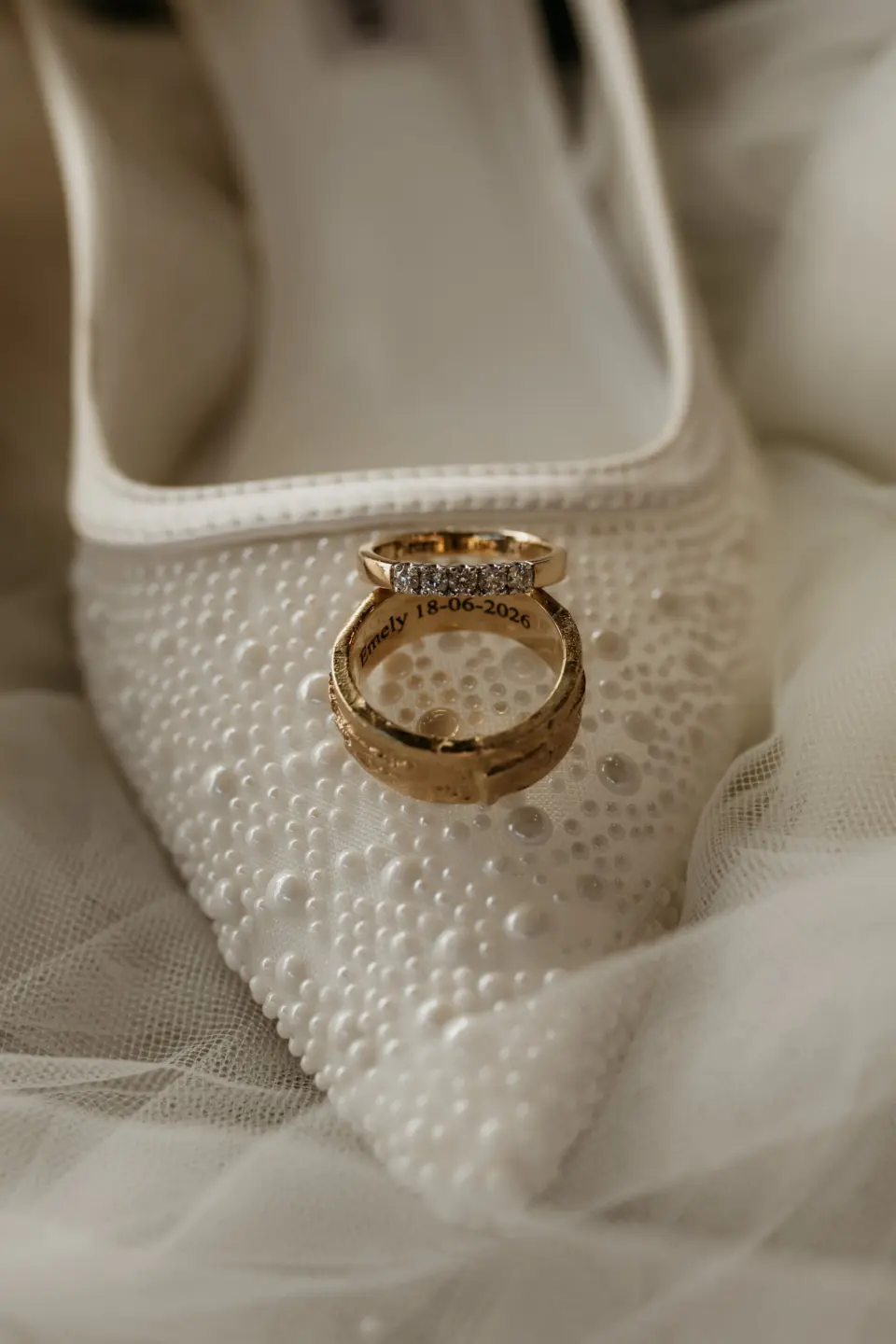
TLDR: An eternity wedding band is a ring set with a continuous row of identical stones, usually diamonds, that symbolizes never-ending love. A full eternity band has stones all the way around, while a half eternity band covers only the top and is easier to resize and more affordable. Your main choices are the setting (pavé, channel, prong or shared prong), the stone shape, the metal and whether it should stack with your engagement ring. Many couples choose one as a wedding band, others receive one later for an anniversary. This guide covers styles, costs, sizing, care and buying.
By Sarah Glasbergen, Founder ThePerfectWedding.com. Updated November 2026
Key Facts at a Glance
- The engagement ring: the average engagement ring cost $4,600 (Source: The Knot Real Weddings Study, 2026)
- Lab-grown is mainstream: 61% of engagement rings had a lab-grown center stone, up 239% since 2020 (Source: The Knot Real Weddings Study, 2026)
- Favorite metal: yellow gold led engagement ring metals at 39% (Source: The Knot, reported by Rapaport, 2026)
- Classic pairing: 38% of couples chose a solitaire setting, a natural partner for an eternity band (Source: The Knot, reported by Rapaport, 2026)
- Big year for weddings: about 2 million US couples married in 2025 (Source: The Knot Real Weddings Study, 2026)
An eternity band is one of the most romantic rings you can wear: a circle of sparkle with no beginning and no end. It works on its own, stacked with an engagement ring or as an anniversary gift years after the wedding. Here is how to choose one that fits your style, your lifestyle and your budget.

What is an eternity wedding band?
An eternity band is a ring with a continuous line of same-size stones set along the band. The unbroken row represents eternal love, which is why it is a popular choice for wedding bands and anniversary rings. Diamonds are the classic choice, but sapphires, rubies, emeralds, lab-grown diamonds and moissanite are all options.
Unlike a solitaire, an eternity band has no single center stone. Its beauty comes from the rhythm of matching stones, so precise cutting and careful matching of color and clarity matter more than the size of any one stone.
Besides serving as a wedding band, the eternity ring is a classic anniversary gift. Many couples mark milestone anniversaries such as the 10th, 25th or 50th with one, and some give an eternity ring to celebrate the birth of a child. There is no strict rule, so it can mark any moment that matters to you.
What is the difference between a full and half eternity band?
The biggest decision is how far the stones go around the band. A full eternity band is set with stones all the way around. A half eternity band, sometimes called a semi-eternity band, has stones across the top half to three quarters of the band and plain metal underneath.
| Feature | Full eternity band | Half eternity band |
|---|---|---|
| Stone coverage | All the way around | Top half to three quarters |
| Sparkle | From every angle | Visible from the top and sides |
| Comfort | Stones sit between fingers | Smooth metal on the palm side |
| Resizing | Usually not possible | Often possible, about one size |
| Cost | Higher; more stones | Lower; fewer stones |
| Best for | Special occasions, stable ring size | Daily wear, active hands |
ThePerfectWedding.com recommends a half eternity band for anyone who works with their hands, or whose ring size changes with the seasons or a pregnancy. A full eternity band is a stunning choice if your size is stable and you want maximum sparkle.
Which eternity band setting is best?
The setting is how the stones are held in place, and it changes both the look and the durability of the ring. These are the four most common options:
- Pavé: many small stones held by tiny beads of metal, creating a surface of continuous sparkle. Delicate and feminine, but the tiny stones need regular checks.
- Channel: stones sit between two walls of metal, protected from knocks. Smooth, modern and practical for daily wear.
- Prong: each stone is held by individual claws, letting in maximum light. Beautiful sparkle, but prongs can snag on fabric.
- Shared prong: neighboring stones share one prong, so less metal shows and more of each diamond is visible. A good balance of sparkle and security.
Other options include bezel settings, where metal surrounds each stone completely, and the French pavé, a vintage-inspired variation with small V-shaped cuts beside each stone. Ask your jeweler to show you the same stone size in different settings side by side.

Which stone shape and metal should you choose for an eternity band?
Round brilliant diamonds are the most traditional and the most forgiving to match. Fancy shapes give an eternity band a more distinctive look, and they work best when the cut matches or complements the engagement ring.
- Round: maximum sparkle and the easiest shape to set in a continuous row.
- Oval: elongates the finger; set east-west for a modern twist.
- Emerald and baguette: step cuts with a clean, Art Deco look.
- Princess: square stones that sit flush together, often in channel settings.
- Marquise and pear: romantic and vintage-inspired, sometimes set in alternating directions.
For help matching shapes, see our engagement ring shapes guide. If you are weighing stone types, read our comparison of moissanite vs diamond.

Your metal should match or intentionally contrast with your engagement ring, since the two rings will rub against each other every day. Matching metals also wear at a similar rate, which keeps both rings in better condition.
- Yellow gold: warm and classic; the most popular metal for engagement rings in The Knot's latest data.
- White gold: bright and modern, usually rhodium-plated, so it needs replating every few years.
- Rose gold: soft pink tone that flatters many skin tones.
- Platinum: dense, naturally white and very secure for holding small stones.
Our guide to wedding ring metals and materials compares durability, maintenance and cost in detail.
How much does an eternity band cost?
The price of an eternity band depends on the number of stones, their total carat weight, quality, whether they are natural or lab-grown, the metal and the setting. A half eternity band uses fewer stones than a full one of the same size, so it typically costs less. Lab-grown diamonds and moissanite let you choose larger or more stones for the same budget.
A good jeweler will show you several combinations of carat weight and quality and explain where you can adjust without losing sparkle. Ask for a written description of total carat weight, color, clarity and metal, and compare quotes from more than one jeweler.
ThePerfectWedding.com tip: shop for your engagement ring and eternity band at the same jeweler if you can. They can match the metal, check how the rings sit together and often offer cleaning and inspections for both.
Can an eternity band be resized?
A full eternity band usually cannot be resized, because there is no plain metal to cut and stretch without disturbing the stones. That makes accurate sizing essential before you order. A half eternity band can often be resized by about one size up or down through the plain section, but repeated resizing can weaken the band.
- Get sized by a jeweler, not with a printable chart.
- Measure at midday when your hands are a normal temperature, not first thing in the morning.
- Size the band together with your engagement ring if you will wear them stacked.
- If your size may change, choose a half eternity band or ask about a custom option.

How do you stack an eternity band with an engagement ring?
Most couples wear the wedding band closest to the heart, below the engagement ring. An eternity band sits beautifully next to a solitaire, but check that the engagement ring setting does not leave a gap or rub against the band. A curved or contoured eternity band can hug a low or halo setting.
Some people add a second eternity band over the years, building a stack for milestones. Read more about pairing rings in our guide on how to wear your engagement ring and wedding band together.

How do you care for an eternity band?
Eternity bands have many small stones, so a little regular care keeps them secure and sparkling. Take your ring off for the gym, gardening and cleaning, and store it separately so diamonds do not scratch other jewelry.
- Clean it at home with warm water, mild soap and a soft brush.
- Have a jeweler check the settings and prongs every six to twelve months.
- Add the ring to your jewelry insurance; see our ring care and insurance guide.
- Ask about professional cleaning and inspection when you buy.
“An eternity band is a promise you wear every day, so choose it for real life. Pick the setting that suits your hands and habits, get sized properly by a jeweler you trust, and let the band tell your story as it grows with you.”
Sarah Glasbergen, Founder ThePerfectWedding.com
Eternity Band FAQ
-
What is the difference between a full and half eternity band?
A full eternity band has stones all the way around. A half eternity band has stones across the top and plain metal underneath.
-
Can you resize an eternity band?
A full eternity band usually cannot be resized. A half eternity band can often be adjusted by about one size.
-
Is an eternity band a wedding band?
It can be. Many couples choose an eternity band as their wedding band, and others receive one later as an anniversary ring.
-
Which eternity band setting is most durable?
Channel and bezel settings protect the stones best. Shared prong offers a good balance of sparkle and security.
-
Which hand do you wear an eternity ring on?
Usually the left ring finger, next to the engagement ring, though some wear it on the right hand.
-
When is an eternity ring given?
Often as a wedding band, at a milestone anniversary or to celebrate the birth of a child.
Find your perfect wedding rings
Explore ring styles, metals and buying guides on ThePerfectWedding.com.
Keep reading: our men's wedding bands guide and vintage wedding rings.


