Moissanite vs Diamond: How to Choose the Right Engagement Ring Stone
Moissanite or diamond? Compare hardness, sparkle, color, price and resale, plus how to tell them apart and what to ask your jeweler.

by Sarah Glasbergen on 13 November 2026
Web editor
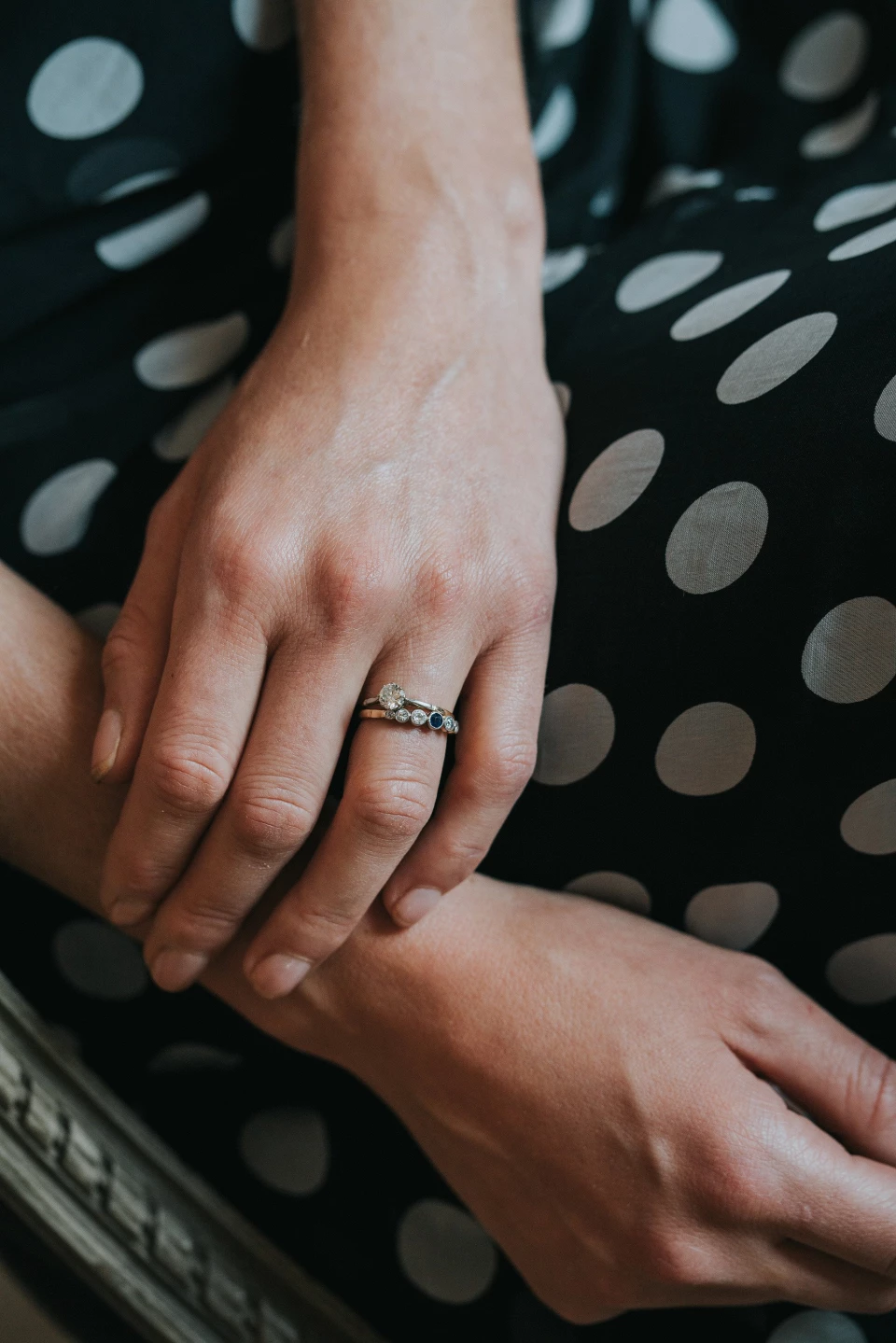
TLDR: Diamond is the hardest gemstone at 10 on the Mohs scale, while moissanite comes in at 9.25, which still makes it durable enough for an everyday engagement ring. Moissanite shows more colorful fire and costs a fraction of a natural diamond of the same size, but it has no standardized grading system and little resale value. A natural diamond costs more, is graded on the familiar 4Cs and tends to hold value better. This guide compares hardness, sparkle, color, price, resale, ethics and how to tell them apart, plus what to ask your jeweler. Updated November 2026.
Key Facts at a Glance
- Hardness: diamond scores 10 on the Mohs scale and moissanite 9.25, making moissanite the hardest of all diamond simulants. (Source: GIA)
- More fire: moissanite has more than twice the fire, or colorful light dispersion, of diamond. (Source: GIA)
- Big price gap: a 3-carat oval natural diamond can cost $15,000 to $40,000 for the stone alone, while a similar-size moissanite was quoted at $2,850. (Source: The Knot, 2024)
- Average ring spend: US couples spent an average of $4,600 on an engagement ring in 2025. (Source: The Knot 2026 Real Weddings Study, via Rapaport)
- Not a diamond by law: under FTC Jewelry Guides, using the word "diamond" for a stone that is not a diamond is considered unfair or deceptive. (Source: FTC, 16 CFR 23.12)
Choosing a center stone is one of the most personal decisions in wedding planning. Moissanite has moved from niche alternative to a mainstream option, and many couples now walk into a jeweler weighing it against a classic diamond. ThePerfectWedding.com's ring guides focus on helping you compare honestly, so this article sticks to the measurable differences and the questions only you can answer.

What is moissanite?
Moissanite is silicon carbide, a mineral first found in 1893 in a meteorite crater in Arizona. Natural moissanite is extremely rare, so the moissanite sold in engagement rings is created in a lab. It is its own gemstone, not a type of diamond and not a lab-grown diamond. (Source: The Knot, 2024)
A diamond, by contrast, is crystallized carbon. The FTC defines it as a mineral of essentially pure carbon with a hardness of 10, a specific gravity of about 3.52 and a refractive index of 2.42. (Source: FTC, 16 CFR 23.12) Lab-grown diamonds share that chemistry, which is why they are a separate comparison from moissanite.
How do moissanite and diamond compare side by side?
This table summarizes the key differences gemologists use. Prices depend heavily on size, cut, quality and setting, so treat them as examples rather than quotes.
| Feature | Moissanite | Natural diamond |
|---|---|---|
| Material | Silicon carbide, lab-created | Crystallized carbon, mined |
| Mohs hardness | 9.25 | 10 |
| Refractive index | About 2.65 to 2.69 | 2.42 |
| Dispersion (fire) | 0.104, more than twice diamond's | Lower, with a whiter sparkle |
| Optical character | Doubly refractive (facets can look doubled) | Singly refractive |
| Grading | No standardized system | GIA 4Cs: cut, color, clarity, carat |
| Example price, 3-carat oval | $2,850 for the stone | $15,000 to $40,000 for the stone |
| Resale value | Limited | Higher, especially for top-quality stones |
Sources for the table: GIA Gems and Gemology (1997) and GIA 4Cs, FTC 16 CFR 23.12, and The Knot (2024) citing Brilliant Earth prices.
Is moissanite as durable as a diamond?
For everyday wear, moissanite is very durable. At 9.25 on the Mohs scale it sits just below diamond, and gemologist Jerry Taylor told The Knot it is durable enough for daily wear. Diamond remains the hardest natural material, so it resists scratches slightly better over decades.
Hardness is not the only factor. Both stones can chip if struck at the wrong angle, so setting style matters. Protective settings such as bezels or sturdy prongs, plus regular checkups, keep either stone secure. ThePerfectWedding.com's guide to engagement ring care and insurance covers cleaning, inspections and coverage.

Does moissanite sparkle more than diamond?
Moissanite does sparkle differently. Its higher refractive index and dispersion create strong rainbow flashes, which GIA describes as more than twice the fire of diamond. Some people love that lively look, while others find it too intense, especially in direct sunlight or in larger stones.
A diamond's sparkle reads as a balance of white brilliance and softer fire. GIA notes that diamonds also take an exceptionally good polish, which gives them a bright luster. Neither is better; it comes down to which look you prefer when you see both under the same lights.
What color and clarity grades does moissanite have?
Diamonds are graded on GIA's 4Cs, and colorless stones in the D, E and F range are the most valuable. Moissanite has no standardized grading system, so each seller uses its own terms, often labels like colorless or near-colorless. According to The Knot, high-quality moissanite has few or virtually no inclusions, comparable to a VVS1 or VVS2 diamond.
- Ask what the seller's grade means: compare it to a diamond color range if possible.
- View stones in different light: daylight, warm indoor light and store spotlights.
- Check for warmth in larger sizes: color tends to be easier to see as stone size grows.


How much cheaper is moissanite than a diamond?
The price gap is the main reason couples consider moissanite. In The Knot's comparison, a 3-carat oval natural diamond from Brilliant Earth cost $15,000 to $40,000 for the stone alone, while a similar-size super premium moissanite cost $2,850. Taylor Custom Rings quoted a 3-carat moissanite solitaire ring at $2,575 and the identical ring with a lab-grown diamond at $7,460. (Source: The Knot, 2024)
For context, the average US engagement ring cost $4,600 in 2025, and 61% of couples chose a lab-grown center stone. (Source: The Knot 2026 Real Weddings Study, via Rapaport) Whatever you choose, set a budget first, then let your jeweler show you where size, quality and setting give the most value. Our article on who pays for the engagement ring can help you start that conversation.
Do moissanite rings hold their value?
Moissanite has limited resale value because it is lab-made and widely available. Natural diamonds generally command higher prices at resale or trade-in because supply is limited, and graduate gemologist Christine Razny-Porter told The Knot that high-quality natural stones can even appreciate. Resale is rarely the main reason to buy an engagement ring, but if long-term value matters to you, ask your jeweler about trade-in and upgrade policies before you buy.
Is moissanite more ethical than diamond?
Ethics are a common reason couples look at moissanite. Because it is made in a lab, there is no mining involved, and Taylor told The Knot that lab-created stones offer a lighter environmental footprint and more ethical sourcing potential. Razny-Porter argues natural diamonds can be just as sustainable when the energy used in lab production is counted, and some jewelers source through lower-impact methods like alluvial mining.
The honest answer is that sourcing varies by supplier. A reputable jeweler should be able to tell you where a stone came from, how it was produced and what certifications or guarantees apply.
“I always tell couples to fall in love with the ring before the label. Moissanite and diamond are both beautiful choices, and the best decision comes from seeing them side by side with a jeweler who explains the differences honestly, without pressure.”
Sarah Glasbergen, Founder ThePerfectWedding.com
How can you tell moissanite from a diamond?
At a glance, many people cannot. A trained jeweler looks for a few telltale signs, according to GIA.
- Doubled facets: moissanite is doubly refractive, so back facet edges can look doubled under magnification.
- Intense rainbow fire: strong colored flashes, especially in larger stones, can point to moissanite.
- Weight: moissanite is lighter, with a specific gravity of about 3.22 versus 3.52 for diamond.
- The right tester: standard thermal probes can read moissanite as diamond, so jewelers use dedicated moissanite or multi-testers.
For certainty, GIA recommends a laboratory grading report. A trusted jeweler can arrange testing and should always disclose clearly whether a stone is moissanite, lab-grown diamond or natural diamond.

What should you ask a jeweler before buying?
Buying from an experienced jeweler gives you expert guidance, clear paperwork and after-sales care. Bring these questions to your appointment.
- Is this stone moissanite, lab-grown diamond or natural diamond, and is that stated on the receipt?
- For diamonds, is there a grading report from an independent lab?
- For moissanite, what does your color grade mean, and is there a warranty?
- Which setting best protects this stone for daily wear?
- What are your resizing, cleaning, trade-in and upgrade policies?
Our guide on how to choose an engagement ring walks through the full buying process, and ThePerfectWedding.com's engagement ring shapes guide and ring metals guide help you design the rest of the ring. Planning ahead? See how to pair your engagement ring and wedding band.
Moissanite vs diamond: frequently asked questions
-
Is moissanite a fake diamond?
No. Moissanite is its own gemstone made of silicon carbide. It is a diamond alternative, and under FTC guidelines it should never be sold as a diamond.
-
Will moissanite get cloudy over time?
Moissanite is very hard and resistant to scratches. Like any stone, it can look dull when oils and lotion build up, and a regular cleaning restores its sparkle.
-
Can a jeweler tell moissanite from a diamond?
Yes. Jewelers look for doubled facets under magnification and use dedicated testers, since standard thermal probes can read moissanite as diamond.
-
Is moissanite cheaper than lab-grown diamond?
Generally yes. In one quote cited by The Knot, a 3-carat moissanite ring cost $2,575 and the identical ring with a lab-grown diamond cost $7,460.
-
Is moissanite hard enough for an engagement ring?
Yes. At 9.25 on the Mohs scale, moissanite is the hardest diamond simulant and durable enough for everyday wear, especially in a protective setting.
-
Does a diamond hold its value better than moissanite?
Usually. Natural diamonds generally fetch higher resale or trade-in prices, while moissanite has limited resale value.
Find your perfect ring
Explore engagement and wedding ring inspiration on ThePerfectWedding.com and book a jeweler appointment to compare stones side by side.


