Wedding Dresses for Tall Brides: Styles That Make the Most of Your Height
Wedding dresses for tall brides: the most flattering silhouettes, extra-length options, trains and veils, shoes, alterations and boutique tips.

by Sarah Glasbergen on 18 November 2026
Web editor
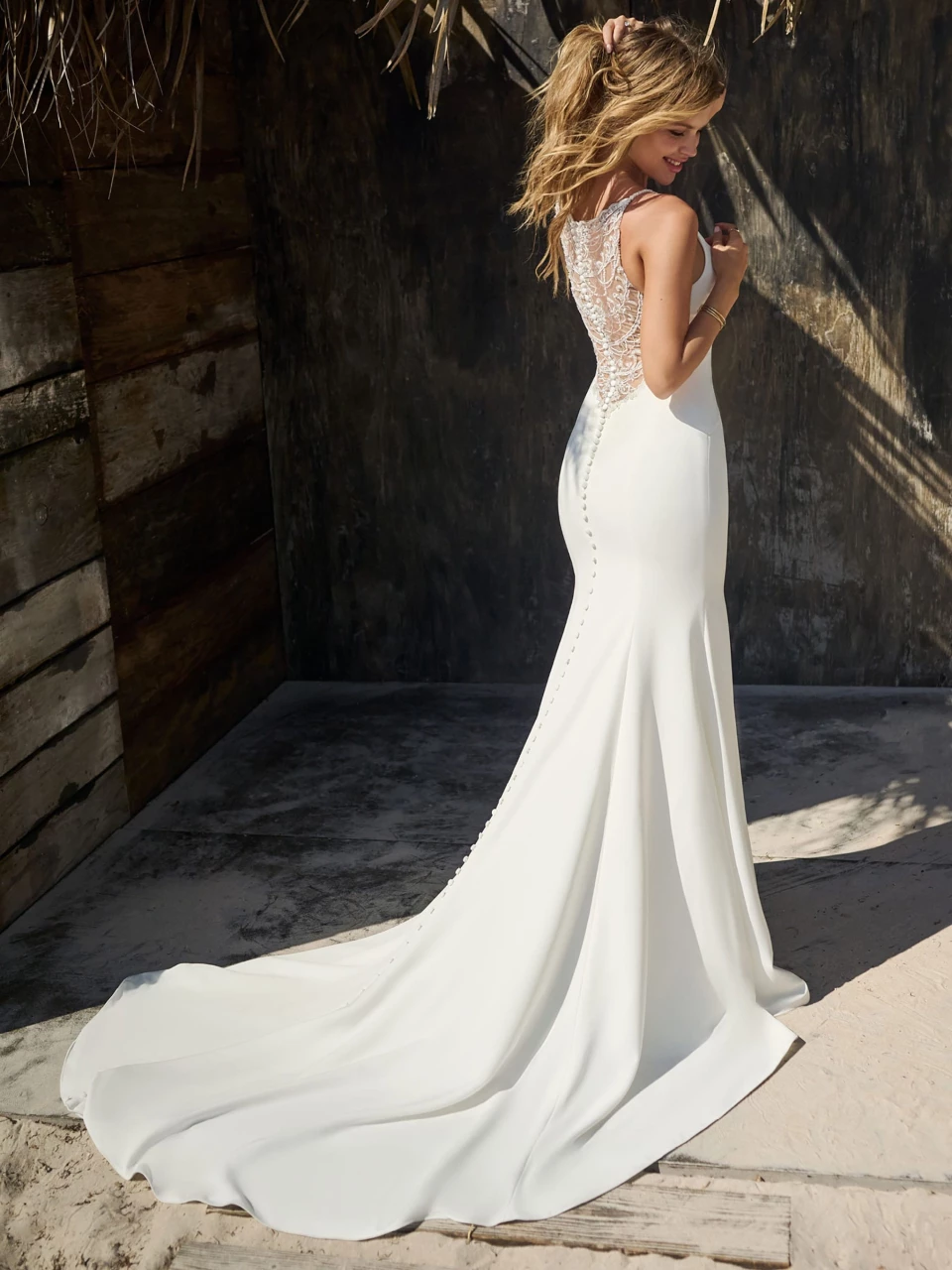
TLDR: The best wedding dresses for tall brides celebrate length instead of hiding it: sheath, mermaid, fit-and-flare, A-line and column silhouettes all look striking on a long frame, and long trains and cathedral veils look especially dramatic. The main challenge is hem length, because many gowns are cut for a bride of around 5 feet 9 inches. If you are taller, especially in heels, ask boutiques for extra-length versions that add several inches to the skirt, and bring your wedding shoes to every fitting. This guide covers silhouettes, lengths, trains, veils, shoes, alterations and boutique tips.
By Sarah Glasbergen, Founder ThePerfectWedding.com. Updated November 2026
Key Facts at a Glance
- Average height: the average US woman aged 20 and over is 63.5 inches tall, about 5 feet 3.5 inches (Source: CDC National Center for Health Statistics, 2023)
- Standard cut: wedding dresses are typically made for a bride around 5 feet 9 inches (Source: David's Bridal, 2026)
- Extra length: David's Bridal lists extra-length gowns with 4 inches of added length (Source: David's Bridal, 2026)
- Floor length rules: 97% of brides choose a floor-length wedding dress (Source: The Knot Wedding Attire Study, 2018)
- Alterations: hemming costs $125 to $450 and a bustle $75 to $175 (Source: The Knot, 2025)
Being tall is a gift when it comes to wedding fashion. Long lines, dramatic trains and bold details that can overwhelm a smaller frame look effortless on you. The trick is finding a dress with enough length and the right proportions, so the gown fits as beautifully as it looks on the hanger.

What wedding dress styles look best on tall brides?
Tall brides can wear almost any silhouette. The question is which one highlights your favorite features and suits your venue. These styles are especially flattering on a long frame:
| Silhouette | Why it works for tall brides | Watch out for |
|---|---|---|
| Sheath or column | Shows off a long, elegant line | Needs enough length so the hem does not hover |
| Mermaid | Dramatic curves and a sweeping train | The flare point must sit at the right spot on your leg |
| Fit-and-flare | Hugs the body, then softens below the hip | Check the torso length so the waist sits correctly |
| A-line | Classic and balanced, flattering on every frame | Short skirts may need an extra-length version |
| Ball gown | Full skirt carries volume beautifully | Bodice length matters for comfort |
| Two-piece | Lets you choose top and skirt lengths separately | A visible midriff gap can grow with movement |
If you have a long torso, pay attention to where the waist seam falls. A natural or dropped waist that hits at your true waist looks far better than one sitting too high. Our guide to wedding dress silhouettes explains each shape in more detail.
What details flatter tall brides?
Tall frames can carry bold details that would overwhelm a petite bride. ThePerfectWedding.com suggests choosing one or two statement features rather than playing everything down.
- Dramatic necklines: deep V-necks, high necks and sculptural off-the-shoulder styles all suit a long neck and torso.
- Bold sleeves: puff sleeves, long bishop sleeves or capes add drama in proportion.
- Large-scale lace or appliqués: big floral motifs look balanced on a tall frame.
- Horizontal details: a contrast belt, a wide sash or a two-tone bodice can break up the line if you want to.
- High slits: a leg slit shows off length and makes dancing easier.
There is no need to look shorter. If you love a sleek, uninterrupted column dress that adds even more height, wear it. The best dress is the one that makes you stand tall with confidence.


How do you find a wedding dress that is long enough?
Length is the most common challenge for tall brides. According to David's Bridal, wedding dresses are typically made for a bride around 5 feet 9 inches, and most fit brides between roughly 5 feet 9 inches and 6 feet. If you are taller than that, or you plan to wear high heels, the standard skirt may end above the floor.
Your options:
- Extra-length sizes: some designers and retailers offer tall or extra-length versions; David's Bridal, for example, lists extra-length gowns with 4 added inches.
- Custom length: many made-to-order designers can add length to the skirt for an extra fee; ask when you order.
- Custom bodice: for a long torso, ask whether the bodice can be lengthened as well as the skirt.
- Lower shoes: a lower heel can make a standard gown work if it is just slightly short.
- Designer-made gowns: a custom-made dress built to your measurements solves length entirely.
Always ask the consultant about extra length before you fall in love with a sample. Sample dresses are usually standard length, so they will look shorter on you than the finished gown can be. Ask the boutique to measure you from the hollow of your neck to the floor in your wedding shoes.
Which trains and veils suit tall brides?
Long trains and veils are made for tall brides. A cathedral train or a full-length veil looks proportionate on a long frame, where it can overwhelm a petite bride. Our wedding dress train guide explains every train length.
| Train or veil | Length | Why it suits tall brides |
|---|---|---|
| Sweep train | Just brushes the floor | Subtle, easy for outdoor venues |
| Chapel train | Extends a little behind you | Balanced and elegant for most venues |
| Cathedral train | Long and sweeping | Dramatic, made for grand ceremony spaces |
| Fingertip veil | Ends at the fingertips | Classic length that frames the dress |
| Cathedral veil | Extends past the train | Breathtaking in photos on a tall frame |
A cathedral veil may need extra length too. Standard veils are measured from the crown of the head, so a veil that skims the floor on an average bride may end higher on you. Ask your bridal salon or veil maker for a custom length.


What shoes should tall brides wear?
Tall brides can wear any heel height they like. Comfort and hem length matter more than height. Decide on your shoes before your first fitting, because the seamstress will hem the dress to their exact height.
- Flats or sandals: comfortable all day and great for outdoor venues and dancing.
- Low block heels: stable on grass and cobblestones.
- Statement heels: perfectly fine if you love them; just make sure the gown is long enough.
- Sneakers for the party: if you change shoes, keep the same heel height to avoid tripping on the hem.
If you are taller than your partner and that matters to you, flats keep you closer in height. Many couples do not mind at all; it is your call. For more styles, read our wedding shoes guide.

What alterations do tall brides need?
Tall brides often need fewer hemming alterations than petite brides, but more attention to torso length, waist placement and straps. According to The Knot, hemming usually costs $125 to $450, and standard alteration packages often total $700 to $1,000.
- Lengthening: limited options once a dress is cut; a seamstress may add a band of matching fabric or lace at the hem.
- Torso: letting out or adjusting the bodice and moving the waist seam.
- Straps and sleeves: lengthening straps or adjusting sleeve length for long arms.
- Bustle: a long train needs a strong bustle for the reception; see our guide to wedding dress bustle types.
Because lengthening is harder than shortening, extra length should be ordered with the dress, not fixed afterward. David's Bridal recommends starting fittings 8 to 12 weeks before the wedding, and most brides need about three. Our alterations cost and timeline guide has the full schedule.
How should tall brides shop for a wedding dress?
A little preparation makes the boutique experience much easier. Tell the consultant your height when you book, so they can pull styles that come in extra length.
- Wear or bring shoes close to the heel height you plan to wear.
- Ask which designers offer extra length or custom length, and how much it costs.
- Do not judge the length of a sample; ask how the ordered gown can be adjusted.
- Check the bodice length and the waist position as carefully as the hem.
- Confirm in writing that extra length is included on your order form.
ThePerfectWedding.com recommends ordering six to nine months before the wedding, as David's Bridal advises, and earlier for extra-length or custom orders, which can take longer to produce. Read our wedding dress shopping tips before your first appointment.
“Tall brides should never shop for a dress that makes them look smaller. Choose a gown with the length and drama to match your frame, order the extra inches up front, and walk down the aisle like the runway was made for you.”
Sarah Glasbergen, Founder ThePerfectWedding.com
Tall Bride Wedding Dress FAQ
-
What height counts as a tall bride?
There is no fixed rule, but brides over about 5 feet 9 inches often need extra length, since many gowns are cut for that height.
-
What is the best wedding dress style for tall brides?
Sheath, mermaid, fit-and-flare, A-line and column styles all flatter a tall frame.
-
Can a wedding dress be made longer?
Yes, if you order extra length when you buy it. Lengthening a finished dress is limited and harder than shortening.
-
Should tall brides wear heels?
Wear whatever is comfortable. Just choose your shoes before the first fitting so the hem is right.
-
What veil length suits a tall bride?
Cathedral and chapel lengths look stunning, though you may need a custom length.
-
How much extra length do tall dresses have?
It varies by designer; David's Bridal, for example, lists extra-length gowns with 4 added inches.
Find your dream wedding dress
Browse wedding dresses and bridal boutiques for every height and style on ThePerfectWedding.com.
Next steps: read what to expect at your wedding dress fitting and when to start wedding dress shopping.


