Religious vs Civil Wedding Ceremony: Differences and How to Choose
Religious vs civil wedding ceremony compared: officiant, location, flexibility, requirements, and cost. How to choose the right one.

by Sarah Glasbergen on 28 June 2026
Web editor
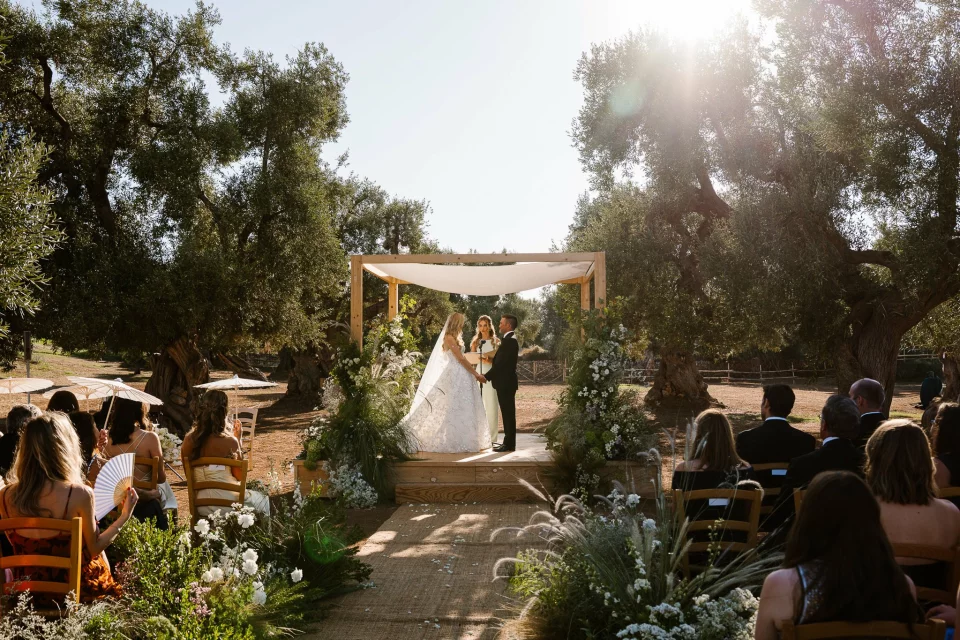
TLDR: A religious ceremony is led by a faith official and follows the traditions of your religion, often in a place of worship, while a civil ceremony is led by a legal official, can be held almost anywhere, and is fully customizable. Both are legally binding with a marriage license and an authorized officiant. Below we compare the two on location, flexibility, requirements, and cost, so you can choose the ceremony that fits your beliefs and your vision.
The ceremony is the heart of the wedding, and the choice between religious and civil shapes everything from where you marry to what you can say. The right answer depends on your faith, your families, and how much you want to personalize the script. ThePerfectWedding.com laid out the differences clearly, and paired them with our guide to choosing an officiant.
Key Facts at a Glance
- A religious ceremony follows the traditions of your faith, often in a place of worship (Source: wedding etiquette, 2026)
- A civil ceremony is led by a legal official and can be held almost anywhere (Source: wedding etiquette, 2026)
- Both are legally binding with a valid marriage license and an authorized officiant (Source: legal requirements)
- An officiant typically costs $260 to $300, with religious ceremonies often involving a donation (Source: industry data, 2026)
- Civil ceremonies offer full script flexibility, while religious ones follow set liturgy (Source: wedding etiquette, 2026)
What Is the Difference Between a Religious and Civil Ceremony?
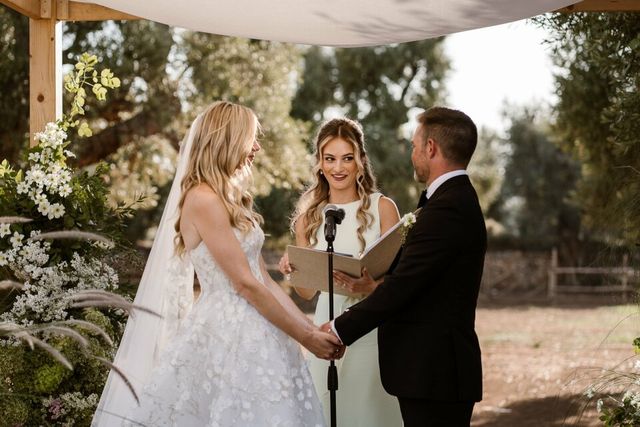
A religious ceremony is officiated by a member of the clergy, a priest, rabbi, imam, minister, or similar, and follows the rituals, readings, and liturgy of your faith. It is often held in a church, temple, mosque, or synagogue, though many faith officials will travel to a venue. A civil ceremony is officiated by a legal authority, such as a judge, justice of the peace, or licensed officiant, and is secular, meaning you write the script and vows yourself. Both are equally legal as long as you have a valid marriage license and an authorized officiant. Our guide to choosing an officiant helps with either path.
Religious vs Civil Ceremony: A Side-by-Side Comparison
Here is how the two compare across the factors couples weigh most.
| Factor | Religious ceremony | Civil ceremony |
|---|---|---|
| Officiant | Member of the clergy | Judge, official, or licensed officiant |
| Location | Often a place of worship | Almost anywhere |
| Script | Follows faith traditions | Fully customizable |
| Requirements | May include membership or counseling | Marriage license only |
| Cost | Officiant fee or donation | Officiant fee, often $260 to $300 |
When Is a Religious Ceremony the Right Choice?
A religious ceremony is the natural fit when faith is central to your lives or your families, when you want the blessings and traditions of your religion, or when marrying within your faith community matters to you. It carries deep meaning and a sense of continuity, and the structure of the liturgy is a comfort to many couples. Keep in mind some faiths require membership, premarital counseling, or specific readings, so ask early. If you are blending two faiths, our interfaith ceremony guide shows how it can be done beautifully.
When Is a Civil Ceremony the Right Choice?
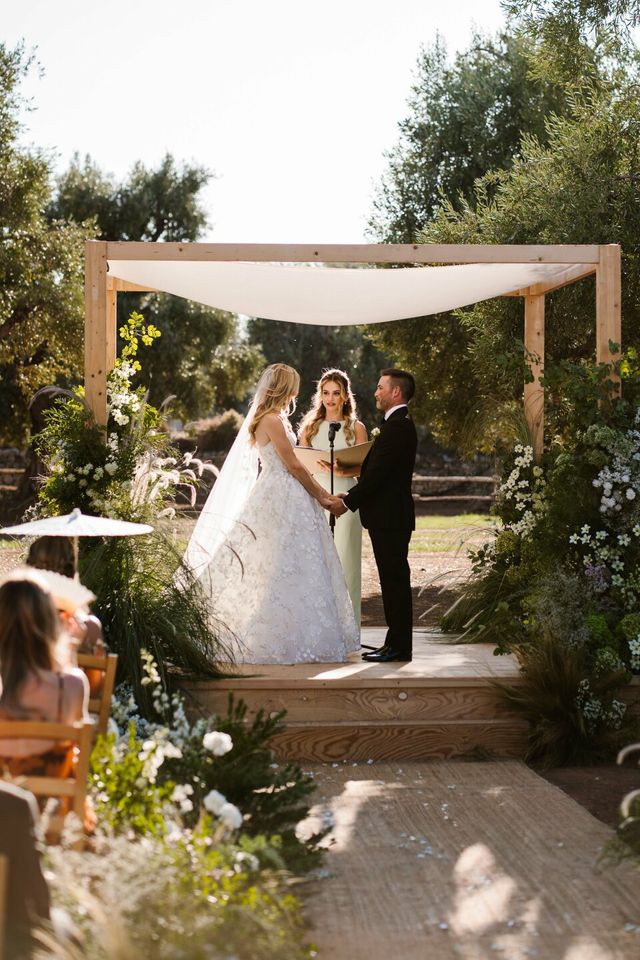
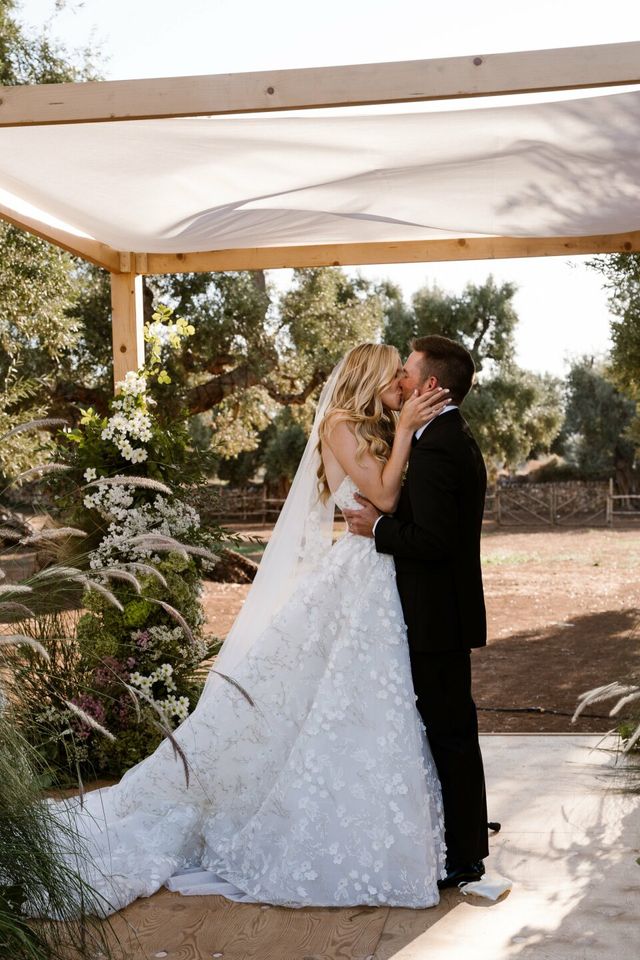
A civil ceremony suits couples who want full freedom over their ceremony, who are not religious or come from different faiths, or who want to marry somewhere meaningful that is not a place of worship. Because the script is entirely yours, you can write personal vows, choose your own readings, and shape a ceremony that reflects exactly who you are. It is also the simplest path legally, requiring only a marriage license and an authorized officiant. Our secular ceremony guide and guide to writing vows help you build it.
How Much Does Each Ceremony Cost?
Cost is rarely the deciding factor, but it differs. A civil officiant typically charges $260 to $300. A religious ceremony often involves a donation to the officiant and the place of worship rather than a set fee, which varies widely by faith and community, and may come with additional costs like premarital classes. A place of worship may also have its own fee for using the space. Either way, the ceremony is a small share of the overall budget. Slot it into our wedding budget breakdown so nothing is overlooked.
Can You Blend Religious and Civil Elements?
Absolutely, and many couples do. You can incorporate religious readings, blessings, or rituals into an otherwise personal ceremony, or have a civil officiant weave in traditions that matter to your families. Interfaith couples often co-officiate with leaders from both faiths. A ceremony program helps guests follow along when you blend elements. The goal is a ceremony that honours your beliefs and your relationship, and a good officiant will help you craft exactly that. Browse officiants on ThePerfectWedding.com.
What Makes a Ceremony Legally Valid?
Regardless of type, a wedding is legal when you have a valid marriage license and an authorized officiant, and in many states one or two witnesses. The religious or civil nature of the ceremony does not change its legal standing, since both rely on the same license and an officiant recognised by the state. Requirements vary by location, so confirm your state's rules on licenses, waiting periods, and witnesses early in your planning to avoid any last-minute surprises.
How Long Does Each Ceremony Last?
Length is worth planning for. A religious ceremony, particularly one with a full liturgy or mass, often runs 30 to 60 minutes, while a civil ceremony is typically a more concise 20 to 30 minutes. Both can flex to your wishes. Knowing the length helps you build your timeline and your program. Our ceremony program guide helps guests follow along, especially for longer or tradition-rich ceremonies.
How Do You Personalize Either Ceremony?
Personal touches make any ceremony memorable. Personal vows, meaningful readings, music, and unity rituals all add depth, and cultural or family traditions can be woven into either format. A civil ceremony gives you complete freedom over the script, while a religious one offers personalization within the bounds of the faith's traditions. Explore our unity ceremony ideas and our guide to writing vows to make the moment unmistakably yours.
Should You Have a Ceremony Rehearsal?
A rehearsal is worth the time for either type of ceremony. Walking through the processional, the order of events, and where everyone stands the day before helps your wedding party feel confident and keeps the actual ceremony calm and smooth. Religious ceremonies with more involved liturgy especially benefit from a run-through, but even a short civil ceremony flows better for it. Your officiant or coordinator will guide the rehearsal, and it doubles as a relaxed, joyful moment with your closest people the evening before you marry.
“There is no right or wrong here, only what is true to you as a couple. A religious ceremony offers the depth and continuity of your faith traditions, while a civil ceremony hands you a blank page to write something deeply personal. And the two are not mutually exclusive: some of the most moving ceremonies I have seen blend a beloved tradition with words the couple wrote themselves. Choose what reflects your story.”
Sarah Glasbergen, Founder ThePerfectWedding.com
-
What is the difference between a religious and civil ceremony?
A religious ceremony is led by a faith official and follows your religion's traditions, often in a place of worship. A civil ceremony is led by a legal official, can be held almost anywhere, and is fully customizable.
-
Is a civil ceremony legally binding?
Yes. Both civil and religious ceremonies are legally binding as long as you have a valid marriage license and an authorized officiant. A civil ceremony is the simplest legal path.
-
How much does a wedding officiant cost?
A civil officiant typically charges $260 to $300. A religious ceremony often involves a donation to the officiant and place of worship instead of a set fee, varying by faith and community.
-
Can I personalize a religious ceremony?
To a degree. Religious ceremonies follow set traditions and liturgy, though many allow some personalization. A civil ceremony offers full freedom to write your own script and vows.
-
What does a religious ceremony require?
It varies by faith but may include membership in the congregation, premarital counseling, and specific readings or rituals. Ask your officiant early so you can plan accordingly.
-
Can I blend religious and civil elements?
Yes. Many couples incorporate religious readings, blessings, or rituals into a personal ceremony, and interfaith couples often co-officiate with leaders from both faiths.
Plan Your Ceremony with ThePerfectWedding.com
Start with our officiant guide, our secular ceremony guide, and how to write your vows, then browse ceremony officiants on ThePerfectWedding.com.
The bottom line on a religious versus civil ceremony: a religious ceremony offers the depth and tradition of your faith, while a civil ceremony offers a blank page and the freedom to marry anywhere. Both are equally legal, and the two can be beautifully blended. Let your beliefs, your families, and your vision guide the choice rather than cost, and lean on a thoughtful officiant to craft a ceremony that feels unmistakably like yours.


