Indian Wedding Traditions: Every Ritual and What It Means
From haldi and mehndi to the baraat and the seven steps around the fire, here is every Indian wedding tradition explained, plus how US couples plan one.

by Sarah Glasbergen on 18 November 2026
Web editor
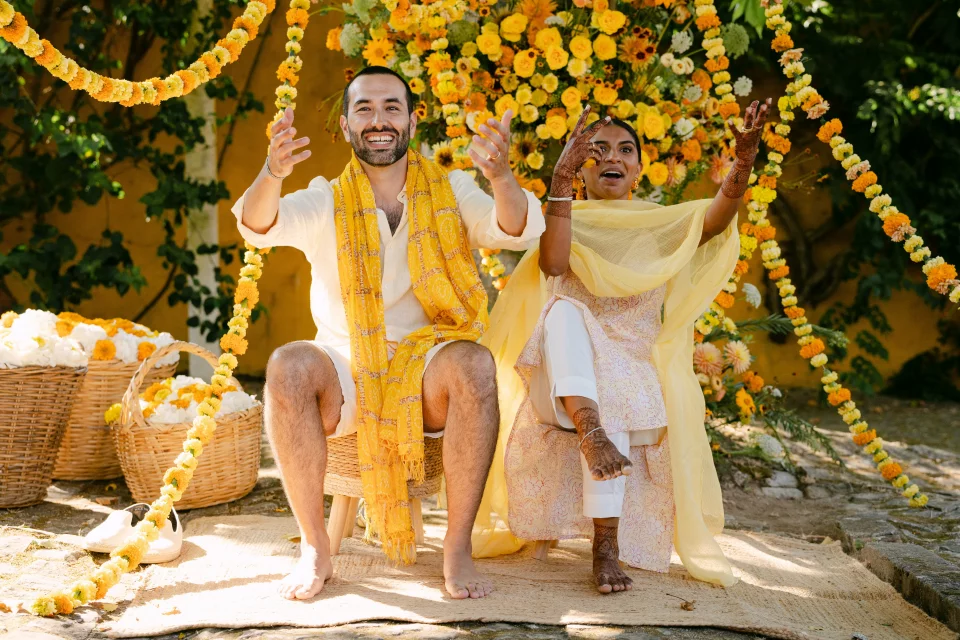
TLDR: Indian wedding traditions are a series of rituals spread over two to five days, usually including a haldi (turmeric) ceremony, a mehndi (henna) night, a sangeet full of music and dance, the groom’s baraat procession, and a sacred ceremony where the couple circles a fire seven times. Each ritual carries a specific blessing for the marriage, and the details shift by region and religion. Below, we walk through every major tradition in order, explain what each one means, compare Hindu, Sikh, Muslim, Gujarati and Bengali customs, and share how US couples plan a traditional or fusion Indian wedding.
Updated November 2026
Key Facts at a Glance
- Guest lists run large: the average wedding in India hosts 326 guests, compared with 115 in the United States (Source: The Knot Worldwide via CNN, 2024).
- A growing US community: nearly 4.4 million people in the US identified as Asian Indian alone in the 2020 Census, up more than 50% since 2010 (Source: US Census Bureau via Axios, 2023).
- Seven steps, seven vows: Hindu and Jain couples take seven rounds or steps around the sacred fire, while Gujarati and Sikh ceremonies use four rounds (Source: The Knot, 2021).
- A global industry: the Indian wedding industry is estimated at about $130 billion, roughly twice the size of America’s (Source: Jefferies via CNN, 2024).
- Bigger budgets in the US: planners in the Washington, DC area put the average Indian American wedding budget at about $200,000, versus a national average of $33,000 for all US weddings (Sources: Washingtonian, 2015; The Knot Real Weddings Study, 2025).
What are the main Indian wedding traditions?
An Indian wedding is less a single event and more a festival with chapters. Most celebrations follow the same arc: blessing and beautifying the couple, celebrating with family, bringing the two families together, the sacred ceremony itself, and finally a farewell and reception. Close to 80% of India’s population identifies as Hindu, so Hindu rituals shape what most Americans picture, but Sikh, Muslim, Jain and Christian Indian weddings each have their own customs.
These are the traditions you’ll see at most Hindu and Hindu-influenced weddings, roughly in the order they happen:
- Roka or engagement: the families formally agree to the match and exchange gifts.
- Haldi: family members apply turmeric paste to the couple for luck and a radiant glow.
- Mehndi: intricate henna designs are applied to the bride’s hands and feet.
- Sangeet: a night of music, choreographed dances and friendly family competition.
- Baraat: the groom’s lively procession to the venue, traditionally on a white horse.
- Wedding ceremony: rituals under the mandap, including the garland exchange and the seven steps around the fire.
- Vidaai and reception: the bride’s emotional farewell to her family, followed by a party.
Regional details vary enormously. A Punjabi family might add a jaggo, an all-night dance party before the wedding, while a Bengali bride hides her face behind betel leaves until the moment of subho drishti. On ThePerfectWedding.com we always suggest asking both families early which rituals matter most to them, because no two Indian weddings look exactly alike.
What happens at the haldi and mehndi ceremonies?
The haldi ceremony usually takes place on the morning of the wedding or the day before. Relatives and close friends smear a paste of turmeric, sandalwood and rosewater onto the couple’s face, arms and feet. Turmeric symbolizes purity and prosperity, and it’s also believed to give the skin a bridal glow and ward off bad luck. Expect laughter, yellow outfits and plenty of mess, so this is never the moment for the wedding attire.
The mehndi is a calmer, more intimate gathering, often held the night before the wedding. A professional henna artist paints elaborate designs on the bride’s hands and feet, typically from fingertips to elbows and from toes to calves. Many artists hide the partner’s name or initials in the pattern, and finding it becomes a playful wedding-night game. Female guests often get smaller designs too.

Tradition says the darker the henna stain, the stronger the love in the marriage. For a deep color, artists recommend leaving the paste on for several hours and avoiding water afterward. A full bridal design can take many hours, so book an experienced mehndi artist well in advance and build the time into your schedule.
What is a sangeet, and what happens at it?
The sangeet, which literally means "music," is the high-energy party of the wedding week. Both families perform rehearsed dances, sing traditional folk songs and often roast the couple in good humor. It’s a way for two families to get to know each other before the ceremony, and many couples say it’s the night guests remember most.

Regional versions bring their own flavor. Punjabi families often hold a dholki with bhangra and gidda dancing, while Gujarati families play garba and dandiya raas, a circle dance performed with two decorated sticks. In the US, sangeets increasingly feature a DJ, lighting design and a dance choreographer who teaches each family group its routine in the weeks before.
At ThePerfectWedding.com we see more and more couples treat the sangeet as its own event with its own vendor list. If you’re planning one, plan for a DJ or live band comfortable with Bollywood and bhangra, a dhol player for the big entrances, and a venue with a sizable dance floor.
What is the baraat at an Indian wedding?
The baraat is the groom’s grand arrival. He traditionally rides a decorated white horse, called the ghodi in Punjabi weddings, while family and friends dance around him to the beat of a dhol drum. In US weddings the horse is sometimes swapped for a vintage car, a convertible or even a horse-drawn carriage, depending on what the venue allows.
When the procession reaches the venue, the bride’s family welcomes the groom’s side with the milni, a ceremonial meeting where relatives of equal rank embrace and exchange garlands. The bride’s mother often performs an aarti, circling a lit lamp in front of the groom as a blessing.
A baraat needs logistics planning. Ask your venue about a procession route, check whether your city requires a permit for a street procession, and book the horse handler and dhol player as early as your photographer. A good wedding planner who has run baraats before will know exactly which questions to ask.
What happens during a Hindu wedding ceremony?
The Hindu ceremony takes place under the mandap, a canopy supported by four pillars that represent the four parents, or in some traditions the elements of earth, wind, fire and water. A priest leads the rituals in Sanskrit, and the ceremony can last from one to three hours. Guests are welcome to come and go quietly during longer portions.
- Kanyadaan: the bride’s parents place her hand in the groom’s, entrusting their daughter to his family.
- Jaimala or varmala: the couple exchanges heavy flower garlands, symbolizing mutual acceptance. Families often playfully lift the couple to make the exchange harder.
- Granthi bandhan: the edge of the bride’s scarf is tied to the groom’s sash, joining them for the rest of the ceremony.
- Agni and the pheras: the couple circles the sacred fire, which acts as the divine witness to the marriage.
- Saptapadi: seven steps, each tied to a vow.
- Mangalsutra and sindoor: the groom ties a black and gold beaded necklace around the bride’s neck and applies red vermilion powder to the parting of her hair.
The saptapadi is the heart of the ceremony, and the marriage is considered complete once the seventh step is taken. While wording differs by family and region, the seven vows are commonly understood as promises of nourishment, strength, prosperity, family happiness, children, health through every season, and lifelong friendship. Many US couples print a short explanation of each vow in their ceremony program so non-Indian guests can follow along.

At the end, elders shower the newlyweds with flower petals and rice as a blessing. Another favorite moment is joota chupai, when the bride’s sisters and cousins steal the groom’s shoes, which he left at the edge of the mandap, and demand a cash ransom before they’ll give them back.
How do Sikh, Muslim, Gujarati and Bengali weddings differ?
Indian weddings aren’t one tradition but many. The table below compares the central ceremony across five of the most common traditions you’ll encounter at US weddings.
| Tradition | Ceremony name | Central ritual | Key detail |
|---|---|---|---|
| Hindu (North Indian) | Vivah | Seven pheras around the sacred fire | Saptapadi seals the marriage |
| Gujarati | Lagna | Four mangal pheras around the fire | Garba and dandiya at the sangeet |
| Bengali | Biye | Saat paak, seven circles of the groom | Subho drishti, the reveal behind betel leaves |
| Sikh | Anand Karaj | Four laavan around the Guru Granth Sahib | Held in a gurdwara, usually in the morning, with no fire |
| Muslim | Nikah | Signing the marriage contract before witnesses | The couple may sit apart until after the nikah |
Many couples in the US blend traditions. Interfaith and fusion weddings might pair a Hindu ceremony in the morning with a Western-style vow exchange in the afternoon, or combine a Sikh Anand Karaj with a Christian ceremony on the same weekend. The key is giving each ritual the time and respect it deserves rather than shortening both.
How many days does an Indian wedding last?
Traditional Indian weddings in India can stretch across a week. In the US, most couples condense the celebrations into a long weekend of two to four days. A typical schedule looks like the one below, though families often add a welcome dinner or a religious puja.
| Event | Typical timing | Who attends | What guests wear |
|---|---|---|---|
| Mehndi | Two days before or the night before | Close family and friends | Bright colors, often green or yellow |
| Haldi | Morning of the wedding or day before | Immediate family | Yellow or clothes you don’t mind staining |
| Sangeet | Night before the wedding | All guests | Festive Indian or cocktail attire |
| Baraat and ceremony | Wedding morning or afternoon | All guests | Formal Indian attire in jewel tones |
| Reception | Wedding evening | All guests | Glamorous evening wear or lehengas |
Guest lists tend to be large because extended family, family friends and parents’ colleagues are traditionally invited. The average wedding in India hosts 326 guests, nearly three times the US average of 115, and Indian American weddings with 300 to 500 guests are common.
How do you plan an Indian wedding in the US?
ThePerfectWedding.com’s advice for a multi-day Indian wedding in the US comes down to one thing: find vendors who know the traditions as well as you do. The right team saves you from explaining what a mandap is at every meeting and keeps a 400-person weekend running on time.
- Venue: confirm that the venue permits an open flame for the agni, has space for a baraat route, and allows outside caterers if you want a specialist Indian menu.
- Wedding planner: a planner experienced with South Asian weddings coordinates multiple events, timelines and cultural rituals.
- Mandap and decor: specialist decorators build and dress the mandap, often with marigolds, roses and draped fabric.
- Priest or officiant: book a pandit, granthi or imam early, since popular officiants are reserved months ahead.
- Mehndi artist, caterer and entertainment: one booking per event keeps the weekend smooth.
- Photographer and videographer: choose a team comfortable covering long ceremonies and fast-moving dances across several days.

Budget per event rather than per weekend. The national average US wedding cost $33,000 in 2024, but a three-day celebration for 300 or more guests multiplies catering, decor and photography hours. To keep costs comfortable, compare quotes from vendors who offer multi-event packages, choose seasonal flowers for the mandap, and book coverage hours for the events that matter most to you. You can explore typical price ranges on our wedding costs page.
“The most beautiful Indian weddings I’ve seen are the ones where the couple knows why each ritual exists. When you understand that the turmeric is a blessing and the seven steps are seven promises, you stop treating it as a checklist and start experiencing it. My advice is to sit down with both families early, choose the traditions that feel most meaningful, and build a vendor team that respects every one of them.”
Sarah Glasbergen, Founder ThePerfectWedding.com
Frequently Asked Questions
-
What should a guest wear to an Indian wedding?
Bright, festive colors and Indian attire such as a saree, lehenga, salwar kameez or kurta are always welcome. Avoid all-white, which is traditionally associated with mourning, and all-red, which is usually reserved for the bride. Covering your shoulders and head may be expected at a gurdwara or temple.
-
How long is a Hindu wedding ceremony?
Most Hindu wedding ceremonies last between one and three hours, depending on the rituals the family includes. Guests can usually step out quietly during longer portions.
-
What does the saptapadi mean?
The saptapadi is the seven steps the couple takes together around the sacred fire. Each step represents a vow, commonly understood as nourishment, strength, prosperity, family happiness, children, health and lifelong friendship. The marriage is considered complete after the seventh step.
-
Can a non-Indian couple include Indian traditions?
Yes, when it’s done with respect and ideally with the guidance of the families or an officiant from the tradition. Many interfaith and fusion couples include a mehndi night, a garland exchange or a sangeet alongside their own customs.
-
What is a good wedding gift at an Indian wedding?
Cash gifts are customary and are often given in an envelope in amounts ending in the number one, such as $101 or $251, because an odd number is considered auspicious. Registry gifts are also common at US weddings.
-
Why does the bride’s family steal the groom’s shoes?
Joota chupai is a playful tradition in which the bride’s sisters and cousins hide the shoes the groom removes before entering the mandap. He negotiates a cash payment to get them back, which breaks the ice between the two families.
Plan your Indian wedding with ThePerfectWedding.com
Ready to start planning? Get inspired by ceremony ideas on our ceremony page, find mandap and floral inspiration in our decoration guide, browse wedding dress photos, and keep every event on track with the wedding planning hub on ThePerfectWedding.com. Looking for someone to capture every ritual? Discover wedding photographers near you.


