Chinese Tea Ceremony: Meaning, Order and How to Plan It
The Chinese wedding tea ceremony explained: its meaning, who is served first, what tea to use, red envelopes, door games and how to plan it with vendors.

by Sarah Glasbergen on 11 November 2026
Web editor
TLDR: The Chinese tea ceremony is a ritual in which the newlyweds serve tea to their parents and elders, as a sign of respect and gratitude, and in return receive blessings, red envelopes (hongbao) and often gold jewelry. It traditionally takes place on the wedding day, at the family home or the venue, with the groom's family served first. This guide explains the meaning, the order of serving, what to prepare, related traditions like the door games and the banquet, and how to plan it with your vendors.
By Sarah Glasbergen, Founder ThePerfectWedding.com. Updated November 2026
Key Facts at a Glance
- A large community: an estimated 5.5 million people in the US identified as Chinese in 2023 (Source: Pew Research Center, U.S. Census Bureau estimate)
- Largest Asian group: Chinese Americans make up about 22% of the US Asian population (Source: Pew Research Center, 2025)
- Where families live: California is home to about 1.8 million Chinese Americans and New York to about 760,000 (Source: Pew Research Center analysis of 2021-23 ACS data)
- Many first-generation families: immigrants made up 58% of the Chinese population in the US in 2023 (Source: Pew Research Center)
- Culture at the ceremony: 32% of US couples included religious, ethnic or cultural elements in their wedding (Source: The Knot Real Weddings Study, 2026)
For many Chinese American families, the tea ceremony is the emotional heart of the wedding day. It is the moment the couple formally thanks their parents and is welcomed into each other's family. It is often more intimate than the ceremony itself, and every family does it a little differently.


What is a Chinese tea ceremony?
The tea ceremony, often called jing cha, means "respectfully offering tea." The couple kneels or bows in front of their parents and elders and serves each of them a cup of tea. By accepting the tea, the elders accept the marriage and welcome the new family member.
In return, the elders offer words of advice and blessings, and give gifts, usually red envelopes with money or gold jewelry such as bracelets and necklaces. The ceremony honors the family as a whole, which is why it remains important even for couples who otherwise plan a Western-style wedding.
What happens during the tea ceremony, step by step?
| Step | What happens | Tip |
|---|---|---|
| 1. Preparation | Tea set, cushions or kneeling pads and a table are set up, often decorated in red | Ask a relative or coordinator to pour and refill |
| 2. Groom's family first | The couple serves the groom's parents, then grandparents and elders by seniority | Prepare a list of names and order in advance |
| 3. Serving the tea | The couple offers the cup with both hands and addresses each elder by their family title | Practice the titles, especially for a non-Chinese partner |
| 4. Blessings and gifts | Elders sip, give advice and present red envelopes or jewelry | Have a helper hold gifts and envelopes |
| 5. Bride's family | Often later the same day or at a separate moment, the couple serves the bride's family | Allow 30 to 60 minutes per family |
| 6. Younger relatives | Younger siblings and cousins may serve tea to the couple and receive red envelopes | Prepare envelopes for the younger generation too |
Customs vary by region and family. Cantonese, Teochew, Hokkien and Shanghainese traditions can differ in order, timing and gifts, so ask your parents what they expect before you plan. ThePerfectWedding.com recommends writing the order down together; it avoids awkward moments on the day.

What tea and tea set do you need?
The tea is often a sweet tea, a wish for a sweet marriage. Popular choices are black or oolong tea sweetened with red dates, lotus seeds, dried longan or rock sugar. Some families use a plain jasmine or chrysanthemum tea instead.
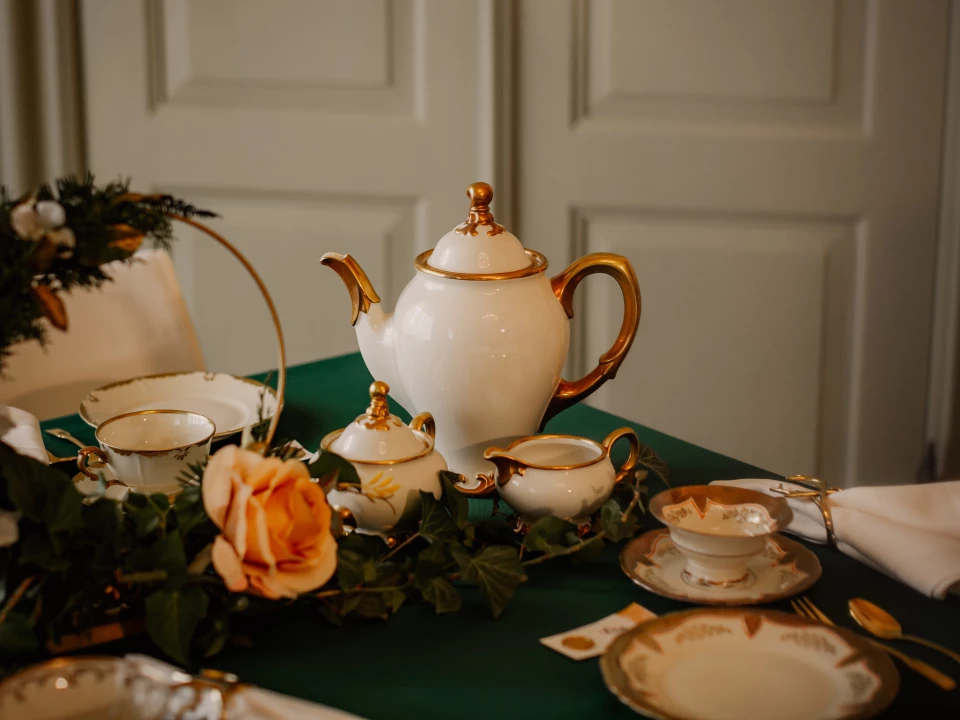
- Tea set: a teapot and small cups, often red or decorated with the double happiness symbol; many families pass one down.
- Tray and table: a low table or tray with room for cups and red envelopes.
- Kneeling cushions: for comfort, especially with a long list of relatives.
- Helper: a relative, coordinator or planner who pours, refills and manages the order.
- Photography: make sure your photographer knows the timing; this is one of the most emotional sets of photos of the day.
Tell your venue if the ceremony takes place on site; they can provide a quiet room, hot water and a table. Our guide to the photography timeline helps you fit it into the day.


What do the couple wear for the tea ceremony?
Many brides change into a traditional red outfit for the tea ceremony, such as a qipao (cheongsam) or a qun kwa, an embroidered two-piece outfit with phoenix and dragon motifs. Grooms may wear a changshan or a suit. Red symbolizes luck and joy, which is why it appears everywhere in Chinese weddings.
Others keep their Western wedding attire on for the tea ceremony and change into a red outfit for the banquet. Plan the outfit change with your timeline and your hair and makeup artist. Our second-look ideas can help you schedule it.
What other Chinese wedding traditions come with the tea ceremony?
The tea ceremony is often part of a wider set of customs. Families pick the ones that matter most to them.
- Guo da li: the formal exchange of betrothal gifts between families, weeks before the wedding.
- An chuang: setting up the marriage bed with red bedding and symbolic fruits for good fortune.
- Hair combing ceremony: on the eve of the wedding, a parent combs each partner's hair while saying blessings.
- Door games: the groom and groomsmen complete playful challenges set by the bridesmaids before they can collect the bride, often paying red envelopes to get through.
- Auspicious date: many families consult the Chinese almanac to choose a lucky wedding date.
- Wedding banquet: a multi-course dinner with symbolic dishes such as whole fish for abundance and long noodles for longevity.
If you like the energy of the door games, our guide to wedding reception games has more ideas for interactive moments.

How do you include a tea ceremony in a modern or interfaith wedding?
Many couples combine a tea ceremony in the morning with a Western ceremony in the afternoon. Others hold the tea ceremony as part of a welcome event or on a separate day for close family only. It works well in interfaith and multicultural weddings, because both families take part.
- Explain the tea ceremony in your program or on your wedding website for guests who are new to it.
- Teach a non-Chinese partner the family titles and the basic etiquette in advance.
- Include both families, for example by serving tea to each set of parents.
- Keep the guest list for the tea ceremony small; it is meant to be intimate.
For more ways to honor two backgrounds, see our interfaith ceremony guide and unity ceremony ideas.
How do you plan a tea ceremony with your vendors?
A tea ceremony is easy to add to most weddings, as long as everyone knows the plan. Discuss it with your venue, photographer, planner and hair and makeup team when you book.
- Venue: a private room or quiet corner, hot water and a table.
- Planner or coordinator: someone to manage the order of relatives and the timing.
- Photographer and videographer: include the ceremony in the shot list with names of key relatives.
- Hair and makeup: plan extra time if you change into a qipao or qun kwa.
- Caterer: for the banquet, ask about symbolic dishes and a family-style service.
Find inspiration for the rest of your ceremony in the ThePerfectWedding.com ceremony section, and read our guide to family-style wedding dining for the banquet.
“The tea ceremony is one of the most beautiful family moments I know. It is quiet, personal and full of meaning. Give it time in your schedule, and let your parents and grandparents guide you. That is exactly what it is for.”
Sarah Glasbergen, Founder ThePerfectWedding.com
Chinese Tea Ceremony FAQ
-
What is the meaning of the Chinese tea ceremony?
The couple serves tea to their parents and elders to show respect and gratitude. By accepting the tea, the elders welcome the marriage and the new family member.
-
Who do you serve tea to first?
Traditionally the groom's parents are served first, then grandparents and other elders by seniority. Many families serve the bride's family later the same day.
-
What do elders give at a tea ceremony?
Elders usually give red envelopes with money or gold jewelry, along with blessings and advice for the marriage.
-
What tea is used at a Chinese wedding?
Often a sweet tea, such as black or oolong tea with red dates, lotus seeds or longan, symbolizing a sweet marriage.
-
How long does a tea ceremony take?
Plan about 30 to 60 minutes per family, depending on the number of relatives being served.
-
Can a non-Chinese partner take part in a tea ceremony?
Yes. Learning the family titles and etiquette in advance is a meaningful way to honor your partner's family.
Plan a ceremony that honors both families
Find ceremony ideas and inspiration for multicultural weddings on ThePerfectWedding.com.
Building your timeline? See our ceremony order guide and the reception timeline.
