Jewish Wedding Traditions: Every Ritual Explained, Step by Step
Jewish wedding traditions explained: ketubah, bedeken, chuppah, seven blessings, breaking the glass and the hora, plus how to plan them with your vendors.

by Sarah Glasbergen on 4 November 2026
Web editor
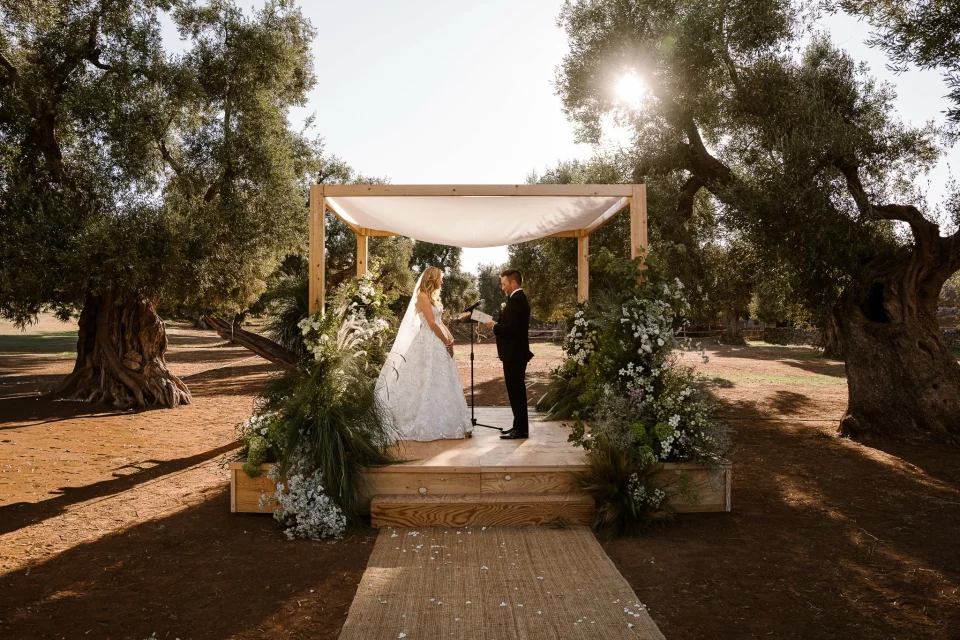
TLDR: A Jewish wedding is built around a handful of meaningful rituals: signing the ketubah (marriage contract), the bedeken (veiling), the ceremony under the chuppah (wedding canopy), the ring exchange, the seven blessings, and the breaking of the glass, followed by a joyful reception with the hora. Every couple adapts these traditions to their own community and level of observance. This guide explains each tradition in the order it happens, what it means, and how to plan it with your rabbi and vendors.
By Sarah Glasbergen, Founder ThePerfectWedding.com. Updated November 2026
Key Facts at a Glance
- A large community: about 7.5 million Jewish Americans live in the US, including 5.8 million adults (Source: Pew Research Center, Jewish Americans in 2020)
- Interfaith is common: 61% of Jewish Americans who married since 2010 have a non-Jewish spouse (Source: Pew Research Center, Jewish Americans in 2020)
- Big differences by movement: among non-Orthodox Jews who married since 2010, 72% are intermarried, while 98% of married Orthodox Jews have a Jewish spouse (Source: Pew Research Center, Jewish Americans in 2020)
- Overall picture: 58% of all married Jewish Americans have a Jewish spouse and 42% are married to someone who is not Jewish (Source: Pew Research Center, Jewish Americans in 2020)
- Date matters: Jewish weddings are traditionally not held on Shabbat or on major holidays, so confirm your date with your rabbi before booking a venue
Whether you grew up going to synagogue every week, you are marrying into a Jewish family, or you simply want to honor your heritage, Jewish wedding traditions offer a beautiful structure for your day. Many rituals are thousands of years old, yet they adapt easily to modern, interfaith and LGBTQ+ couples. Here is what happens, step by step.

What happens at a Jewish wedding?
A traditional Jewish wedding follows a clear order. Some rituals happen privately before the ceremony, others in front of all your guests. The ceremony itself is usually short, often 20 to 30 minutes, but it is packed with meaning.
- Before the ceremony: the tish, the ketubah signing and the bedeken.
- The ceremony: the processional, the chuppah, circling, the betrothal blessings and ring exchange, reading of the ketubah, the seven blessings and the breaking of the glass.
- Right after: yichud, a few private minutes for the couple.
- The reception: the hora, the blessing over the challah, toasts and dancing.
ThePerfectWedding.com recommends sitting down with your rabbi or cantor early to decide which rituals you will include and how you want to adapt them. For a general overview of ceremony structure, see our guide to the wedding ceremony order.
What are the most important Jewish wedding traditions?
This overview covers the rituals you will see at most Jewish weddings, from Orthodox to Reform.
| Tradition | What happens | What it means | When |
|---|---|---|---|
| Tish | Guests gather around the groom (or both partners) with songs and short teachings | Joyful anticipation | Before the ceremony |
| Ketubah signing | Two witnesses sign the marriage contract | Commitments and protection within the marriage | Before the ceremony |
| Bedeken | The partner lowers the veil over the bride's face | Marrying the person, not the appearance | Before the ceremony |
| Chuppah | The couple stands under a canopy open on all sides | The new home, open to guests | Ceremony |
| Circling | One or both partners circle the other, often seven times | Protection and building the relationship | Start of ceremony |
| Ring exchange | A plain band is placed on the index finger | Betrothal, a whole and unbroken bond | Ceremony |
| Sheva Brachot | Seven blessings over wine, often read by honored guests | Joy, creation and love | Ceremony |
| Breaking the glass | A glass wrapped in cloth is stepped on | Remembering sorrow amid joy | End of ceremony |
| Yichud | The couple spends a few minutes alone | First private moment as a married couple | After the ceremony |
| Hora | Guests lift the couple on chairs while dancing | Community celebration | Reception |


What is a chuppah and how do you choose one?
The chuppah is the canopy under which the couple marries. It is open on all four sides, a reminder of Abraham and Sarah's tent, which was open to welcome guests. It symbolizes the home the couple will build together.
A chuppah can be anything from a family tallit (prayer shawl) held up on four poles by close friends, to a freestanding wooden structure covered in flowers and fabric. Many couples work with their florist or a rental company to design it, so it matches the rest of the decor.
- Traditional: a tallit on four poles, held by four honored friends or family members.
- Floral: a wooden or metal frame dressed with greenery, flowers and draping.
- Minimalist: four birch poles with a light linen canopy, ideal outdoors.
- Heirloom: a canopy made from family fabric, such as a grandparent's wedding linens.
Ask your florist early about structure, weight and wind resistance for outdoor ceremonies. You can find florists and decor specialists in the ThePerfectWedding.com decoration section.
What is a ketubah?
The ketubah is the Jewish marriage contract. Traditionally written in Aramaic, it set out the groom's obligations to the bride and protected her financially. Today many couples choose egalitarian texts that describe shared promises, love and partnership, often in both Hebrew and English.
The ketubah is signed before the ceremony by two witnesses, and in many communities also by the couple and the rabbi. It is often read aloud under the chuppah. Many couples commission a ketubah artist, so the contract becomes a piece of art for their home. Plan two to four months for a custom design, and make sure your rabbi approves the text before it is printed.

Why do couples break a glass at a Jewish wedding?
Breaking the glass closes the ceremony and is the moment everyone waits for. A glass wrapped in a cloth or bag is placed on the floor and stepped on, traditionally by the groom and today often by both partners together. The guests shout "Mazel tov!" and the celebration begins.
The most common explanation is that the broken glass remembers the destruction of the Temple in Jerusalem, a reminder that even on the happiest day, we hold sorrow and history in our hearts. Others see it as a symbol of the fragility of relationships, or of a commitment that cannot be undone. Many couples keep the shards and have them turned into a keepsake, such as a mezuzah or a framed piece.
What happens at a Jewish wedding reception?
The reception is all about joy and community. It usually begins with the hamotzi, a blessing over a large challah, often given by a grandparent or another honored guest. Then comes the hora: guests dance in circles to "Hava Nagila" and other songs, and lift the couple high on chairs.
- Hora: plan this with your band or DJ, and choose sturdy chairs and strong lifters.
- Mezinke: when parents marry off their last child, they are crowned with flowers and celebrated with a special dance.
- Kosher catering: if you or your families keep kosher, book a certified kosher caterer or confirm that your venue allows outside kosher catering.
- Birkat Hamazon: grace after meals, sometimes followed by a repeat of the seven blessings.
Talk to your band or DJ about the hora early so they know how long to play. Our guides on choosing a wedding DJ and the reception music timeline help you plan it.

How can interfaith and LGBTQ+ couples include Jewish traditions?
With 61% of Jewish Americans who married since 2010 marrying someone outside the faith, interfaith Jewish weddings are part of the mainstream. Many Reform and Reconstructionist rabbis, as well as independent rabbis and cantors, officiate interfaith ceremonies and help blend traditions from both families.
- Choose rituals that feel meaningful to both of you, such as the chuppah, the glass and the seven blessings.
- Explain each ritual in a printed program or by the officiant, so all guests feel included.
- Use gender-neutral language: both partners can circle each other, wear rings and break the glass together.
- Pair a Jewish ritual with a tradition from the other family, such as a unity ceremony or a cultural dance.
Read more in our interfaith wedding ceremony guide and our overview of unity ceremony ideas.
How do you plan a Jewish wedding with your vendors?
Start with the officiant and the date, because both shape everything else. Popular rabbis and cantors book up a year ahead, and your date needs to avoid Shabbat and certain holidays and observance periods. Use our guide on how to choose a wedding officiant to find the right fit.
- 12 months out: book your rabbi or cantor, venue and, if needed, a kosher caterer.
- 6 to 9 months out: order your ketubah and design the chuppah with your florist.
- 3 months out: choose who holds the chuppah poles and who reads the seven blessings.
- 1 month out: confirm the hora timing with your band or DJ and prepare the glass and cloth.
You can find officiants, venues, florists and caterers in the ThePerfectWedding.com vendor directory. Ask each vendor whether they have worked Jewish weddings before; experience with a hora or a kosher kitchen makes a real difference.

“What I love about Jewish wedding traditions is that every ritual tells a story, from the open chuppah to the broken glass. Choose the moments that speak to you, explain them to your guests, and your ceremony will feel deeply personal for everyone in the room.”
Sarah Glasbergen, Founder ThePerfectWedding.com
Jewish Wedding Traditions FAQ
-
How long is a Jewish wedding ceremony?
The ceremony under the chuppah typically lasts 20 to 30 minutes. Pre-ceremony rituals such as the tish, ketubah signing and bedeken can add 30 to 60 minutes before guests are seated.
-
Who stands under the chuppah?
The couple and the rabbi or cantor stand under the chuppah. In many traditions, both sets of parents stand under or right next to it as well.
-
Which finger does the ring go on at a Jewish wedding?
Traditionally the ring is placed on the index finger of the right hand during the ceremony. Many people move it to the ring finger of the left hand afterwards.
-
Why is the wedding ring a plain band?
A plain band without stones represents a whole, unbroken commitment, and its value is easy to assess, which mattered for the legal act of betrothal.
-
What do guests say at a Jewish wedding?
"Mazel tov!" is the classic congratulations, shouted right after the glass is broken and used all evening.
-
Can a Jewish wedding be held on a Saturday?
Not during Shabbat, which runs from Friday sundown to Saturday sundown. Saturday evening weddings after Shabbat ends are popular, especially in winter.
Find vendors who know Jewish weddings
Book an officiant, florist and caterer with experience in Jewish wedding traditions. Browse trusted vendors on ThePerfectWedding.com.
Planning your processional? See our processional order guide and explore more ceremony ideas in the ceremony section.
