Mermaid Wedding Dresses: Styles, Fit and How to Wear One
Mermaid wedding dress guide: mermaid vs trumpet vs fit-and-flare, body types, fabrics, sitting and dancing, bustles, alterations and accessories.

by Sarah Glasbergen on 18 November 2026
Web editor
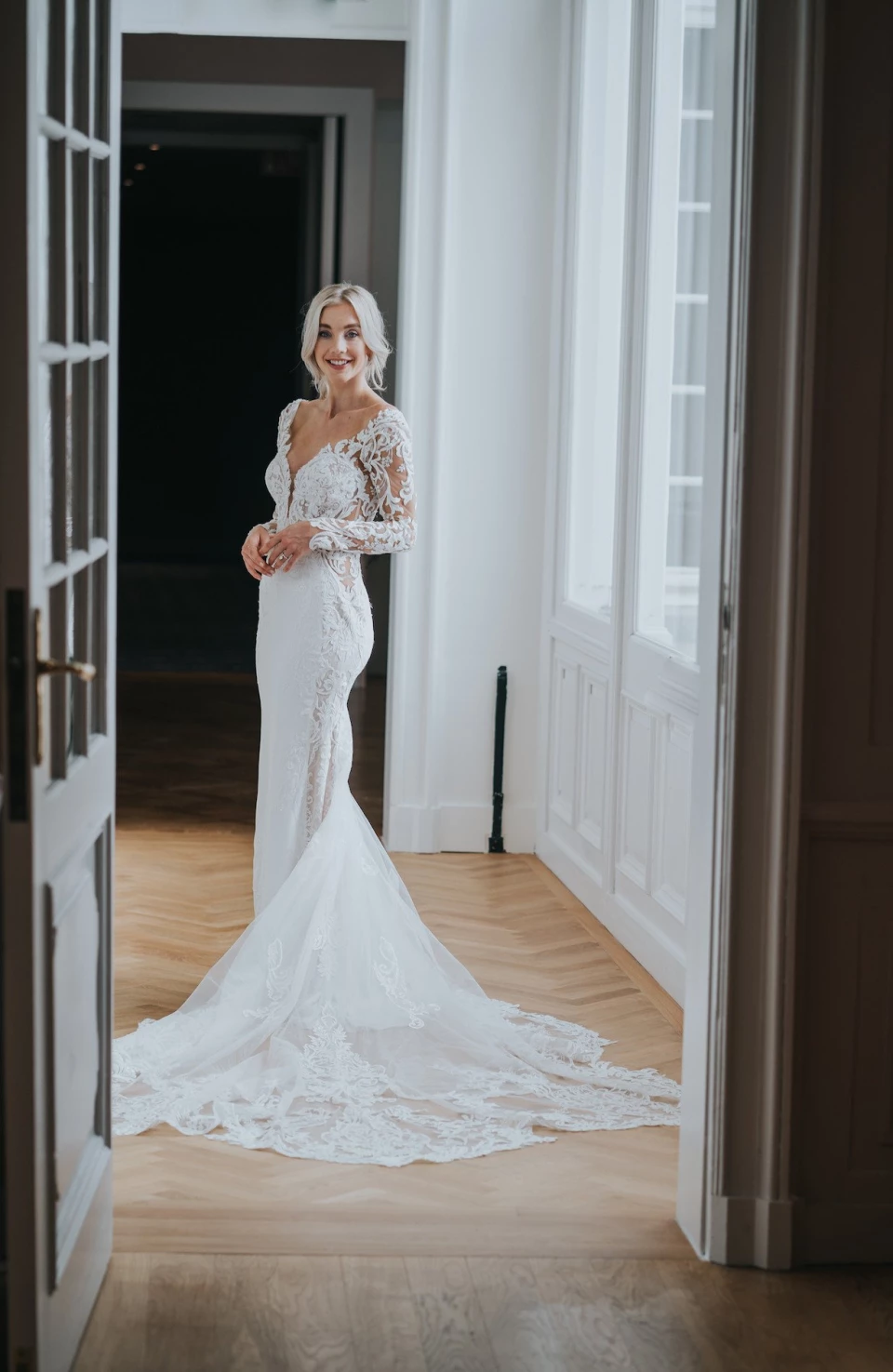
TLDR: A mermaid wedding dress is fitted through the bodice, waist, hips and thighs, then flares out dramatically at or just below the knee, like a mermaid's tail. It is the most body-hugging of the classic silhouettes and suits brides who want to show off their shape. Compared with a trumpet dress (which flares at mid-thigh) or a fit-and-flare (which flares from the hip), it is the most dramatic and the least roomy. This guide covers body types, fabrics, comfort, bustles, alterations, accessories and how to shop for one.
By Sarah Glasbergen, Founder ThePerfectWedding.com. Updated November 2026
Key Facts at a Glance
- Dress budget: the average wedding dress costs about $2,100 (Source: The Knot Real Weddings Study, 2026)
- Fitted styles lead: fit-and-flare was the most popular silhouette at 35%, ahead of A-line at 29% (Source: The Knot Wedding Attire Study, 2018)
- Hemming: hemming a wedding dress usually costs $125 to $450 (Source: The Knot, 2025)
- Bustling: adding a bustle typically costs $75 to $175, depending on layers and bustle type (Source: The Knot, 2025)
- Dance floor ready: 87% of couples open the reception with a first dance (Source: The Knot Real Weddings Study, 2026)
Few silhouettes make an entrance like a mermaid gown. It sculpts, it flares and it photographs beautifully from every angle. It also asks a little more of you in terms of fit and movement, so it pays to know exactly what you are signing up for before your first appointment.


What is a mermaid wedding dress?
A mermaid wedding dress follows the line of your body from the neckline all the way to the knee. At or just below the knee, the skirt releases into a full flare, often finished with a train. The contrast between the close fit and the sudden volume is what makes the style so striking.
Mermaid gowns come with every neckline, from strapless and sweetheart to off-the-shoulder, illusion and long sleeves. The flare can be soft and fluid in crepe or chiffon, or full and frothy with layers of tulle and lace. For a wider overview of every shape, read our guide to wedding dress silhouettes explained.
What is the difference between a mermaid, trumpet and fit-and-flare dress?
These three silhouettes are often confused because they are all fitted on top and flared at the bottom. The difference is where the flare begins, and that one detail changes how the dress looks, feels and moves.
| Silhouette | Where it flares | Look | Movement |
|---|---|---|---|
| Mermaid | At or just below the knee | The most dramatic and sculpted | The most restrictive; shorter steps |
| Trumpet | Around mid-thigh | Curvy but slightly softer | More freedom for stairs and dancing |
| Fit-and-flare | From the hip | Defined waist, gentle volume | The easiest to walk, sit and dance in |
If you love the mermaid look but worry about comfort, try a trumpet in the same fabric during your appointment. Many brides find it keeps most of the drama with noticeably more ease. Our fit-and-flare wedding dress guide covers the softest version of the shape.


Which body types suit a mermaid wedding dress?
A mermaid dress highlights the curve from waist to hip, which is why it is a favorite for hourglass figures. But body type is a starting point, not a rule. A skilled bridal consultant can adjust the flare point, the fabric and the structure so the dress works with your proportions.
- Hourglass: the classic match; the silhouette follows your natural curves.
- Athletic or straight: a mermaid can create curves, especially with corsetry, seaming and a full flare.
- Pear: look for structured fabrics that skim the hips, or consider a trumpet with a higher flare.
- Petite: choose a lighter fabric, a higher flare point and a modest train so the dress does not overwhelm you.
- Curvy and plus-size: internal boning and supportive fabrics give shape and comfort; a supportive bodice makes all the difference.
The best test is how you feel when you walk, turn and sit in the dress. If you feel confident and can breathe comfortably, it suits you.
What fabrics work best for a mermaid dress?
Fabric decides whether a mermaid gown feels sleek, romantic or sculptural. Structured fabrics hold the shape of the body and the flare, while soft fabrics move more but show every seam and undergarment line.
- Crepe: smooth, modern and figure-skimming; best with a clean, minimal design.
- Satin and mikado: structured and glossy; they hold a sculpted flare and feel luxurious.
- Lace: romantic and forgiving; it hides seams and adds texture along the fitted body.
- Tulle: often layered for a full, airy flare and a soft train.
- Stretch fabrics: some designers add stretch linings for extra comfort when you sit and dance.
ThePerfectWedding.com recommends thinking about your venue and season too. Heavy satin feels right in a ballroom, while lightweight lace or crepe is kinder at a summer garden wedding.


Can you sit and dance in a mermaid wedding dress?
Yes, with a few adjustments. Because the skirt is fitted to the knee, your stride is shorter and sitting requires a little technique. A well-made gown with the right fit should let you sit at dinner and dance at the reception without discomfort.
- Practice walking, climbing a step and sitting during every fitting.
- Ask your seamstress to check the knee area; a little extra room makes a big difference.
- Sit on the edge of your chair and gather the flare to one side.
- Bustle the train before the first dance so no one steps on it.
- Consider a second, lighter look for the party if you plan to dance all night.
Since most couples start the reception with a first dance, rehearse a few steps in your dress or in a long practice skirt so the movement feels natural on the day.
Does a mermaid dress need a bustle and alterations?
Almost always. A mermaid gown has to fit closely to look right, so alterations are part of the plan. According to The Knot, a standard alteration package with a hem, a bustle and one adjustment to the top or bottom typically costs $700 to $1,000, and more for complex lace or beading.
- Hem: length has to be exact so the flare starts in the right place and you do not trip.
- Taking in: the bodice, waist and hips are fitted to your shape.
- Bustle: lifts the train for the reception; mermaid gowns often suit an American (over) bustle or a French (under) bustle.
- Flare point: a good seamstress can sometimes raise or lower where the skirt opens.
Plan for two to three fittings and start alterations a few months before the wedding. Compare styles in our guide to wedding dress bustle types and see the full schedule in wedding dress alterations cost and timeline.

How do you accessorize a mermaid wedding dress?
A mermaid gown is already a statement, so accessories should frame the silhouette rather than compete with it. Keep the focus on one or two areas, such as a dramatic back, statement earrings or a cathedral veil.
- Veil: a long, sheer veil extends the line of the flare; a short blusher keeps the shape visible.
- Jewelry: drop earrings suit strapless and sweetheart necklines; skip a necklace if the bodice is detailed.
- Shoes: choose a stable heel height and bring the shoes to every fitting so the hem is measured correctly.
- Hair: an updo shows off an open back; soft waves balance a high neckline.
- Undergarments: seamless shapewear or a built-in corset keeps the fitted lines smooth.
Find more ideas in our bridal jewelry guide.
How do you shop for a mermaid dress at a bridal boutique?
A bridal boutique is the best place to find a mermaid gown, because the fit is so personal. A consultant can pull styles with different flare points and fabrics, explain designer sizing and show you how alterations will change the final look.
- Book appointments early; brides book their first appointments about 9 months before the wedding on average (The Knot).
- Tell your consultant your budget, venue and the silhouettes you are curious about.
- Try a mermaid, a trumpet and a fit-and-flare side by side to compare.
- Wear seamless underwear and bring shoes close to the height you plan to wear.
- Ask what alterations the boutique offers in-house and how long they take.
According to ThePerfectWedding.com's dress shopping advice, trying one silhouette you would never have picked is often the moment brides find their dress. Read our wedding dress shopping tips before your first appointment.

“A mermaid dress is all about fit. When the flare starts in exactly the right place and the bodice is sculpted to you, it looks effortless. Give yourself time for fittings, practice sitting and dancing, and trust a good boutique and seamstress to get every detail right.”
Sarah Glasbergen, Founder ThePerfectWedding.com
Mermaid Wedding Dress FAQ
-
What is the difference between a mermaid and a trumpet wedding dress?
A mermaid dress flares at or just below the knee, while a trumpet dress flares higher, around mid-thigh, which makes it easier to move in.
-
Are mermaid wedding dresses uncomfortable?
They are more fitted than other styles, but a well-altered gown in the right fabric lets you walk, sit and dance comfortably.
-
Can petite brides wear a mermaid dress?
Yes. Choose a lighter fabric, a slightly higher flare point and a modest train to keep the proportions balanced.
-
Do mermaid dresses need a bustle?
Most do if they have a train. A bustle lifts the train for the reception so you can dance freely.
-
How much do mermaid dress alterations cost?
A standard package with a hem, a bustle and one fitting adjustment typically costs $700 to $1,000, according to The Knot.
-
What shoes go with a mermaid wedding dress?
A comfortable, stable heel works best. Bring the exact pair to every fitting so the hem is measured correctly.
Find your wedding dress
Browse silhouettes, styles and inspiration from bridal designers and boutiques on ThePerfectWedding.com.
Keep exploring with when to start wedding dress shopping and what to expect at a wedding dress fitting.


