Sheath Wedding Dresses: The Minimalist Silhouette Explained
Sheath wedding dress guide: what a sheath or column dress is, the best fabrics, who it suits, venues, undergarments, accessories and alterations.

by Sarah Glasbergen on 18 November 2026
Web editor
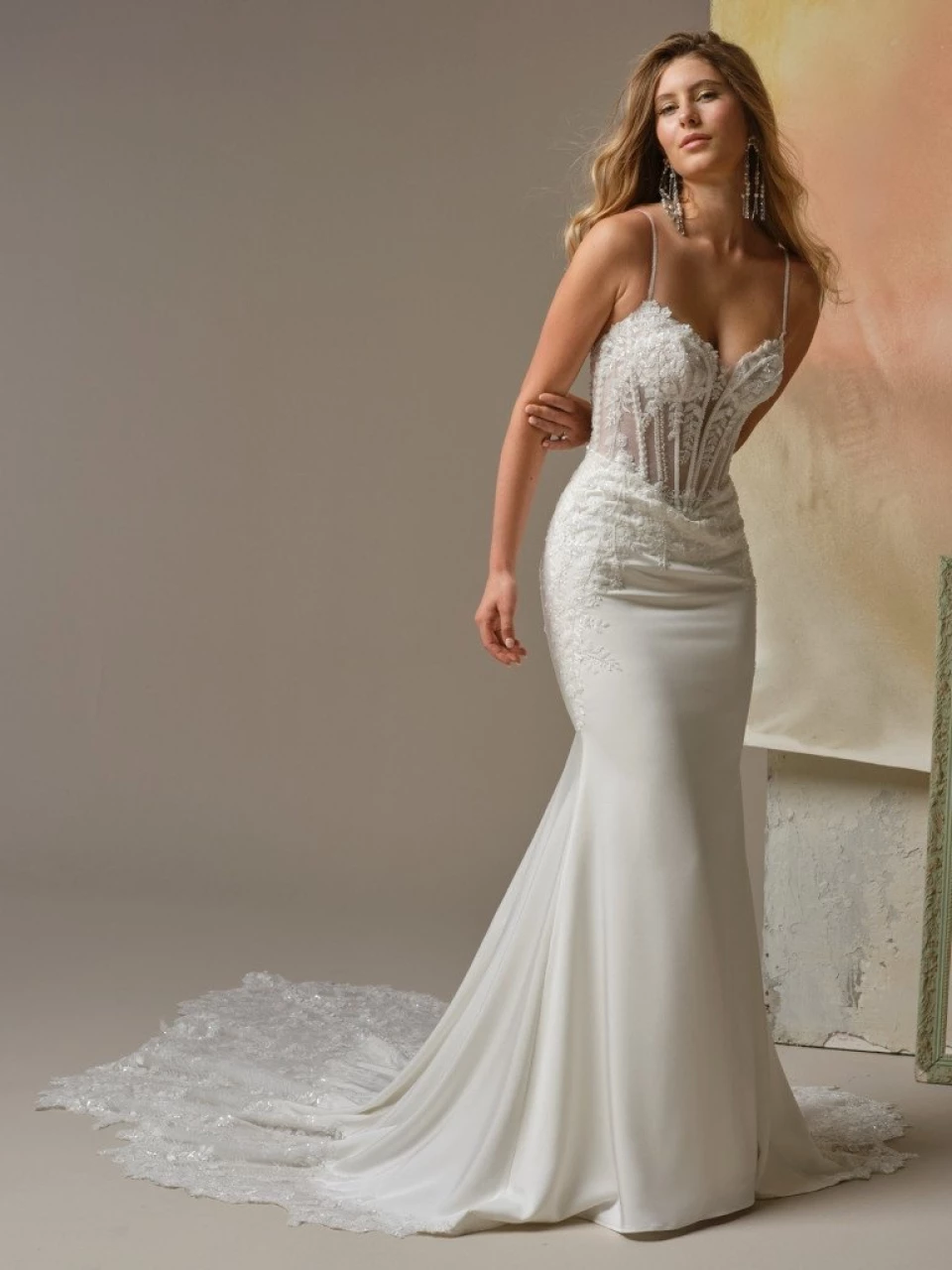
TLDR: A sheath wedding dress is a slim, straight silhouette that follows the natural line of the body from neckline to hem, without a full skirt or dramatic flare. It is also called a column dress, and it is the go-to shape for brides who want a clean, minimalist and modern look. Sheath gowns are light, easy to move in and suit city halls, restaurants, galleries, beaches and garden parties alike. This guide covers what a sheath dress is, the best fabrics, who it suits, venues, undergarments, accessories and alterations.
By Sarah Glasbergen, Founder ThePerfectWedding.com. Updated November 2026
Key Facts at a Glance
- Dress budget: the average wedding dress costs about $2,100 (Source: The Knot Real Weddings Study, 2026)
- Silhouette share: fit-and-flare (35%), A-line (29%) and ball gown (16%) were the top three shapes, leaving the rest to sheath, mermaid and other styles (Source: The Knot Wedding Attire Study, 2018)
- Straps are back: only 33% of brides chose a strapless gown, down from 73% in 2011 (Source: The Knot Wedding Attire Study, 2018)
- Hemming: hemming a wedding dress usually costs $125 to $450 (Source: The Knot, 2025)
- Accessories matter: 84% of brides accessorize, with shoes (76%) and a veil (65%) the most common (Source: The Knot Wedding Attire Study, 2018)
If you picture yourself in something sleek rather than voluminous, the sheath is your silhouette. It is effortless, it moves with you, and it puts the focus on fabric, fit and you. Here is everything to know before you shop.


What is a sheath wedding dress?
A sheath wedding dress has a narrow, straight cut that skims the body and falls to the floor in a nearly straight line. It may be fitted at the waist or cut on the bias so it drapes over the hips, but it never flares out into a full skirt.
Because there is no volume to hide behind, the design details carry the look: a neckline, an open back, a thigh-high slit or a subtle train. Sheath dresses can be ultra minimal in crepe or silk, or romantic in lace and beading. See how it compares to every other shape in our guide to wedding dress silhouettes explained.
What is the difference between a sheath, column and slip dress?
The names overlap, and boutiques use them in slightly different ways. In general, all three are slim and straight, but they differ in structure and fabric.
| Style | Shape | Typical fabric | Best for |
|---|---|---|---|
| Sheath | Slim and straight, often lightly fitted at the waist | Crepe, lace, satin | Modern, clean bridal looks |
| Column | Straight from shoulder to hem, more structured | Crepe, mikado, heavy satin | Formal city and black-tie weddings |
| Slip | Bias-cut, fluid and body-skimming, thin straps | Silk, satin, charmeuse | Relaxed, minimalist and destination weddings |
| Mermaid (for contrast) | Fitted to the knee, then flared | Lace, satin, tulle | Dramatic, curve-defining looks |
| A-line (for contrast) | Fitted bodice, skirt widening from the waist | Tulle, lace, organza | Classic, forgiving silhouettes |
If you like the sheath's ease but want a little more movement, ask your consultant for a soft A-line or a sheath with a detachable overskirt for the ceremony.
What fabrics are used for sheath wedding dresses?
Fabric matters more in a sheath than in almost any other silhouette, because it sits close to the body and shows every line. The right choice depends on the look you want and the season.
- Crepe: matte, smooth and slightly stretchy; the signature fabric of the modern minimalist bride.
- Silk and satin: glossy and fluid; beautiful in a bias-cut slip style and in candlelight.
- Lace: romantic and textured; it adds interest to a simple shape and is more forgiving of seams.
- Chiffon and georgette: light and airy; ideal for beach and summer weddings.
- Beaded or sequined overlays: add sparkle for an evening reception.
ThePerfectWedding.com recommends feeling fabrics in person at a boutique. Light silks and satins look stunning but can show undergarments, while heavier crepes hold their shape and smooth the silhouette.


Who does a sheath wedding dress suit?
A sheath suits more body types than its reputation suggests. Because it follows your natural line rather than adding volume, it creates a long, elegant look. Fit is everything, so the cut and fabric should work with your shape.
- Petite brides: the uninterrupted vertical line makes you look taller and keeps the dress from overwhelming your frame.
- Tall brides: a sheath shows off your height beautifully, especially with a dramatic back or a slit.
- Slim and athletic figures: the clean lines suit a straighter shape; add interest with a cowl, draping or an open back.
- Curvy brides: choose structured crepe or lace with internal support, and a bias cut that skims rather than clings.
If you are unsure, try a sheath next to an A-line during your appointment and compare. Our guide to wedding dress styles for every body type has more tips.
Which wedding venues suit a sheath dress?
The sheath is one of the most versatile silhouettes for venues. It looks at home in modern spaces and is easy to wear on uneven ground, stairs or sand.
- City hall and courthouse weddings: chic, simple and easy to wear all day.
- Restaurants, lofts and galleries: clean lines match modern interiors; see our restaurant wedding guide.
- Beach and destination weddings: lightweight chiffon or silk travels well and moves in the breeze.
- Garden and vineyard weddings: a lace sheath feels romantic without heavy layers.
- Black-tie evenings: a structured column in satin or mikado with a train feels elegant and formal.

What do you wear under a sheath wedding dress?
Because a sheath skims the body, undergarments should be invisible. The goal is smooth lines and support without bulk.
- Seamless, skin-tone underwear rather than white, which can show through light fabrics.
- A built-in bra or bra cups sewn into the dress, especially for open backs and thin straps.
- Light shapewear or a slip if the fabric is clingy.
- Bring your undergarments to every fitting so the dress is altered to fit over them.
Read more in our guide on what to wear under a wedding dress.

How do you accessorize a sheath wedding dress?
A minimalist dress is a blank canvas, so accessories can do more of the talking. Pick one focal point and build around it.
- Veil: a cathedral-length veil adds drama to a simple gown; a short or birdcage veil keeps it modern. See how to choose a wedding veil.
- Jewelry: statement earrings, a back necklace for an open back, or a fine pendant for a V-neck.
- Shoes: they will often show, especially with a slit, so choose a pair you love.
- Second look: a detachable overskirt, cape or bow can transform the dress between ceremony and party.
- Bouquet: a loose, sculptural or single-variety bouquet suits the clean lines.


What alterations does a sheath dress need?
Sheath dresses tend to be simpler to alter than layered ball gowns, but the close fit means precision matters. Typical alterations include a hem, taking in the sides and adjusting the straps.
- Hem: usually $125 to $450, according to The Knot; a sheath needs an exact length to avoid dragging.
- Taking in the bodice: around $100 to $200, more with lace or beading.
- Adding straps: about $200 or less if you want extra support.
- Bustle: only needed if your sheath has a train.
Schedule your first fitting a few months before the wedding and bring your shoes and undergarments. Our guide to wedding dress alterations cost and timeline explains each step.

How much does a sheath wedding dress cost?
Sheath dresses are available at every price point, from simple crepe designs to couture silk with hand beading. As a benchmark, The Knot's latest Real Weddings Study puts the average wedding dress at about $2,100, with lower budgets around $1,200 and higher budgets around $3,200.
- Fabric: silk, heavy satin and hand-applied lace cost more than crepe or polyester satin.
- Details: beading, embroidery and detachable pieces raise the price.
- Custom work: 19% of brides wore custom-made attire, according to The Knot.
- Deposits: boutiques typically ask for 30% to 50% upfront, with the balance due at pickup.
- Alterations: budget for them separately, since they are not included in the dress price.
ThePerfectWedding.com tip: share your total budget, including alterations and accessories, with your bridal consultant at the start of the appointment so every dress you try is realistic.
“A sheath dress proves that simple is never boring. When the fabric is beautiful and the fit is perfect, you do not need volume to make an entrance. Choose one detail that feels like you, and let a great boutique and seamstress take care of the rest.”
Sarah Glasbergen, Founder ThePerfectWedding.com
Sheath Wedding Dress FAQ
-
What is a sheath wedding dress?
A slim, straight silhouette that follows the natural line of the body from neckline to hem, without a full skirt or flare.
-
Is a sheath dress the same as a column dress?
Mostly. Both are slim and straight; a column is often more structured, while a sheath can be lightly fitted at the waist.
-
Does a sheath dress suit petite brides?
Yes. The unbroken vertical line elongates the figure and keeps the dress in proportion.
-
What fabric is best for a sheath wedding dress?
Crepe for a modern, smooth look; silk or satin for a fluid slip; lace for romance and extra texture.
-
Can you wear a veil with a sheath dress?
Absolutely. A long cathedral veil adds drama, while a short veil keeps the look minimal.
-
Are sheath dresses comfortable?
Generally yes. They are lighter than layered gowns and easy to walk, sit and dance in when properly altered.
Find your wedding dress
Discover silhouettes, styles and bridal inspiration on ThePerfectWedding.com.
Next steps: our backless wedding dress guide and wedding shoes guide.


