Maternity Wedding Dresses: Styles, Timing and Comfort Tips
Maternity wedding dresses for pregnant brides: the best silhouettes and fabrics, when to order, how alterations work with a growing bump and comfort tips.

by Sarah Glasbergen on 18 November 2026
Web editor
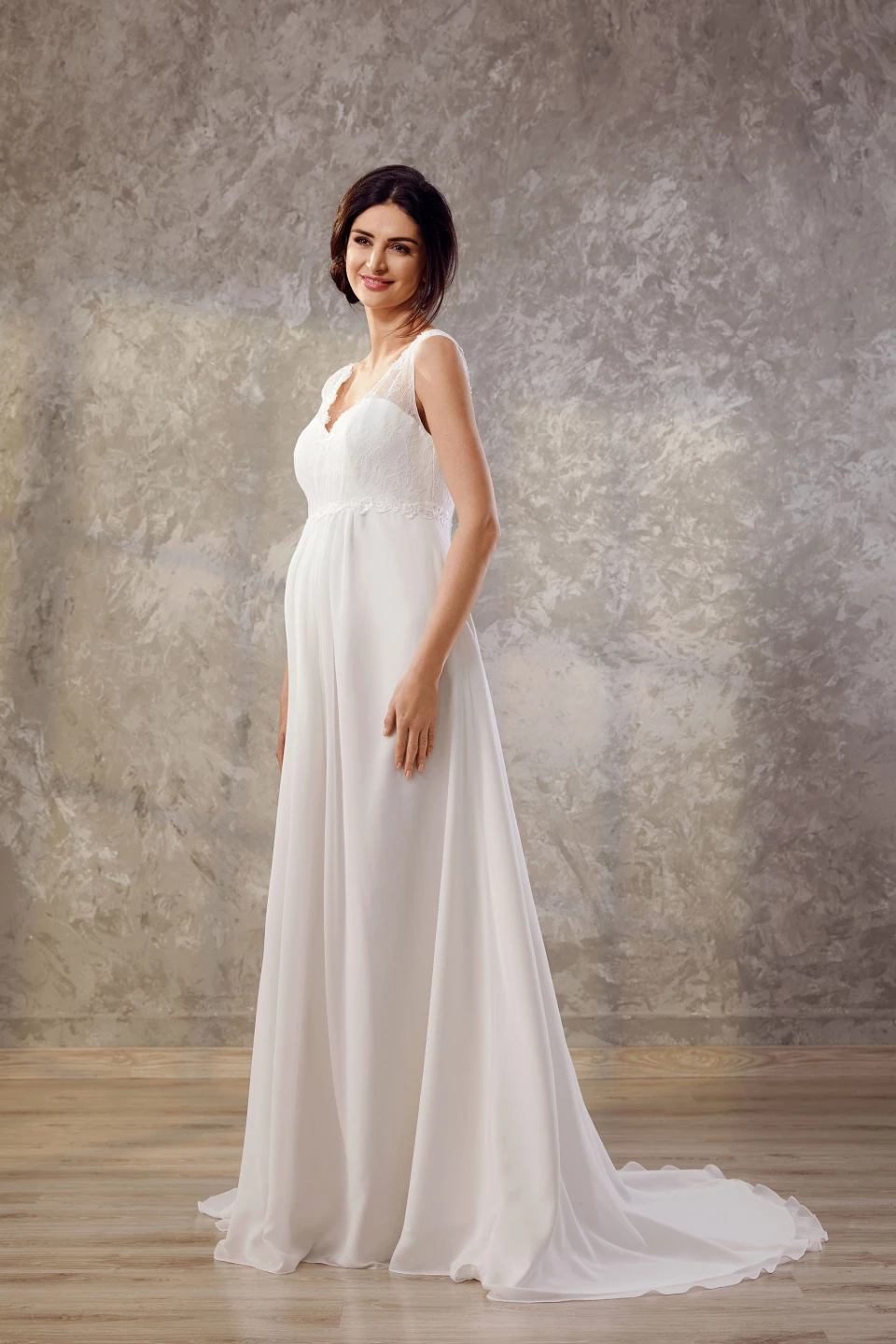
TLDR: The best maternity wedding dresses have an empire waist, an A-line skirt or soft stretch fabrics like jersey, chiffon and crepe that make room for a growing bump. Shop early, but time your order and fittings around your due date: order a size up, let your bridal consultant plan alterations, and book the final fitting in the week of the wedding. If you will be in your third trimester on the day, a dedicated maternity gown is usually the most comfortable choice. This guide covers silhouettes, timing, fabrics, comfort and where to shop.
By Sarah Glasbergen, Founder ThePerfectWedding.com. Updated November 2026
Key Facts at a Glance
- Dress budget: the average wedding dress costs about $2,100 (Source: The Knot Real Weddings Study, 2026)
- Production time: a made-to-order dress takes 16 to 20 weeks on average to arrive after you order (Source: The Knot, 2026)
- Sizing: bridal retailer David's Bridal advises pregnant brides to go two sizes up, since a dress can be taken in later (Source: David's Bridal pregnant bride guide)
- Final fitting: David's Bridal recommends booking the final fitting the week of the wedding, leaving a day or two for last adjustments (Source: David's Bridal pregnant bride guide)
- Vendor team: couples hire 13 wedding professionals on average, so loop your bridal salon in early (Source: The Knot Real Weddings Study, 2026)
Planning a wedding while pregnant means you are dressing for a body that changes from month to month. That sounds stressful, but the right silhouette, the right fabric and a bridal consultant who has done this before make it surprisingly simple. Here is how to find a dress you will feel beautiful and comfortable in.

What is a maternity wedding dress?
A maternity wedding dress is a bridal gown designed or adapted to fit a pregnant body. It has extra room through the waist and tummy, a supportive bodice for a changing bust, and fabrics that stretch or drape instead of cinching. Some are made by dedicated maternity bridal labels; others are regular bridal styles that a boutique adjusts for your bump.
You do not always need a maternity label. In the first and early second trimester, many standard gowns work with a size adjustment. Later in pregnancy, a gown cut specifically for a bump usually looks and feels better.
Which wedding dress silhouettes work best when you are pregnant?
The silhouette matters more than the label. These shapes give a bump room without hiding it, unless you want to. For a full overview of every shape, see our guide to wedding dress silhouettes.
- Empire waist: fitted just under the bust, then flowing freely over the tummy; the classic maternity choice for any trimester.
- A-line: fitted bodice with a skirt that widens gradually; works well early on and with a raised waistline later. Read our A-line wedding dress guide.
- Soft column or sheath in stretch fabric: skims and celebrates the bump; best in jersey or stretch crepe with a skilled seamstress.
- Flowy boho or chiffon gowns: light layers that move with you, ideal for outdoor and warm-weather weddings.
- Ball gown with a raised waist: possible, but heavy skirts and corsetry can feel uncomfortable later in pregnancy.
| Silhouette | Best trimester | Comfort level | Watch out for |
|---|---|---|---|
| Empire waist | All | High | Very full skirts can overwhelm a petite frame |
| A-line | First and second | Medium to high | A natural waistline may need raising |
| Stretch sheath or column | Second and third | High in stretch fabric | Rigid fabrics show every seam |
| Chiffon or boho | All | High | Sheer layers may need extra lining |
| Ball gown | First | Low to medium | Corsets and weight later in pregnancy |

When should you order a maternity wedding dress?
Timing is the trickiest part. A made-to-order gown takes 16 to 20 weeks on average to arrive, according to The Knot, so you cannot wait until the last month to choose. At the same time, ordering too early means guessing your size months ahead.
ThePerfectWedding.com recommends telling your bridal consultant your due date at the very first appointment. An experienced boutique will work backwards from your wedding date and suggest one of three routes:
- Order a size up: the standard route for gowns that need production time; the seamstress takes it in later.
- Buy off the rack or in stock: useful when the wedding is soon or your size is hard to predict.
- Choose a maternity bridal line: these are graded for a bump and often ship faster than couture gowns.
Some consultants use a maternity pillow during early appointments so you can see how a style will look later in pregnancy. Our guide on when to start wedding dress shopping explains the standard timeline you are adjusting from.

How does alterations timing work with a growing bump?
For most brides, alterations start 8 to 12 weeks before the wedding with about three fittings, according to David's Bridal. With a bump, the order changes: the seamstress does the work that does not depend on your waist first, and saves the bodice and waist for last.
- First fitting: hem, straps, sleeves and any design changes that will not shift as your shape changes.
- Middle fitting: check the bust and back, add built-in support, and plan how much room the waist needs.
- Final fitting: in the week of the wedding, the seamstress fine-tunes the bodice and waist to your body on the day.
- Buffer: leave a day or two after the final fitting for last-minute tweaks.
Ask your salon or seamstress upfront whether they can fit you that close to the date, and get the plan in writing. Our alterations cost and timeline guide covers what each type of change usually involves.
Which fabrics are most comfortable for a pregnant bride?
Choose fabrics that breathe and give. David's Bridal suggests lighter options such as crepe, tulle, chiffon or stretchy jersey. Heavy satin, structured mikado and stiff boning look stunning, but they can feel restrictive after several hours on your feet.
- Jersey and stretch crepe: soft, forgiving and easy to let out.
- Chiffon: light and floaty, perfect over an empire waist.
- Tulle: airy volume without weight.
- Lace overlays: pretty and often stretchy, with a lining that can be adjusted.
For a deeper look at how each material behaves, see our wedding dress fabrics guide.
Where can you buy a maternity wedding dress?
Start with local bridal boutiques. Many carry maternity-friendly styles or work with designers who can raise a waistline, add stretch panels or adjust a bodice. A good consultant can also tell you which of their gowns alter well for a bump.
- Full-service bridal salons: the best choice for fittings, timing advice and in-house alterations.
- Bridal retailers with maternity collections: several national bridal brands offer maternity styles in a wide size range.
- Dedicated maternity labels: specialist brands design gowns specifically for each stage of pregnancy.
- Experienced bridal seamstresses: essential whichever gown you choose, because maternity fittings are a specialty.
Browse styles and find bridal shops near you on ThePerfectWedding.com before you book appointments, and ask each salon how many pregnant brides they dress each year.


How do you stay comfortable in your dress on the wedding day?
Comfort is not a compromise; it is what lets you enjoy the day. Plan these details with your bridal salon and planner:
- Built-in support: ask for cups or a soft built-in bra instead of a separate strapless bra.
- Flexible shoes: low block heels or flats with some structure handle swelling better; see our wedding shoes guide.
- A shorter train or a bustle: less weight to carry around during the reception.
- Breathable layers: choose a lining that does not trap heat.
- Rest stops: build seated moments into the timeline and keep water close by.
Your photographer can also help. Ask them to plan portraits early in the day, when you have the most energy, and to include a few shots that celebrate your bump if you want them.
Should you choose a maternity dress or a regular gown?
It depends mainly on how far along you will be. If you are in the first trimester on the wedding day, a regular gown in a forgiving silhouette, ordered with room to spare, usually works. In the second trimester, an empire or A-line gown with a raised waist is the sweet spot.
If you will be in your third trimester, David's Bridal recommends considering a true maternity wedding dress. A gown cut for a bump distributes weight better, sits correctly at the hem and saves a lot of complicated alterations.
“A pregnant bride does not need to hide anything or settle for less. The trick is timing: tell your consultant your due date on day one, order with room to grow and trust your seamstress to finish the fit in the final week. Then you can simply enjoy the day.”
Sarah Glasbergen, Founder ThePerfectWedding.com
Maternity Wedding Dress FAQ
-
What is the best wedding dress style for a pregnant bride?
An empire waist is the most popular choice, followed by A-line gowns and soft sheath dresses in stretch fabric.
-
When should a pregnant bride order her wedding dress?
Order early enough to cover production time, usually 16 to 20 weeks, and order a size up so the dress can be taken in later.
-
When is the final fitting for a maternity wedding dress?
Book it in the week of the wedding, with a day or two to spare for last adjustments.
-
Can a regular wedding dress be altered for a bump?
Often yes, especially empire and A-line styles. Ask your seamstress early which changes are possible.
-
Which fabrics are best for a maternity wedding dress?
Light, stretchy or draping fabrics such as jersey, stretch crepe, chiffon and tulle.
-
Do I need a maternity wedding dress in the third trimester?
It is usually the most comfortable option, because the gown is cut to support a bump.
Find your wedding dress
Browse wedding dress styles and bridal shops on ThePerfectWedding.com.
Keep reading: our guide on what to expect at a wedding dress fitting and what to wear under your wedding dress.


