Night Wedding Photos: Lighting, Sparklers, Blue Hour and Timing
Night wedding photos made easy: flash vs off-camera lighting, blue hour, sparkler and skyline portraits, timeline tips and coverage hours.

by Sarah Glasbergen on 18 November 2026
Web editor
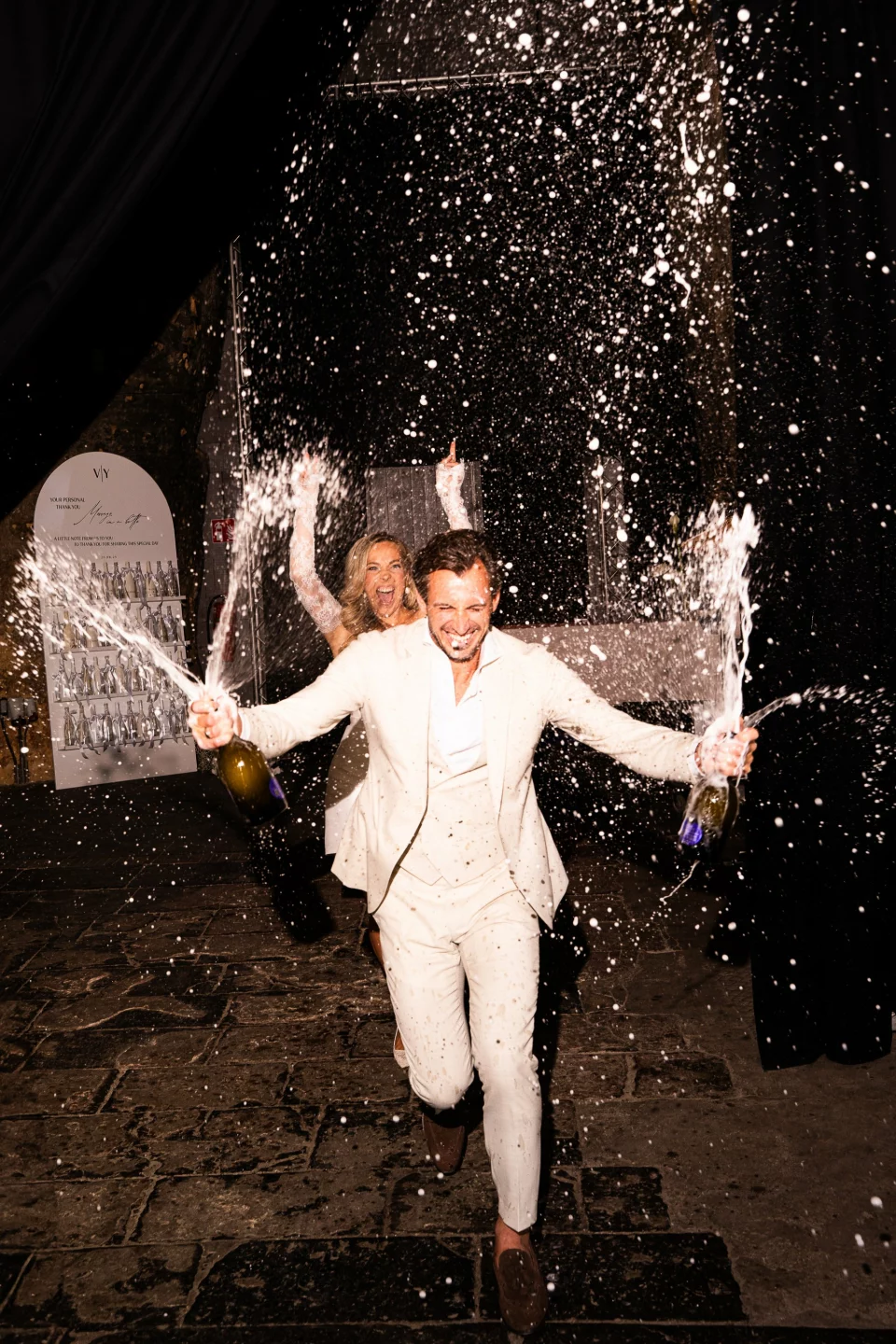
TLDR: The best night wedding photos happen when you plan them like any other portrait session: a set window in the timeline, a photographer who brings off-camera lighting, and coverage that lasts past sunset. Blue hour, the short stretch of deep blue sky right after the sun goes down, gives the most magical light, while flash and off-camera strobes handle everything after dark. Sparkler exits and city-light portraits need safety planning and a few rehearsed minutes. This guide covers lighting styles, sparklers, blue hour, timing and how many hours of coverage to book.
By Sarah Glasbergen, Founder ThePerfectWedding.com. Updated November 2026
Key Facts at a Glance
- Most couples hire a pro: 88% of couples hired a photographer for their wedding (Source: The Knot Real Weddings Study, 2026)
- Photography budget: couples spent an average of $3,000 on their wedding photographer (Source: The Knot Real Weddings Study, 2026)
- Blue hour is short: civil twilight lasts about 28 minutes at the latitude of New York, shorter near the equator and longer further north (Source: timeanddate.com, 2026)
- Sparklers are hot: a sparkler burns at about 2,000°F, hot enough to melt some metals (Source: U.S. Consumer Product Safety Commission, 2024)
- Social-first content: 40% of couples planning social-first wedding content ask their photographers and videographers to capture it (Source: Zola First Look Report, 2026)
Some of the most memorable wedding images are made after the sun goes down: a couple wrapped in string lights, a tunnel of sparklers, a skyline glowing behind a kiss. These photos rarely happen by accident. They need light, a little time and a photographer who is comfortable working in the dark.

What are night wedding photos and why do couples want them?
Night wedding photos are any images made after sunset: portraits under the evening sky, reception moments on the dance floor, sparkler or fireworks shots and city-light portraits. They capture the mood of the party, which is often the part of the day guests remember most.
They also add variety to your gallery. Daytime portraits show the setting and the details, while night portraits feel more cinematic, with glowing backgrounds and dramatic contrast. If you already planned a sunset session, our guide to golden hour wedding photos explains that window; this guide picks up where the sun disappears.
When is blue hour, and how is it different from golden hour?
Golden hour is the warm, low light before sunset. Blue hour comes right after sunset, while the sun is just below the horizon and the sky turns a deep, even blue. Astronomers call this period civil twilight, which ends when the center of the sun is 6 degrees below the horizon.
Blue hour is brief. Near New York it lasts roughly half an hour, and the best color often appears in just 10 to 15 minutes of it. During that window the sky still has detail, venue lights and candles start to glow, and a photographer can balance both in one frame.
| Light window | When it happens | What it looks like | Best for |
|---|---|---|---|
| Golden hour | The hour before sunset | Warm, soft, glowing skin tones | Romantic couple portraits |
| Blue hour | Roughly 20 to 40 minutes after sunset | Deep blue sky, warm artificial lights | Venue and skyline portraits |
| After dark | Once the sky turns black | Lit only by flash and venue lighting | Sparklers, dance floor, dramatic portraits |
Ask your photographer to check the exact sunset time for your date and location; many use apps that also show civil twilight. ThePerfectWedding.com recommends writing the sunset time directly into your timeline so the coordinator and DJ know when you will step away.

How do photographers light wedding photos at night?
Once natural light fades, every photo depends on the light your photographer brings or finds. There are three main approaches, and most experienced wedding photographers combine them during one evening.
- On-camera flash: a flash mounted on the camera, often bounced off a ceiling or wall. Fast and flexible for candid reception moments.
- Off-camera lighting: one or more strobes on light stands or held by an assistant, placed to the side or behind the couple. This creates depth, rim light and that editorial look.
- Available light: string lights, candles, uplighting and street lamps, captured with fast lenses and higher camera sensitivity. Moody and natural, but only when there is enough light to work with.
| Approach | Look | Pros | Trade-offs |
|---|---|---|---|
| On-camera flash | Clean, bright, true-to-life | Quick, works almost anywhere | Can look flat if used direct |
| Off-camera lighting | Dramatic, dimensional, editorial | Separates you from the background | Needs setup time and often an assistant |
| Available light | Warm, soft, atmospheric | Natural mood of the venue | Depends on venue lighting, more grain |
When you review portfolios, look for full receptions shot after dark, not just one hero image. If you love dramatic night portraits, ask whether your photographer uses off-camera lighting and whether a second photographer or assistant will help hold lights. Venue lighting also matters: string lights, candles and uplighting give your photographer more to work with.

How do you take sparkler photos safely at a wedding?
A sparkler exit or sparkler portrait is one of the most requested night shots. It looks effortless in photos, but it works best when your planner, venue and photographer coordinate it together.
- Check the rules first: many venues and local fire codes restrict or ban sparklers. Read our guide to outdoor wedding permits and rules and confirm in writing with your venue.
- Choose long, low-smoke wedding sparklers: longer sparklers give your photographer more time to frame the shot.
- Assign a lighting team: your coordinator or venue staff should light sparklers in small groups and keep a bucket of water or sand nearby.
- Keep a safe distance: guests should hold sparklers high and away from hair, dresses and veils. Sparklers burn at about 2,000°F, so children should watch rather than hold them.
- Walk slowly: the classic mistake is rushing through. Walk at half speed, look at each other and do the exit twice if needed.
Your photographer usually lights the scene with flash so faces stay sharp while the sparklers add glow. Plan about 10 to 15 minutes for the setup, lighting and a second run.
How do you get city lights and skyline portraits at night?
City weddings have a built-in night backdrop: lit skylines, bridges, neon signs and busy streets. The best time for skyline portraits is blue hour, when buildings are lit but the sky is not yet black, so the outline of the city stays visible.
- Ask your venue about a rooftop, balcony or terrace with a view, and whether you can access it during the reception.
- Scout or let your photographer scout the location before the day to find angles and safe places to stand.
- Plan transport if the best view is a short walk or drive away, and keep the trip under 10 minutes.
- Bring a wrap or jacket; rooftops get windy and cool after dark.
Off-camera lighting is what makes these portraits work. One strobe lights the couple while a slower exposure records the city lights behind them, so neither looks too dark or blown out.

How do you fit night photos into the wedding timeline?
Night portraits need their own slot, just like family photos. The easiest approach is to step out for 10 to 20 minutes during the reception, usually between dinner courses or right after the first dance, timed to blue hour.
- Blue hour portraits: 10 to 15 minutes, starting about 15 minutes after sunset.
- Dark-sky portraits: 10 minutes once it is fully dark, ideally with off-camera lighting.
- Sparkler exit or send-off: 10 to 15 minutes, often near the end of coverage.
- Dance floor coverage: at least 30 to 60 minutes of open dancing to capture the party at its peak.
Share these blocks with your coordinator and DJ so the reception keeps moving while you are outside. For a full schedule from getting ready to send-off, see our wedding photography timeline.

How many hours of photography coverage do you need for night photos?
Night photos only happen if your photographer is still there after dark. In summer, sunset can fall late in the evening, so a package that starts with getting ready may end before the sky turns blue. Count backward from your send-off to make sure coverage includes the moments you care about.
If budget is a factor, talk to your photographer about shifting coverage later in the day rather than cutting the night entirely, or adding an extra hour only for the evening. Our guide on how many hours of wedding photography walks through typical packages, and our wedding photographer cost guide explains how hours affect price.
What should you ask your photographer about night shooting?
A short conversation before you book prevents disappointment later. ThePerfectWedding.com suggests these questions to reveal how comfortable a photographer is after dark:
- Can I see a full gallery from a wedding that continued after sunset?
- Do you use off-camera lighting, and do you bring an assistant to help?
- How do you handle very dark venues or candlelit receptions?
- Have you photographed sparkler exits, and what do you need from us?
- What time does our package end compared to sunset on our date?
Good answers are specific. A photographer who has shot many evening receptions will talk about light placement, timing and backup plans for wind, rain or venue restrictions.
“Night portraits are often the photos couples frame. The secret is not a fancy camera, it is a plan: know your sunset time, protect 15 minutes for blue hour and trust a photographer who knows how to bring light into the dark.”
Sarah Glasbergen, Founder ThePerfectWedding.com
Night Wedding Photos FAQ
-
When is the best time for night wedding photos?
During blue hour, roughly 15 to 30 minutes after sunset, when the sky is deep blue and venue lights glow.
-
Do wedding photographers use flash at night?
Yes. Most use on-camera flash for candids and off-camera lighting for portraits once natural light fades.
-
How long do sparkler photos take?
Plan about 10 to 15 minutes, including lighting the sparklers and a second run.
-
Are sparklers allowed at every wedding venue?
No. Many venues and local fire codes restrict them, so confirm in writing before buying any.
-
How much time should we set aside for night portraits?
About 10 to 20 minutes during the reception is enough for blue hour and dark-sky portraits.
-
Do we need extra coverage hours for night photos?
Often, yes. Make sure your package lasts past sunset, or ask your photographer to shift or add an evening hour.
Plan your photography timeline
Find planning guides, timelines and checklists for every part of your wedding day on ThePerfectWedding.com.
Next steps: our wedding photo shot list and how to choose a wedding photographer.


